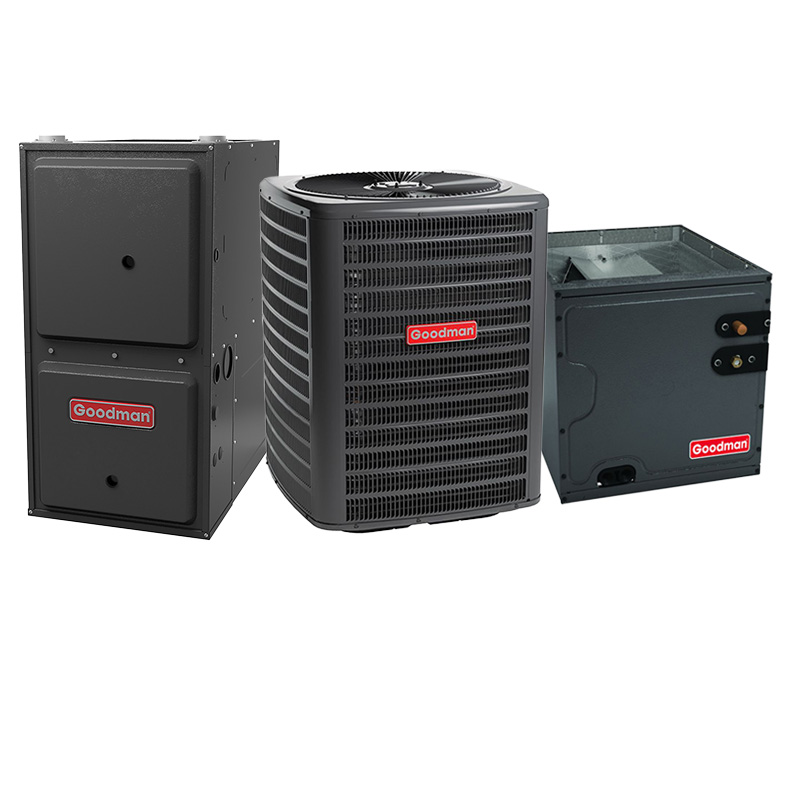
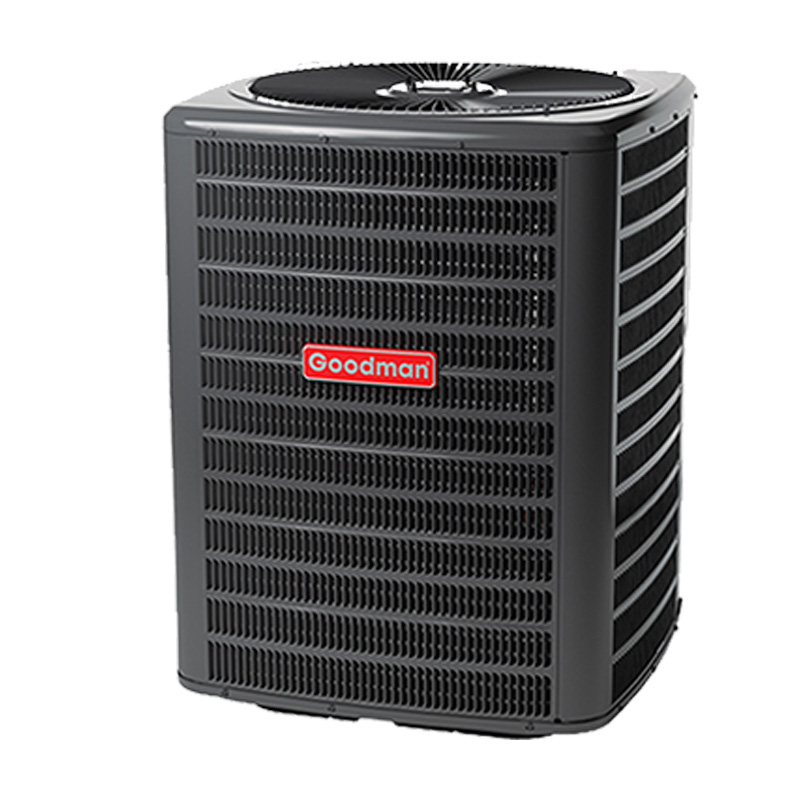
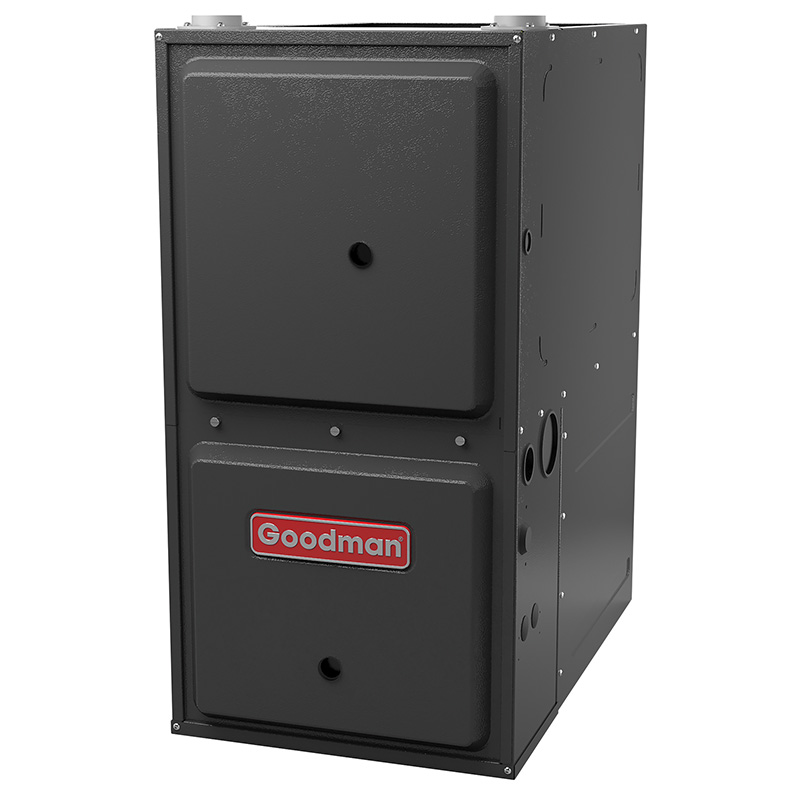
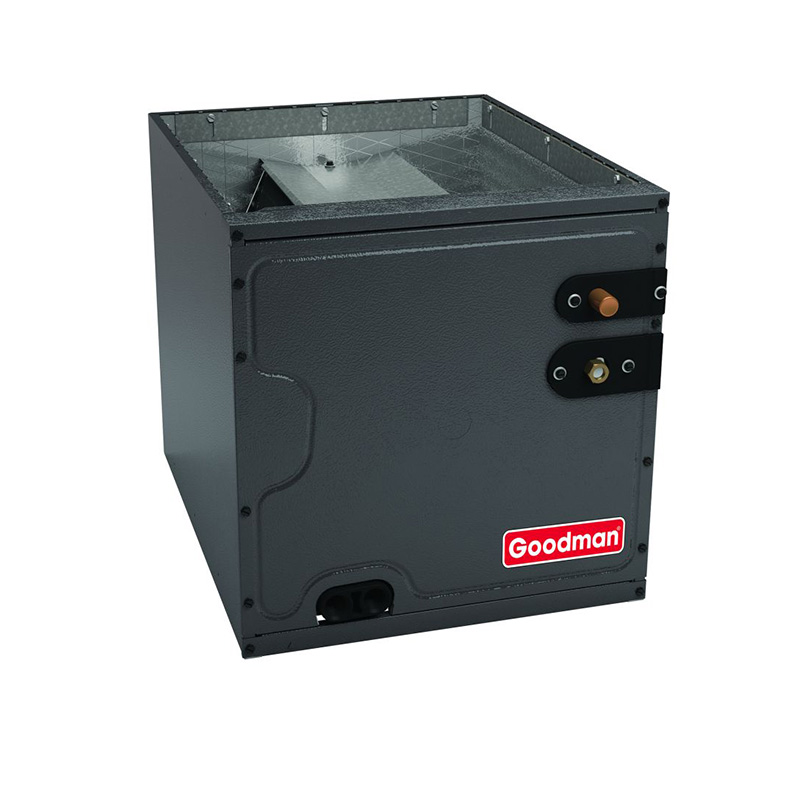
Goodman 2 Ton 13.8 SEER2 60000 BTU 96% AFUE Two Stage Multi-Speed ECM Gas Furnace System – Downflow | R32
View on AC Direct see your lowest price →Check current price on AC Direct →
Key features
- Two-stage cooling and heating for better humidity control and quieter part-load operation
- 96% AFUE gas furnace with multi-speed ECM blower motor for reduced electricity use
- 13.8 SEER2 cooling efficiency meets 2023+ federal minimums across all U.S. climate regions
- R-32 refrigerant with lower global-warming potential than R-410A, aligned with current regulatory direction
- Downflow configuration designed for installations where supply air exits the bottom of the air handler
- Two-stage compressor reduces short-cycling and extends average run times for more even comfort
About this system
The Goodman 2-ton, 13.8 SEER2, 96% AFUE downflow system pairs a two-stage air conditioner with a two-stage, multi-speed ECM gas furnace in a configuration built for homes where the air handler sits above the living space and conditioned air flows downward, common in closets, basements, and certain manufactured-home setups. The 60,000 BTU furnace output at 96% AFUE means very little heat escapes through the flue, translating to meaningful gas savings over an older 80% unit. R-32 refrigerant has a lower global-warming potential than R-410A and is increasingly the industry standard as R-410A is phased out, so this system is positioned for the near-term regulatory environment.
Two-stage operation is the practical advantage here. On mild days the system runs on its lower stage, cycling less frequently, holding humidity better, and putting less wear on components than a single-stage unit would. The ECM (electronically commutated motor) blower is notably more efficient than a standard PSC motor, cutting fan electricity use and running quietly enough that most homeowners stop noticing it. At 13.8 SEER2 the cooling efficiency clears the federal minimums for most U.S. regions but sits at the lower end of the mid-efficiency range, not a high-efficiency system by today’s standards. The package suits buyers who want a meaningful step up from entry-level equipment without the price of a premium brand.
This configuration is worth flagging: downflow systems are less common than upflow, so not every HVAC contractor stocks downflow coils or has routine experience with the orientation. Verify that your installer is familiar with downflow setups before committing, because a mismatched or improperly sealed coil is one of the leading causes of the refrigerant and moisture issues that show up in Goodman owner complaints.
The Goodman 2-ton 13.8 SEER2 / 96% AFUE downflow system delivers solid mid-tier performance at a price point typically 15 to 25 percent below comparable Carrier, Trane, or Lennox equipment. The two-stage operation and ECM blower are genuine comfort upgrades over entry-level systems, though owners should budget for likely capacitor replacement in the 7-to-10-year window and understand that compressor longevity tends to trail premium brands. It is a reasonable choice when budget is a hard constraint and installation quality is not.
Overall score is the average of the five ratings above.
What we like
- Two-stage operation improves humidity control and comfort compared to single-stage alternatives at this price
- 96% AFUE furnace efficiency is near the top of the gas-furnace market and will reduce heating bills versus older 80% units
- ECM blower motor cuts fan electricity consumption and runs noticeably quieter than a standard PSC motor
- R-32 refrigerant keeps the system compatible with current and near-future regulations without a costly future retrofit
- Price typically lands 15 to 25 percent below Trane, Lennox, and Carrier systems with comparable specs, making it accessible for budget-conscious buyers
Trade-offs
- Dual-run capacitors are the most frequently reported failure point, with repair costs typically in the $300 to $600 range and onset often after year 7
- Compressor lifespan averages 10 to 14 years versus 15 to 20 years for premium brands, meaning earlier replacement costs for some owners
- Evaporator coil leaks appear in a meaningful share of owner reviews, and the downflow orientation makes coil access and sealing more critical than in upflow systems
- 13.8 SEER2 sits at the lower end of mid-efficiency, so owners in hot climates or with high cooling loads may find the long-run electricity costs favor a higher-SEER2 option
What homeowners and pros say about Goodman
Homeowners who review Goodman equipment on ConsumerAffairs give the brand roughly 2.5 out of 5, a score shaped largely by owners who experienced expensive repairs after the system’s first several years. The recurring complaint is repair costs climbing after roughly year 7, with dual-run capacitor failures being the most frequently cited specific issue. Evaporator coil leaks also appear in a meaningful share of reviews and tend to generate sharper frustration because they involve refrigerant and can take longer to diagnose. Google dealer reviews across Goodman-selling contractors land closer to 3.8 out of 5, where the dominant theme is straightforward: buyers appreciate paying less up front than they would for a Trane or Carrier, and many report years of trouble-free service when the installation was done well.
HVAC technicians tend to be candid about the brand’s positioning. The equipment is serviceable and the parts are widely stocked, which keeps repair costs lower than they would be for an obscure brand. The capacitor vulnerability is well-known enough that experienced techs often check it proactively during tune-ups. The concern that comes up most often among installers is compressor longevity: Goodman compressors tend to average 10 to 14 years in the field, compared to 15 to 20 years for premium brands, which matters if you are weighing total cost of ownership over a long ownership horizon. On this specific system the downflow orientation adds a layer of installation sensitivity: the evaporator coil seal and condensate management in a downflow application require careful attention, and the refrigerant-leak-within-the-first-year issue documented in some Goodman owner experiences is most often traced back to install or initial charge problems rather than a factory defect.
Sources: ConsumerAffairs Goodman owner reviews, AHRI Directory of Certified Product Performance, U.S. DOE appliance and equipment efficiency standards, Goodman product specification sheets.
What it costs to run
At 13.8 SEER2, cooling this 2-ton system for a typical 1200-hour cooling season at the U.S. average electricity rate of $0.17/kWh works out to roughly $355 per year in cooling, about $10 less per year than a minimum-efficiency 13.4 SEER2 unit of the same size. Your real cost depends on your climate and local rate.
Method: (24,000 BTU/hr ÷ 13.8 SEER2) × 1200 hours ÷ 1000 × $0.17/kWh. Rate source: U.S. EIA average; cooling hours: moderate-climate estimate.
How it compares
| Brand | Comparable model | SEER2 | Stage | Price position |
|---|---|---|---|---|
| Goodman | 2-Ton 13.8 SEER2 / 96% AFUE Downflow (this system) | 13.8 | Two-stage | Value pick |
| Carrier | Performance Series (24ACC636 + 59TP6) | ~15-16 | Two-stage | Typically 15 to 25 percent higher than this Goodman |
| Trane | XR15 + S9V2 (2-ton bundle) | ~15 | Two-stage | Typically 20 to 30 percent higher than this Goodman |
| Lennox | Merit Series (14ACX + ML196E) | ~14-15 | Single-stage (base Merit) to two-stage | Typically 10 to 20 percent higher than this Goodman |
Competitor rows are comparable single-stage units at similar efficiency; price is relative position, not a quote.
Questions about this system
Why does this system use a downflow configuration, and how do I know if my home needs it?
Downflow means supply air exits the bottom of the air handler and return air enters the top, which is the correct orientation for installations in an upper-floor closet or attic where ducts run down into the living space. Check where your existing return-air duct connects to the cabinet: if it enters from the top, you have a downflow system. Installing a downflow unit in a space designed for upflow will cause serious performance and moisture problems, so confirm the orientation with your contractor before ordering.
What does R-32 refrigerant mean for me compared to older R-410A systems?
R-32 has about one-third the global-warming potential of R-410A and is the refrigerant direction the industry is moving toward as R-410A is phased down under current EPA rules. In practical terms it means this system will remain serviceable as R-410A becomes harder to source, and certified technicians can work with R-32 using standard equipment. One note: R-32 is mildly flammable, so it requires A2L-rated components and installer certification, which most current HVAC technicians already have or are obtaining.
How often do Goodman capacitors actually fail, and what does it cost to fix?
Capacitor failure is the most commonly reported repair on Goodman equipment, with many owners reporting the issue appearing after the 7-year mark. It is not a catastrophic repair: a dual-run capacitor replacement typically runs $300 to $600 including labor, and a competent technician can complete it in under an hour. Keeping a service agreement that includes annual inspections makes it easier to catch a weakening capacitor before it causes a no-cool call on a hot day.
The two-stage furnace rating is 60,000 BTU. Is that the right size for my home?
A proper Manual J load calculation is the only reliable way to answer that. As a rough reference, 60,000 BTU at 96% AFUE delivers about 57,600 BTU of usable heat, which a sizing rule of thumb might associate with a 1,500 to 2,000 square foot well-insulated home in a moderate climate, but local climate, ceiling height, insulation levels, and window area all shift the number significantly. An oversized furnace will short-cycle and wear components faster; an undersized one will struggle on the coldest days. Ask your contractor to show you the load calculation.
What warranty does Goodman provide on this system, and are there any conditions I should know about?
Goodman typically offers a 10-year parts limited warranty on registered systems, which requires registration within a set window after installation (usually 60 days). The compressor often carries an additional limited warranty period. Critically, the warranty generally requires installation by a licensed HVAC contractor and proof of that installation for claims, so DIY or unlicensed installs can void coverage. Review the specific warranty certificate that ships with the unit, because terms can vary by model and registration status.
Specifications
| Cooling capacity | 2 Ton |
| Efficiency | 13.8 SEER2 |
| Furnace output | 60000 BTU |
| Furnace efficiency | 96% AFUE |
| Configuration | Downflow |
| Refrigerant | R-32 |