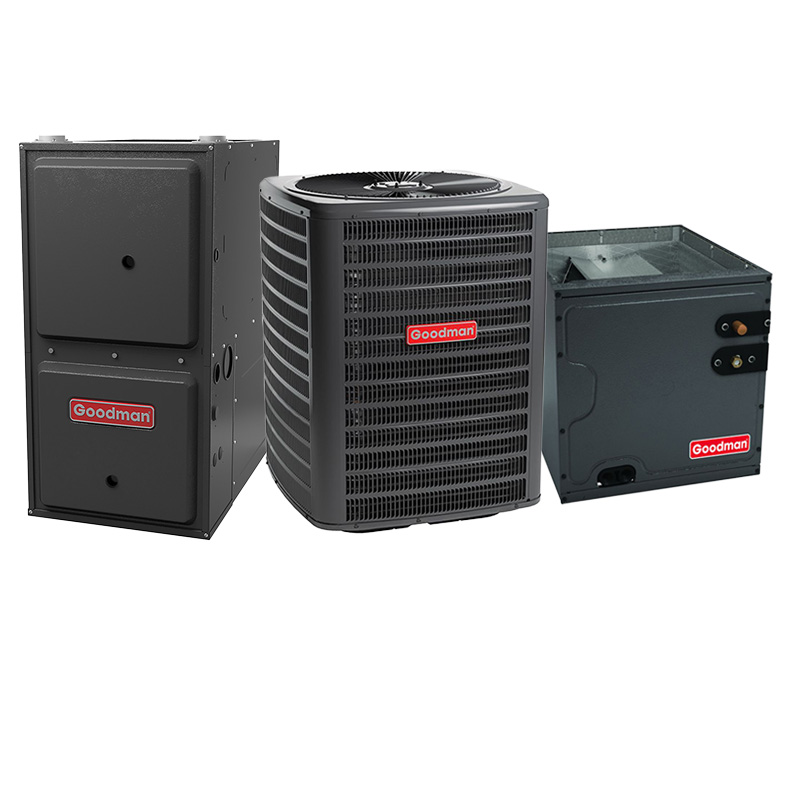
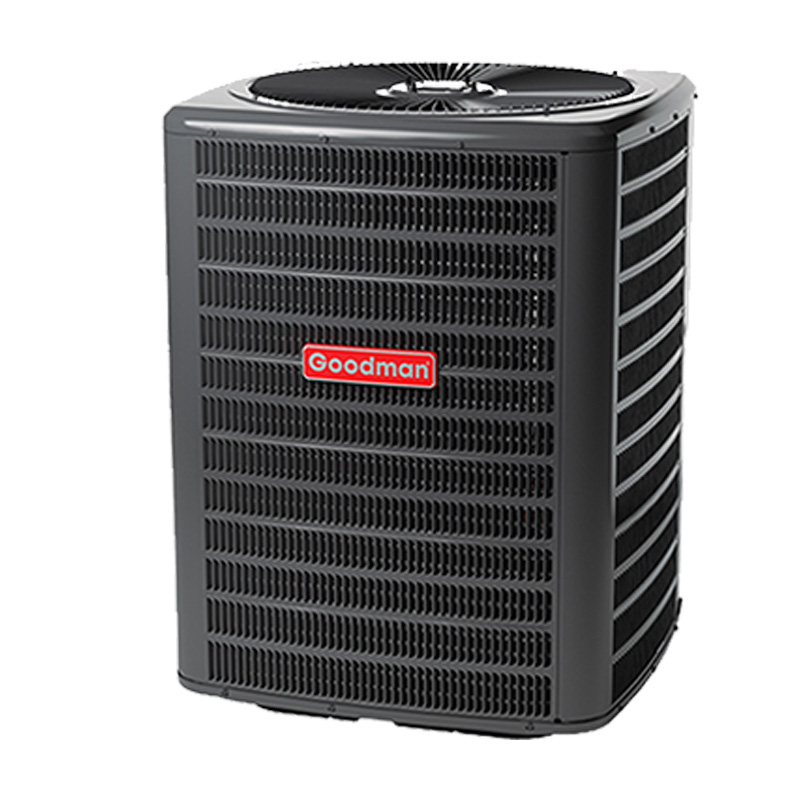
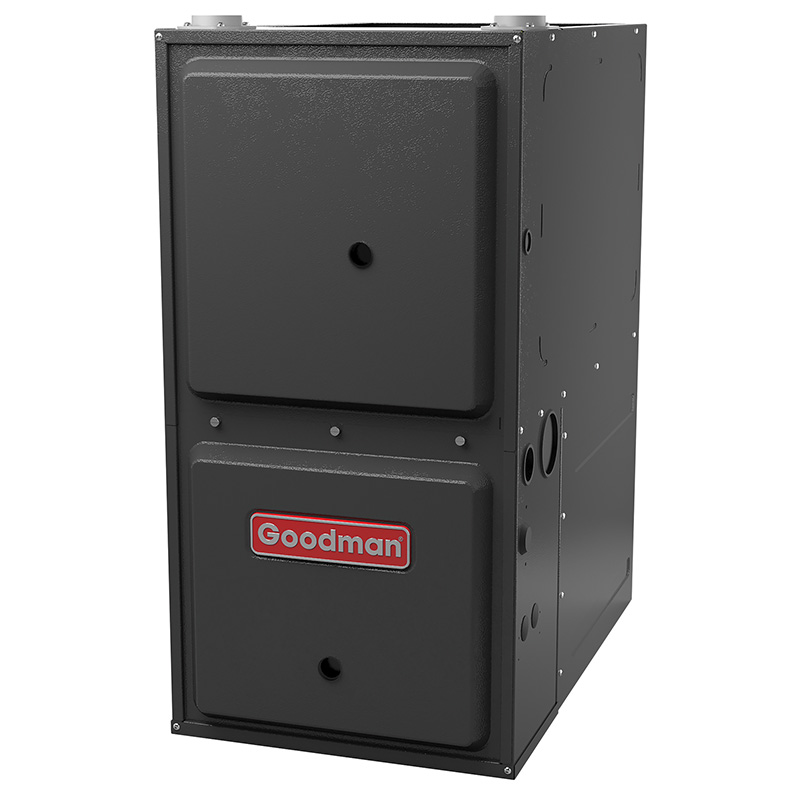
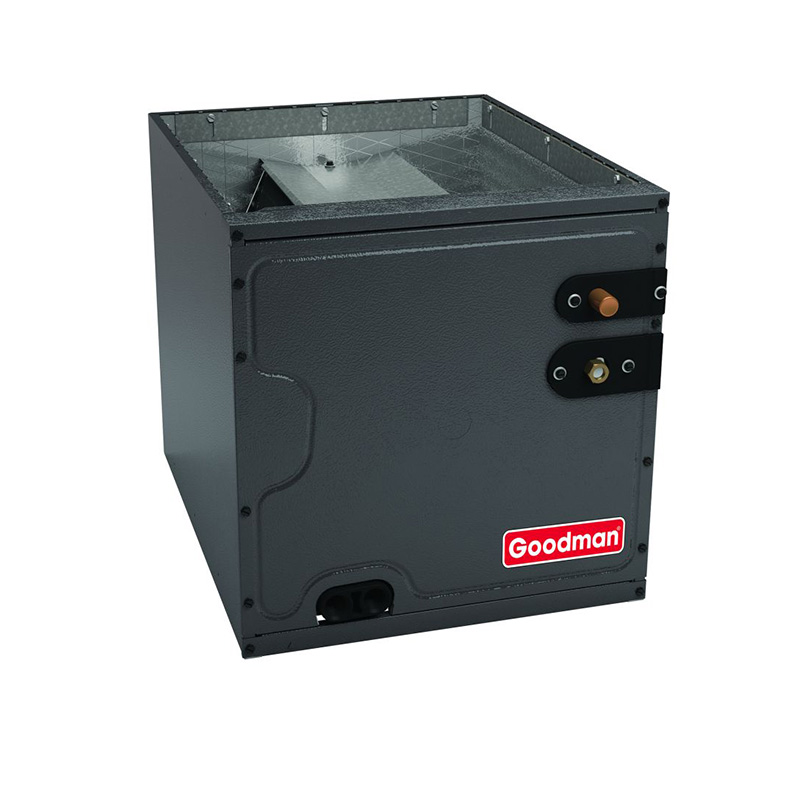
Goodman 2 Ton 13.8 SEER2 40000 BTU 96% AFUE Two Stage Multi-Speed ECM Gas Furnace System – Downflow | R32
View on AC Direct see your lowest price →Check current price on AC Direct →
Key features
- 13.8 SEER2 cooling efficiency meets 2023 federal minimums for most regions
- 96% AFUE two-stage gas furnace with 40,000 BTU maximum heating output
- Multi-speed ECM blower motor for quieter operation and lower fan energy use
- Downflow configuration designed for basement or crawlspace duct installations
- R-32 refrigerant with lower global warming potential than R-410A
- Two-stage heating reduces short cycling and temperature swings in mild weather
About this system
This Goodman two-ton downflow system pairs a 13.8 SEER2 air conditioner with a 96% AFUE two-stage gas furnace, making it a practical choice for smaller homes or supplemental zones in the 800 to 1,200 square foot range where a high-efficiency heating and cooling combo is wanted without the cost of a premium brand. The downflow configuration means the furnace discharges conditioned air downward through the floor, which suits basement and crawlspace installations where ductwork runs below the living space. R-32 refrigerant has a lower global warming potential than the older R-410A it replaces, and it is now the standard for new residential equipment.
The two-stage furnace runs on a lower firing rate most of the time, cycling up to full 40,000 BTU output only when outdoor temperatures demand it. That reduces temperature swings and tends to lower fuel bills compared with single-stage operation at the same AFUE rating. The multi-speed ECM blower motor adjusts airflow continuously rather than snapping between fixed speeds, which improves dehumidification, reduces noise during normal operation, and cuts blower electricity use. At 13.8 SEER2, the cooling side clears the federal minimum for most U.S. regions but is not a high-efficiency outlier, so buyers in very hot climates who run the AC heavily all summer should weigh whether a higher SEER2 unit would recover the cost difference over time.
This Goodman system delivers solid efficiency and practical two-stage comfort features at a price point that typically runs 15 to 25 percent below comparable Carrier, Trane, or Lennox equipment. The trade-off is a documented history of component failures around year seven and beyond, and compressor longevity that generally falls short of premium-brand averages. For budget-conscious buyers with access to skilled installation and a willingness to budget for the occasional repair, it represents reasonable value.
Overall score is the average of the five ratings above.
What we like
- 96% AFUE furnace meaningfully cuts heating fuel costs versus 80% AFUE alternatives
- Two-stage operation improves comfort and humidity control without variable-speed pricing
- ECM blower motor reduces electricity consumption compared with PSC motors
- R-32 refrigerant is the current industry standard with a lower environmental footprint
- Price undercuts Trane, Lennox, and Carrier equivalents by roughly 15 to 25 percent
Trade-offs
- Dual-run capacitors are the most commonly reported failure point, typically needing replacement within the first decade
- Evaporator coil leaks appear in a notable share of owner reports, a potential mid-life repair cost
- Compressor lifespan averages 10 to 14 years versus 15 to 20 years for premium brands
- 13.8 SEER2 is near the regulatory floor, so cooling efficiency savings are limited in high-use climates
What homeowners and pros say about Goodman
Homeowners who review Goodman equipment on ConsumerAffairs give the brand roughly 2.5 out of 5 stars, and it is worth understanding the context: that platform disproportionately captures frustrated owners who experienced problems, so it skews negative relative to the installed base. The recurring complaint is repair costs climbing after about year seven, with dual-run capacitor failures being the most commonly named issue and one that is generally a 300 to 600 dollar fix when caught early. Evaporator coil leaks also surface with enough regularity in owner accounts to be worth noting as a potential mid-life expense. Across Google dealer reviews, the picture is more balanced at around 3.8 out of 5, where affordability and accessible pricing are the most frequently praised attributes. Those two data points together suggest a brand that serves its purpose when expectations are calibrated appropriately.
HVAC technicians tend to be candid that Goodman’s performance depends heavily on who puts it in. The equipment itself is not considered fragile, but the documented compressor lifespan of roughly 10 to 14 years, compared with 15 to 20 years for premium brands, is a real trade-off that shows up in real-world service records. A minority of first-year refrigerant leak reports are generally attributed to installation or initial charge problems rather than factory defects, which reinforces how much the install matters with this brand. For this specific system, the two-stage furnace and ECM blower are legitimate features that add comfort value, and the 96% AFUE rating is genuinely efficient. The honest summary is that buyers who find a skilled installer and keep up with annual maintenance, particularly capacitor inspection, tend to get reasonable service life at a price that is hard to match from the major premium brands.
Sources: ConsumerAffairs Goodman owner reviews, AHRI Directory of Certified Product Performance, U.S. DOE appliance and equipment efficiency standards, Goodman product specification sheets.
What it costs to run
At 13.8 SEER2, cooling this 2-ton system for a typical 1200-hour cooling season at the U.S. average electricity rate of $0.17/kWh works out to roughly $355 per year in cooling, about $10 less per year than a minimum-efficiency 13.4 SEER2 unit of the same size. Your real cost depends on your climate and local rate.
Method: (24,000 BTU/hr ÷ 13.8 SEER2) × 1200 hours ÷ 1000 × $0.17/kWh. Rate source: U.S. EIA average; cooling hours: moderate-climate estimate.
How it compares
| Brand | Comparable model | SEER2 | Stage | Price position |
|---|---|---|---|---|
| Goodman | 2 Ton 13.8 SEER2 96% AFUE Two-Stage Downflow System | 13.8 | Two-stage | Value pick |
| Carrier | Performance Series 24ACC636 with 59TP6 | 14.3 | Two-stage | Approximately 20 to 25 percent more than this Goodman system |
| Trane | XR14c with S9V2 furnace | 14.0 | Two-stage | Approximately 20 to 30 percent more than this Goodman system |
| Lennox | Merit ML14XC1 with SLP98V | 14.3 | Two-stage | Approximately 25 to 35 percent more than this Goodman system |
Competitor rows are comparable single-stage units at similar efficiency; price is relative position, not a quote.
Questions about this system
Is a downflow furnace harder to install than an upflow model, and will any technician know how to do it?
Downflow furnaces discharge air through the bottom, which requires the unit to sit over a floor plenum or sub-base and introduces condensate drainage considerations that differ from upflow installs. Most experienced HVAC technicians work with both configurations, but it is worth confirming your contractor has done downflow work before, since improper installation is the single most cited factor in early Goodman failures.
What does the two-stage furnace actually mean for my heating bills compared with a single-stage 96% AFUE unit?
Both units share the same 96% AFUE rating, so fuel efficiency at full fire is identical. The advantage of two-stage operation is that the furnace runs at a lower output most of the time, reducing short cycling, which can marginally improve real-world efficiency and extend equipment life. The comfort benefit, fewer temperature swings, is often more noticeable than the fuel savings.
How does R-32 refrigerant affect service costs if the system develops a leak?
R-32 is widely available and is now the standard refrigerant in new residential equipment, so technicians can service it without specialty sourcing. A refrigerant leak within the first year is one of the documented issues in a minority of Goodman owner reports and is typically traced to installation or factory charge problems rather than a refrigerant quality issue.
What is Goodman's warranty on this system, and are there conditions I need to meet?
Goodman typically offers a 10-year parts warranty when the product is registered within a set window after installation, dropping to a shorter term if registration is missed. You generally need a licensed contractor to perform the installation and must use the equipment in a residential application to maintain full coverage. Confirm the current registration requirements at the time of purchase, as terms can change.
Should I budget for maintenance or repairs beyond the standard service plan given what owners report about Goodman reliability?
Yes. Dual-run capacitor replacements are the most frequently reported failure, usually costing 300 to 600 dollars and often occurring before the 10-year mark. Evaporator coil leaks and compressor issues become more common after year seven based on owner feedback on ConsumerAffairs. Setting aside a modest annual reserve for repairs is a reasonable approach with this brand.
Specifications
| Cooling capacity | 2 Ton |
| Efficiency | 13.8 SEER2 |
| Furnace output | 40000 BTU |
| Furnace efficiency | 96% AFUE |
| Configuration | Downflow |
| Refrigerant | R-32 |