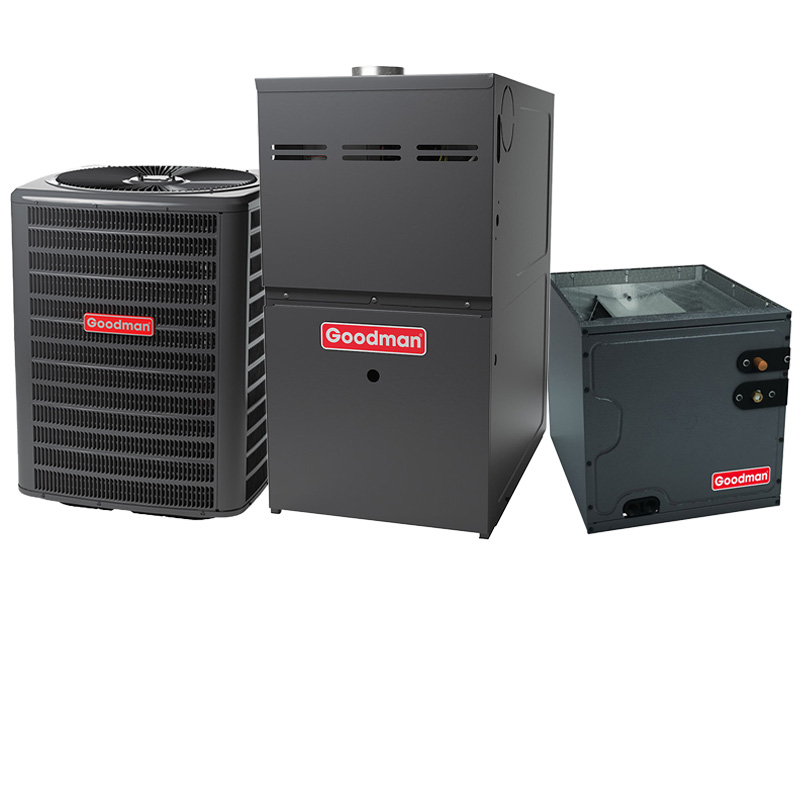
Goodman 5 Ton 14 SEER2 120000 BTU 80% AFUE Multi-Speed ECM Gas Furnace System – Upflow | R32
View on AC Direct see your lowest price →Check current price on AC Direct →
Key features
- 5-ton cooling capacity suited for larger homes up to roughly 3,500 sq ft
- 14 SEER2 efficiency rating meets current federal minimum standards
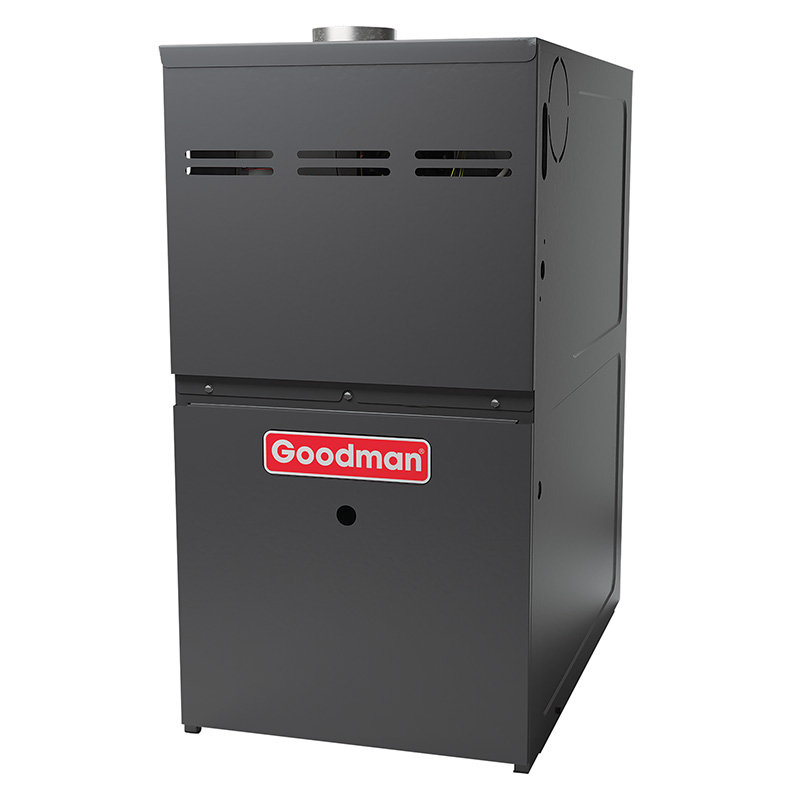
- 120,000 BTU, 80% AFUE gas furnace in upflow configuration
- Multi-speed ECM blower motor for improved airflow control and humidity management
- R-32 refrigerant with lower global warming potential than R-410A
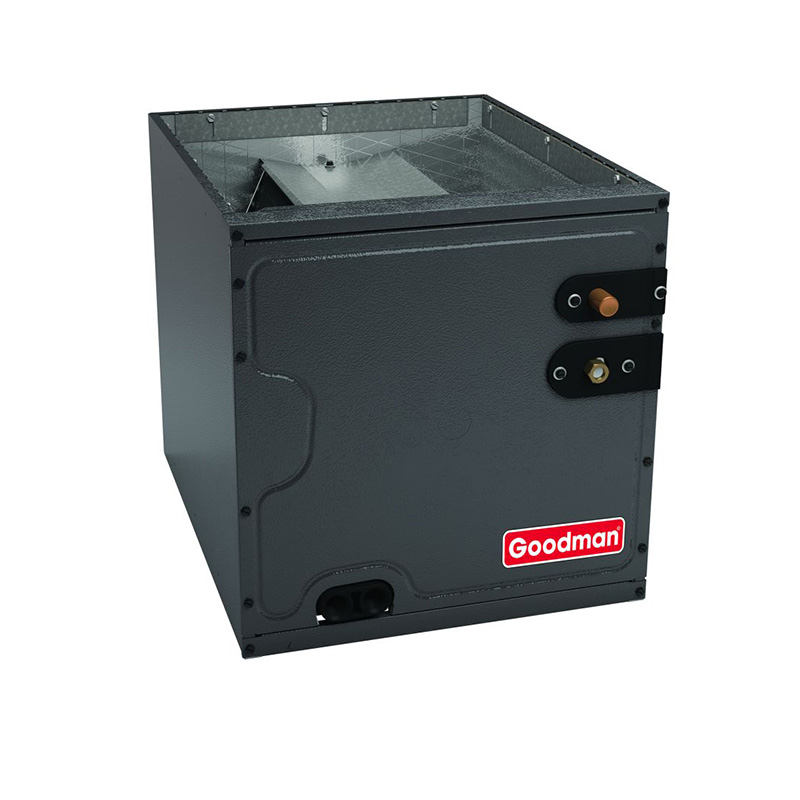
- Factory-matched system designed to simplify sizing and coil compatibility
About this system
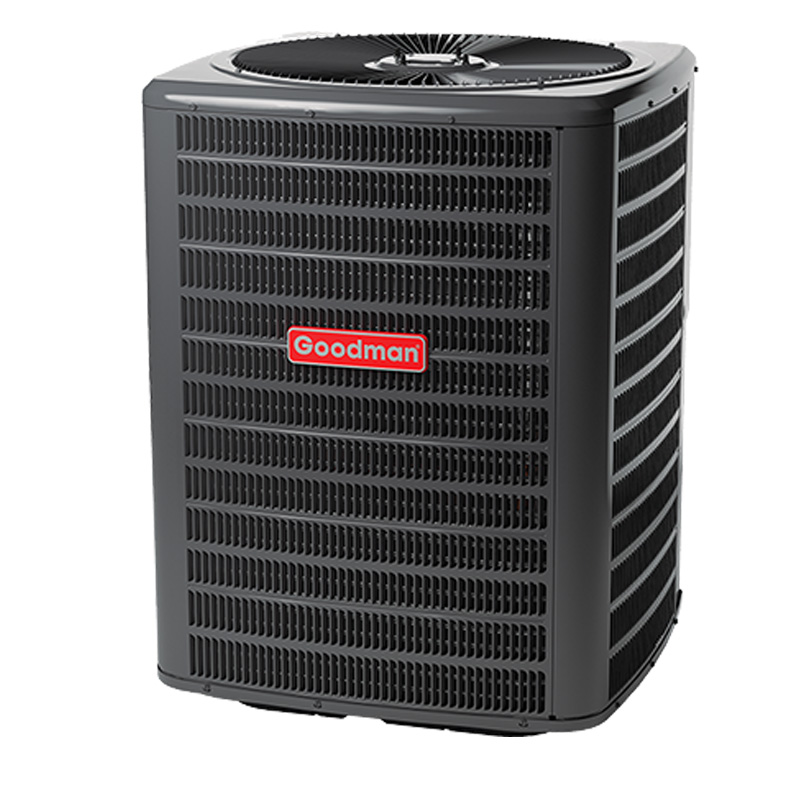
This Goodman bundle pairs a 5-ton, 14 SEER2 central air conditioner with a 120,000 BTU, 80% AFUE multi-speed ECM gas furnace in an upflow configuration, making it a straightforward choice for larger homes in the 2,500 to 3,500 square foot range that need serious heating and cooling capacity. The system uses R-32 refrigerant, a lower global-warming-potential option that is becoming more common in residential equipment as the industry moves away from R-410A. At 14 SEER2, efficiency sits at the current federal minimum for most U.S. climate regions, so operating costs will be higher than a 16 or 18 SEER2 system over a decade of use.
The multi-speed ECM blower motor is a meaningful step above a single-speed PSC motor: it adjusts airflow more precisely, improves humidity control, and consumes less electricity during the fan-only mode compared to older motor types. The 80% AFUE furnace is the entry-level efficiency tier for gas heat, meaning 20 cents of every dollar spent on gas exits through the flue. Homeowners in cold climates who run the furnace heavily through a long winter will feel that gap versus a 96% AFUE unit in their annual gas bills. That said, for mild to moderate heating climates or for buyers who prioritize lower upfront cost, this system covers the fundamentals without unnecessary complexity.
This Goodman system delivers a functional, budget-conscious solution for high-capacity residential heating and cooling, priced noticeably below comparable Carrier, Trane, and Lennox equipment. The 14 SEER2 efficiency and 80% AFUE are entry-level figures, so lifetime operating costs are higher than mid-tier or premium alternatives. Buyers who prioritize low upfront cost and have a qualified installer lined up will find real value here; buyers expecting premium longevity or low repair frequency should weigh the trade-offs carefully.
Overall score is the average of the five ratings above.
What we like
- Priced 15 to 25 percent below comparable Trane, Lennox, and Carrier systems
- Multi-speed ECM motor improves comfort and humidity control over single-speed alternatives
- R-32 refrigerant is environmentally preferable to R-410A and increasingly well-supported by technicians
- Factory-matched components reduce guesswork on coil and system compatibility
- Large 5-ton capacity covers high-square-footage homes without needing a supplemental system
Trade-offs
- 80% AFUE means 20% of gas heat is lost through the flue, adding up in cold climates over years of use
- 14 SEER2 is the efficiency floor, not a selling point, and will cost more to operate than higher-SEER2 alternatives
- Compressor lifespan averages 10 to 14 years, shorter than the 15 to 20 years documented for premium brands
- Documented failure modes include dual-run capacitor failures, evaporator coil leaks, and a minority of refrigerant leaks in year one, often tied to install quality
What homeowners and pros say about Goodman
Homeowners who have owned Goodman equipment tend to split into two camps. Those who had a skilled installer from day one often describe years of trouble-free operation and point to the lower purchase price as money they kept in their pocket. Those who ran into problems, particularly around year 7 and beyond, describe repair bills that eroded the original savings, a pattern consistent with Goodman’s ConsumerAffairs rating of roughly 2.5 out of 5, a score that channel skews toward frustrated owners but still reflects a real pattern of mid-life repair frequency. On Google dealer reviews, where the sample is broader and includes satisfied customers, Goodman systems average around 3.8 out of 5, with affordability cited most often as the reason buyers chose the brand.
HVAC technicians who work on Goodman equipment regularly say the dual-run capacitor is the call they expect most often, usually a quick fix in the 300 to 600 dollar range, but they also flag evaporator coil leaks as a recurring issue that shows up in owner reviews and is a more involved repair. Compressor longevity is another honest point of separation: Goodman compressors tend to average 10 to 14 years in real-world use, versus 15 to 20 years that technicians more commonly see with premium brands. The first-year refrigerant leak reports that surface in owner feedback are almost always traced to installation or initial charge quality rather than the equipment itself, which is why nearly every experienced technician says install quality is the single biggest variable in how long any Goodman system actually lasts.
Sources: ConsumerAffairs Goodman owner reviews, AHRI Directory of Certified Product Performance, U.S. DOE appliance and equipment efficiency standards, Goodman product specification sheets.
What it costs to run
At 14 SEER2, cooling this 5-ton system for a typical 1200-hour cooling season at the U.S. average electricity rate of $0.17/kWh works out to roughly $874 per year in cooling, about $39 less per year than a minimum-efficiency 13.4 SEER2 unit of the same size. Your real cost depends on your climate and local rate.
Method: (60,000 BTU/hr ÷ 14 SEER2) × 1200 hours ÷ 1000 × $0.17/kWh. Rate source: U.S. EIA average; cooling hours: moderate-climate estimate.
How it compares
| Brand | Comparable model | SEER2 | Stage | Price position |
|---|---|---|---|---|
| Goodman | 5-Ton 14 SEER2 / 120K BTU 80% AFUE Multi-Speed ECM Bundle | 14 | Multi-speed | Value pick |
| Carrier | Comfort 24ACC636 / 58TP 120,000 BTU | 14-15 | Single-stage | Moderately higher than Goodman, typically 15 to 20 percent more installed |
| Trane | XR14c / S9X1 120,000 BTU | 14-15 | Single-stage | Higher than Goodman, typically 20 to 25 percent more installed |
| Lennox | Merit ML14XC1 / ML196E 120,000 BTU | 14-15 | Single-stage | Higher than Goodman, typically 20 to 25 percent more installed |
Competitor rows are comparable single-stage units at similar efficiency; price is relative position, not a quote.
Questions about this system
Will a 5-ton system actually be right for my house, or is bigger always better?
Bigger is not better with HVAC. An oversized system short-cycles, meaning it starts and stops too frequently, which wears components faster and leaves humidity uncontrolled. A proper Manual J load calculation by your installer is the only reliable way to confirm 5 tons is the right size for your specific home, climate, and insulation level.
What does 80% AFUE actually mean for my gas bill compared to a 96% unit?
For every 100 dollars you spend on natural gas, 80 dollars becomes heat in your home and 20 dollars exits through the flue with an 80% AFUE furnace. A 96% AFUE unit keeps 96 dollars. In a cold climate running the furnace heavily from October through April, that 16-percentage-point gap adds up to a meaningful annual difference that can close the upfront price gap over 8 to 12 years.
Is R-32 refrigerant harder to find service for, or more expensive to recharge?
R-32 is increasingly common in residential equipment and most HVAC technicians are now certified to handle it. It is not yet as universally stocked as R-410A was at peak, so in some rural markets you may encounter a technician who needs to special-order it, but this is becoming less common each year.
What are the most likely repair costs I should plan for over the first 10 years?
The most commonly reported failure on Goodman equipment is the dual-run capacitor, which typically runs 300 to 600 dollars to diagnose and replace and is a straightforward repair. Evaporator coil leaks are a documented issue in owner reviews and are more costly, often in the 1,000 to 2,000 dollar range depending on labor market. A small percentage of owners have reported refrigerant leaks in year one, which is usually traced back to install or initial charge quality rather than a manufacturing defect.
Does Goodman's warranty require registration, and what does it actually cover?
Yes, Goodman requires product registration within a set window after installation to activate the full limited parts warranty, which is typically 10 years on covered components when registered by a licensed contractor. Failure to register on time typically reduces coverage to a shorter base period. The warranty covers parts, not labor, so factor in service call costs when estimating out-of-pocket repair expenses after year one.
Specifications
| Cooling capacity | 5 Ton |
| Efficiency | 14 SEER2 |
| Furnace output | 120000 BTU |
| Furnace efficiency | 80% AFUE |
| Configuration | Upflow |
| Refrigerant | R-32 |