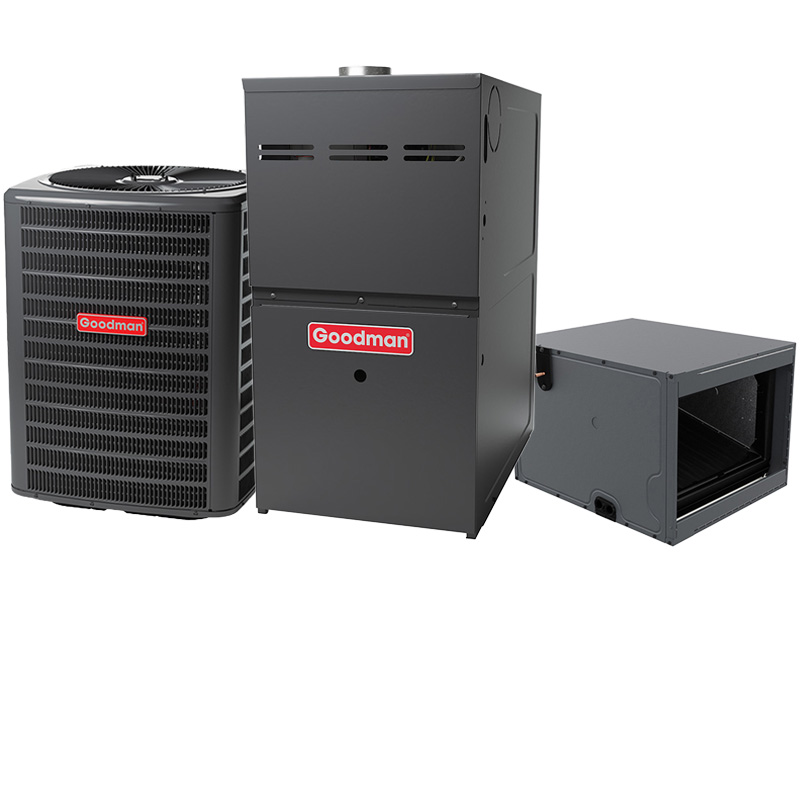
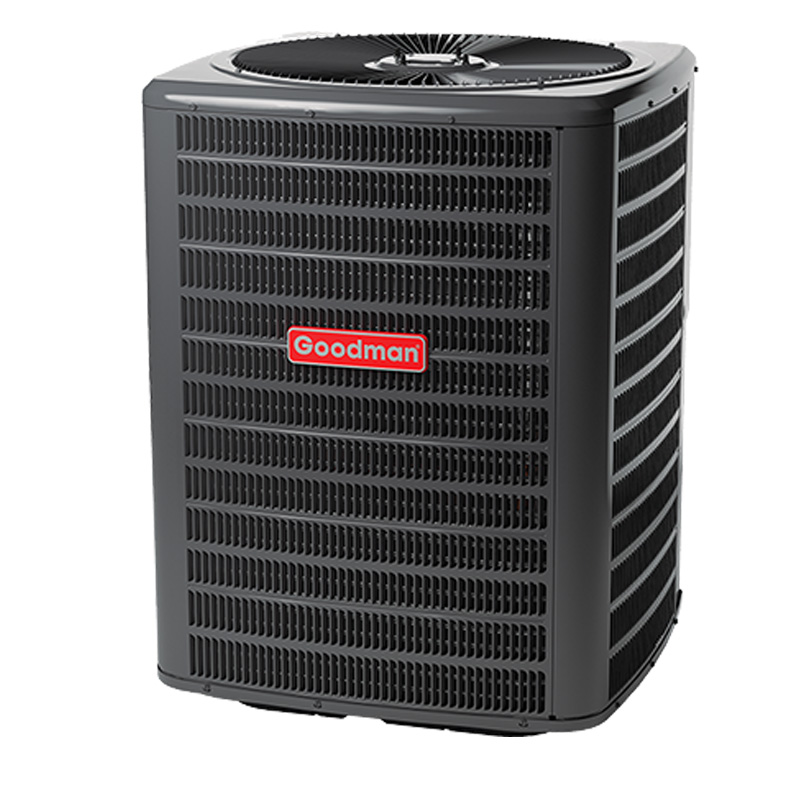
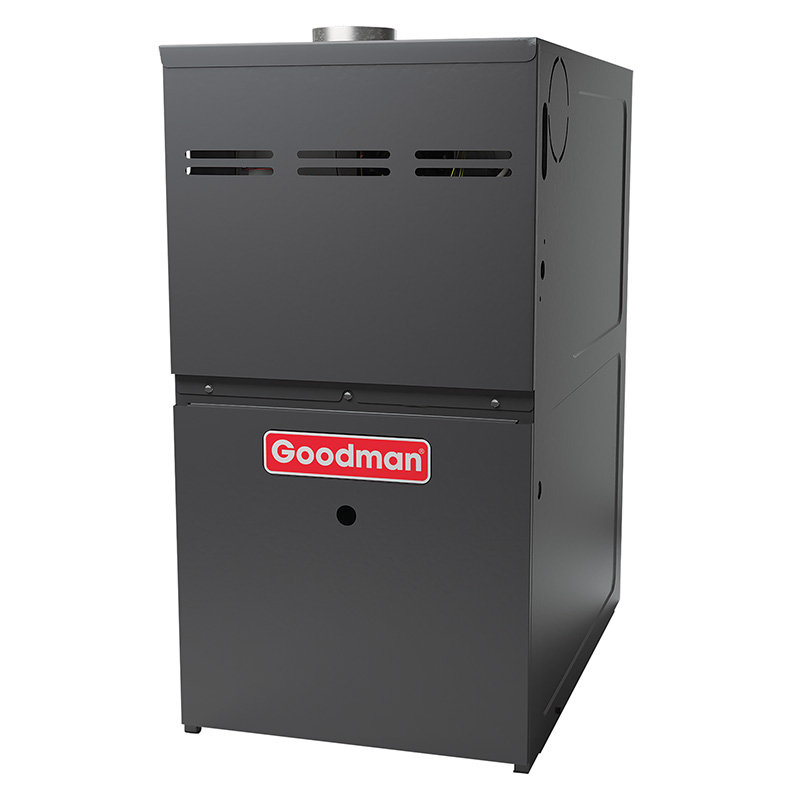
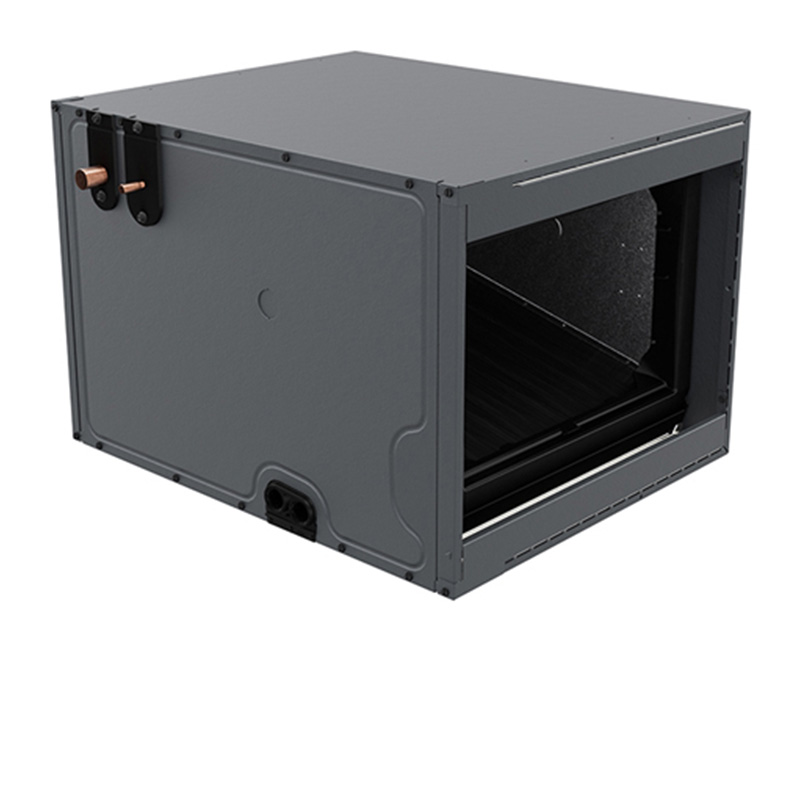
Goodman 1.5 Ton 14.5 SEER2 40000 BTU 80% AFUE Multi-Speed ECM Gas Furnace System – Horizontal | R32
View on AC Direct see your lowest price →Check current price on AC Direct →
Key features
- 14.5 SEER2 cooling efficiency meets or exceeds federal minimums for most U.S. climate zones
- 40,000 BTU 80% AFUE gas furnace sized for smaller spaces up to roughly 650 sq ft
- Multi-speed ECM blower motor reduces fan electricity use and improves airflow consistency
- Horizontal cabinet orientation designed for attic or tight-clearance crawl-space installs
- R-32 refrigerant with lower global warming potential than outgoing R-410A systems
- Value-tier pricing typically 15 to 25 percent below comparable Trane, Lennox, and Carrier units
About this system
This Goodman 1.5-ton horizontal system is built around a 14.5 SEER2 cooling split and an 80% AFUE gas furnace, making it a straightforward choice for smaller homes, condos, or additions in the 450 to 650 square foot range that need both heating and cooling from a single ducted system. The horizontal configuration targets attic installs or crawl-space applications where vertical clearance is limited, which narrows the audience to buyers with a specific mechanical room layout rather than a general-purpose install.
The 40,000 BTU furnace runs at 80% AFUE, meaning one dollar in five of your gas spend goes unused as exhaust. That is the federal minimum efficiency tier, not a high-efficiency category, so expect moderate heating bills compared to 90%-plus AFUE alternatives. On the cooling side, 14.5 SEER2 sits at the current federal baseline for many Northern climate zones and just above it for warmer regions, delivering adequate but not standout efficiency. The multi-speed ECM blower motor is the most notable spec upgrade here: it modulates airflow, reduces blower electricity consumption compared to a PSC motor, and tends to improve humidity control and comfort consistency versus single-speed alternatives. The system uses R-32 refrigerant, which has a lower global warming potential than R-410A and is becoming more common as the industry phases down older refrigerants.
This Goodman horizontal split is a budget-accessible entry point for a specific install situation, pairing a baseline-efficiency furnace with a competent ECM-equipped air handler at a price point most premium brands cannot touch. The trade-offs are real: 80% AFUE is the low end of the efficiency range, compressor longevity trails premium brands, and post-year-seven repair costs are a documented pattern with Goodman equipment. It earns its place for cost-conscious buyers with a horizontal-only install constraint, provided they use a vetted installer and budget for potential component replacements after the first decade.
Overall score is the average of the five ratings above.
What we like
- Priced 15 to 25 percent below comparable Carrier, Trane, and Lennox systems
- ECM multi-speed blower improves comfort and cuts fan operating costs versus single-speed motors
- R-32 refrigerant is more environmentally friendly than R-410A and increasingly well-supported by technicians
- Horizontal configuration solves a real install problem for attic and crawl-space applications where vertical units will not fit
- Goodman parts are widely stocked, keeping repair turnaround times short in most markets
Trade-offs
- 80% AFUE is the lowest efficiency tier available; homeowners in cold climates will notice the gap versus 90%-plus units on monthly gas bills
- Compressor lifespan averages 10 to 14 years versus 15 to 20 years typical of premium brands, raising long-term replacement risk
- Dual-run capacitor failures and evaporator coil leaks are documented recurring issues across owner reviews
- Goodman's ConsumerAffairs rating sits around 2.5 out of 5, with repair cost escalation after roughly year 7 as the most common complaint theme
What homeowners and pros say about Goodman
Among homeowners, Goodman draws a split reaction that shows up clearly in the data. On Google dealer review pages the brand averages around 3.8 out of 5 stars across several hundred reviews per location, with affordability consistently cited as the strongest point in its favor. On ConsumerAffairs, where the audience skews toward people who had problems, the score drops to roughly 2.5 out of 5, and the recurring complaint is not infant failure but repair costs that start climbing after roughly year seven. That pattern is worth taking seriously on a horizontal system like this one, where an attic location can make service calls more expensive simply due to access difficulty.
HVAC technicians who work on Goodman equipment regularly point to a short list of predictable weak spots on these systems. Dual-run capacitors are the most commonly flagged failure, though at 300 to 600 dollars a repair it is an inconvenience rather than a disaster, and Goodman parts availability is generally good. Evaporator coil leaks appear in a meaningful number of owner accounts, which is worth noting given that this system uses R-32, a refrigerant that should reduce environmental impact when leaks do occur but still represents a service expense. Compressor longevity is the longer-term concern: Goodman compressors tend to average 10 to 14 years in real-world use, against 15 to 20 years that premium brands typically deliver. Technicians across the board emphasize that install quality drives outcomes on Goodman equipment more than on higher-tier brands, so the choice of contractor matters as much as the equipment itself.
Sources: ConsumerAffairs Goodman owner reviews, AHRI Directory of Certified Product Performance, U.S. DOE appliance and equipment efficiency standards, Goodman product specification sheets.
What it costs to run
At 14.5 SEER2, cooling this 1.5-ton system for a typical 1200-hour cooling season at the U.S. average electricity rate of $0.17/kWh works out to roughly $253 per year in cooling, about $21 less per year than a minimum-efficiency 13.4 SEER2 unit of the same size. Your real cost depends on your climate and local rate.
Method: (18,000 BTU/hr ÷ 14.5 SEER2) × 1200 hours ÷ 1000 × $0.17/kWh. Rate source: U.S. EIA average; cooling hours: moderate-climate estimate.
How it compares
| Brand | Comparable model | SEER2 | Stage | Price position |
|---|---|---|---|---|
| Goodman | GMVC8 / CHPF horizontal split (this system) | 14.5 | Multi-speed | Value pick |
| Carrier | Comfort 80 / 24ACC6 split system | 14.5 | Single-stage | Moderately higher than this Goodman |
| Trane | XR14 / S80 split system | 14.5 | Single-stage | Moderately to notably higher than this Goodman |
| Lennox | Merit 14 / ML180 split system | 14.5 | Single-stage | Moderately higher than this Goodman |
Competitor rows are comparable single-stage units at similar efficiency; price is relative position, not a quote.
Questions about this system
Is an 80% AFUE furnace going to cost me noticeably more to heat my home than a 96% AFUE unit?
Yes, on a direct comparison roughly 16 cents of every heating dollar is lost as exhaust with an 80% AFUE furnace versus a 96% unit. For a smaller space this system is sized for, the absolute dollar difference is moderate, but in a cold climate it compounds over time. If your winters are mild or the heated space is small, the gap is less consequential.
What is R-32 refrigerant and will technicians be able to service it locally?
R-32 is a single-component refrigerant with a lower global warming potential than R-410A, and it is being adopted broadly across the HVAC industry. Most technicians in urban and suburban markets are already certified to handle it, though availability in rural areas may still be spottier. It is worth confirming your local service provider is equipped before committing.
What does the horizontal configuration actually mean for my install, and can this unit be flipped to vertical?
Horizontal means the air handler is designed to lie on its side, which suits attic platforms or cramped crawl spaces where a vertical cabinet would not clear the ceiling. This unit is configured specifically for horizontal orientation and is not simply a standard cabinet rotated; attempting to use it in a vertical application without a model confirmed for that position can affect condensate drainage and void installation warranties.
The capacitor failures mentioned in reviews sound concerning. How expensive is that repair typically?
Dual-run capacitor replacement is one of the most common and most affordable HVAC repairs, typically running between 300 and 600 dollars including a service call. It is not a catastrophic failure, and Goodman parts are widely stocked, so turnaround is usually fast. Keeping a service contract or setting aside a small annual maintenance budget addresses this risk.
Does Goodman's warranty on this system require professional installation, and what does it actually cover?
Goodman requires registration by a licensed HVAC contractor within a set window after install to activate the full parts warranty, which for residential equipment typically runs ten years on covered components. DIY installation or failure to register on time usually reduces coverage to a shorter base period. Read the specific warranty documentation for this model carefully before signing any install contract, and confirm your contractor will handle the registration.
Specifications
| Cooling capacity | 1.5 Ton |
| Efficiency | 14.5 SEER2 |
| Furnace output | 40000 BTU |
| Furnace efficiency | 80% AFUE |
| Configuration | Horizontal |
| Refrigerant | R-32 |