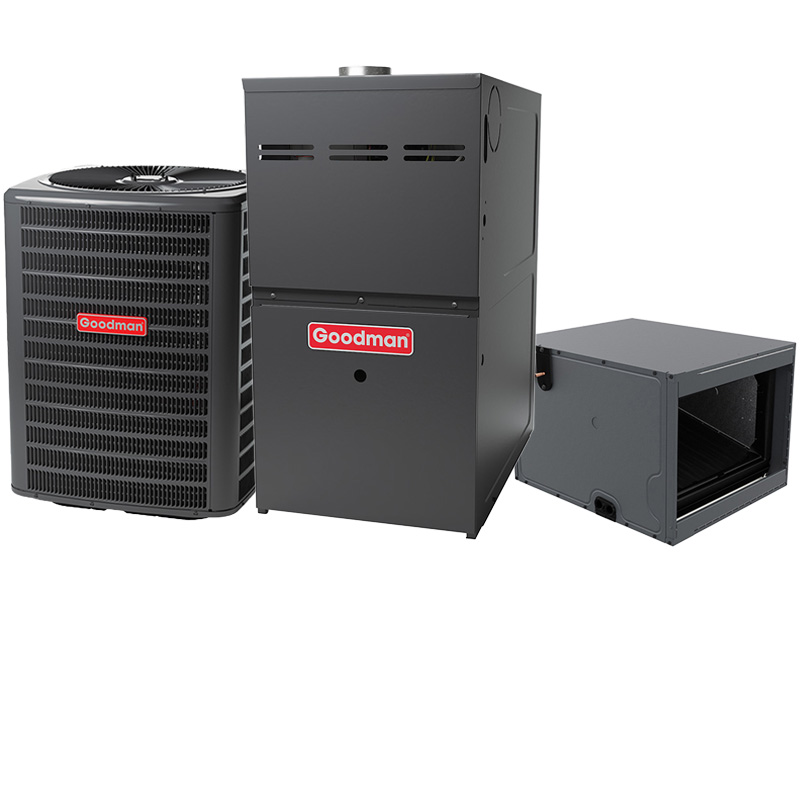
Goodman 2.5 Ton 15.2 SEER2 80000 BTU 80% AFUE Multi-Speed ECM Gas Furnace System – Horizontal | R32
View on AC Direct see your lowest price →Check current price on AC Direct →
Key features
- 2.5-ton cooling capacity matched to roughly 1,200 to 1,600 sq ft homes
- 15.2 SEER2 efficiency, just above current federal minimums for most regions
- 80,000 BTU, 80% AFUE gas furnace for moderate-climate heating
- Multi-speed ECM blower motor reduces electricity use and improves humidity control
- Horizontal configuration designed for attic, crawl space, or closet installs
- R-32 refrigerant charge with lower global warming potential than R-410A
About this system
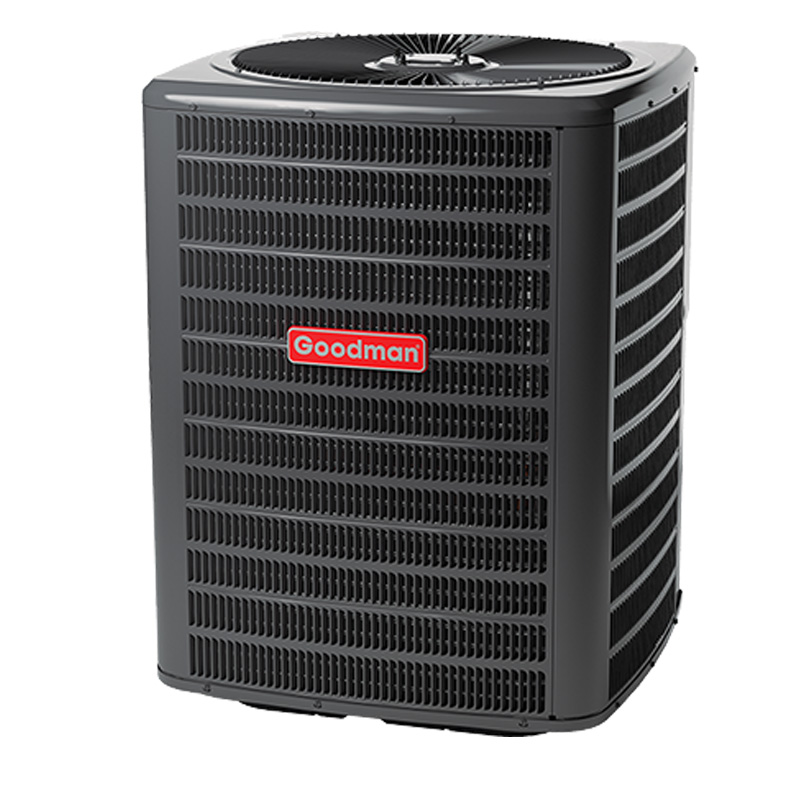
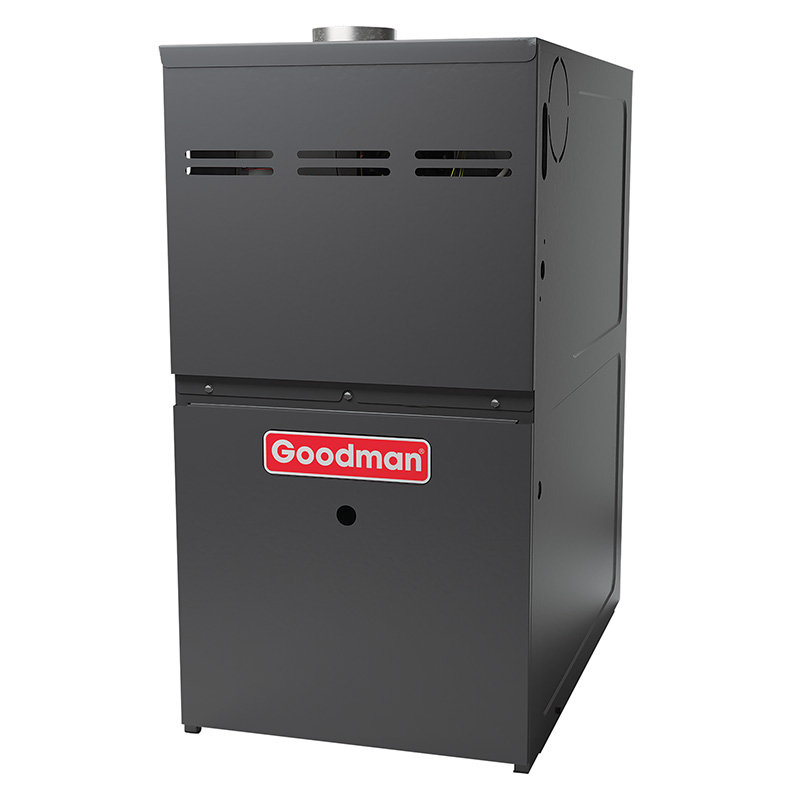
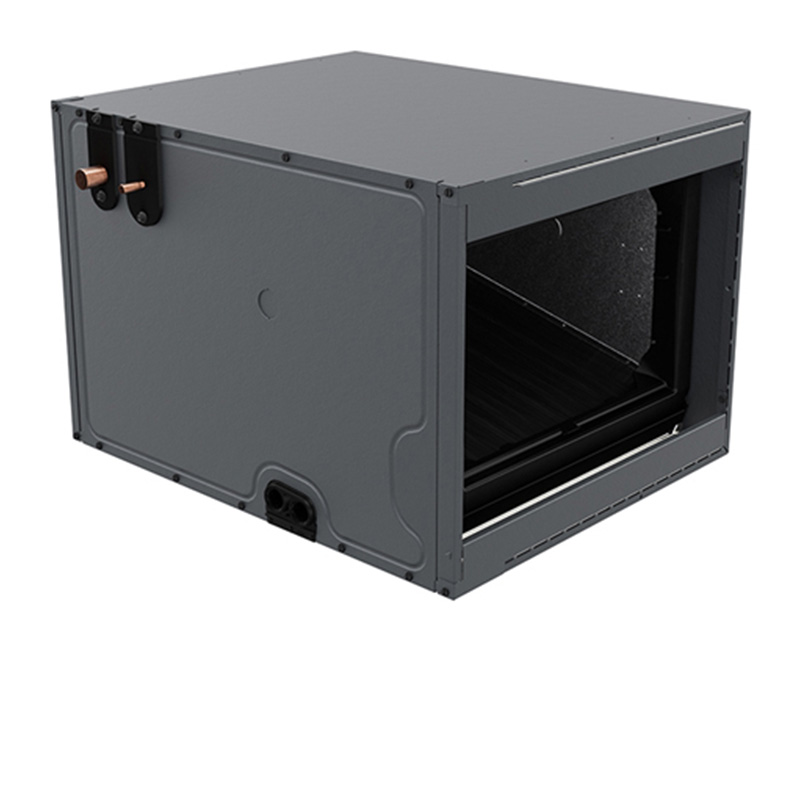
The Goodman 2.5-ton, 15.2 SEER2 horizontal split system pairs a multi-speed ECM air handler with an 80,000 BTU, 80% AFUE gas furnace, making it a practical choice for homes in the 1,200 to 1,600 square foot range that need both cooling and heating from a single matched set. The horizontal configuration is built for tight spaces where vertical installation is not possible, including attics with low clearance, crawl spaces, and closet alcoves, so if your ductwork runs through those areas this orientation can simplify the install considerably. The R-32 refrigerant charge is a step forward environmentally, carrying a lower global warming potential than the R-410A it replaces, and it is already the standard for new residential equipment in many markets.
On the efficiency side, 15.2 SEER2 sits just above the current federal minimum for most U.S. climate zones, which means operating costs will be modestly better than a baseline unit but will not rival the savings of a 17 or 18 SEER2 system. The 80% AFUE furnace converts eight of every ten units of gas into heat, which is adequate for moderate-climate homes but leaves money on the table compared to a 96% AFUE condensing furnace in regions with long, cold winters. The ECM blower motor does help by using less electricity than a standard PSC motor, and multi-speed operation lets the system match airflow to actual demand rather than blasting at full capacity every cycle, which improves comfort and humidity control.
This Goodman system offers a solid entry point for homeowners who need a matched cooling and heating package without stretching to premium brand pricing, and the ECM motor and R-32 refrigerant are genuine upgrades over older baseline equipment. The efficiency figures are respectable but not exceptional, and long-term ownership costs depend heavily on how well the system is installed and maintained. It is a reasonable buy for budget-conscious owners in mild to moderate climates who plan to keep up with routine service.
Overall score is the average of the five ratings above.
What we like
- Priced 15 to 25 percent below comparable Carrier, Trane, and Lennox systems, reducing upfront cost
- ECM blower motor cuts fan electricity use compared to standard PSC motors
- Horizontal configuration opens up installation options in attics and low-clearance spaces
- R-32 refrigerant is more environmentally responsible than R-410A
- Factory-matched system reduces guesswork on compatibility between the coil, furnace, and condenser
Trade-offs
- 80% AFUE furnace is below the efficiency of mid-tier and premium condensing options, raising heating bills in cold climates
- Compressor lifespan averages 10 to 14 years, shorter than the 15 to 20 years often seen with premium brands
- Documented owner reports of evaporator coil leaks and dual-run capacitor failures after year 7, which add to long-term service costs
- Performance depends significantly on installer quality, so a poor setup can undercut the system's rated efficiency and lifespan
What homeowners and pros say about Goodman
Goodman consistently earns praise for affordability, and that pattern holds with systems like this one. Google dealer reviews across Goodman installers average around 3.8 out of 5, with the most repeated compliment being that buyers got reliable cooling and heating without paying Carrier or Trane prices. Contractors who work with Goodman equipment regularly tend to say the same thing: the units are straightforward to install and parts are easy to source, which keeps service calls manageable in the early years. The caution they add just as consistently is that the install itself is where this equipment either performs or falls short, and a rushed or imprecise setup will surface problems faster than it would on a premium unit.
The longer-term picture is more mixed. ConsumerAffairs scores for Goodman sit around 2.5 out of 5, and while that platform skews toward frustrated owners rather than satisfied ones, the recurring complaints are specific enough to take seriously: repair costs that start climbing after roughly year 7, dual-run capacitor failures that are annoying but usually inexpensive to fix, evaporator coil leaks that are more disruptive, and compressor lifespans that average 10 to 14 years rather than the 15 to 20 years more commonly reported on premium brands. A small share of owners also report refrigerant leaks in the first year, which professionals typically trace back to installation or initial charge issues rather than a defect in the unit itself. The honest read is that this system rewards buyers who choose a skilled installer, register the warranty promptly, and schedule annual tune-ups, and it underperforms for those who treat it as a set-and-forget purchase.
Sources: ConsumerAffairs Goodman owner reviews, AHRI Directory of Certified Product Performance, U.S. DOE appliance and equipment efficiency standards, Goodman product specification sheets.
What it costs to run
At 15.2 SEER2, cooling this 2.5-ton system for a typical 1200-hour cooling season at the U.S. average electricity rate of $0.17/kWh works out to roughly $403 per year in cooling, about $54 less per year than a minimum-efficiency 13.4 SEER2 unit of the same size. Your real cost depends on your climate and local rate.
Method: (30,000 BTU/hr ÷ 15.2 SEER2) × 1200 hours ÷ 1000 × $0.17/kWh. Rate source: U.S. EIA average; cooling hours: moderate-climate estimate.
How it compares
| Brand | Comparable model | SEER2 | Stage | Price position |
|---|---|---|---|---|
| Goodman | 2.5T 15.2 SEER2 / 80K BTU 80% AFUE ECM Horizontal R-32 | 15.2 | Multi-speed | Value pick |
| Carrier | Comfort 24ACC6 series with 80% AFUE 58MCA furnace | 15.2 | Single-stage | Typically 15 to 20 percent more than this Goodman |
| Trane | XR15 condenser with S8B1 80% AFUE furnace | 15.0 | Single-stage | Typically 20 to 25 percent more than this Goodman |
| Lennox | Merit ML15XC1 condenser with ML180 80% AFUE furnace | 15.1 | Single-stage | Typically 20 to 25 percent more than this Goodman |
Competitor rows are comparable single-stage units at similar efficiency; price is relative position, not a quote.
Questions about this system
Is 15.2 SEER2 good enough to get a federal tax credit?
To qualify for the 25C energy efficiency tax credit, a split system heat pump must meet specific efficiency thresholds, but a gas furnace and AC combination like this one falls under different criteria. As of current IRS guidance, the furnace must be 97% AFUE or higher to qualify on its own, and the AC portion must meet regional efficiency minimums. This system's 80% AFUE furnace does not qualify for the furnace credit, so you should verify current IRS requirements with a tax professional before counting on any rebate.
Why is the horizontal configuration important, and can I install it vertically?
Horizontal configuration means the air handler is designed to lie on its side, with airflow moving from one end to the other, which suits attics, crawl spaces, and tight utility closets where standing a unit upright is not practical. Using a horizontal-rated unit in a vertical orientation is not recommended and can cause drainage and airflow problems. If you need vertical installation, you would want to confirm the specific model number allows upflow or downflow before purchasing.
What is R-32 refrigerant and will it cost more to service?
R-32 is a single-component refrigerant with a lower global warming potential than the R-410A it is replacing across the industry. It is mildly flammable, which means technicians need A2L certification to handle it, and not every HVAC technician in all markets is currently certified. Service availability is growing quickly as R-32 systems become more common, but it is worth confirming your local service contractors are equipped before committing.
What are the most common repairs to budget for on a Goodman system like this?
Dual-run capacitors are the most frequently reported failure, typically showing up after several years of use and usually costing between 300 and 600 dollars to replace, which is a relatively minor repair. Evaporator coil leaks appear in a meaningful share of owner accounts and are more expensive to address. Compressors on Goodman equipment tend to last 10 to 14 years on average, so budgeting for a potential compressor replacement or full system swap in that timeframe is prudent.
Does Goodman require professional registration to activate the warranty?
Yes, Goodman's longer parts warranty, typically 10 years on registered units, requires the equipment to be installed by a licensed contractor and registered within a set window after installation, usually 60 days. Unregistered units fall back to a shorter base warranty period. Make sure your installer completes the registration and provides you the confirmation, because that step is easy to skip and difficult to reverse after the deadline passes.
Specifications
| Cooling capacity | 2.5 Ton |
| Efficiency | 15.2 SEER2 |
| Furnace output | 80000 BTU |
| Furnace efficiency | 80% AFUE |
| Configuration | Horizontal |
| Refrigerant | R-32 |