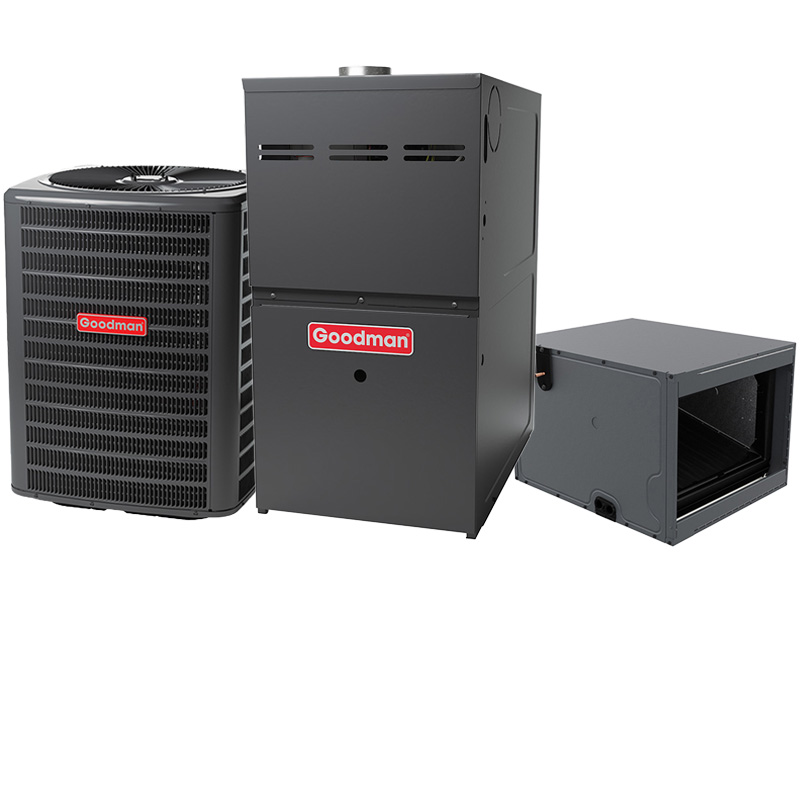
Goodman 2.5 Ton 15.2 SEER2 60000 BTU 80% AFUE Multi-Speed ECM Gas Furnace System – Horizontal | R32
View on AC Direct see your lowest price →Check current price on AC Direct →
Key features
- 15.2 SEER2 cooling efficiency, meeting and exceeding current federal minimums
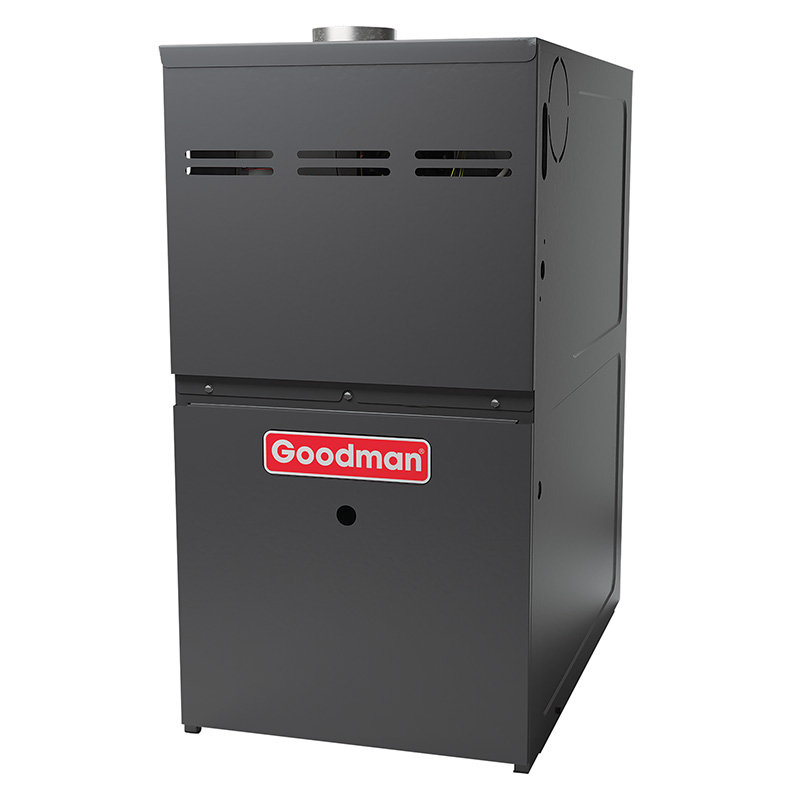
- 60,000 BTU 80% AFUE multi-speed gas furnace for horizontal installations
- ECM blower motor reduces electricity use and improves humidity control vs. PSC motors
- R-32 refrigerant with lower global warming potential than R-410A
- 2.5-ton capacity suited to roughly 1,200 to 1,600 sq ft depending on load
- Matched system design allows Goodman's full parts and labor warranty eligibility
About this system
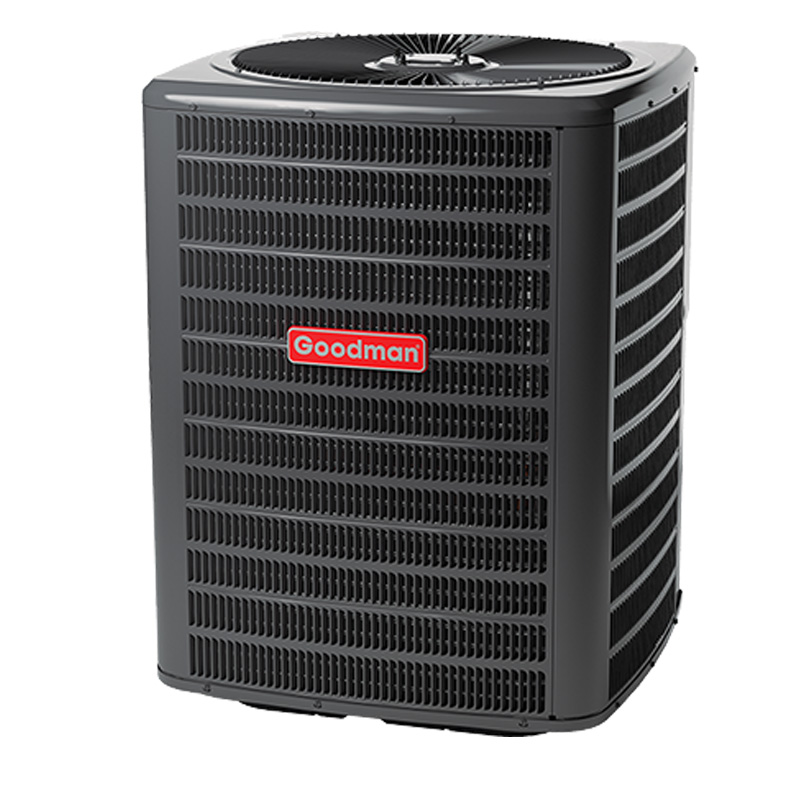
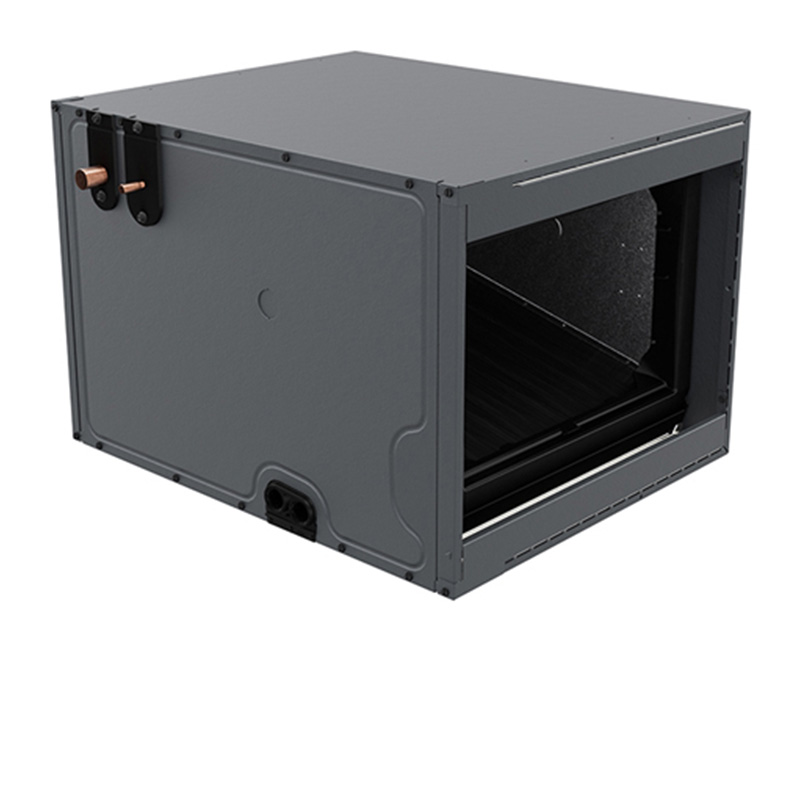
This Goodman 2.5-ton system pairs a 15.2 SEER2 R-32 air conditioner with a 60,000 BTU 80% AFUE multi-speed ECM gas furnace configured for horizontal installation, making it a practical choice for homes with attic or crawl-space air handlers where vertical upflow is not an option. The 2.5-ton cooling capacity suits most homes in the 1,200 to 1,600 square-foot range, though actual sizing depends on local climate, insulation, and Manual J load calculations. R-32 refrigerant carries a lower global warming potential than the R-410A it replaces, and most jurisdictions will see R-32 become the standard as R-410A is phased down.
The 15.2 SEER2 rating lands at the entry-to-mid efficiency tier. It clears federal minimum thresholds with some room to spare, which means lower operating costs than a base-level unit, but it will not produce the energy savings of a 17 SEER2 or higher variable-speed system. The 80% AFUE furnace means 20 cents of every heating dollar goes up the flue, which is acceptable in mild to moderate climates but less competitive against 96% AFUE condensing furnaces in cold regions with long heating seasons. The multi-speed ECM blower motor improves comfort and humidity control compared to single-speed PSC motors and draws less electricity during most operating hours.
Goodman positions this bundle as a cost-accessible system for homeowners who want a recognizable brand, a warranty safety net, and lower upfront cost rather than top-tier efficiency or longevity. It suits replacement projects in older homes, budget-conscious new construction, and rental properties where the owner wants reliable function without premium brand pricing.
This Goodman horizontal bundle delivers solid entry-to-mid efficiency at a price point that undercuts Carrier, Trane, and Lennox by a meaningful margin, making it a reasonable choice for budget-focused replacements. The 80% AFUE furnace and 15.2 SEER2 rating are functional rather than exceptional, and long-term ownership costs depend heavily on install quality and the luck of the draw on a few documented failure points. Buyers who prioritize upfront savings over premium longevity will find fair value here; those in cold climates or planning a 20-year horizon should weigh the trade-offs carefully.
Overall score is the average of the five ratings above.
What we like
- Priced 15 to 25 percent below comparable Trane, Lennox, and Carrier systems
- ECM multi-speed blower improves comfort and lowers blower electricity costs vs. single-speed units
- R-32 refrigerant is forward-compatible as R-410A is phased out
- Horizontal configuration expands installation options for attic and crawl-space setups
- Matched system qualifies for Goodman's full parts and labor warranty when registered
Trade-offs
- 80% AFUE is noticeably less efficient than 90-plus percent condensing furnaces, adding to annual heating costs in cold climates
- Compressor lifespan averages 10 to 14 years, shorter than the 15 to 20 years reported for premium brands
- Dual-run capacitor failures and evaporator coil leaks are the most commonly documented owner complaints after year 7
- A minority of owners report refrigerant leaks within the first year, typically traced to installation or charge issues rather than factory defects
What homeowners and pros say about Goodman
Homeowners who research Goodman online encounter a mixed picture. On ConsumerAffairs, the brand scores around 2.5 out of 5, a channel that skews toward people who had problems, and the recurring theme in those complaints is repair bills climbing after roughly year 7. Google dealer reviews are more balanced, averaging around 3.8 out of 5 across hundreds of reviews per location, where affordability is the most frequently cited positive. The gap between those two scores reflects a real split in ownership experience: buyers who got a clean installation and hit the maintenance schedule tend to be satisfied, while those who ran into the documented failure points, particularly dual-run capacitor failures and evaporator coil leaks, often feel the savings evaporated in repair costs.
HVAC technicians who service Goodman equipment repeatedly point to installation quality as the variable that separates good outcomes from bad ones. The capacitor issue is widely acknowledged as the system’s most common repair, generally quick and inexpensive when caught early. Coil leaks are a more frustrating and costly problem for the share of owners who experience them. On the refrigerant side, the first-year leak complaints that show up in reviews are typically attributed to installer error or improper charge rather than factory defects, which underscores why choosing a skilled, licensed contractor matters at least as much as choosing the equipment itself. For this horizontal-configuration unit specifically, that installation care extends to proper leveling, condensate management, and adequate service clearance in tight attic or crawl-space situations.
Sources: ConsumerAffairs Goodman owner reviews, AHRI Directory of Certified Product Performance, U.S. DOE appliance and equipment efficiency standards, Goodman product specification sheets.
What it costs to run
At 15.2 SEER2, cooling this 2.5-ton system for a typical 1200-hour cooling season at the U.S. average electricity rate of $0.17/kWh works out to roughly $403 per year in cooling, about $54 less per year than a minimum-efficiency 13.4 SEER2 unit of the same size. Your real cost depends on your climate and local rate.
Method: (30,000 BTU/hr ÷ 15.2 SEER2) × 1200 hours ÷ 1000 × $0.17/kWh. Rate source: U.S. EIA average; cooling hours: moderate-climate estimate.
How it compares
| Brand | Comparable model | SEER2 | Stage | Price position |
|---|---|---|---|---|
| Goodman | 2.5T 15.2 SEER2 / 80% AFUE Horizontal R-32 Bundle | 15.2 | Multi-speed | Value pick |
| Carrier | Comfort 15 (24ACC6) with 58SC gas furnace | 15.0-15.5 | Single-stage | Moderately higher than Goodman |
| Trane | XR15 (4TTR5) with S8X1 80% AFUE furnace | 15.0-15.5 | Single-stage | Moderately to significantly higher than Goodman |
| Lennox | Merit ML15 with ML180 80% AFUE furnace | 15.1-15.5 | Single-stage | Moderately higher than Goodman |
Competitor rows are comparable single-stage units at similar efficiency; price is relative position, not a quote.
Questions about this system
Why does this system use R-32 instead of R-410A, and does that affect service costs?
R-32 is a next-generation refrigerant with a lower global warming potential that is replacing R-410A as federal regulations phase it down. Most HVAC technicians are transitioning their equipment to handle R-32, but in some rural markets you may find fewer technicians currently certified to work with it. Over time, availability should improve as R-32 becomes the industry standard.
Is 80% AFUE enough for my climate, or should I upgrade to a higher-efficiency furnace?
In the South and most of the West, where heating seasons are short, 80% AFUE is generally considered adequate and the payback period on a 96% AFUE furnace can stretch beyond 10 years. In the Midwest and Northeast, where gas heat runs for five or more months, the 20-cent-per-dollar flue loss of an 80% furnace adds up noticeably, and a condensing furnace often pays back the price difference faster.
What is the most common repair this system will need, and roughly what does it cost?
Based on documented owner experience, dual-run capacitor failure is the most frequently reported issue on Goodman equipment, typically surfacing after year 7. Capacitor replacement is usually a straightforward repair in the $300 to $600 range including a service call. Evaporator coil leaks are a less frequent but more expensive problem, and a small share of owners have reported refrigerant issues in the first year that were traced to installation or improper charge.
Does horizontal configuration affect efficiency or performance compared to upflow installation?
Orientation does not change the rated SEER2 or AFUE numbers, but horizontal installs require careful attention to condensate drainage and adequate clearances for airflow and service access. A properly executed horizontal installation performs identically to an upflow setup; shortcuts in leveling or drainage are a common source of problems in attic and crawl-space jobs.
What warranty comes with this system, and what do I need to do to activate it?
Goodman typically offers a 10-year parts warranty on registered systems and includes a labor warranty component on matched, registered systems, though exact terms should be confirmed at purchase since coverage details can vary by model and distributor. You generally need to register the unit with Goodman within 60 days of installation to receive the full warranty period; failing to register usually drops coverage to a shorter base term. Always confirm current warranty terms directly with Goodman or your installing dealer before purchase.
Specifications
| Cooling capacity | 2.5 Ton |
| Efficiency | 15.2 SEER2 |
| Furnace output | 60000 BTU |
| Furnace efficiency | 80% AFUE |
| Configuration | Horizontal |
| Refrigerant | R-32 |