Goodman 3 Ton 15.2 SEER2 80000 BTU 80% AFUE Two Stage Multi-Speed ECM Gas Furnace System – Upflow | R32
View on AC Direct see your lowest price →Check current price on AC Direct →
Key features
- 15.2 SEER2 cooling efficiency meets current federal minimums for most U.S. regions
- Two-stage furnace operation at 80,000 BTU and 80% AFUE for more even heat delivery
- Multi-speed ECM blower motor reduces fan energy use and improves dehumidification
- R-32 refrigerant with lower global-warming potential than R-410A
- Upflow configuration designed for basement or utility closet installations
- Factory-matched system components designed to work together for consistent airflow
About this system
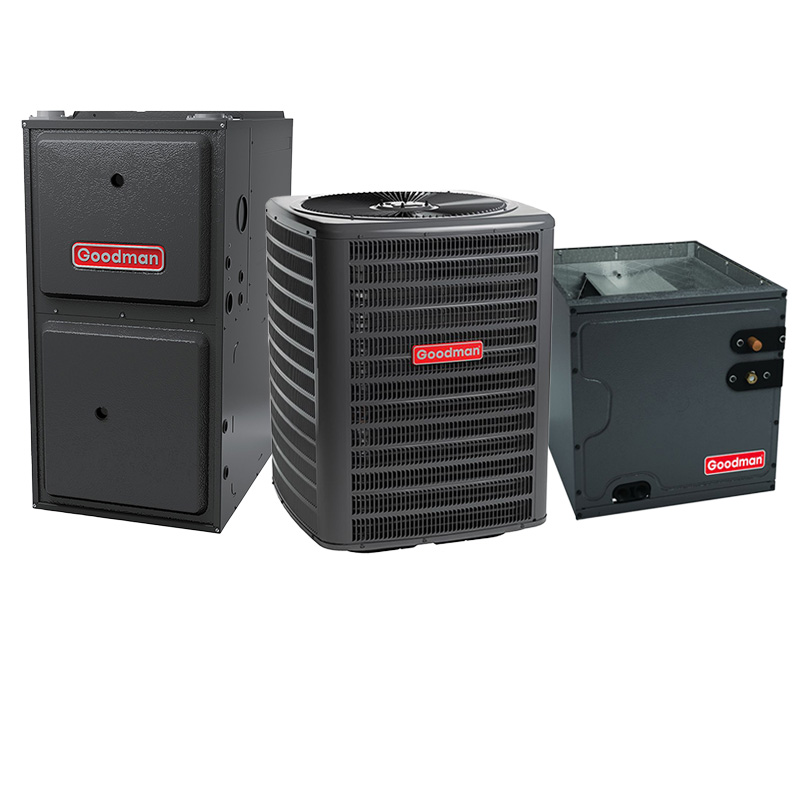
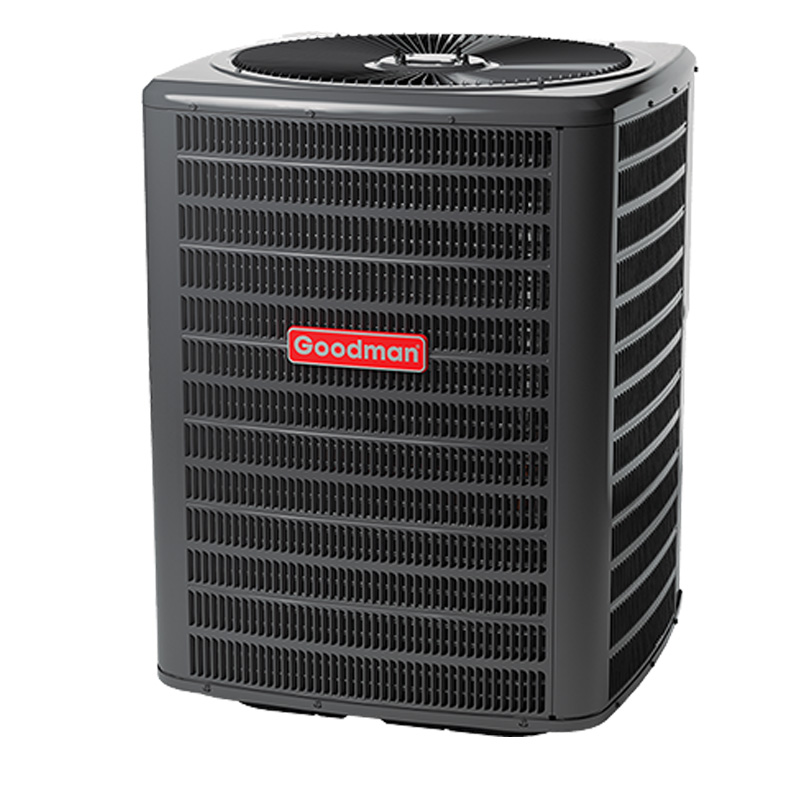
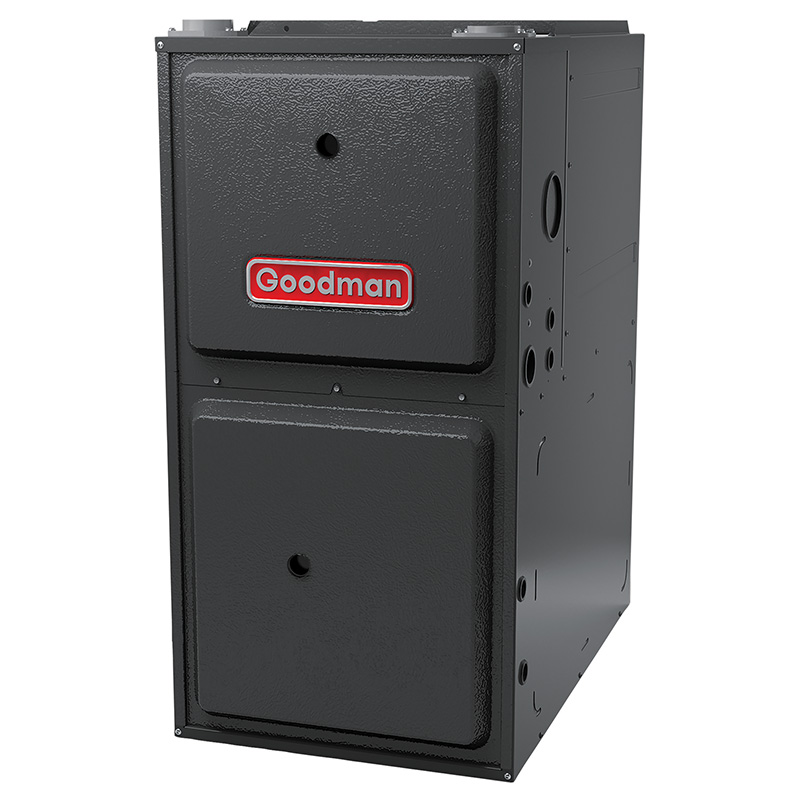
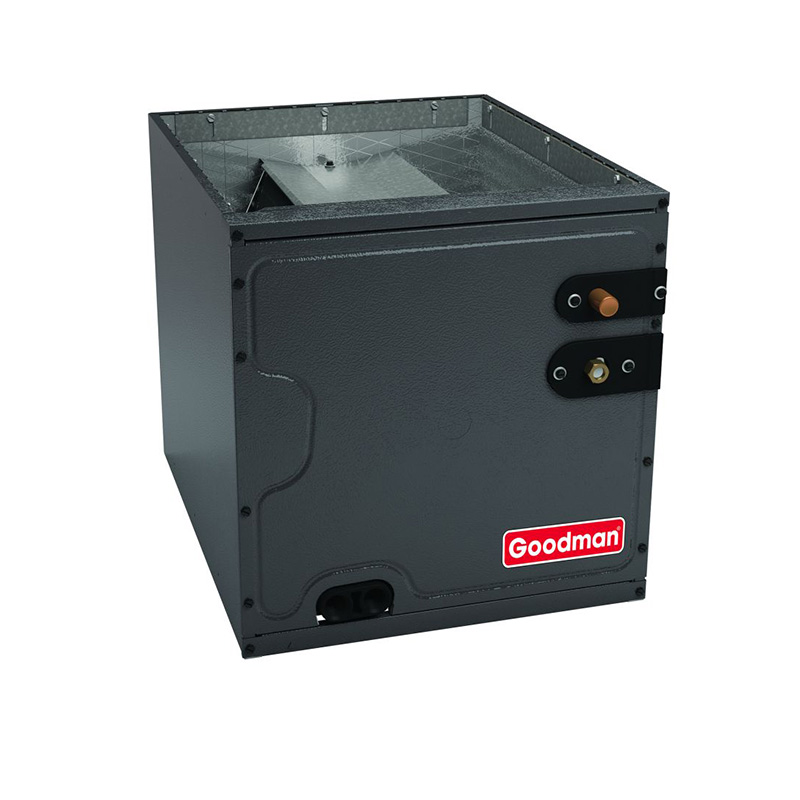
The Goodman GLXS4BA3610 pairs a 3-ton, 15.2 SEER2 split-system air conditioner with an 80,000 BTU, 80% AFUE two-stage gas furnace in an upflow configuration. It uses R-32 refrigerant, which carries a lower global-warming potential than R-410A and is becoming the new standard as the industry moves away from older refrigerants. The two-stage furnace fires at a reduced capacity on mild days and steps up to full output only when temperatures demand it, which smooths out temperature swings and tends to run quieter than a single-stage unit cycling on and off at full blast.
The multi-speed ECM blower motor is one of the more practical upgrades in this price tier. ECM motors use significantly less electricity than standard PSC motors and give the system better dehumidification on long, low-demand cooling cycles. Together, those features make this system a reasonable fit for a mid-size home in a mixed climate where both heating and cooling loads are moderate. At 15.2 SEER2 the cooling efficiency clears the federal minimum for most U.S. regions but sits at the lower end of what the market now offers, so buyers in hot climates should weigh whether stepping up to a higher SEER2 unit makes sense for their utility rates.
This is an upflow-only configuration, meaning the furnace must be installed in a basement, crawlspace, or utility closet where supply air travels upward through the duct system. If your existing ductwork runs in that direction and your home falls in the 1,400 to 2,000 square-foot range with average insulation, the 3-ton sizing is likely appropriate, though a proper Manual J load calculation by a licensed contractor should always confirm that before any equipment is purchased.
This Goodman bundle delivers a functional two-stage heating and cooling system at a price point that undercuts comparable equipment from Carrier, Trane, and Lennox by a meaningful margin. The efficiency specs are adequate rather than impressive, and long-term ownership costs depend heavily on installation quality and a willingness to budget for component repairs after the first several years. Buyers who want maximum reliability and minimal service calls will find better track records elsewhere, but for cost-conscious homeowners with access to a skilled installer, this system offers a workable return on a tight budget.
Overall score is the average of the five ratings above.
What we like
- Two-stage furnace and ECM blower provide more consistent comfort than a basic single-stage system
- R-32 refrigerant positions the system ahead of older R-410A units for long-term regulatory compatibility
- Price typically runs 15 to 25 percent below equivalent Carrier, Trane, and Lennox systems
- Factory-matched components reduce the guesswork around airflow and charge calculations
- Widespread parts availability and a large installer network make service calls relatively straightforward
Trade-offs
- 80% AFUE is the lowest efficiency tier available for gas furnaces and will cost more to operate than 96% AFUE alternatives in colder climates
- 15.2 SEER2 sits at the entry level of current efficiency standards and offers limited utility savings compared to 17 or 18 SEER2 options
- Dual-run capacitors and evaporator coil leaks are the most commonly documented repair issues, with repair costs often climbing after year 7
- Compressor lifespan averages 10 to 14 years, roughly shorter than the 15 to 20 years reported for premium brands
What homeowners and pros say about Goodman
Homeowners who have lived with Goodman equipment share a fairly consistent picture: the system runs reliably for the first several years, and the lower purchase price is the most frequently praised feature in Google dealer reviews, which average around 3.8 out of 5 across dealer locations. That score reflects a satisfied-but-not-enthusiastic ownership experience. The ConsumerAffairs profile tells a harder story, sitting at roughly 2.5 out of 5, a platform that tends to attract owners with grievances, and the recurring complaint is repair bills that start accumulating after about year 7. That pattern lines up with documented failure data: dual-run capacitors are the most commonly reported component failure, usually a manageable 300 to 600 dollar repair, but evaporator coil leaks are also a recurring theme and cost considerably more to address.
HVAC professionals generally describe Goodman as a brand where their own work determines the outcome as much as the equipment does. A small but real share of early-warranty calls trace back to refrigerant issues from charging problems rather than factory faults, which means choosing a meticulous installer is arguably more important here than with premium brands. The compressor lifespan data adds another honest consideration: Goodman compressors tend to average 10 to 14 years in service, versus the 15 to 20 years that Carrier, Trane, and Lennox units more commonly achieve. For a homeowner who prices out the total cost of ownership over 15 years, including one or two capacitor replacements and the possibility of a compressor or coil service call, the upfront savings can narrow. For a buyer with a firm budget today and a realistic view of that trade-off, this two-stage system with its ECM motor is one of the more capable options at the Goodman price point.
Sources: ConsumerAffairs Goodman owner reviews, AHRI Directory of Certified Product Performance, U.S. DOE appliance and equipment efficiency standards, Goodman product specification sheets.
What it costs to run
At 15.2 SEER2, cooling this 3-ton system for a typical 1200-hour cooling season at the U.S. average electricity rate of $0.17/kWh works out to roughly $483 per year in cooling, about $65 less per year than a minimum-efficiency 13.4 SEER2 unit of the same size. Your real cost depends on your climate and local rate.
Method: (36,000 BTU/hr ÷ 15.2 SEER2) × 1200 hours ÷ 1000 × $0.17/kWh. Rate source: U.S. EIA average; cooling hours: moderate-climate estimate.
How it compares
| Brand | Comparable model | SEER2 | Stage | Price position |
|---|---|---|---|---|
| Goodman | GLXS4BA3610 (this system) | 15.2 | Two-stage furnace / single-stage condenser | Value pick |
| Carrier | Performance 16 (24ACC636A003 + 58TP080) | 15.2 to 16 | Two-stage furnace / single-stage condenser | Typically 20 to 25 percent higher than this Goodman bundle |
| Trane | XR15 + S8X2 80% furnace | 15 to 15.6 | Two-stage furnace / single-stage condenser | Typically 20 to 30 percent higher than this Goodman bundle |
| Lennox | Merit ML14XC1 + ML80UH080 bundle | 15 to 15.5 | Two-stage furnace / single-stage condenser | Typically 25 to 35 percent higher than this Goodman bundle |
Competitor rows are comparable single-stage units at similar efficiency; price is relative position, not a quote.
Questions about this system
Does R-32 refrigerant require any special handling compared to R-410A?
R-32 is mildly flammable (classified A2L), so it does require certified technicians using R-32-compatible tools and equipment for charging, recovery, and service. Most licensed HVAC contractors in the U.S. are now equipped for it, but it is worth confirming with your installer before booking the job.
Will the 80% AFUE furnace cause noticeably higher gas bills compared to a 96% AFUE model?
In a moderate heating climate the difference can amount to roughly 16 cents of every dollar spent on gas being exhausted rather than converted to heat. In a cold northern climate where the furnace runs heavily from October through April, the long-term fuel savings from a high-efficiency 96% AFUE unit can outweigh its higher upfront cost within several years, so it is worth running the numbers for your specific utility rates and annual heating degree days.
What are the most likely repairs I should budget for over the first 10 years?
Based on documented owner feedback, dual-run capacitor failure is the most common issue and typically runs in the 300 to 600 dollar range to fix. Evaporator coil leaks show up in a meaningful share of reviews and cost substantially more to address. Setting aside a small annual service budget and keeping up with filter changes and annual tune-ups will reduce the risk of both.
How important is the installer's quality with a Goodman system specifically?
Very important. Technicians consistently cite installation quality as the single biggest factor in how long a Goodman unit lasts, more so than with premium brands that carry tighter factory tolerances. A small fraction of owners report refrigerant leaks in the first year, which is almost always an installation or charge issue rather than a factory defect. Getting multiple bids and checking installer references matters more here than with a higher-tolerance brand.
Is this system eligible for any federal tax credits or utility rebates?
As of 2025, the federal 25C tax credit for residential HVAC requires a minimum of 15 SEER2 for split-system central air conditioners and 97% AFUE or a heat pump for the heating side, so this furnace at 80% AFUE does not qualify for the heating credit. The cooling side may qualify for some utility rebate programs depending on your provider. Check the ENERGY STAR rebate finder and your local utility's current program terms before purchasing.
Specifications
| Cooling capacity | 3 Ton |
| Efficiency | 15.2 SEER2 |
| Furnace output | 80000 BTU |
| Furnace efficiency | 80% AFUE |
| Configuration | Upflow |
| Refrigerant | R-32 |
| Model | GLXS4BA3610 |