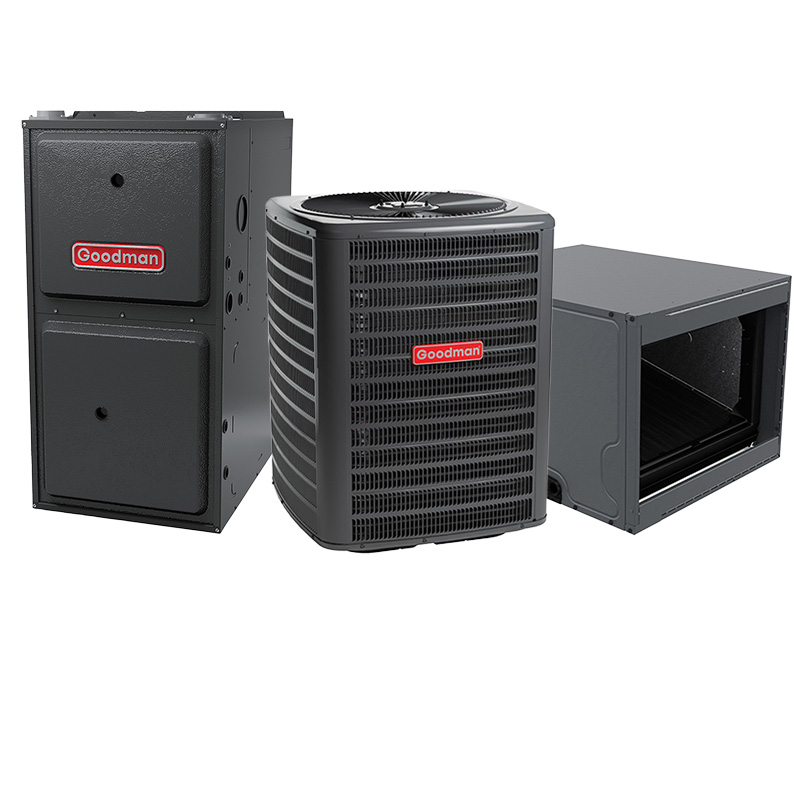
Goodman 3.5 Ton 15.2 SEER2 80000 BTU 80% AFUE Two Stage Multi-Speed ECM Gas Furnace System – Horizontal | R32
View on AC Direct see your lowest price →Check current price on AC Direct →
Key features
- 3.5-ton capacity with 15.2 SEER2 cooling efficiency, meeting 2023 federal minimums
- 80,000 BTU two-stage gas furnace at 80% AFUE for reduced cycling and fuel use
- Multi-speed ECM blower motor lowers fan electricity draw and improves humidity control
- Horizontal cabinet orientation designed for attic and crawl-space installations
- R-32 refrigerant with lower global warming potential than legacy R-410A systems
- Factory-matched system rating ensures coil and condenser are certified together
About this system
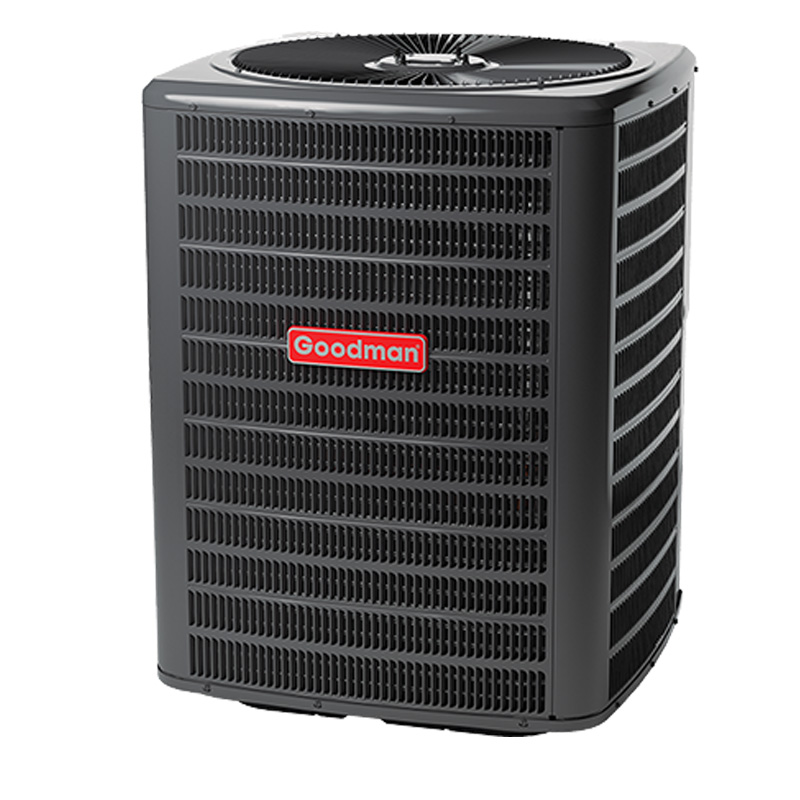
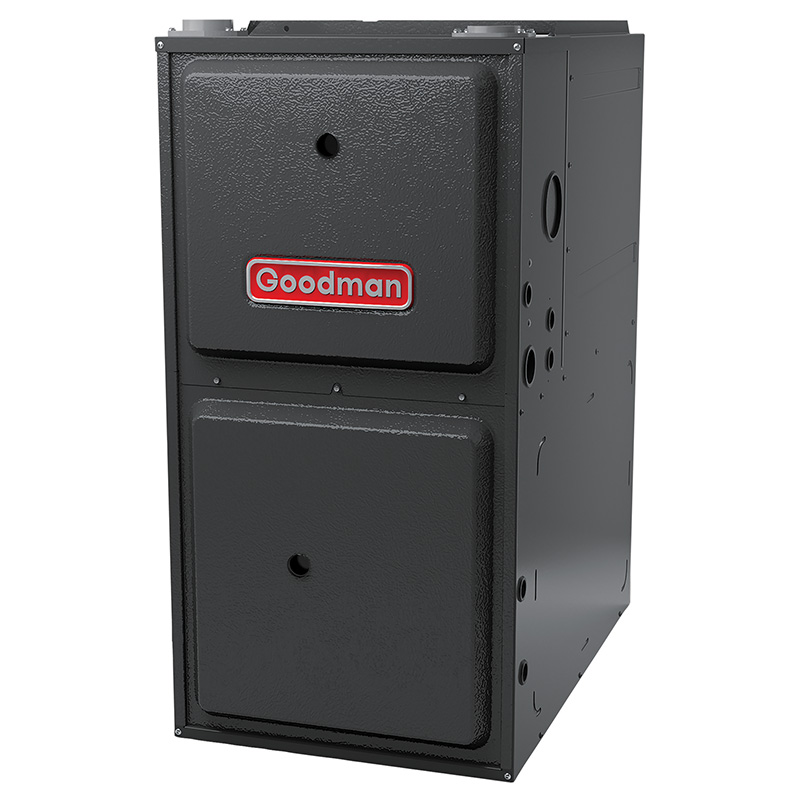
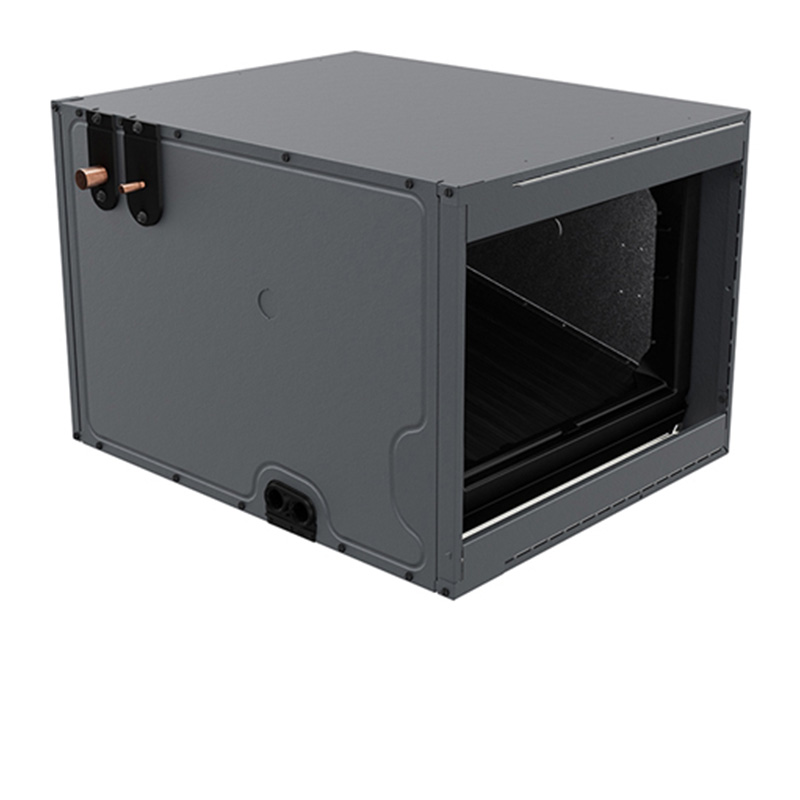
The Goodman GLXS4BA4210 is a 3.5-ton horizontal split system pairing a 15.2 SEER2 air conditioner with an 80,000 BTU, 80% AFUE two-stage gas furnace. The horizontal configuration makes it the right call for attic installations or crawl spaces where a standard upflow or downflow cabinet simply will not fit. At 3.5 tons, it is sized for homes roughly in the 1,800 to 2,400 square foot range, though actual sizing depends on your local climate, insulation, and Manual J load calculation.
The two-stage furnace and multi-speed ECM blower motor are the specs worth paying attention to here. Two-stage heating means the furnace runs on a lower fire for most of the season and only kicks to full output on the coldest days, which reduces temperature swings, lowers fuel consumption compared to a single-stage unit, and cuts down on on-off cycling noise. The ECM motor adjusts airflow continuously rather than running at one fixed speed, which saves electricity at the air handler and helps with humidity control in summer. At 80% AFUE the furnace converts four out of every five units of gas to heat, which meets federal minimums for northern climates but trails the 96-plus percent efficiency of condensing furnace options. R-32 refrigerant carries a lower global warming potential than the R-410A it replaces and is becoming standard in new equipment.
This system is a factory-matched combination, meaning the coil and outdoor unit are rated together to hit the published 15.2 SEER2 figure. That efficiency lands it squarely in the entry-level tier of current two-stage systems. It is not a high-efficiency or variable-capacity setup, so buyers looking for top-end energy savings or the quietest possible operation should weigh those limitations against the lower purchase price that Goodman consistently delivers.
The GLXS4BA4210 delivers a genuinely functional two-stage system at a price that can run 15 to 25 percent below comparable Carrier, Trane, or Lennox equipment, making it an honest value pick for budget-conscious buyers who are not chasing top-tier efficiency. The two-stage furnace and ECM blower add meaningful comfort features that single-stage value systems skip. That said, Goodman's documented track record of capacitor failures, evaporator coil leaks, and compressors averaging 10 to 14 years means the long-run cost picture is less clear-cut than the sticker price implies.
Overall score is the average of the five ratings above.
What we like
- Lower upfront cost versus comparable Carrier, Trane, and Lennox two-stage systems
- Two-stage furnace reduces temperature swings and fuel consumption on mild days
- ECM blower motor cuts fan electricity use and supports better humidity control
- Factory-matched rating removes uncertainty about whether coil and condenser will hit the published SEER2
- R-32 refrigerant is the forward-looking industry standard with a lower environmental impact
Trade-offs
- 80% AFUE is the federal minimum for many northern climates and trails condensing furnace options by a wide margin
- 15.2 SEER2 is entry-level two-stage efficiency; variable-capacity systems from premium brands beat it in both comfort and energy use
- Dual-run capacitor failures and evaporator coil leaks are documented and recurring owner complaints after the first several years
- Compressor lifespan averaging 10 to 14 years falls short of the 15 to 20 years reported for premium-brand compressors
What homeowners and pros say about Goodman
Homeowners who post about Goodman online tend to cluster at the extremes. On ConsumerAffairs, Goodman scores around 2.5 out of 5, a channel that skews toward people writing after a frustrating repair bill. The recurring complaint there is that costs climb noticeably after roughly year 7, with dual-run capacitor failures being the most commonly cited culprit. Those are generally a quick, relatively affordable fix, but they require a service call. Evaporator coil leaks also come up with enough regularity in owner accounts to be treated as a real possibility over a 10-plus year ownership window rather than a fluke. On the other side, Google dealer reviews for Goodman installers average around 3.8 out of 5 across hundreds of reviews per location, and the most consistent praise in that context is straightforward: the equipment costs less up front and it works when the installation is done right.
HVAC technicians tend to be matter-of-fact about Goodman. The most common professional observation is that install quality is the single biggest factor in how long any Goodman system lasts, which puts real weight on choosing an experienced contractor who pulls permits and does a proper refrigerant charge rather than simply swapping in the equipment and leaving. Compressor longevity is the longer-term concern pros flag most often, with Goodman compressors averaging 10 to 14 years in real-world use compared to 15 to 20 years on premium-brand hardware. For a horizontal installation like this one, where service access can be trickier than a standard upflow setup, that lifespan difference is worth factoring into the total cost of ownership conversation before signing off on the installation quote.
Sources: ConsumerAffairs Goodman owner reviews, AHRI Directory of Certified Product Performance, U.S. DOE appliance and equipment efficiency standards, Goodman product specification sheets.
What it costs to run
At 15.2 SEER2, cooling this 3.5-ton system for a typical 1200-hour cooling season at the U.S. average electricity rate of $0.17/kWh works out to roughly $564 per year in cooling, about $75 less per year than a minimum-efficiency 13.4 SEER2 unit of the same size. Your real cost depends on your climate and local rate.
Method: (42,000 BTU/hr ÷ 15.2 SEER2) × 1200 hours ÷ 1000 × $0.17/kWh. Rate source: U.S. EIA average; cooling hours: moderate-climate estimate.
How it compares
| Brand | Comparable model | SEER2 | Stage | Price position |
|---|---|---|---|---|
| Goodman | GLXS4BA4210 (this system) | 15.2 | two-stage | Value pick |
| Carrier | Performance 16 (24ACC636A / 59TP6) | 16 | two-stage | Typically 15 to 25 percent higher than this Goodman system |
| Trane | XR15 / S9X2 (XV80 series furnace pairing) | 15.2 to 16 | two-stage | Typically 15 to 20 percent higher than this Goodman system |
| Lennox | Merit 16ACX / ML180 furnace pairing | 16 | two-stage | Typically 20 to 25 percent higher than this Goodman system |
Competitor rows are comparable single-stage units at similar efficiency; price is relative position, not a quote.
Questions about this system
Is horizontal the only configuration this system supports, or can the furnace be installed upflow?
This specific model is rated and warranted for horizontal installation. If your installation needs upflow or downflow orientation, you would need a different Goodman furnace model; using a horizontal cabinet in an upflow position can affect drainage, heat exchanger function, and warranty coverage.
What does R-32 refrigerant mean for me as an owner, and is it harder to service than R-410A?
R-32 has a lower global warming potential than R-410A and is increasingly common in new equipment. From a service standpoint, most certified HVAC technicians are familiar with R-32, but you should confirm your local contractor has the correct recovery equipment before booking a service call, since R-32 requires a few handling differences compared to R-410A.
How significant is the difference between 80% AFUE and a 96% AFUE condensing furnace for my heating bills?
On a rough basis, upgrading from 80% to 96% AFUE means roughly 16 percent less gas used per heating dollar. For a home spending 1,200 dollars a year on gas heat, that is roughly 190 dollars annually. Whether the condensing furnace's higher purchase price pays back depends on your climate, gas rates, and how long you stay in the home.
Goodman reviews online look mixed. What are the most common problems owners actually report with systems like this?
The most frequently documented failure on Goodman systems is the dual-run capacitor, which typically costs 300 to 600 dollars to replace and is considered a straightforward repair. Evaporator coil leaks show up in a meaningful share of owner reviews, and compressors on Goodman equipment average 10 to 14 years of service life versus 15 to 20 for premium brands. A small number of owners have also reported refrigerant leaks within the first year, which is usually a sign of an installation or charging issue rather than a factory defect.
The system is listed as factory-matched. Do I still need a Manual J load calculation, or does the 3.5-ton rating automatically fit my house?
Factory-matched means the coil and condenser are rated together to achieve the published SEER2, but it says nothing about whether 3.5 tons is the right size for your home. An oversized or undersized system will short-cycle, reduce humidity control, and wear components faster regardless of brand. A Manual J load calculation by your installer is the only way to confirm the correct tonnage.
Specifications
| Cooling capacity | 3.5 Ton |
| Efficiency | 15.2 SEER2 |
| Furnace output | 80000 BTU |
| Furnace efficiency | 80% AFUE |
| Configuration | Horizontal |
| Refrigerant | R-32 |
| Model | GLXS4BA4210 |