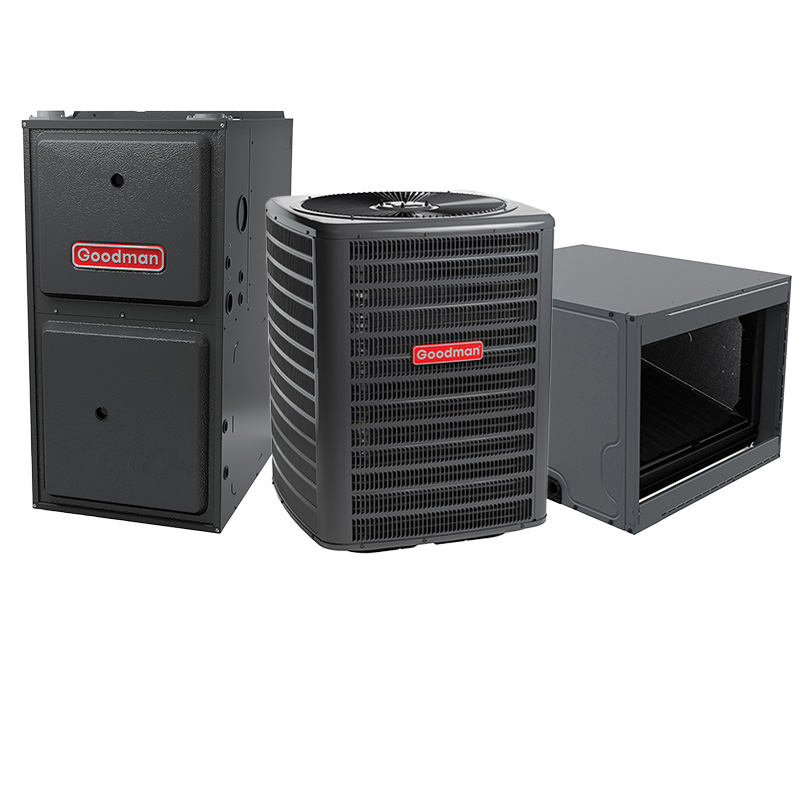
Goodman 4 Ton 14.5 SEER2 100000 BTU 80% AFUE Two Stage Multi-Speed ECM Gas Furnace System – Horizontal | R32
View on AC Direct see your lowest price →Check current price on AC Direct →
Key features
- 4-ton cooling capacity with 14.5 SEER2 efficiency rating
- 100,000 BTU two-stage gas furnace at 80% AFUE
- Multi-speed ECM blower motor for quieter, more efficient airflow
- Horizontal configuration for crawl space, attic, or side-mount installations
- R-32 refrigerant with lower global warming potential than R-410A
- Goodman 10-year parts limited warranty with product registration
About this system
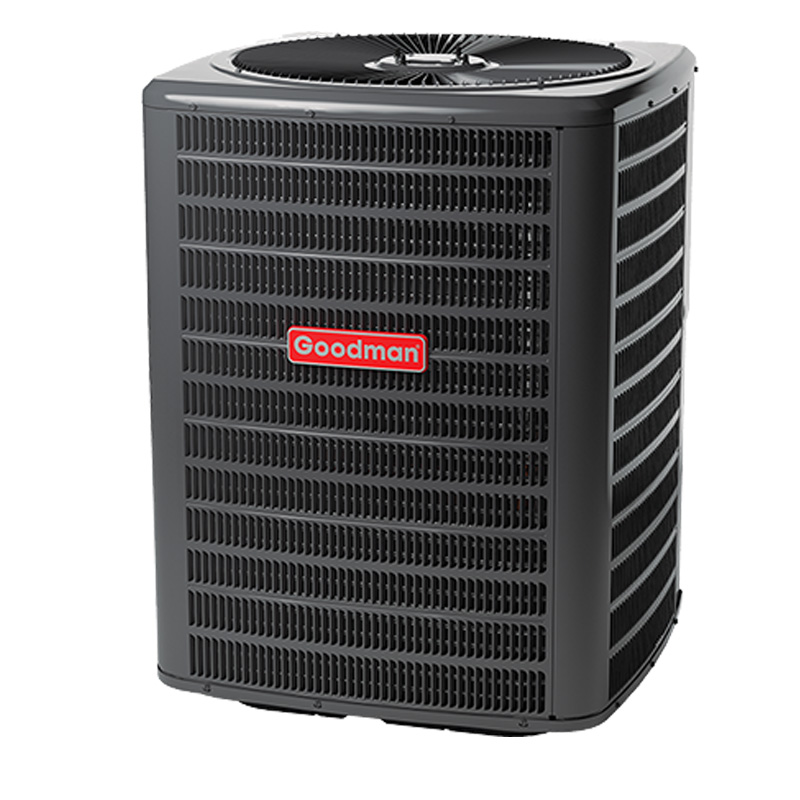
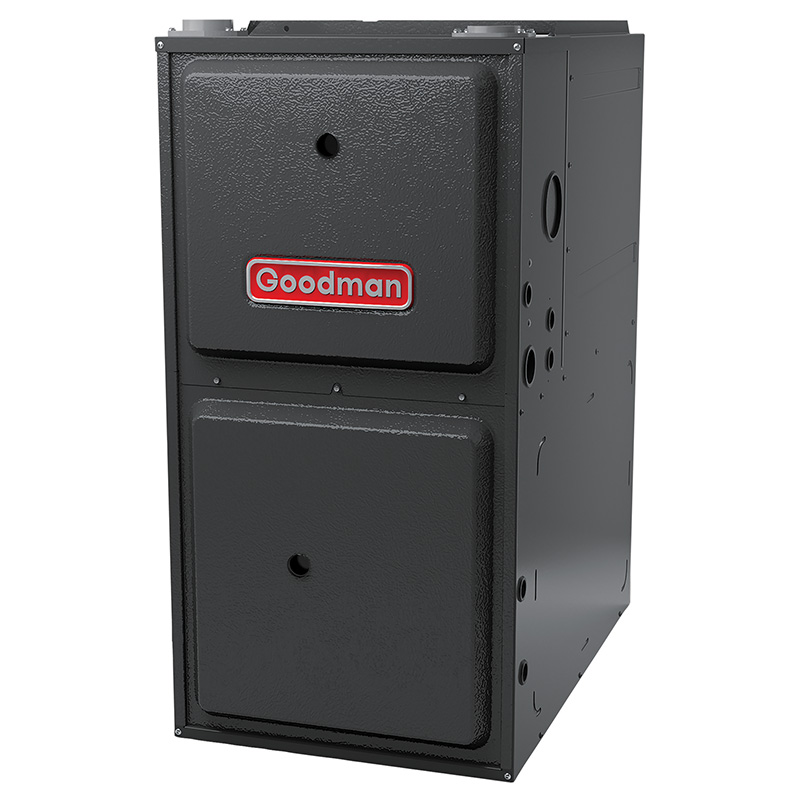
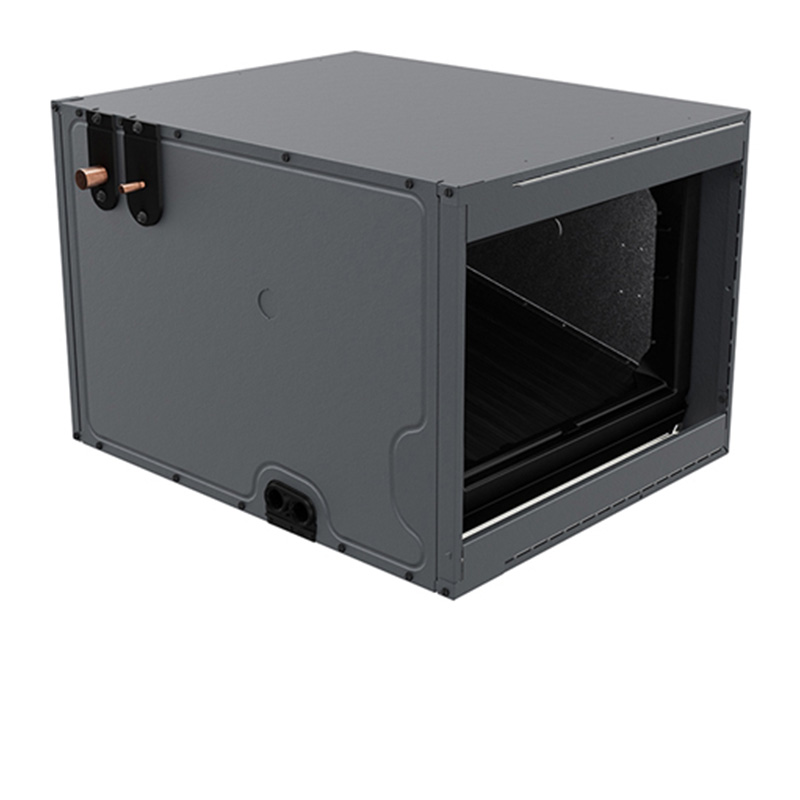
The Goodman GLXS4BA4810 packages a 4-ton, 14.5 SEER2 R-32 cooling system with a 100,000 BTU 80% AFUE two-stage gas furnace in a horizontal configuration, making it a direct fit for homes where the air handler sits in a crawl space, attic, or closet oriented on its side. The two-stage furnace runs at a lower firing rate most of the time, which stretches runtime, improves humidity control, and reduces the temperature swings you get from a single-stage system cycling hard on and off. The multi-speed ECM blower motor reinforces those gains by adjusting airflow more precisely and drawing significantly less electricity than a standard PSC motor.
R-32 refrigerant is a step forward from the R-410A that dominated residential HVAC for the past two decades. It has a lower global warming potential, requires a smaller refrigerant charge by weight, and is already the standard in many international markets. Contractors increasingly stock it, though not every technician has worked with it yet, so confirming your installer is comfortable with R-32 before you sign a contract is worth doing. At 14.5 SEER2 the system clears the federal minimum for most U.S. regions without jumping into the premium efficiency tier, which keeps upfront cost manageable while still offering a meaningful improvement over aging equipment running at 10 to 12 SEER.
This system suits a mid-size to larger home in a climate where heating loads are real but not extreme, and where the buyer wants a functional, warrantied system at a price point that leaves room in the budget for professional installation, a good thermostat, and a service agreement. It is not positioned for buyers whose first priority is the lowest possible utility bill decade over decade or the longest possible compressor life with no intervention.
The GLXS4BA4810 delivers a solid mid-efficiency two-stage system at a price point that is genuinely hard to match from Carrier, Trane, or Lennox. The trade-off is a brand with a well-documented repair profile after year 7 and compressor longevity that typically falls short of premium competitors, so the value equation depends heavily on how long you plan to stay in the home and how diligently the system is maintained.
Overall score is the average of the five ratings above.
What we like
- Priced 15 to 25 percent below comparable Carrier, Trane, and Lennox systems
- Two-stage furnace operation improves comfort and humidity control versus single-stage
- ECM blower motor reduces electricity consumption and operating noise
- R-32 refrigerant is a more environmentally responsible choice going forward
- 10-year parts warranty with registration provides meaningful cost protection on components
Trade-offs
- 80% AFUE furnace wastes 20 cents of every fuel dollar, a real cost in cold climates
- Compressor lifespan averages 10 to 14 years versus 15 to 20 years for premium brands
- Dual-run capacitor failures and evaporator coil leaks are documented recurring issues
- Horizontal-only configuration limits installation flexibility compared to multi-position systems
What homeowners and pros say about Goodman
Homeowners who choose Goodman most often point to the upfront price as the deciding factor, and on that measure this system delivers. The Google dealer review average of around 3.8 out of 5 reflects a reasonable satisfaction rate among buyers who had competent installs and kept up with maintenance. On ConsumerAffairs, where the score sits near 2.5 out of 5, the complaints cluster around repair costs that climb after roughly year 7, which lines up with the known failure patterns: dual-run capacitors are the single most commonly reported breakdown, usually resolved for 300 to 600 dollars, and evaporator coil leaks show up in a meaningful portion of owner accounts. A small number of owners also report refrigerant leaks in the first year, which technicians generally attribute to charge errors at installation rather than factory defects.
HVAC contractors who work on Goodman equipment regularly tend to describe it as acceptable equipment that performs to its rating when installed correctly, while acknowledging that compressor longevity in the 10-to-14-year range is a real gap compared to the 15-to-20-year window seen more often with Trane and Carrier compressors. The horizontal configuration of this specific system adds another layer of installation complexity, since improper slope, drain pan setup, or refrigerant charge in a horizontal application can accelerate the coil leak issue. Pros who recommend Goodman typically do so paired with a strong service agreement and a candid conversation about what the lower purchase price does and does not include over the life of the equipment.
Sources: ConsumerAffairs Goodman owner reviews, AHRI Directory of Certified Product Performance, U.S. DOE appliance and equipment efficiency standards, Goodman product specification sheets.
What it costs to run
At 14.5 SEER2, cooling this 4-ton system for a typical 1200-hour cooling season at the U.S. average electricity rate of $0.17/kWh works out to roughly $675 per year in cooling, about $56 less per year than a minimum-efficiency 13.4 SEER2 unit of the same size. Your real cost depends on your climate and local rate.
Method: (48,000 BTU/hr ÷ 14.5 SEER2) × 1200 hours ÷ 1000 × $0.17/kWh. Rate source: U.S. EIA average; cooling hours: moderate-climate estimate.
How it compares
| Brand | Comparable model | SEER2 | Stage | Price position |
|---|---|---|---|---|
| Goodman | GLXS4BA4810 (this system) | 14.5 | two-stage | Value pick |
| Carrier | Performance 14 / 59TP6 series | 14.3-15.2 | two-stage | Priced roughly 20 to 25 percent above this Goodman system |
| Trane | XR14 / S8X2 series | 14.3-15.0 | two-stage | Priced roughly 20 to 25 percent above this Goodman system |
| Lennox | Merit ML14XP1 / ML80XP2V series | 14.3-15.1 | two-stage | Priced roughly 15 to 20 percent above this Goodman system |
Competitor rows are comparable single-stage units at similar efficiency; price is relative position, not a quote.
Questions about this system
Does the horizontal configuration mean I can only install this system on its side?
Yes, the GLXS4BA4810 is designed specifically for horizontal airflow applications, meaning the air handler is oriented on its side rather than standing upright. This makes it well-suited for attic, crawl space, or closet installs where vertical clearance is limited, but it cannot be converted to upflow or downflow without a different model.
Will my existing R-410A lineset work with this R-32 system?
In most cases copper linesets that are clean, properly sized, and in good condition can be reused with R-32, but your installer must flush the old lineset thoroughly to remove any R-410A residue and POE oil. Not all technicians have completed R-32 certification yet, so confirming your contractor is trained on R-32 handling and has the correct recovery equipment before work begins is important.
What does the two-stage furnace actually do differently day to day?
The furnace runs at a lower fire rate the majority of the time, typically around 65 percent of capacity, and only steps up to full 100,000 BTU output on the coldest days or during initial warm-up. Longer, lower-intensity cycles distribute heat more evenly through the home, reduce temperature swings between the thermostat setpoint and actual room temperature, and tend to feel noticeably quieter than a single-stage furnace cycling on and off at full blast.
Goodman has mixed reviews online. Should that concern me for this specific system?
Goodman scores roughly 2.5 out of 5 on ConsumerAffairs, a channel that skews toward people with complaints, and around 3.8 out of 5 on Google dealer reviews where affordability is the most-cited positive. The documented failure patterns are real: dual-run capacitors are the most common breakdown (typically a 300 to 600 dollar fix), evaporator coil leaks appear in a meaningful share of owner reports, and a minority of owners report refrigerant leaks in the first year that usually trace back to installation rather than the equipment itself. A quality installation, annual maintenance, and a service agreement reduce but do not eliminate these risks.
Is 80% AFUE good enough, or should I be looking at a 96% furnace instead?
80% AFUE means 80 cents of every dollar of gas becomes usable heat; the other 20 cents exits through the flue. In mild to moderate climates with lower annual heating hours, the lower upfront cost of an 80% furnace often pencils out reasonably well. In climates with long, cold winters, a high-efficiency 96% or 97% AFUE two-stage furnace can recoup the price difference through utility savings within several years, so your local heating degree days and current gas rates are the key variables to run before deciding.
Specifications
| Cooling capacity | 4 Ton |
| Efficiency | 14.5 SEER2 |
| Furnace output | 100000 BTU |
| Furnace efficiency | 80% AFUE |
| Configuration | Horizontal |
| Refrigerant | R-32 |
| Model | GLXS4BA4810 |