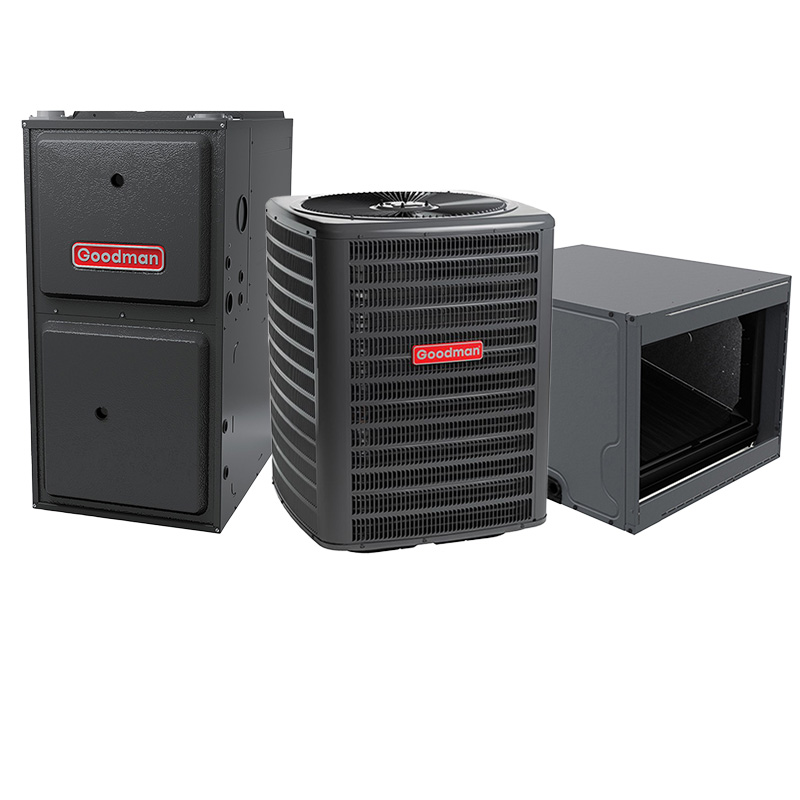
Goodman 5 Ton 14 SEER2 120000 BTU 80% AFUE Two Stage Multi-Speed ECM Gas Furnace System – Horizontal | R32
View on AC Direct see your lowest price →Check current price on AC Direct →
Key features
- 5-ton two-stage cooling rated at 14 SEER2 with R-32 refrigerant
- 120,000 BTU two-stage gas furnace at 80% AFUE, non-condensing design
- Multi-speed ECM blower motor reduces fan energy and improves dehumidification
- Horizontal configuration suited for attic, crawlspace, or closet installs
- Two-stage compressor modulates between full and reduced capacity for steadier comfort
- Compatible with standard B-vent flue; no condensate line required from heat exchanger
About this system
The Goodman GLXS4BA6010 pairs a 5-ton, 14 SEER2 central air conditioner with a 120,000 BTU, 80% AFUE two-stage gas furnace in a horizontal configuration, making it a strong candidate for attic or crawlspace installations where upflow units simply will not fit. The R-32 refrigerant charge aligns with current low-GWP standards, and the multi-speed ECM blower motor trims fan energy use compared to a standard PSC motor while helping with humidity control at partial load. At 14 SEER2, this system sits at the federal minimum efficiency threshold for most northern climate zones, which means it meets code but will not win awards for energy savings.
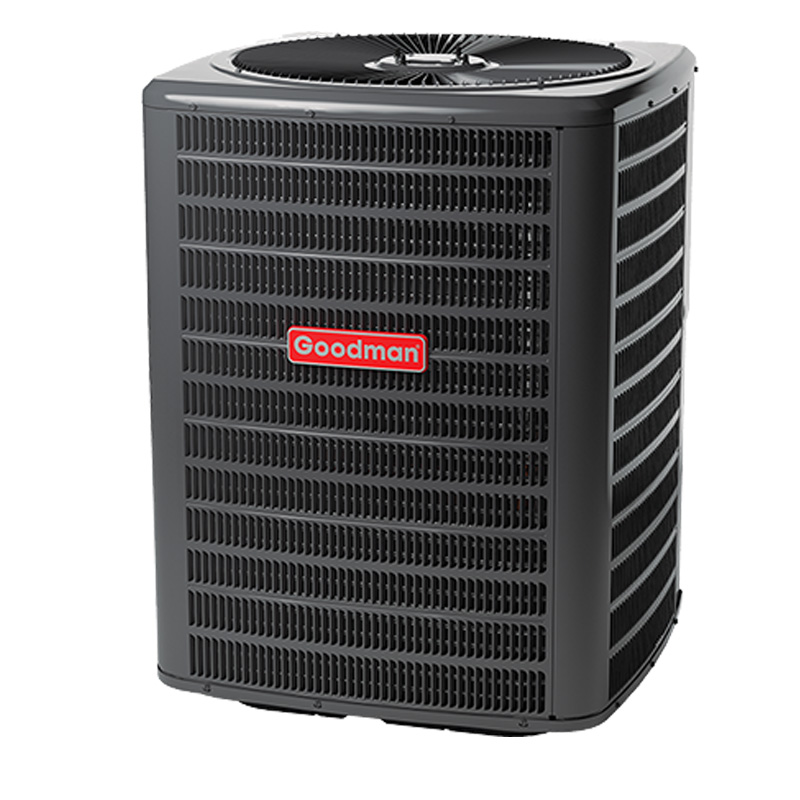
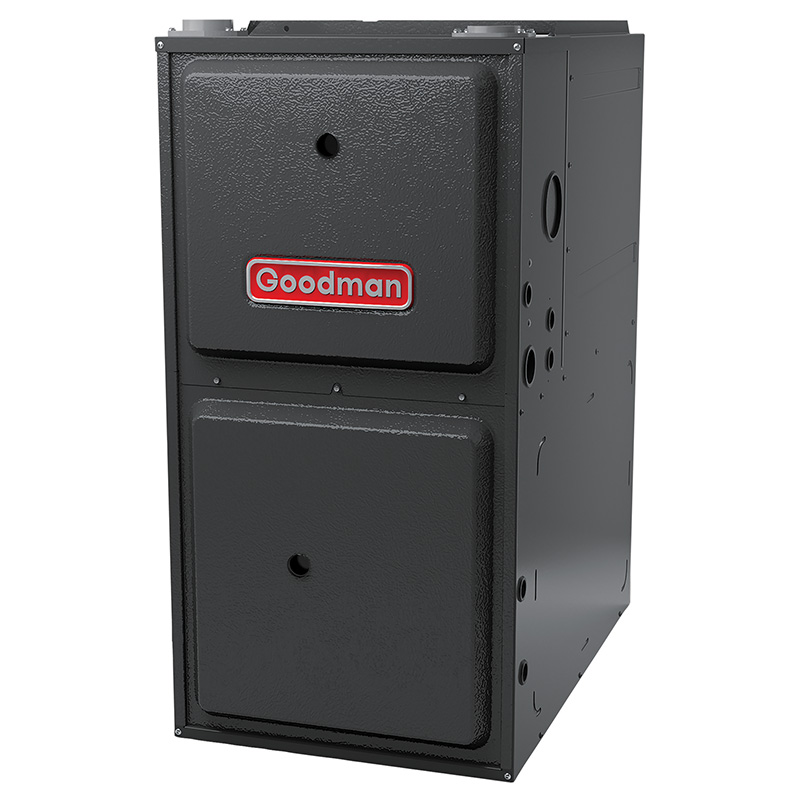
Two-stage cooling on the outdoor unit means the compressor runs at a reduced capacity on mild days, which extends run cycles, improves dehumidification, and keeps indoor temperatures more consistent than a single-stage unit would. The 80% AFUE furnace is a non-condensing design, so it vents with standard B-vent and does not require a condensate drain line from the heat exchanger, simplifying a horizontal install. That said, an 80% furnace exhausts 20% of fuel energy up the flue, which matters more in colder climates where heating hours are high. Buyers in the upper Midwest or mountain states should weigh whether a 96% AFUE upgrade pencils out over the system’s lifetime.
This bundle is aimed at homeowners replacing an aging system in a larger home, roughly 2,500 to 3,500 square feet depending on climate and insulation, who want a code-compliant, functional upgrade without the premium pricing of Trane, Lennox, or Carrier. It is not the system for buyers prioritizing maximum long-term efficiency or who want to minimize the odds of a repair call in year 8.
The Goodman GLXS4BA6010 delivers a functional, code-compliant 5-ton system at a price point noticeably below premium brands, and the two-stage compressor with ECM blower is a genuine comfort upgrade over entry-level single-stage equipment. The trade-off is a brand track record that shows real repair costs climbing after year 7 and compressor longevity that typically runs shorter than Trane, Lennox, or Carrier counterparts. It is a reasonable choice if upfront cost is the priority and the installation is handled by a skilled, licensed technician.
Overall score is the average of the five ratings above.
What we like
- Priced roughly 15 to 25 percent below comparable Trane, Lennox, and Carrier systems, leaving room in the budget for quality installation
- Two-stage cooling extends run cycles and pulls more humidity out of the air compared to single-stage operation
- ECM blower motor reduces electricity consumption at fan speeds and supports better airflow balance
- Horizontal cabinet design opens up installation options in attics and crawlspaces where other configurations cannot be used
- R-32 refrigerant has a lower global warming potential than R-410A and is increasingly well-supported by service technicians
Trade-offs
- Compressor longevity averages 10 to 14 years versus 15 to 20 years for premium brands, meaning a mid-life replacement is more likely
- Dual-run capacitors are the most frequently reported failure point and, while inexpensive to fix, add to long-term service cost
- 80% AFUE is the legal minimum in many regions and will cost more to operate than a 96% AFUE condensing furnace in cold climates
- A minority of owners have reported refrigerant leaks in the first year, typically tied to install or charge quality rather than the equipment itself
What homeowners and pros say about Goodman
Homeowners shopping this system typically cite the upfront price as the deciding factor, and that tracks with Goodman’s Google dealer review average of around 3.8 out of 5, where affordability is the most repeated praise across hundreds of reviews per location. The two-stage operation and ECM blower get specific credit from owners who upgraded from older single-stage equipment, with noticeably better humidity control and fewer short-cycling complaints. On the other side, the ConsumerAffairs score sits at roughly 2.5 out of 5, and while that platform skews toward people with complaints, the pattern is consistent: repair costs tend to climb after about year 7, and dual-run capacitor failures are the most commonly reported issue on Goodman equipment, though they are generally a low-cost fix in the $300 to $600 range.
HVAC technicians who work on Goodman equipment regularly make two consistent points. First, the brand’s performance and longevity are heavily influenced by how well the system is installed and commissioned; a careful, experienced contractor can get solid years out of this equipment, while a rushed or under-charged install accelerates the problems. Second, the documented failure modes are worth knowing going in: evaporator coil leaks show up in a real share of owner reports, compressor lifespan averages 10 to 14 years versus 15 to 20 for premium brands, and a small number of owners have seen refrigerant leaks within the first year, typically pointing back to installation or initial charge issues rather than a factory defect. None of that is disqualifying for a buyer with a firm budget, but it should inform expectations about long-term service costs.
Sources: ConsumerAffairs Goodman owner reviews, AHRI Directory of Certified Product Performance, U.S. DOE appliance and equipment efficiency standards, Goodman product specification sheets.
What it costs to run
At 14 SEER2, cooling this 5-ton system for a typical 1200-hour cooling season at the U.S. average electricity rate of $0.17/kWh works out to roughly $874 per year in cooling, about $39 less per year than a minimum-efficiency 13.4 SEER2 unit of the same size. Your real cost depends on your climate and local rate.
Method: (60,000 BTU/hr ÷ 14 SEER2) × 1200 hours ÷ 1000 × $0.17/kWh. Rate source: U.S. EIA average; cooling hours: moderate-climate estimate.
How it compares
| Brand | Comparable model | SEER2 | Stage | Price position |
|---|---|---|---|---|
| Goodman | GLXS4BA6010 (this system) | 14 | two-stage | Value pick |
| Carrier | Performance 14 / 58MXA (Performance series split system bundle) | 14-15 | two-stage | Approximately 20 to 25 percent above this Goodman |
| Trane | XR14 / S8X2 (XR14 condenser with S8X2 80% furnace) | 14-15 | single-stage to two-stage | Approximately 20 to 30 percent above this Goodman |
| Lennox | Merit 14ACX / ML180 (Merit series bundle) | 14 | single-stage | Approximately 15 to 25 percent above this Goodman |
Competitor rows are comparable single-stage units at similar efficiency; price is relative position, not a quote.
Questions about this system
Is 14 SEER2 going to meet code for my area, and is it worth upgrading to a higher efficiency tier?
14 SEER2 meets the federal minimum for most northern U.S. climate zones and some southern ones, but several southern states now require 15 SEER2 or higher for new installations, so confirm your local code before purchasing. Whether upgrading makes financial sense depends on your cooling hours and electricity rate; in a high-cooling-load climate, a 16 or 18 SEER2 unit will show a faster payback.
What does horizontal configuration mean, and can this unit also be installed in a vertical upflow or downflow orientation?
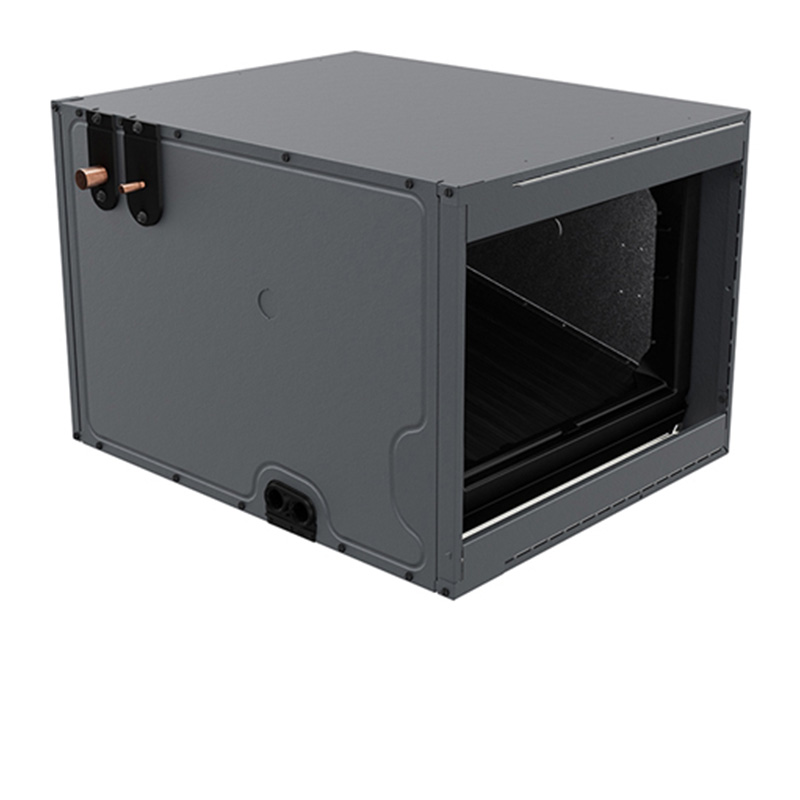
Horizontal configuration means the furnace cabinet and coil are designed to lie on their side, with airflow moving across rather than up or down, which is the standard approach for attic or crawlspace installs. This specific model is configured for horizontal use; if you need upflow or downflow, you would need a different Goodman model series rather than repositioning this one.
Goodman's ConsumerAffairs score is around 2.5 out of 5. Should that concern me?
ConsumerAffairs is a complaint-skewed platform, so the score reflects owners who had problems more than owners who did not, and the recurring theme there is repair costs rising after roughly year 7. Google dealer reviews average around 3.8 out of 5, where affordability is the most common praise. The honest picture is that Goodman is not as durable as premium brands on average, but many units run fine for a decade-plus when installed correctly.
What are the most likely repairs on this system, and how much should I budget for them?
Dual-run capacitors are the most commonly reported failure on Goodman equipment and are typically a straightforward repair in the $300 to $600 range. Evaporator coil leaks appear in a meaningful share of owner reports and are more costly to address. Compressors average 10 to 14 years on this brand, so budgeting for a possible replacement in that window is realistic.
Does the 80% AFUE furnace require a special venting setup in a horizontal install?
An 80% AFUE non-condensing furnace uses standard Category I B-vent and does not produce enough condensate to require a drain line from the flue, which keeps the horizontal installation simpler. You will still need a condensate drain for the evaporator coil in cooling mode, but the furnace venting itself is conventional. Always confirm venting size and run length with your installer to meet manufacturer and local code requirements.
Specifications
| Cooling capacity | 5 Ton |
| Efficiency | 14 SEER2 |
| Furnace output | 120000 BTU |
| Furnace efficiency | 80% AFUE |
| Configuration | Horizontal |
| Refrigerant | R-32 |
| Model | GLXS4BA6010 |