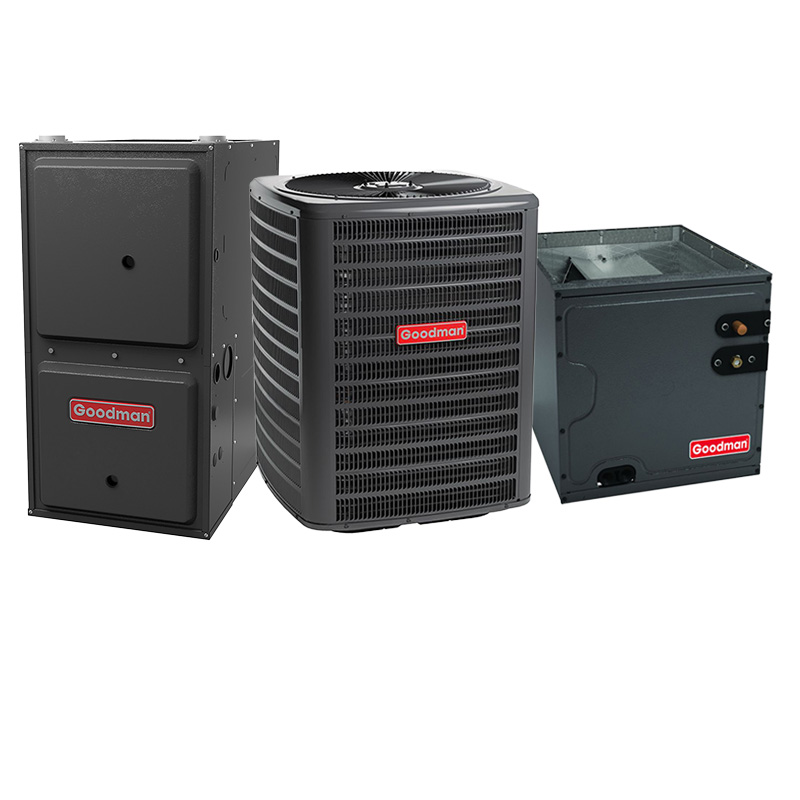
Goodman 2.5 Ton 15.2 SEER2 80000 BTU 80% AFUE Two Stage Multi-Speed ECM Gas Furnace System – Low NOX For California Downflow | R32
View on AC Direct see your lowest price →Check current price on AC Direct →
Key features
- 2.5-ton two-stage compressor for reduced cycling and better humidity control
- 15.2 SEER2 rated efficiency, meeting current federal minimums for the region
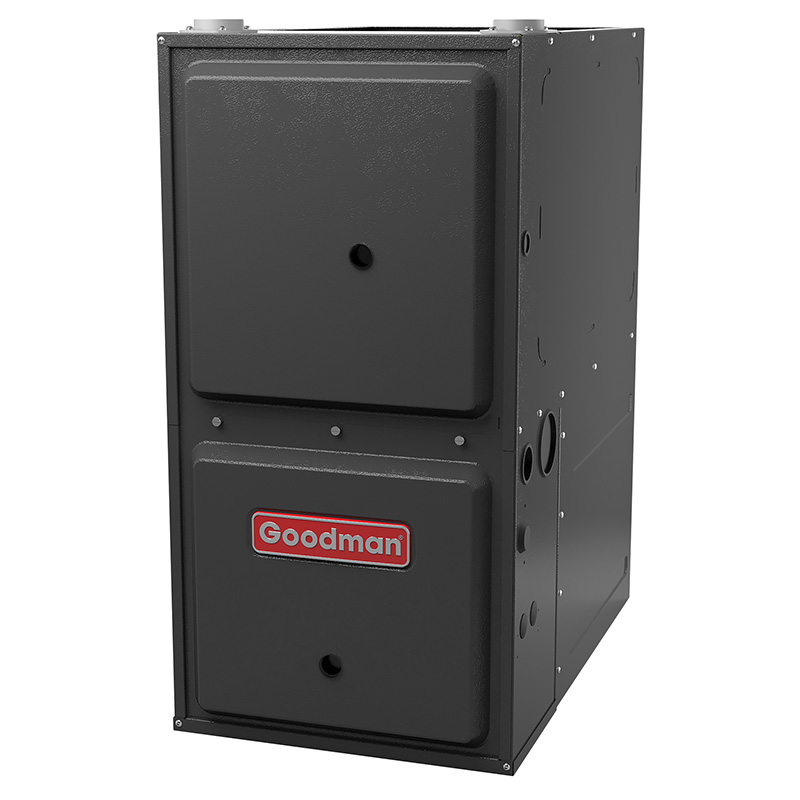
- 80,000 BTU 80% AFUE downflow gas furnace with Low NOX certification for California
- Multi-speed ECM blower motor for quieter operation and improved airflow precision
- R-32 refrigerant with lower global-warming potential than R-410A
- Downflow-only cabinet configuration designed for under-floor duct systems
About this system
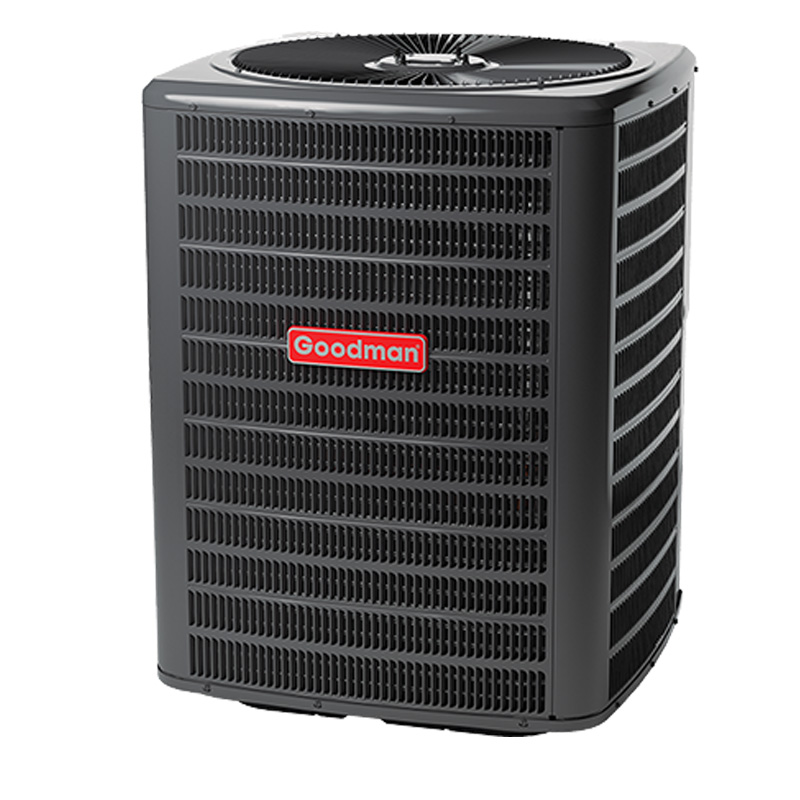
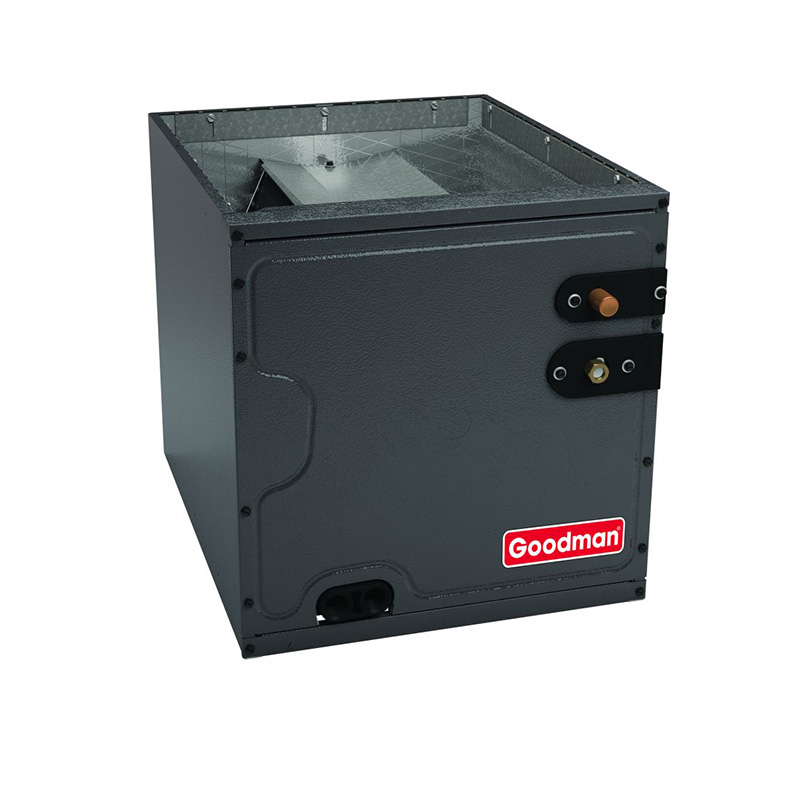
The Goodman GLXS4BA3010 is a 2.5-ton, 15.2 SEER2 split system paired with an 80,000 BTU two-stage gas furnace rated at 80% AFUE. It is configured specifically for downflow applications, meaning the furnace discharges conditioned air downward through the floor, which suits homes with under-floor ductwork or crawl-space distribution systems. The system uses R-32 refrigerant, a lower global-warming-potential option that California’s Low NOX requirements help push into wider use, and the furnace carries Low NOX certification for compliance in California air districts with strict emissions rules.
The two-stage compressor and multi-speed ECM blower motor are the functional core of what makes this system more capable than a basic single-stage unit. Two-stage cooling means the system runs at reduced capacity on milder days, cycling less frequently and maintaining more even temperatures. The ECM blower adjusts airflow in finer increments, which also helps with humidity control and quieter operation compared to single-speed PSC motors. At 15.2 SEER2, efficiency sits at the lower edge of what qualifies as mid-efficiency today, so utility savings relative to a high-SEER2 system will be modest, but operating costs will still beat an older R-22 or low-SEER unit meaningfully.
This system is a reasonable fit for budget-conscious homeowners in mild to moderately warm California climates who need a code-compliant replacement or new-construction option and want the comfort benefits of two-stage operation without paying premium-brand prices. The downflow configuration makes it a narrower fit than a multi-position furnace, so confirming your duct layout before purchasing is essential.
The GLXS4BA3010 delivers two-stage comfort features and California code compliance at a price point that undercuts premium brands by a meaningful margin. Trade-offs are real: 80% AFUE is the lowest tier allowed in many areas, 15.2 SEER2 sits at the efficiency floor rather than any kind of high point, and Goodman's long-term reliability record is uneven enough that buyers should budget for possible mid-life repairs. For the right buyer, it represents solid baseline value; it is not a set-and-forget system.
Overall score is the average of the five ratings above.
What we like
- Price typically 15 to 25 percent below comparable Trane, Lennox, or Carrier systems
- Two-stage operation improves comfort and humidity management over single-stage alternatives
- ECM blower reduces motor energy consumption and lowers operating sound levels
- Low NOX certified for California air quality compliance out of the box
- R-32 refrigerant aligns with current and near-future environmental regulations
Trade-offs
- 80% AFUE means 20 cents of every gas dollar is lost as exhaust, a real long-term cost in high-use climates
- 15.2 SEER2 is entry-level efficiency; higher-SEER2 options in this tonnage exist at modest price increases
- Downflow-only configuration limits installation flexibility compared to multi-position furnaces
- Goodman's documented failure modes, including dual-run capacitor failures, evaporator coil leaks, and compressors that average 10 to 14 years versus 15 to 20 for premium brands, mean repair budgeting is prudent
What homeowners and pros say about Goodman
Homeowners who leave reviews on platforms like ConsumerAffairs give Goodman an average of about 2.5 out of 5, a score that reflects the platform’s well-known skew toward frustrated owners rather than satisfied ones. The recurring complaint in those reviews is repair costs starting to accumulate after roughly year seven, with capacitor failures and coil leaks appearing most often in the threads. Google dealer reviews tell a more moderate story, averaging around 3.8 out of 5 across hundreds of location-level reviews, where the most common praise is straightforward: the price was right and the system works. Neither number should be dismissed, and neither tells the whole story on its own.
HVAC technicians who install and service Goodman equipment tend to offer a consistent professional read: the equipment is competent at its price point, but installation quality matters more with Goodman than with some premium brands. Proper refrigerant charge, correct airflow setup, and tight duct connections at install tend to separate the systems that run quietly for a decade from the ones that generate service calls. The documented failure modes, dual-run capacitor failures, evaporator coil leaks, and compressors that average 10 to 14 years rather than the 15 to 20 years seen on higher-end equipment, are not universal, but they are real enough that technicians and informed buyers factor them into their planning. For this specific system, the two-stage operation and ECM blower are genuine performance upgrades over basic single-stage Goodman equipment, but the underlying brand-level reliability picture does not change based on those features.
Sources: ConsumerAffairs Goodman owner reviews, AHRI Directory of Certified Product Performance, U.S. DOE appliance and equipment efficiency standards, Goodman product specification sheets.
What it costs to run
At 15.2 SEER2, cooling this 2.5-ton system for a typical 1200-hour cooling season at the U.S. average electricity rate of $0.17/kWh works out to roughly $403 per year in cooling, about $54 less per year than a minimum-efficiency 13.4 SEER2 unit of the same size. Your real cost depends on your climate and local rate.
Method: (30,000 BTU/hr ÷ 15.2 SEER2) × 1200 hours ÷ 1000 × $0.17/kWh. Rate source: U.S. EIA average; cooling hours: moderate-climate estimate.
How it compares
| Brand | Comparable model | SEER2 | Stage | Price position |
|---|---|---|---|---|
| Goodman | GLXS4BA3010 (this system) | 15.2 | two-stage | Value pick |
| Carrier | Performance 16 (24ACC636 with 58TP furnace) | 16 | two-stage | Moderately higher than this system |
| Trane | XR15 with S9V2 furnace | 15.2 | two-stage | Notably higher than this system |
| Lennox | Merit ML15XC1 with ML196 furnace | 15.2 | single-stage | Comparable to moderately higher than this system |
Competitor rows are comparable single-stage units at similar efficiency; price is relative position, not a quote.
Questions about this system
Is 80% AFUE good enough for California winters, or should I step up to a higher-efficiency furnace?
In the mild coastal regions of California, 80% AFUE is often adequate and code-allowed in many areas. However, in inland valleys and mountain-adjacent regions where winters are colder and furnace run times are longer, a 96% AFUE condensing furnace will recover its cost premium faster through lower gas bills. Check your local jurisdiction, since some California air districts restrict non-condensing furnace installation.
What does the downflow configuration mean, and how do I know if my home requires it?
Downflow means the furnace pulls return air in at the top and discharges heated or cooled air downward through the bottom into floor-level ductwork. If your furnace sits in a closet or utility room with ducts running under the floor or through a crawl space, you likely need a downflow unit. Upflow and horizontal homes cannot use this cabinet without significant duct modification, so verify your existing duct configuration before ordering.
Does this system qualify for any California or federal efficiency rebates?
At 15.2 SEER2 and 80% AFUE, this system generally meets minimum federal standards but falls below the thresholds required for most California utility rebate programs, which often target 16 SEER2 or higher and 95% AFUE or higher for gas furnaces. Check your specific utility's current program requirements, as thresholds change and some programs focus on heat pump conversions rather than gas furnace upgrades.
What are the most likely repair costs I should plan for over the first 10 years?
The most commonly reported failure point on Goodman systems is the dual-run capacitor, typically a 300 to 600 dollar repair that most technicians can handle in a single visit. Evaporator coil leaks appear in a meaningful share of owner reports and can cost significantly more depending on whether the coil needs replacement. A small number of owners also report refrigerant leaks in the first year, which usually points to an installation or charge issue rather than a component defect.
Why does this system use R-32 instead of R-410A, and does that affect service costs?
R-32 has a lower global-warming potential than R-410A and is part of the industry shift away from higher-GWP refrigerants driven by both federal regulations and California-specific rules. From a service standpoint, R-32 requires technicians to use compatible equipment and follow specific handling procedures due to its mild flammability classification, so confirming your HVAC contractor is certified and equipped for R-32 work before scheduling service calls is worthwhile.
Specifications
| Cooling capacity | 2.5 Ton |
| Efficiency | 15.2 SEER2 |
| Furnace output | 80000 BTU |
| Furnace efficiency | 80% AFUE |
| Configuration | Downflow |
| Refrigerant | R-32 |
| Model | GLXS4BA3010 |