Goodman 4 Ton 14.5 SEER2 80000 BTU 80% AFUE Two Stage Multi-Speed ECM Gas Furnace System – Low NOX For California Downflow | R32
View on AC Direct see your lowest price →Check current price on AC Direct →
Key features
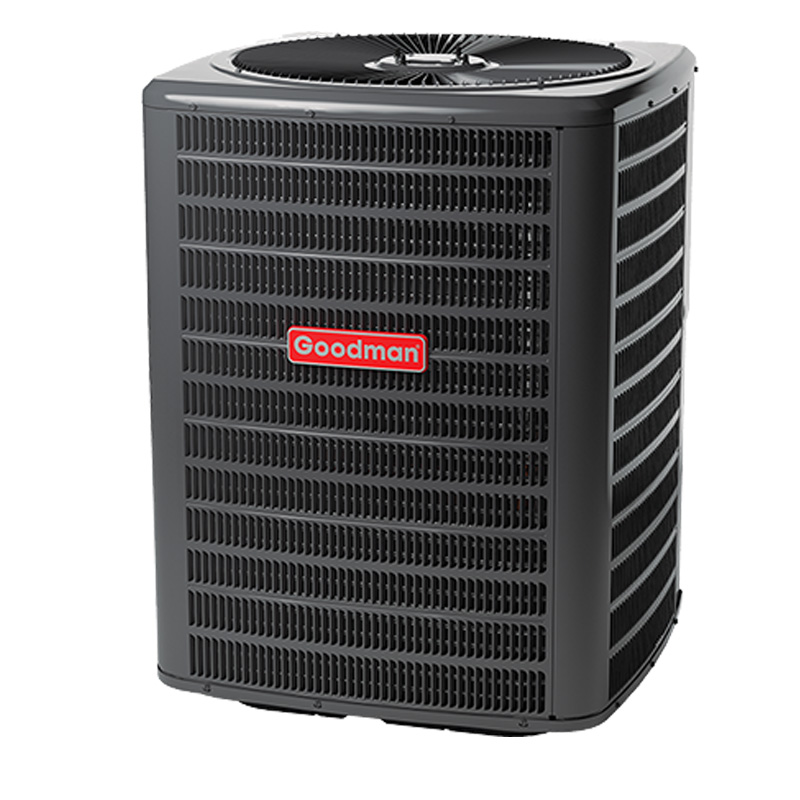
- 4-ton R-32 condensing unit rated at 14.5 SEER2, meeting 2023 federal minimum efficiency standards
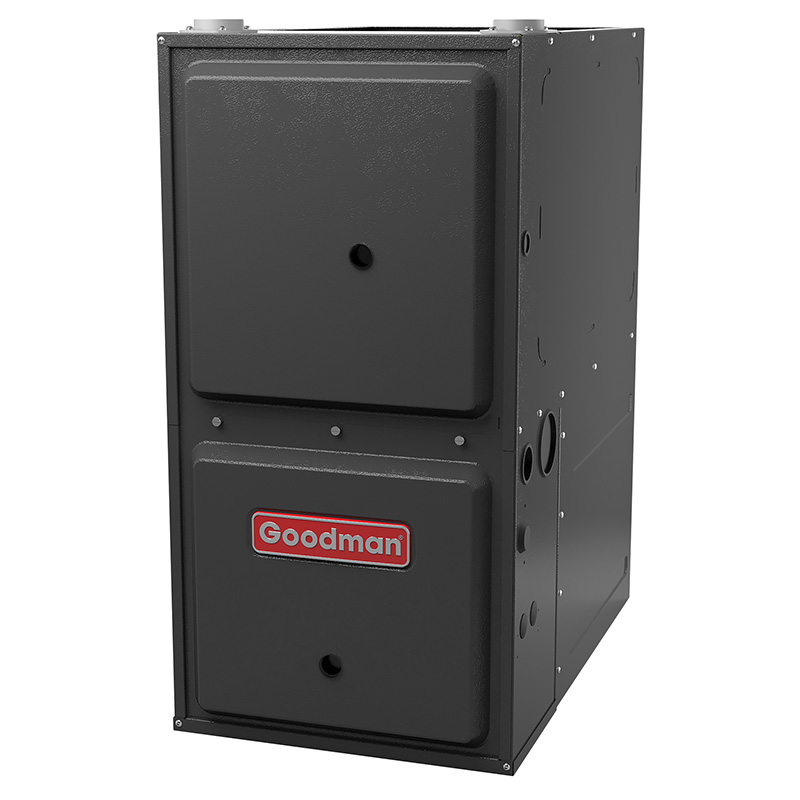
- 80,000 BTU two-stage gas furnace at 80% AFUE with downflow configuration
- Multi-speed ECM blower motor reduces fan electricity draw versus standard PSC motors
- California Low NOx certified, compliant with South Coast AQMD and Bay Area AQMD burner rules
- Matched AHRI-certified system; efficiency and warranty ratings apply only when both units are installed together
- R-32 refrigerant has a lower global warming potential than R-410A and operates at higher pressure
About this system
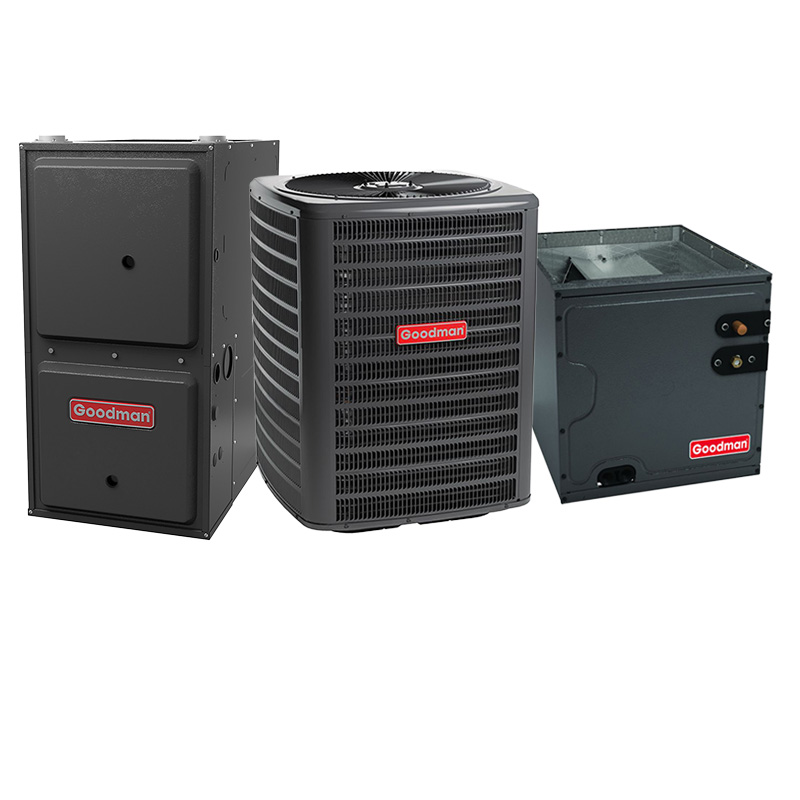
The Goodman GLXS4BA4810 is a 4-ton, 14.5 SEER2 split system bundled with an 80,000 BTU two-stage, 80% AFUE gas furnace configured for downflow installation. It runs on R-32 refrigerant and meets California’s Low NOx emissions requirements, making it one of the few systems in this price tier that ships ready for California air districts without an aftermarket burner swap. The downflow configuration suits homes where the air handler sits in a closet, utility room, or platform above the conditioned space, with supply air pushed downward into the duct system.
The two-stage compressor and multi-speed ECM blower motor are the real performance story here. Running on low stage the majority of the time, the system cycles less frequently, maintains more consistent indoor temperatures, and removes humidity more effectively than a single-stage unit would. The ECM motor trims blower electricity consumption compared with a standard PSC motor. At 14.5 SEER2 this system sits at the federal minimum efficiency tier for the 2023-onward standards, which means it qualifies for some utility rebates but will not earn the federal tax credit that requires 15 SEER2 or higher. Buyers in moderate climates who prioritize upfront cost over long-run efficiency savings are the natural fit.
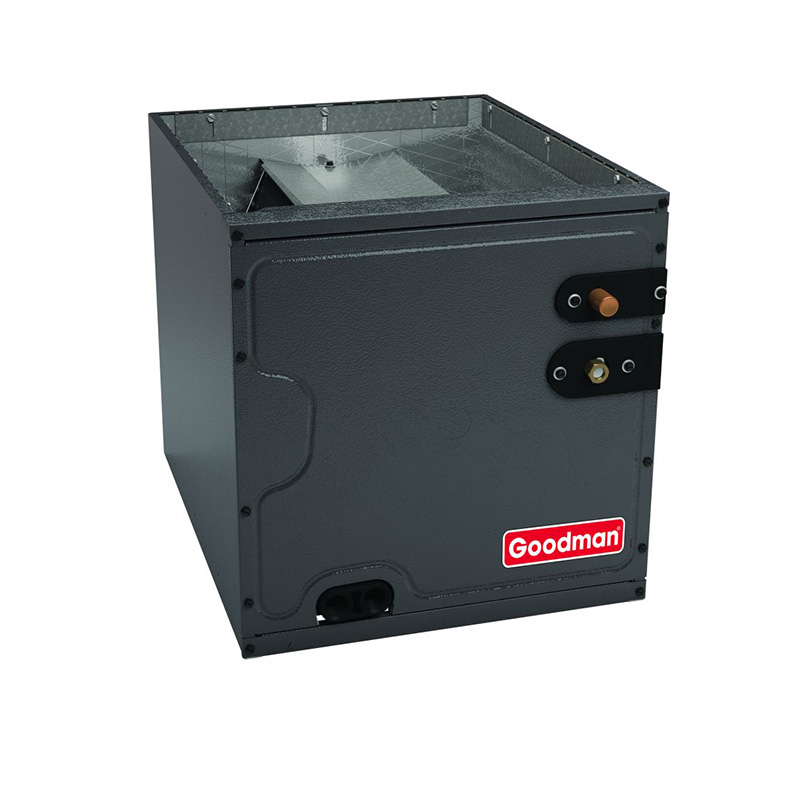
This system is sold as a matched combination, meaning the outdoor condensing unit and indoor furnace coil assembly are tested together and the AHRI-certified ratings apply to the pair as installed. That matters for warranty validity and for ensuring the manufacturer’s published efficiency numbers actually apply to your home. Buyers should confirm their existing duct system is sized for 4-ton airflow before purchasing, as undersized ductwork is one of the most common reasons a correctly installed Goodman unit underperforms its rated specs.
The GLXS4BA4810 delivers a two-stage, ECM-equipped system at a price point that undercuts Carrier, Trane, and Lennox by a meaningful margin, and the Low NOx certification removes a common California compliance headache. The trade-off is a brand with a documented history of capacitor failures, coil leak reports, and compressor longevity that trails premium competitors, so long-term cost of ownership depends heavily on install quality and whether you budget for a service plan.
Overall score is the average of the five ratings above.
What we like
- Two-stage compressor improves humidity control and temperature consistency versus single-stage alternatives at this price
- ECM blower motor reduces operating electricity costs compared with PSC motors common in cheaper systems
- California Low NOx certification included, avoiding costly field modifications required by some competing units
- R-32 refrigerant is widely available and has a lower environmental impact than R-410A
- Priced 15 to 25 percent below comparable Carrier, Trane, and Lennox configurations, lowering the barrier to a two-stage system
Trade-offs
- 80% AFUE furnace is the lowest efficiency tier available; homes with high annual heating loads will pay more in gas bills than with a 96% AFUE alternative
- 14.5 SEER2 sits at the federal minimum and does not qualify for the federal Inflation Reduction Act tax credit, which requires 15 SEER2 or higher
- Documented compressor lifespan of 10 to 14 years on average trails the 15 to 20 years reported for premium brands, raising long-term replacement risk
- Dual-run capacitor failures and evaporator coil leaks are the most frequently reported repair issues, and repair costs can climb noticeably after year seven
What homeowners and pros say about Goodman
Homeowners who choose Goodman most often point to the upfront price as the deciding factor, and on that measure this system delivers. Google dealer reviews across Goodman installers average around 3.8 out of 5, with affordability appearing repeatedly as the reason buyers chose the brand. The picture is less favorable on ConsumerAffairs, where Goodman scores approximately 2.5 out of 5, a channel that skews toward complaint-motivated reviews and where the consistent thread is repair bills that start accumulating around year seven or eight. Neither number alone tells the full story, but together they suggest a brand that satisfies buyers early in the system’s life and tests patience later.
HVAC technicians who install and service Goodman equipment regularly identify install quality as the largest single variable in how a unit performs over time, more so than with premium brands that have tighter factory tolerances. The specific failure modes that show up most in owner and technician accounts are dual-run capacitor failures (typically a straightforward 300 to 600 dollar repair), evaporator coil refrigerant leaks, and compressors that tend to reach the end of their service life in the 10 to 14 year range rather than the 15 to 20 years more common in Carrier, Trane, or Lennox compressors. For this particular system, the two-stage compressor and ECM motor add mechanical complexity that a single-stage budget unit does not have, which is worth weighing against those reliability patterns. A qualified installer, a service agreement, and a budget for one or two capacitor or coil repairs over the system’s life are reasonable expectations going in.
Sources: ConsumerAffairs Goodman owner reviews, AHRI Directory of Certified Product Performance, U.S. DOE appliance and equipment efficiency standards, Goodman product specification sheets.
What it costs to run
At 14.5 SEER2, cooling this 4-ton system for a typical 1200-hour cooling season at the U.S. average electricity rate of $0.17/kWh works out to roughly $675 per year in cooling, about $56 less per year than a minimum-efficiency 13.4 SEER2 unit of the same size. Your real cost depends on your climate and local rate.
Method: (48,000 BTU/hr ÷ 14.5 SEER2) × 1200 hours ÷ 1000 × $0.17/kWh. Rate source: U.S. EIA average; cooling hours: moderate-climate estimate.
How it compares
| Brand | Comparable model | SEER2 | Stage | Price position |
|---|---|---|---|---|
| Goodman | GLXS4BA4810 | 14.5 | Two-stage | Value pick |
| Carrier | Performance 17 (24ACC636A / 58CVA080) | 15-17 | Two-stage | Roughly 20 to 30 percent higher than Goodman |
| Trane | XR15 / S9X2 (4TTR5048 / S9X2B080U5PSB) | 15-15.5 | Two-stage | Roughly 20 to 25 percent higher than Goodman |
| Lennox | Merit ML14XC1 / ML80UH (4-ton / 80,000 BTU) | 14.3-15 | Single-stage to two-stage depending on config | Roughly 15 to 25 percent higher than Goodman |
Competitor rows are comparable single-stage units at similar efficiency; price is relative position, not a quote.
Questions about this system
Does this system qualify for the federal Inflation Reduction Act HVAC tax credit?
No. The federal tax credit for central air conditioners currently requires 15 SEER2 or higher. At 14.5 SEER2 this condensing unit falls below that threshold and does not qualify, though some state and utility rebate programs have lower efficiency floors that this system may still meet.
Why does the California Low NOx certification matter and does it cost extra?
California air districts including the South Coast AQMD require gas furnaces to meet Low NOx burner standards; a standard furnace sold outside California would need an aftermarket burner kit to comply. This unit ships with a factory Low NOx burner already installed, so there is no field modification or added parts cost required for compliance.
What does the downflow configuration mean and how do I know if my home needs it?
In a downflow system the furnace pulls return air in at the top and pushes conditioned air downward out the bottom into the duct system. This is typical when the air handler sits on a raised platform or in an upper-floor closet above the supply ducts. If your current furnace is upflow or horizontal, this unit is not a direct replacement and you would need a different configuration.
R-32 is a higher-pressure refrigerant than R-410A. Does that affect installation or service?
Yes. R-32 operates at pressures slightly higher than R-410A and requires technicians to use R-32-rated hoses, gauges, and recovery equipment. Most current HVAC tools are rated for the pressure range, but you should confirm your installer has R-32-compatible equipment before booking the job. R-32 is also mildly flammable (A2L classification), which requires specific handling practices.
What are the most common repairs on Goodman systems and when do they typically occur?
The most frequently documented failure on Goodman equipment is the dual-run capacitor, which typically runs 300 to 600 dollars to diagnose and replace and can occur at almost any point in the system's life. Evaporator coil leaks appear in a meaningful share of owner reports, and compressor longevity averages 10 to 14 years rather than the 15 to 20 years seen on premium brands. Repair frequency tends to increase noticeably after roughly year seven based on owner feedback patterns on ConsumerAffairs.
Specifications
| Cooling capacity | 4 Ton |
| Efficiency | 14.5 SEER2 |
| Furnace output | 80000 BTU |
| Furnace efficiency | 80% AFUE |
| Configuration | Downflow |
| Refrigerant | R-32 |
| Model | GLXS4BA4810 |