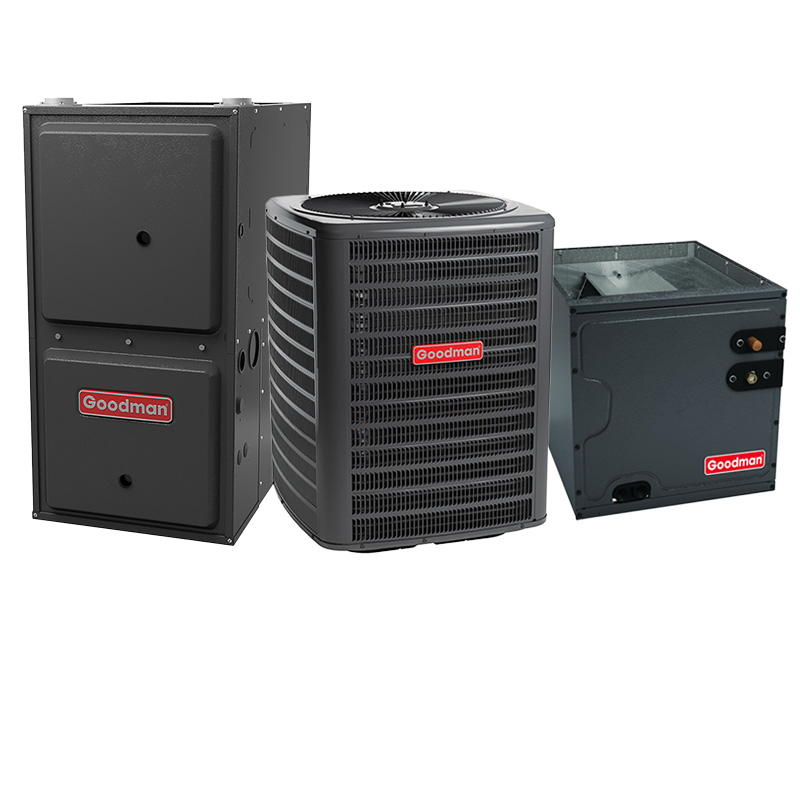
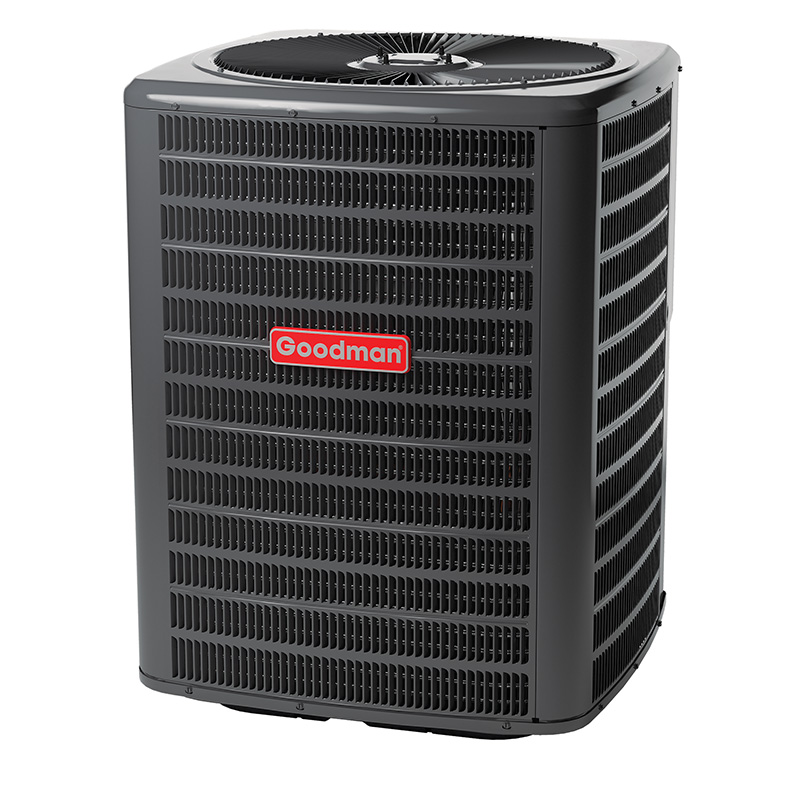
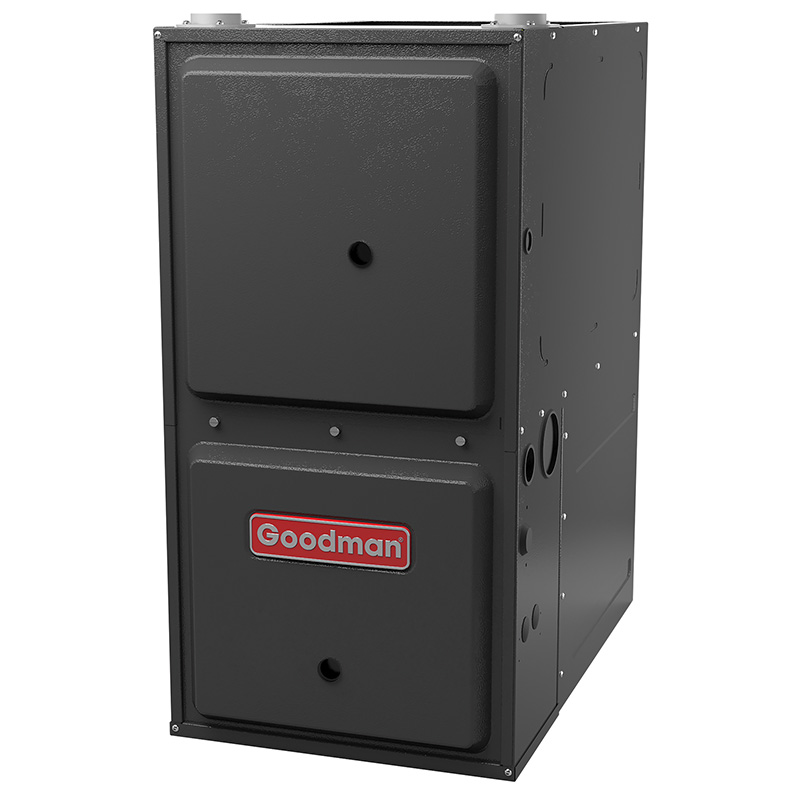
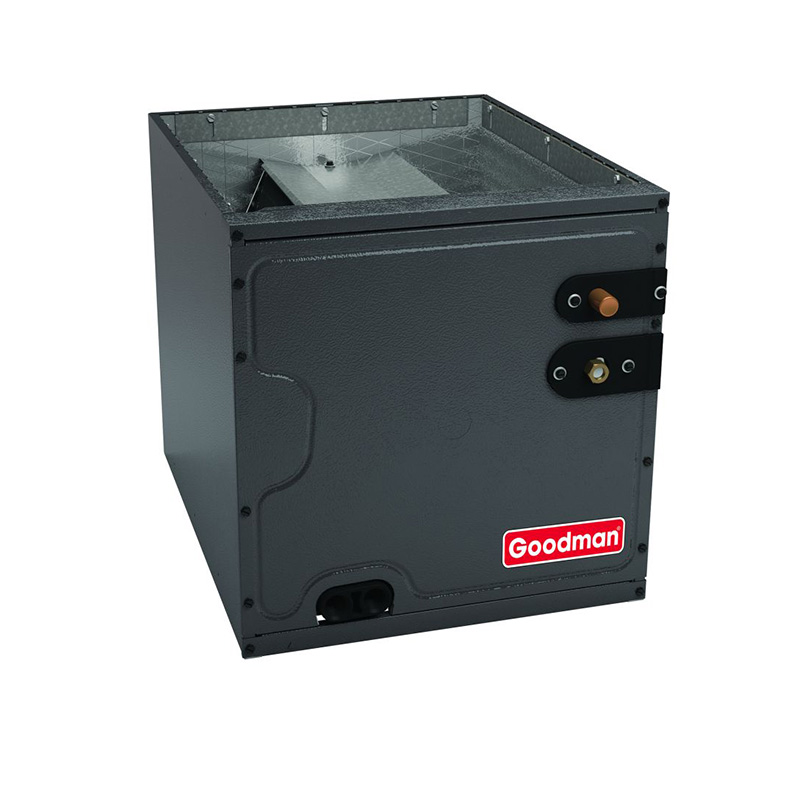
Goodman Furnace And Air Conditioner 1.5 Ton 14.5 SEER2 AC With 60000 BTU 80% AFUE Multi-Speed ECM Gas Furnace System – Downflow | R32
View on AC Direct see your lowest price →Check current price on AC Direct →
Key features
- 1.5-ton cooling capacity rated at 14.5 SEER2, meeting current federal minimum efficiency standards
- 60,000 BTU gas furnace with 80% AFUE single-stage heat output in a downflow cabinet orientation
- Multi-speed ECM blower motor for lower fan electricity use and more even air distribution than PSC alternatives
- R-32 refrigerant, which has roughly 68% lower global warming potential than R-410A
- Downflow configuration designed for attic, platform, or closet installations where supply air feeds floor registers
- Factory-matched system sold as a bundled coil-and-condenser pair, simplifying equipment compatibility verification
About this system
This Goodman bundle pairs a 1.5-ton, 14.5 SEER2 air conditioner with a 60,000 BTU, 80% AFUE multi-speed ECM gas furnace in a downflow configuration, making it a practical fit for homes where the air handler sits in an attic, closet, or platform above the living space and supply air drops down through floor registers. The 1.5-ton capacity targets smaller homes, condominiums, or well-insulated zones typically in the 600 to 900 square foot range, depending on local climate and building envelope. R-32 refrigerant is the forward-looking choice here: it carries a significantly lower global warming potential than the R-410A it is replacing across the industry, and most jurisdictions are now mandating or incentivizing the transition.
The 14.5 SEER2 rating lands at the current federal minimum threshold for most U.S. climate zones, which means it meets code but does not exceed it by a meaningful margin. Homeowners in mild climates with moderate cooling loads will see reasonable utility bills, but those in hot, humid regions running the system heavily all summer may find the efficiency gap versus a 16 or 18 SEER2 unit pays back over time. The 80% AFUE furnace is similarly a baseline performer: for every dollar of gas burned, 80 cents becomes usable heat. That is adequate where winters are short or mild, but in colder northern climates an upgrade to a 96% AFUE condensing furnace would likely reduce annual heating costs enough to offset the price difference within a few years. The ECM blower motor is a genuine value-add at this price tier, running at variable speeds to improve air distribution, reduce electricity draw during continuous fan operation, and support better humidity management compared to a standard PSC motor.
This Goodman bundle is a straightforward, budget-accessible entry point for smaller homes needing a downflow gas-and-cooling system, and the ECM motor and R-32 refrigerant are genuine positives at the price. However, efficiency sits at the regulatory floor rather than above it, and Goodman's documented track record of capacitor failures, coil leaks, and shorter average compressor life means long-term ownership costs can erode the upfront savings, particularly if install quality is not first-rate.
Overall score is the average of the five ratings above.
What we like
- Priced roughly 15 to 25 percent below comparable Carrier, Trane, and Lennox systems, giving meaningful upfront savings on a smaller-home install
- ECM blower motor reduces continuous fan electricity consumption compared to a single-speed PSC motor at this price tier
- R-32 refrigerant is a future-ready choice with a lower environmental footprint and broad industry adoption trajectory
- Factory-matched system eliminates compatibility guesswork between condenser, coil, and furnace components
- Downflow cabinet addresses a real installation need that not every bundled system covers, reducing field modification work
Trade-offs
- 14.5 SEER2 is the federal minimum in most regions, offering no efficiency buffer for homeowners with high cooling loads or rising electricity rates
- 80% AFUE is a baseline furnace rating; colder-climate owners will pay more in annual gas costs compared to a 90-plus percent AFUE alternative
- Goodman's documented failure modes, including dual-run capacitor failures, evaporator coil leaks, and compressor lifespans averaging 10 to 14 years versus 15 to 20 for premium brands, raise long-term repair cost exposure
- A minority of owners have reported refrigerant leaks within the first year, typically tied to install or charge issues, which underscores how much this system's durability depends on installer skill
What homeowners and pros say about Goodman
Homeowners who leave reviews about Goodman systems tend to split along a familiar line: those who got a clean, well-executed install and had routine maintenance performed regularly report years of acceptable performance and specifically point to the affordable purchase price as the reason they chose the brand. That sentiment shows up in the roughly 3.8 out of 5 average seen across Google dealer reviews, where affordability is the most frequently cited positive. The less favorable picture emerges on platforms like ConsumerAffairs, where Goodman sits around 2.5 out of 5, and the recurring theme in negative feedback is repair bills arriving sooner than expected, often after year seven when the unit is past its most visible warranty coverage.
HVAC technicians who service Goodman equipment regularly point to a short list of known weak spots. Dual-run capacitors are the most commonly reported component failure and are generally considered a quick, low-cost repair in the 300 to 600 dollar range, but they come up frequently enough to be worth monitoring annually. Evaporator coil leaks appear in a meaningful share of owner reports and represent a more expensive repair. Compressors on Goodman condensers tend to average 10 to 14 years of service life, which is a real gap compared to the 15 to 20 years seen on premium brands. Technicians consistently note that this system’s longevity is more sensitive to install quality than premium alternatives are, meaning a poor startup, an incorrect refrigerant charge, or improperly sized ductwork can meaningfully shorten the system’s useful life. A first-year refrigerant leak, while reported by a minority of owners, is nearly always traced back to the installation rather than the equipment itself.
Sources: ConsumerAffairs Goodman owner reviews, AHRI Directory of Certified Product Performance, U.S. DOE appliance and equipment efficiency standards, Goodman product specification sheets.
What it costs to run
At 14.5 SEER2, cooling this 1.5-ton system for a typical 1200-hour cooling season at the U.S. average electricity rate of $0.17/kWh works out to roughly $253 per year in cooling, about $21 less per year than a minimum-efficiency 13.4 SEER2 unit of the same size. Your real cost depends on your climate and local rate.
Method: (18,000 BTU/hr ÷ 14.5 SEER2) × 1200 hours ÷ 1000 × $0.17/kWh. Rate source: U.S. EIA average; cooling hours: moderate-climate estimate.
How it compares
| Brand | Comparable model | SEER2 | Stage | Price position |
|---|---|---|---|---|
| Goodman | 1.5 Ton 14.5 SEER2 AC / 60K BTU 80% AFUE ECM Furnace Downflow | 14.5 | Single-stage | Value pick |
| Carrier | Comfort 14 (CA14NA / 58TP) bundled system | 14.3 | Single-stage | Approximately 15 to 25 percent higher than this Goodman bundle |
| Trane | XR14 / S8X1 80% AFUE system bundle | 14.3 | Single-stage | Approximately 20 to 30 percent higher than this Goodman bundle |
| Lennox | Merit ML14XC1 / ML80XP1 system bundle | 14.3 | Single-stage | Approximately 20 to 30 percent higher than this Goodman bundle |
Competitor rows are comparable single-stage units at similar efficiency; price is relative position, not a quote.
Questions about this system
Is a downflow furnace the right choice for my house, or do I need a different orientation?
Downflow furnaces are specifically built for installations where the unit sits above the living space, typically in an attic or on a raised platform, with supply air flowing downward through floor-level registers. If your existing system uses an upflow or horizontal configuration, this cabinet orientation will not work without significant and costly ductwork changes, so confirm your current setup before purchasing.
Will my existing HVAC technician know how to work with R-32 refrigerant?
R-32 requires EPA Section 608 certification just like R-410A, but it is mildly flammable (classified A2L), which means technicians need specific training and equipment to handle it safely. Most licensed professionals working in 2024 and beyond are gaining R-32 experience as it rolls out across the industry, but it is worth confirming your installer has worked with A2L refrigerants before scheduling the job.
What does the Goodman warranty actually cover on this system?
Goodman typically offers a 10-year parts limited warranty when the system is registered within a set window after installation, dropping to a shorter term if registration is missed. The warranty covers parts replacement but does not include labor costs, which can be substantial, so factor potential service call and labor expenses into your total cost-of-ownership calculation.
Is 1.5 tons enough for my home, and how do I know for sure?
Capacity should be determined by a Manual J load calculation that accounts for your home's square footage, insulation levels, window area, local climate, and ceiling height rather than a simple square-foot rule of thumb. An undersized system will struggle to hold temperature on hot days, while an oversized one will short-cycle, reduce humidity control, and wear components faster, so insist your contractor perform or provide that calculation.
Goodman has mixed reviews online. Should I be worried about repair costs down the road?
The concern is legitimate and worth planning for. Goodman scores around 2.5 out of 5 on ConsumerAffairs, where recurring complaints center on repair costs climbing after roughly year seven, and the brand's documented weak points include dual-run capacitor failures (typically a 300 to 600 dollar fix), evaporator coil leaks, and compressor lifespans that average 10 to 14 years versus 15 to 20 for premium brands. Setting aside a small annual service budget and getting a maintenance agreement with a reputable local HVAC company can substantially reduce the risk of an unpleasant surprise.
Specifications
| Cooling capacity | 1.5 Ton |
| Efficiency | 14.5 SEER2 |
| Furnace output | 60000 BTU |
| Furnace efficiency | 80% AFUE |
| Configuration | Downflow |
| Refrigerant | R-32 |