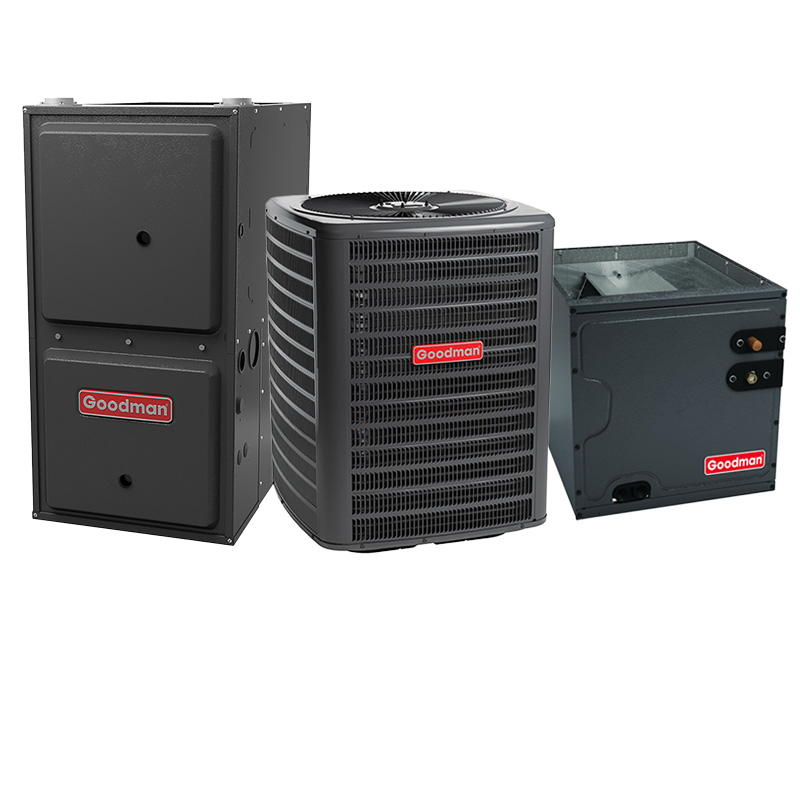
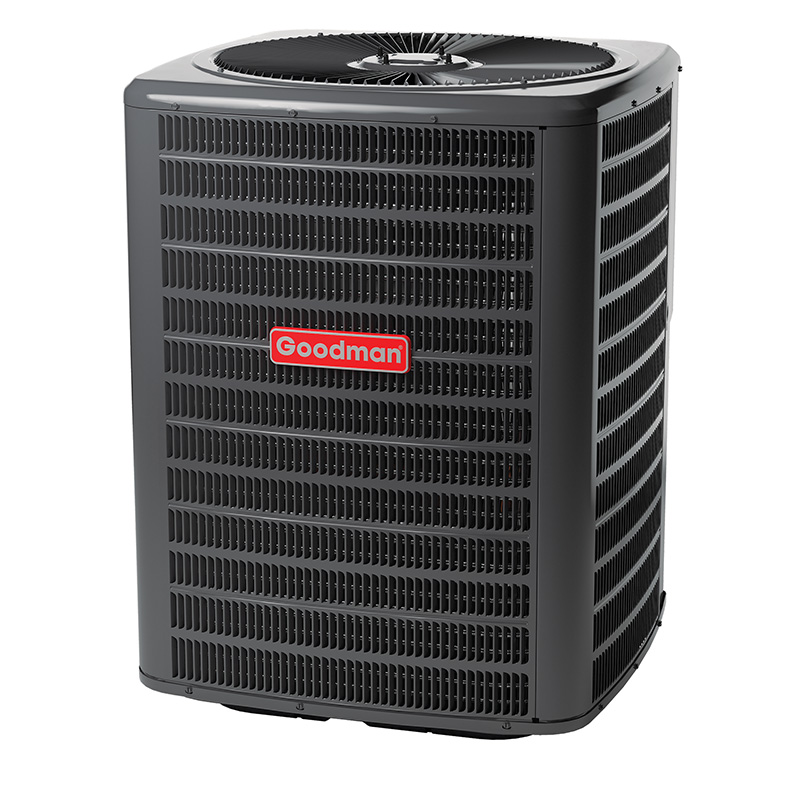
Goodman Furnace And Air Conditioner 3.5 Ton 15.2 SEER2 AC With 80000 BTU 80% AFUE Multi-Speed ECM Gas Furnace System – Downflow | R32
View on AC Direct see your lowest price →Check current price on AC Direct →
Key features
- 3.5-ton cooling capacity suits homes roughly 1,600 to 2,200 sq ft depending on climate and insulation
- 15.2 SEER2 rating meets current federal minimums and improves on older low-SEER equipment
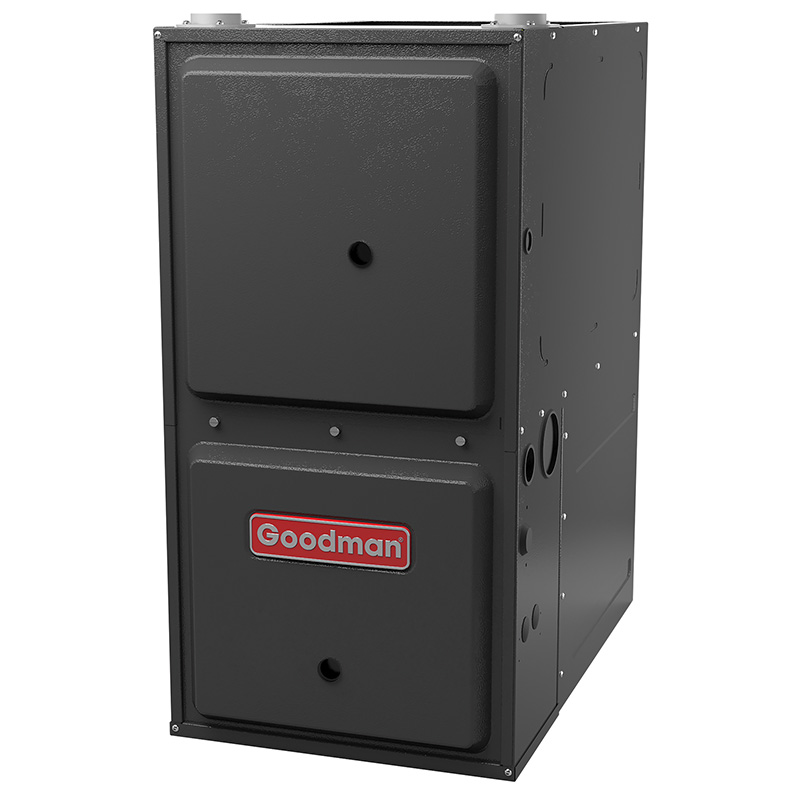
- 80,000 BTU output with 80% AFUE multi-speed ECM gas furnace in downflow configuration
- R-32 refrigerant: lower global warming potential than R-410A and compliant with upcoming regulations
- Multi-speed ECM blower motor reduces fan energy use and improves humidity control versus single-speed
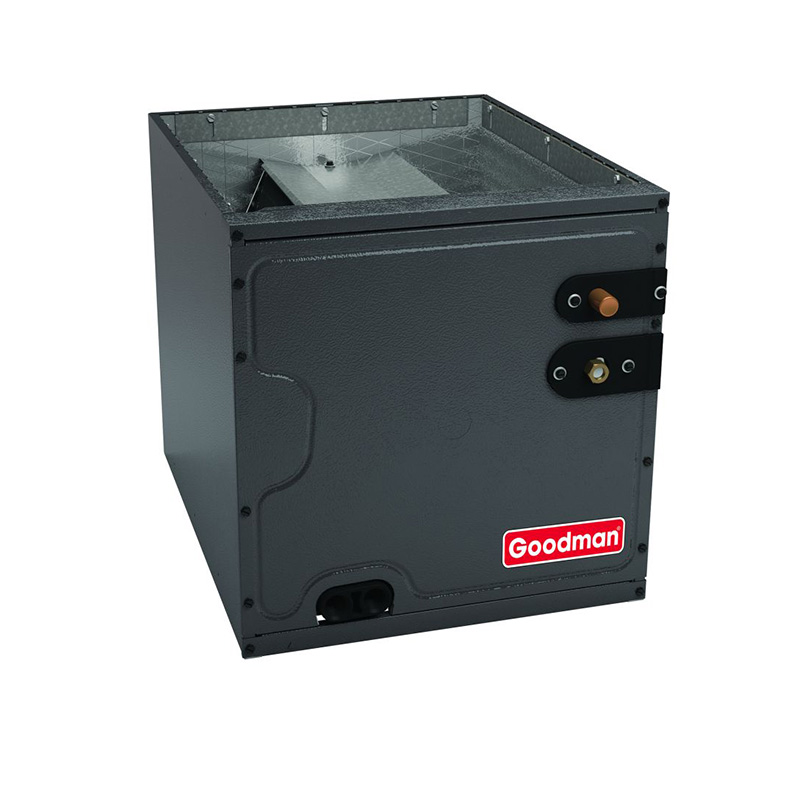
- Bundled system from one manufacturer simplifies coil matching and warranty paperwork
About this system
This Goodman bundle pairs a 3.5-ton, 15.2 SEER2 central air conditioner with an 80,000 BTU, 80% AFUE multi-speed ECM gas furnace in a downflow configuration, meaning the furnace sits above the air handler and blows conditioned air downward through floor registers. That layout is common in homes with basement or crawl-space ductwork, and the downflow orientation is less flexible than an upflow or horizontal unit, so confirming your existing duct orientation before ordering is essential. The R-32 refrigerant charge is a forward-looking choice: R-32 has a lower global warming potential than the R-410A it replaces and is increasingly the industry standard heading into the late 2020s.
On the performance side, 15.2 SEER2 clears the federal minimum efficiency threshold for most U.S. climate zones but sits at the lower end of mid-efficiency territory. It will outrun an aging R-22 or low-SEER R-410A system on utility bills, but homeowners in hot climates who run their AC heavily from May through September may find a 16 or 17 SEER2 unit pays back the cost difference within five to eight years. The 80% AFUE furnace is similarly entry-level efficient: one dollar in five goes up the flue as waste heat. In mild climates or homes that heat lightly, that trade-off is reasonable. In cold-weather regions where the furnace runs hard for five or six months, a 96% AFUE unit deserves a serious look at current gas prices.
This Goodman bundle delivers solid entry-to-mid-tier performance at a price point that undercuts comparable Trane, Lennox, and Carrier systems by a meaningful margin. The 15.2 SEER2 and 80% AFUE specs keep it competitive without reaching high-efficiency territory, and long-term costs depend heavily on installation quality and how aggressively the system is used. Buyers who want maximum peace of mind or live in high-heat or very cold climates may find the efficiency and reliability ceiling a limiting factor over a 15-plus-year ownership window.
Overall score is the average of the five ratings above.
What we like
- Price typically 15 to 25 percent below comparable Trane, Lennox, and Carrier bundles
- R-32 refrigerant is forward-compatible with evolving EPA regulations
- ECM blower motor lowers fan operating costs and handles humidity better than single-speed alternatives
- Bundled coil-matched system simplifies installation and supports warranty compliance
- Widely available parts and service network due to Goodman's large installed base
Trade-offs
- 80% AFUE means significant heat loss up the flue; meaningful ongoing fuel cost penalty versus 95-96% units in cold climates
- Compressor lifespan averages 10 to 14 years versus 15 to 20 years for premium brands, raising replacement cost risk in the second decade
- Downflow-only configuration limits installation flexibility; requires existing or new downflow duct layout
- ConsumerAffairs reviews average around 2.5 out of 5, with repair cost complaints rising after year 7 being a recurring theme
What homeowners and pros say about Goodman
Homeowners who choose Goodman generally cite upfront affordability as the deciding factor, and Google dealer reviews bear that out with scores averaging around 3.8 out of 5 across dealer locations, where value for money is the praise that shows up most consistently. The picture on consumer complaint platforms is less flattering: ConsumerAffairs shows a score of roughly 2.5 out of 5, and the pattern in those reviews is not usually a problem at installation but rather repair costs that begin climbing after the seven-year mark. Dual-run capacitor failures are the most commonly named culprit, typically a manageable low-cost fix, but evaporator coil leaks appear often enough in owner accounts to be worth noting as a realistic scenario over a 10-year ownership window.
HVAC technicians who work on Goodman equipment regularly tend to frame their assessments around install quality above almost everything else. A properly sized, correctly charged, and cleanly installed Goodman unit running on a well-balanced duct system can perform reliably through its expected service life. Where things tend to go sideways is when the system is oversized, undercharged, or installed by a lower-cost crew cutting corners, since the brand leaves less margin for error than a premium unit might. The compressor lifespan data point is the one professionals most often raise when comparing Goodman to Trane, Lennox, or Carrier: independent service data suggests Goodman compressors average 10 to 14 years rather than the 15 to 20 years associated with premium brands, which factors into the real total cost of ownership for buyers planning to stay in a home long-term. First-year refrigerant leaks, reported by a minority of owners, are most often traced back to installation or initial charge issues rather than a manufacturing defect, reinforcing the consistent professional advice to invest in a qualified, experienced installer regardless of which brand you buy.
Sources: ConsumerAffairs Goodman owner reviews, AHRI Directory of Certified Product Performance, U.S. DOE appliance and equipment efficiency standards, Goodman product specification sheets.
What it costs to run
At 15.2 SEER2, cooling this 3.5-ton system for a typical 1200-hour cooling season at the U.S. average electricity rate of $0.17/kWh works out to roughly $564 per year in cooling, about $75 less per year than a minimum-efficiency 13.4 SEER2 unit of the same size. Your real cost depends on your climate and local rate.
Method: (42,000 BTU/hr ÷ 15.2 SEER2) × 1200 hours ÷ 1000 × $0.17/kWh. Rate source: U.S. EIA average; cooling hours: moderate-climate estimate.
How it compares
| Brand | Comparable model | SEER2 | Stage | Price position |
|---|---|---|---|---|
| Goodman | GSXN5 / GMVC8 bundle (this system) | 15.2 | Single-stage / multi-speed | Value pick |
| Carrier | Comfort 24ACC6 with 58MCA furnace | 15.2 | Single-stage | Priced roughly 20 to 25 percent above this Goodman bundle |
| Trane | XR15 with S9V2 furnace | 15.2 | Single-stage / two-stage | Priced roughly 20 to 30 percent above this Goodman bundle |
| Lennox | Merit ML15 with ML196E furnace | 15.2 | Single-stage | Priced roughly 15 to 25 percent above this Goodman bundle |
Competitor rows are comparable single-stage units at similar efficiency; price is relative position, not a quote.
Questions about this system
Is a downflow furnace going to work with my existing ductwork?
Only if your current system already uses a downflow layout, meaning the supply plenum exits through the bottom of the furnace into floor or basement ducts. Adapting an upflow duct system to a downflow unit typically requires significant ductwork modifications and adds labor cost. Confirm your existing configuration with your installer before purchasing.
Why does this system use R-32 instead of R-410A?
R-32 has roughly one-third the global warming potential of R-410A and is part of the industry-wide shift away from higher-GWP refrigerants under EPA Section 608 regulations. R-32 is mildly flammable (A2L classification), so installers must be certified and follow updated handling procedures, which most licensed HVAC technicians are already trained for.
What does 80% AFUE actually mean for my heating bill compared to a higher-efficiency furnace?
It means 80 cents of every dollar in gas goes toward heating your home and 20 cents exits through the flue. A 96% AFUE furnace would recover most of that 16-cent gap per dollar. In a home spending $1,200 per heating season, that difference approaches $192 annually, so the payback calculation on upgrading to a higher-efficiency furnace depends on your local gas rates and how many months per year you heat.
What are the most common repair issues I should budget for over time?
Dual-run capacitor failure is the most frequently reported issue with Goodman AC units and is generally an inexpensive repair in the $300 to $600 range. Evaporator coil leaks appear in a notable share of owner reviews and carry a higher repair cost. Compressor longevity averages 10 to 14 years for Goodman versus 15 to 20 years for premium brands, so budgeting for a possible compressor replacement in the second decade is prudent.
Does buying a matched Goodman bundle affect the warranty compared to mixing brands?
Yes, in a meaningful way. Goodman's parts and labor warranty registration typically requires the indoor coil and outdoor unit to be a matched, registered system. Using a coil from a different brand or an unregistered combination can void or reduce coverage, so staying within the bundled system and completing manufacturer registration promptly after installation is important.
Specifications
| Cooling capacity | 3.5 Ton |
| Efficiency | 15.2 SEER2 |
| Furnace output | 80000 BTU |
| Furnace efficiency | 80% AFUE |
| Configuration | Downflow |
| Refrigerant | R-32 |