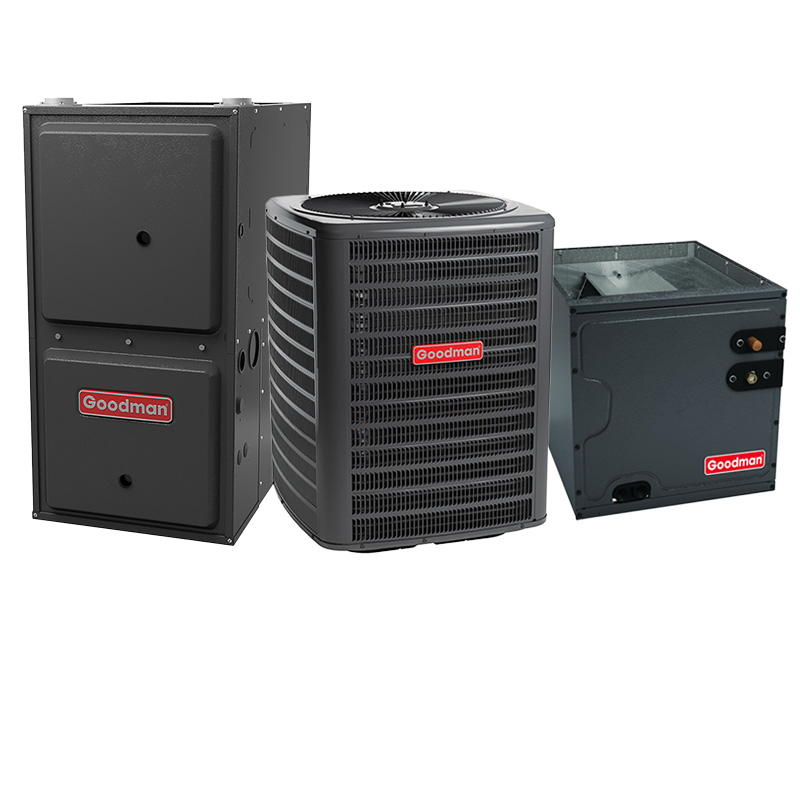
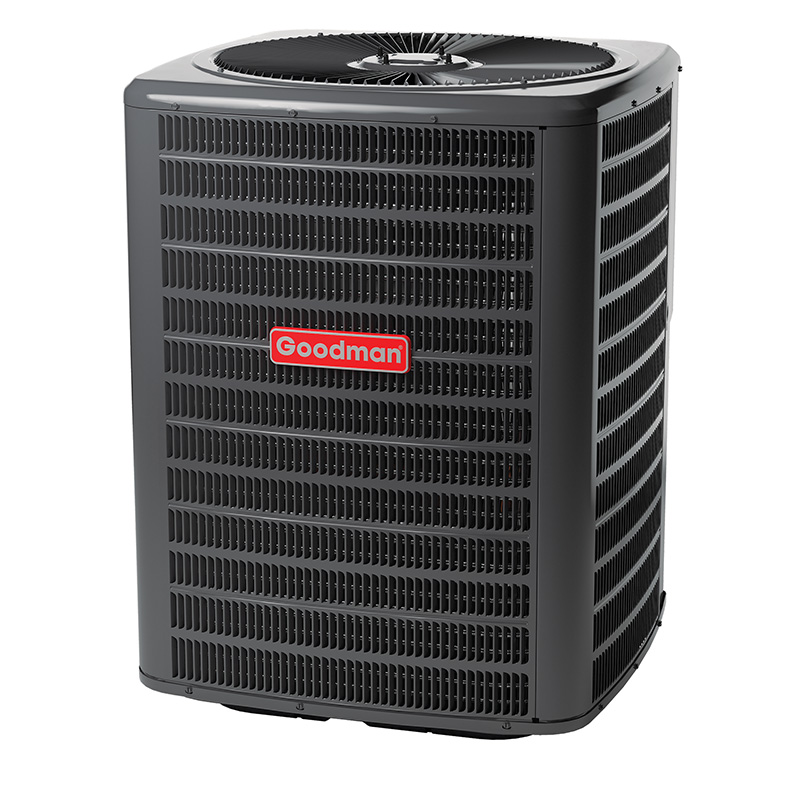
Goodman Furnace And Air Conditioner 3.5 Ton 15.2 SEER2 AC With 100000 BTU 80% AFUE Multi-Speed ECM Gas Furnace System – Downflow | R32
View on AC Direct see your lowest price →Check current price on AC Direct →
Key features
- 3.5-ton cooling capacity matched to a 100,000 BTU heating output for larger single-story or two-story homes
- 15.2 SEER2 efficiency rating meets current federal minimum standards and reduces operating costs versus older 13-14 SEER equipment
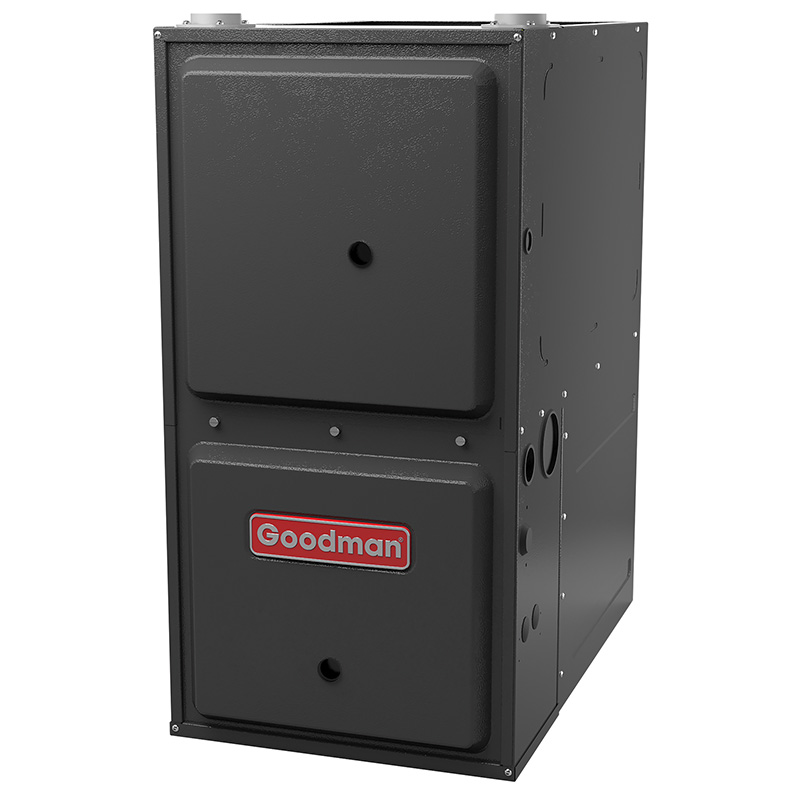
- 80% AFUE single-stage gas furnace with multi-speed ECM blower for improved comfort and humidity control
- Downflow configuration designed for installations where supply air must flow downward into floor-level duct systems
- R-32 refrigerant with lower global-warming potential than R-410A, aligned with current and upcoming environmental regulations
- Goodman's 10-year parts limited warranty on registered equipment covers major components including the compressor and heat exchanger
About this system
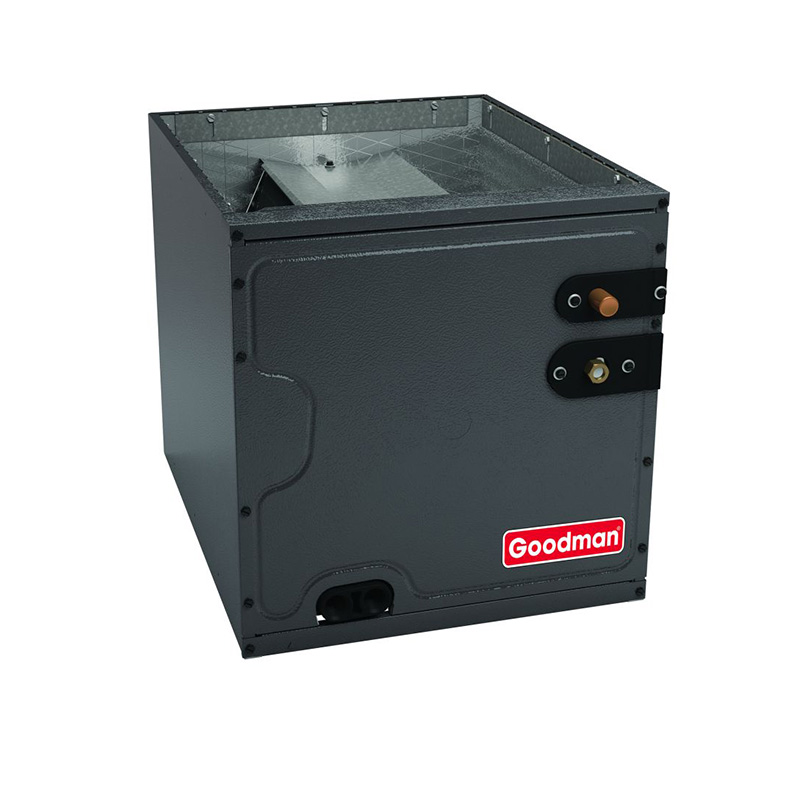
This Goodman bundle pairs a 3.5-ton, 15.2 SEER2 air conditioner with a 100,000 BTU, 80% AFUE multi-speed ECM gas furnace in a downflow configuration, making it a practical choice for homes where the air handler sits above a crawlspace or basement with supply ducts running beneath the floor. The R-32 refrigerant charge is a forward-looking detail: R-32 has a lower global-warming potential than the R-410A it replaces and is increasingly common in new residential equipment. At 3.5 tons, this system is sized for roughly 1,600 to 2,200 square feet depending on local climate, insulation quality, and ceiling height, so a proper Manual J load calculation before purchase is not optional.
The 80% AFUE rating means 80 cents of every fuel dollar goes toward heat, with 20 cents lost through the flue. That is the federal minimum for new furnaces in northern U.S. climate zones, and it trails the 95%-plus efficiency of condensing furnaces. Homeowners in mild-to-moderate heating climates or those on lower natural gas rates will find the lower upfront cost of an 80% unit offsets the efficiency gap; those in colder regions with high gas bills may want to price out a 96% AFUE alternative before committing. The multi-speed ECM blower motor is a genuine comfort upgrade over single-speed units, running at lower speeds during mild weather to reduce humidity and even out temperatures room to room.
This Goodman bundle delivers a functional, code-compliant heating and cooling system at a price point noticeably below Carrier, Trane, and Lennox equivalents, making it a reasonable option for budget-focused buyers who can secure a skilled installer. The efficiency specs are adequate rather than impressive, and the brand's documented reliability record means long-term ownership costs depend heavily on installation quality and willingness to budget for periodic repairs. It is not the system for buyers who want to install it and forget it for 20 years.
Overall score is the average of the five ratings above.
What we like
- Priced 15 to 25 percent below comparable Carrier, Trane, and Lennox systems, leaving room in the budget for a quality install
- R-32 refrigerant is more environmentally friendly than R-410A and positions the system for near-term regulatory compliance
- Multi-speed ECM blower improves dehumidification and temperature consistency compared to single-speed alternatives
- 10-year parts warranty on registered units covers the compressor, which is the most expensive component to replace
- Downflow furnace design suits a specific and common duct configuration that upflow units simply cannot serve
Trade-offs
- 80% AFUE is the minimum federally allowed in many regions and will cost more to operate annually than a 95%-plus condensing furnace, particularly in cold climates
- Compressor lifespan averages 10 to 14 years versus 15 to 20 years for premium brands, meaning a mid-life replacement is a realistic budget item
- Dual-run capacitors and evaporator coil leaks are documented recurring failure modes that add to ownership cost after year 7
- ConsumerAffairs reviews average around 2.5 out of 5, with repair costs in the 7-plus year range as a consistent complaint
What homeowners and pros say about Goodman
Homeowners who chose Goodman equipment frequently point to the lower purchase price as the deciding factor, and Google dealer reviews average around 3.8 out of 5 across multi-hundred-review samples, where affordability is the most repeated compliment. That approval tends to hold through the early years of ownership. The picture shifts noticeably after roughly year 7, which is where ConsumerAffairs reviews, averaging around 2.5 out of 5 on that complaint-weighted platform, concentrate most of their frustration. The recurring pattern in those later reviews is repair costs accumulating faster than owners anticipated, with dual-run capacitor failures being the most commonly cited service call and evaporator coil leaks appearing often enough to be a known risk rather than a rare outlier.
HVAC technicians who work on Goodman equipment regularly offer a more nuanced take. Many will say that a well-installed Goodman unit running on a properly sized system will perform adequately for a decade or more, and that the price gap versus Carrier, Trane, or Lennox genuinely exists. Where they tend to add caution is around compressor lifespan, which runs roughly 10 to 14 years for Goodman versus 15 to 20 years for premium brands, and around the minority of units that arrive from installation with refrigerant charge issues that only surface in the first cooling season. Their consistent advice: the contractor matters at least as much as the brand, and skimping on installation to preserve the savings from the equipment discount is the scenario that produces the worst outcomes.
Sources: ConsumerAffairs Goodman owner reviews, AHRI Directory of Certified Product Performance, U.S. DOE appliance and equipment efficiency standards, Goodman product specification sheets.
What it costs to run
At 15.2 SEER2, cooling this 3.5-ton system for a typical 1200-hour cooling season at the U.S. average electricity rate of $0.17/kWh works out to roughly $564 per year in cooling, about $75 less per year than a minimum-efficiency 13.4 SEER2 unit of the same size. Your real cost depends on your climate and local rate.
Method: (42,000 BTU/hr ÷ 15.2 SEER2) × 1200 hours ÷ 1000 × $0.17/kWh. Rate source: U.S. EIA average; cooling hours: moderate-climate estimate.
How it compares
| Brand | Comparable model | SEER2 | Stage | Price position |
|---|---|---|---|---|
| Goodman | GSXH5 / GMVC8 Series Bundle | 15.2 | Single-stage / Multi-speed | Value pick |
| Carrier | Comfort 24ACC636 with 58CVA Gas Furnace | 15.2 | Single-stage | 15 to 25 percent above Goodman |
| Trane | XR15 with S8X1 Gas Furnace | 15.0-15.5 | Single-stage | 15 to 25 percent above Goodman |
| Lennox | Merit ML15XC1 with ML180 Gas Furnace | 15.0-15.5 | Single-stage | 15 to 25 percent above Goodman |
Competitor rows are comparable single-stage units at similar efficiency; price is relative position, not a quote.
Questions about this system
Is a downflow furnace the right choice for my house, or do I need to confirm my duct layout first?
Yes, you need to confirm before ordering. Downflow furnaces are designed for systems where the supply plenum exits from the bottom of the unit and feeds floor-level or underfloor ductwork, typically in a garage installation above a crawlspace, or a first-floor utility closet over a basement. Using a downflow unit in an upflow or horizontal application is not possible without a different cabinet entirely, so verify your existing duct connection point or consult your installer before purchasing.
Will R-32 refrigerant be harder to service or recharge than R-410A?
R-32 is becoming increasingly common in residential equipment, and most established HVAC contractors are already certified to handle it. It does require technicians to use R-32-rated equipment and follow slightly different handling procedures due to its mild flammability classification, so confirming your chosen contractor has R-32 experience before signing is a reasonable step. Supply availability is not a concern in most U.S. markets today.
The 80% AFUE rating is the minimum allowed in my area. How much more would I spend on gas versus a 96% AFUE unit?
The annual difference depends on your local gas rate, climate zone, and how much you heat, but as a rough illustration, a home spending 1,200 dollars per year on gas with an 80% furnace would spend roughly 1,000 dollars with a 96% unit, saving around 200 dollars annually. Over 10 years that is approximately 2,000 dollars, which may or may not close the gap with the higher purchase price of a condensing furnace depending on specific quotes in your market.
What are the most likely repairs I should budget for over the first 10 years?
Based on documented owner experience with Goodman equipment, dual-run capacitor failure is the most common service call and typically costs 300 to 600 dollars including labor. Evaporator coil leaks are reported by a meaningful share of owners and are more expensive to address. A small number of owners have reported refrigerant leaks within the first year, which are generally traced to installation or initial charge issues rather than a component defect. Setting aside a modest annual maintenance reserve is sensible.
Does the 10-year parts warranty require registration, and what does it actually cover?
Yes, Goodman's 10-year parts limited warranty requires product registration within a specified window after installation, typically 60 days. Without registration, coverage drops to a shorter base warranty period. The warranty covers replacement parts but does not cover labor costs, refrigerant, or any repairs resulting from improper installation, so your out-of-pocket cost for a covered repair still includes the technician's time. Reading the warranty certificate that ships with the unit before installation is worthwhile.
Specifications
| Cooling capacity | 3.5 Ton |
| Efficiency | 15.2 SEER2 |
| Furnace output | 100000 BTU |
| Furnace efficiency | 80% AFUE |
| Configuration | Downflow |
| Refrigerant | R-32 |