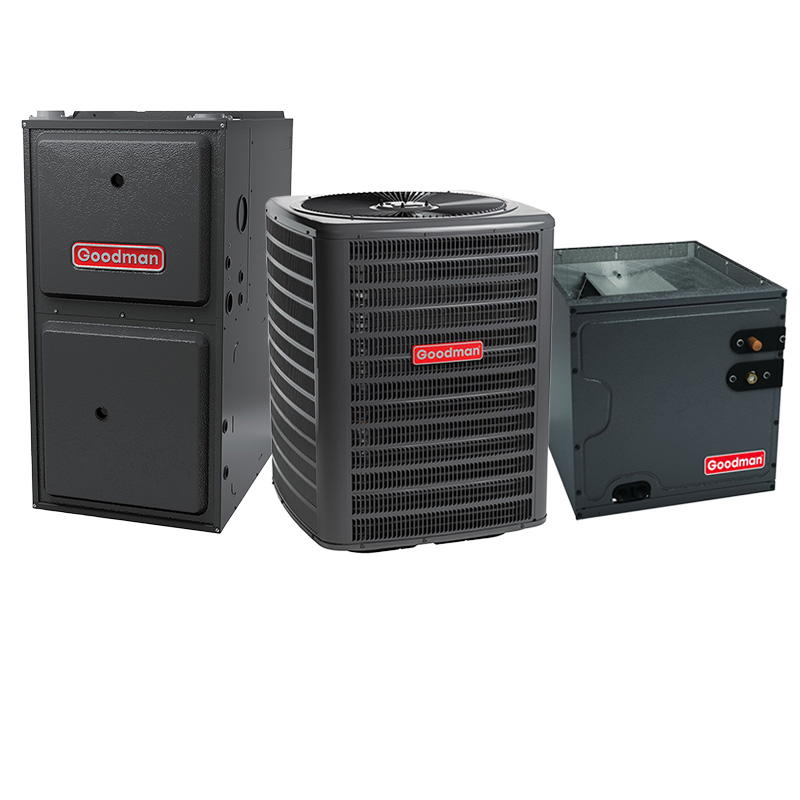
Goodman Furnace And Air Conditioner 3 Ton 15.5 SEER2 AC With 100000 BTU 80% AFUE Two Stage Multi-Speed ECM Gas Furnace System – Upflow | R32
View on AC Direct see your lowest price →Check current price on AC Direct →
Key features
- 3-ton cooling capacity with 15.5 SEER2 efficiency rating
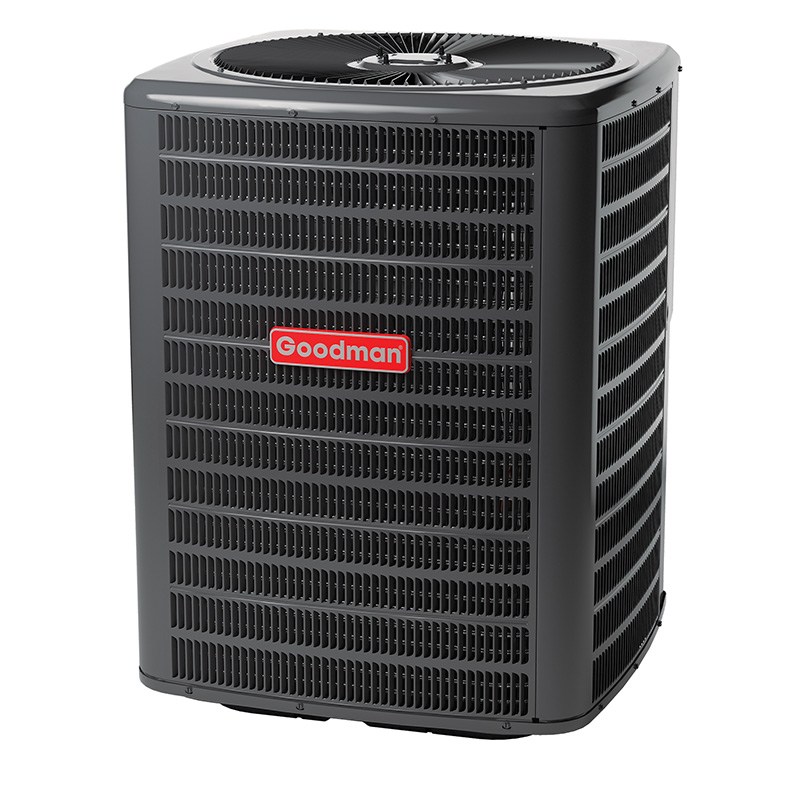
- Two-stage scroll compressor for improved humidity control and quieter part-load operation
- R-32 refrigerant with lower global warming potential than R-410A
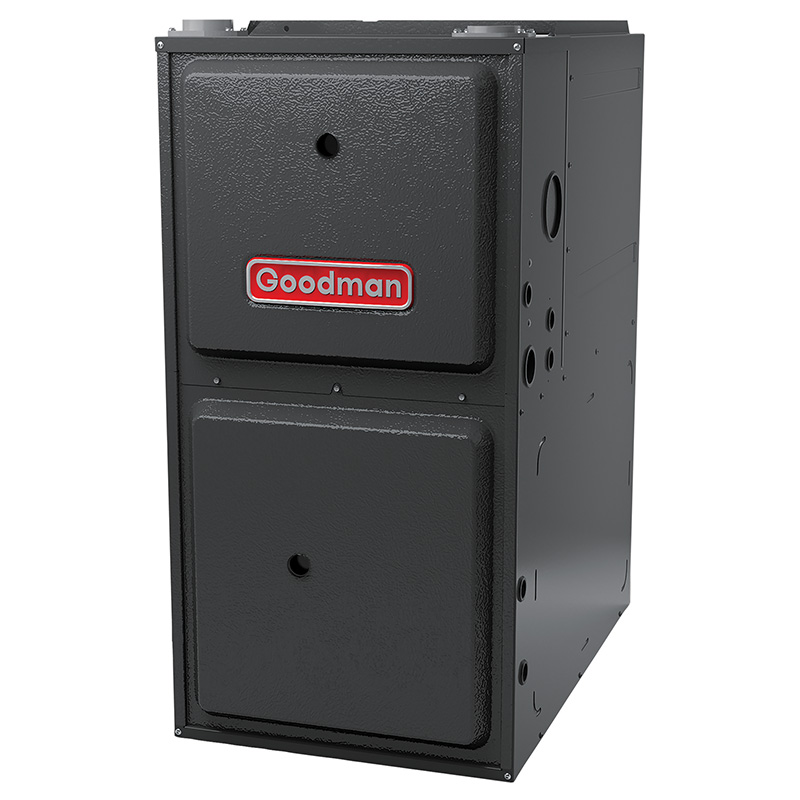
- 100,000 BTU, 80% AFUE two-stage gas furnace with multi-speed ECM blower
- Upflow configuration for installation in basements, utility closets, or ground-floor air handlers
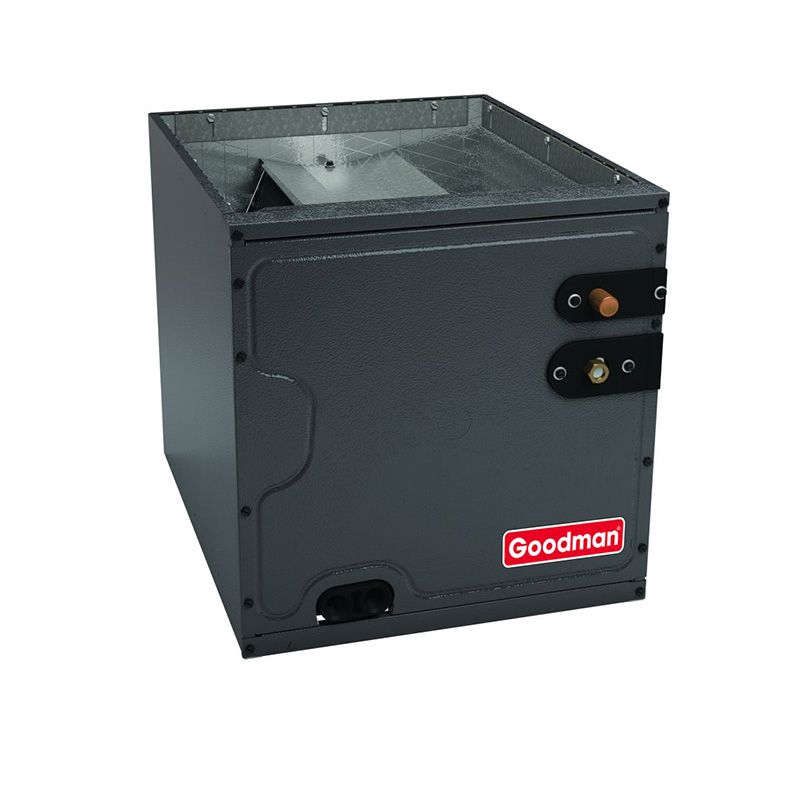
- Factory-matched coil and condenser designed to achieve rated SEER2 as a system
About this system
This Goodman bundle pairs a 3-ton, 15.5 SEER2 air conditioner with a 100,000 BTU, 80% AFUE two-stage gas furnace in an upflow configuration, making it a practical choice for homes in the 1,500 to 2,200 square foot range that need both cooling and heating replaced at the same time. The R-32 refrigerant charge reflects the industry’s move away from R-410A, offering a lower global warming potential while maintaining strong heat-transfer efficiency. Buying the air handler and furnace as a matched system simplifies coil compatibility and helps ensure the SEER2 rating is actually achievable in the field.
The two-stage compressor is a meaningful upgrade over single-stage equipment. On mild days the system runs at low capacity, which improves humidity control, reduces temperature swings, and cuts compressor cycling. The multi-speed ECM blower motor adjusts airflow in finer increments than a standard PSC motor, lowering electricity consumption during blower-only operation and distributing conditioned air more evenly. The 80% AFUE furnace is a code-minimum efficiency tier in most northern climates, so homeowners who heat heavily should weigh whether a 96% AFUE unit would recover the cost difference through gas savings within a reasonable payback window.
Goodman positions this bundle as a value option, typically priced 15 to 25 percent below similar equipment from Trane, Lennox, or Carrier. That gap is real and measurable, but it comes with trade-offs in expected compressor lifespan and a repair history that becomes more active after roughly year seven. For budget-conscious buyers willing to keep up with routine maintenance and work with a skilled installer, this system offers solid functionality without the premium-brand price tag.
This Goodman bundle delivers above-code cooling efficiency and two-stage comfort features at a price point that is hard to match from premium brands. The trade-off is a shorter expected compressor lifespan and a repair frequency after year seven that owners should budget for. It is a reasonable choice when install quality is prioritized and long-term operating costs are weighed carefully.
Overall score is the average of the five ratings above.
What we like
- Priced 15 to 25 percent below comparable Trane, Lennox, and Carrier systems, lowering the upfront barrier
- Two-stage compressor reduces humidity and temperature swings compared to single-stage equipment
- ECM blower motor cuts electricity use during fan operation and improves airflow consistency
- R-32 refrigerant is forward-compatible as the industry phases out R-410A
- Matched system simplifies installation and helps ensure the rated 15.5 SEER2 is achievable
Trade-offs
- 80% AFUE is code-minimum in many northern regions, meaning higher annual gas costs versus 96% AFUE alternatives
- Compressor lifespan averages 10 to 14 years, notably shorter than the 15 to 20 years typical of premium brands
- Evaporator coil leaks appear in a meaningful share of owner reviews, a recurring Goodman failure mode
- Dual-run capacitor failures are the most commonly reported repair, usually surfacing within the first several years of service
What homeowners and pros say about Goodman
Among homeowners, Goodman earns consistent praise for one thing above most others: the price. On dealer Google review pages, Goodman-equipped installs average around 3.8 out of 5 stars, and the most repeated positive comment is that the system delivered reliable comfort without a premium-brand bill. On ConsumerAffairs, however, the picture is less flattering, with scores hovering around 2.5 out of 5. That channel skews toward frustrated owners, and the recurring pattern in the complaints is the same: repair costs that start climbing after roughly year seven, with evaporator coil leaks and dual-run capacitor failures appearing as the most cited specific problems. Neither failure is catastrophic, but both carry a labor bill that can feel disproportionate on a budget-oriented system.
HVAC technicians tend to have a measured view of Goodman. Most acknowledge that install quality is the single largest variable in how long one of these systems lasts, and they will point out that a well-commissioned Goodman often outlasts a sloppily installed premium unit. That said, techs who work on large volumes of Goodman equipment do note that compressor longevity tends to fall in the 10 to 14 year range, compared to 15 to 20 years for Trane or Carrier compressors. A small but documented share of owners also report refrigerant leaks within the first year, which technicians almost universally attribute to installation or initial charge issues rather than a factory defect. The bottom line from the field is that this system rewards careful installation and consistent maintenance, and punishes neglect faster than its premium-brand competitors do.
Sources: ConsumerAffairs Goodman owner reviews, AHRI Directory of Certified Product Performance, U.S. DOE appliance and equipment efficiency standards, Goodman product specification sheets.
What it costs to run
At 15.5 SEER2, cooling this 3-ton system for a typical 1200-hour cooling season at the U.S. average electricity rate of $0.17/kWh works out to roughly $474 per year in cooling, about $74 less per year than a minimum-efficiency 13.4 SEER2 unit of the same size. Your real cost depends on your climate and local rate.
Method: (36,000 BTU/hr ÷ 15.5 SEER2) × 1200 hours ÷ 1000 × $0.17/kWh. Rate source: U.S. EIA average; cooling hours: moderate-climate estimate.
How it compares
| Brand | Comparable model | SEER2 | Stage | Price position |
|---|---|---|---|---|
| Goodman | GSXH503610 + GMVC801005CN (this system) | 15.5 | Two-stage | Value pick |
| Carrier | Comfort 24ACC636 + 59SC5 | 15.2 | Single-stage AC / two-stage furnace | 10 to 20 percent above this system |
| Trane | XR15 + S9V2 | 15.0 | Single-stage AC / two-stage furnace | 15 to 25 percent above this system |
| Lennox | EL15XC1 + ML196E | 15.5 | Single-stage AC / two-stage furnace | 20 to 30 percent above this system |
Competitor rows are comparable single-stage units at similar efficiency; price is relative position, not a quote.
Questions about this system
Does the 80% AFUE furnace qualify for any efficiency rebates in my area?
Most utility and federal rebate programs now require a minimum of 95 to 97% AFUE for furnace incentives, so this 80% unit will typically not qualify. Check your local utility's program requirements before purchasing if rebates are part of your budget calculation.
Can this system use R-410A instead of R-32, or is R-32 required?
This condenser and coil are designed and factory-charged for R-32 only. Mixing refrigerant types is not permitted and would void the warranty. Your installer will need to be certified for R-32 handling, which is now required under updated EPA Section 608 rules.
What does upflow configuration mean and will it work in my home?
Upflow means the furnace draws return air in at the bottom and discharges heated or cooled air upward into the duct system. This is the most common configuration for furnaces installed in basements, utility rooms, or ground-floor closets where supply ducts run through the floor above. If your ducts connect at the side or top of the unit in a different orientation, you would need a horizontal or downflow model instead.
How serious is the capacitor failure issue, and what does it typically cost to fix?
Dual-run capacitor failure is the most commonly reported Goodman repair and is generally a straightforward fix. Repair costs typically fall in the 300 to 600 dollar range including labor, and most HVAC technicians can complete the job in under an hour. It is worth having a tech inspect the capacitor during annual maintenance to catch early degradation before it causes a no-cool call in peak summer.
Is a two-stage furnace worth the extra cost over a single-stage at the same AFUE rating?
At the same AFUE rating, the two-stage furnace does not save gas on a per-BTU basis, but it runs longer at lower fire, which reduces temperature overshoot and cold spots. The bigger benefit is pairing with the two-stage compressor so the whole system runs at reduced capacity on moderate days, improving comfort and humidity control. For homes with sensitive occupants or poorly balanced duct systems, that comfort benefit is usually worth the modest price difference.
Specifications
| Cooling capacity | 3 Ton |
| Efficiency | 15.5 SEER2 |
| Furnace output | 100000 BTU |
| Furnace efficiency | 80% AFUE |
| Configuration | Upflow |
| Refrigerant | R-32 |