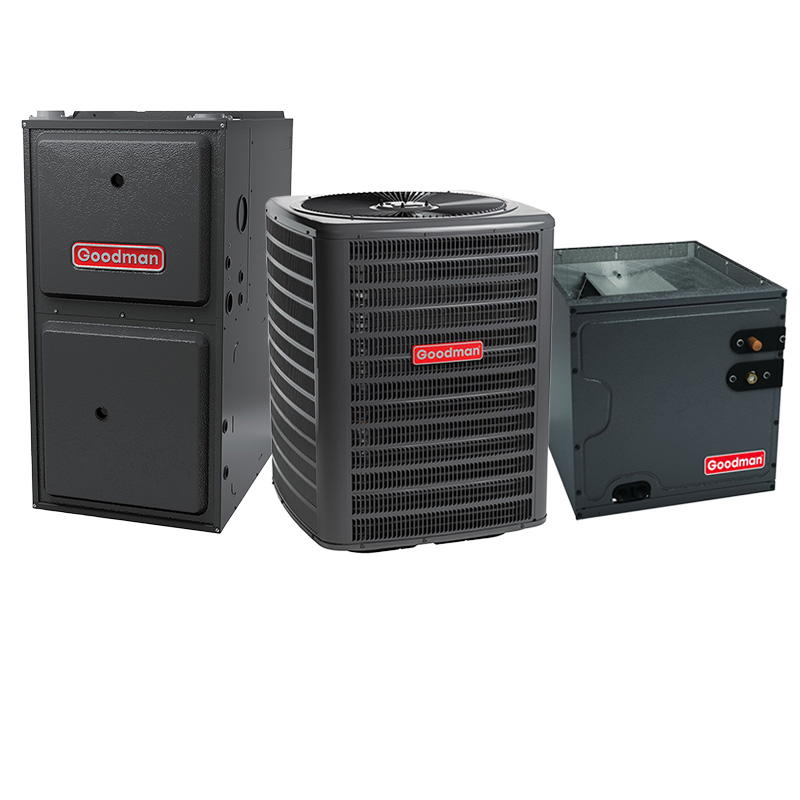
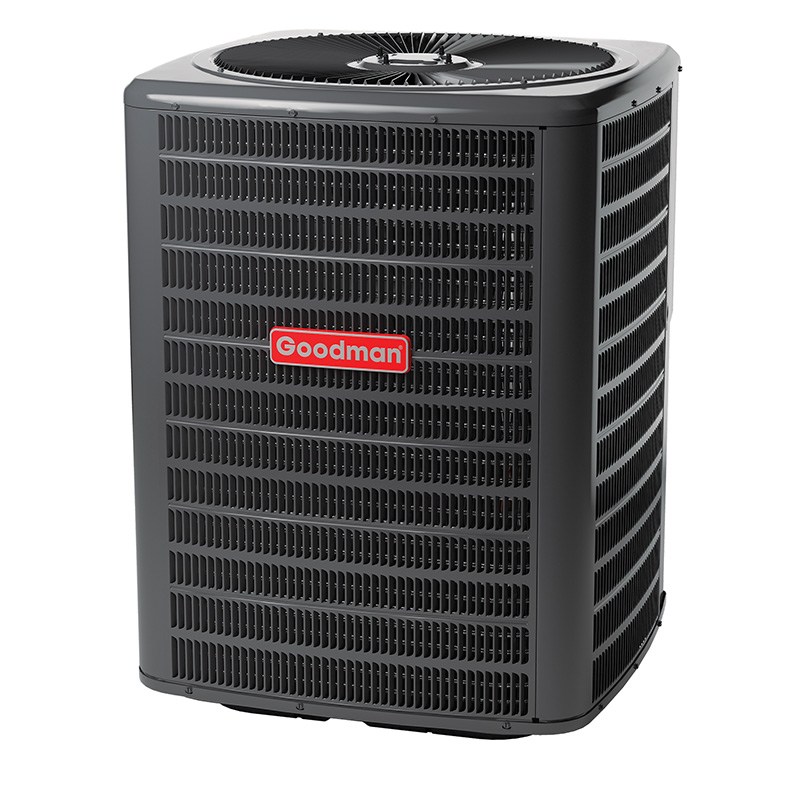
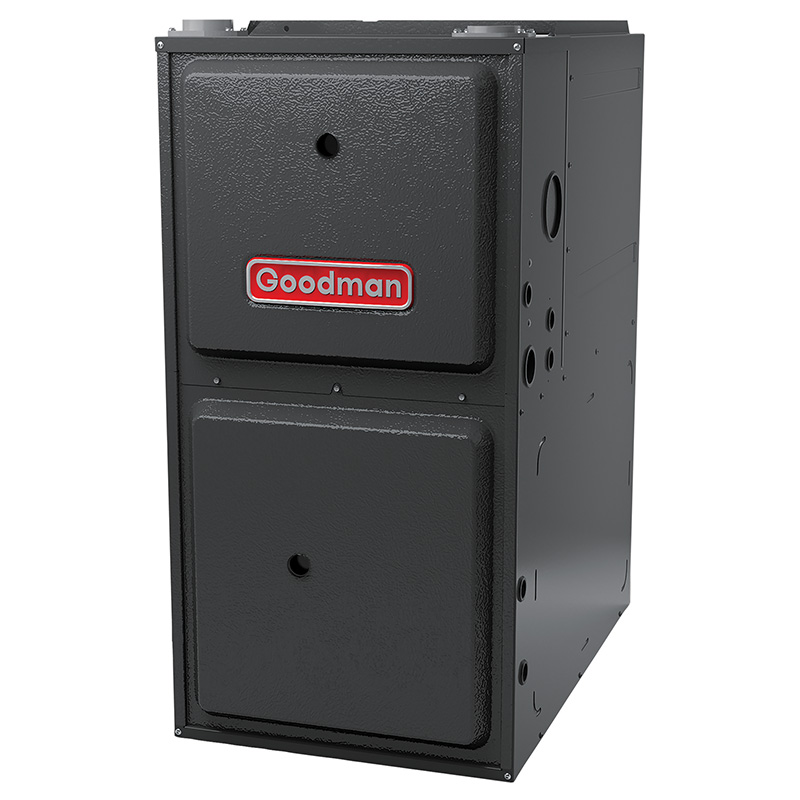
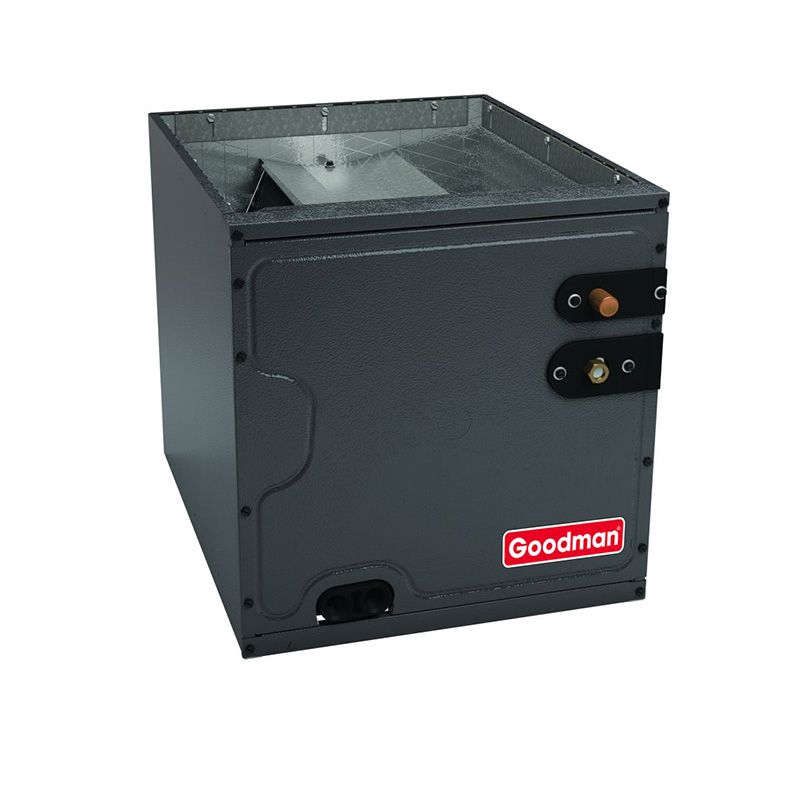
Goodman Furnace And Air Conditioner 3.5 Ton 15.2 SEER2 AC With 100000 BTU 80% AFUE Two Stage Multi-Speed ECM Gas Furnace System – Upflow | R32
View on AC Direct see your lowest price →Check current price on AC Direct →
Key features
- 3.5-ton, 15.2 SEER2 central air conditioner using R-32 refrigerant
- 100,000 BTU two-stage gas furnace rated at 80% AFUE
- Multi-speed ECM blower motor for lower electrical draw and quieter airflow
- Upflow configuration for homes with overhead supply ductwork
- Two-stage operation on both heating and cooling for more stable indoor temperatures
- R-32 refrigerant with lower global-warming potential than legacy R-410A
About this system
This Goodman bundle pairs a 3.5-ton, 15.2 SEER2 air conditioner with a 100,000 BTU, 80% AFUE two-stage gas furnace in an upflow configuration. The combination is sized for homes roughly in the 1,800 to 2,600 square foot range, depending on local climate, insulation, and duct layout. Two-stage cooling and heating mean the system runs at a lower capacity most of the time, cycling less aggressively and delivering more consistent comfort than a single-stage unit, while also putting less abrupt strain on components.
The furnace uses a multi-speed ECM blower motor, which draws significantly less electricity than a standard PSC motor and allows the system to modulate airflow for better dehumidification and quieter operation. The air conditioner uses R-32 refrigerant, a lower-global-warming-potential alternative to R-410A that is becoming the new industry standard and should remain serviceable as the industry transitions away from older refrigerants. At 80% AFUE, the furnace is a standard-efficiency unit, meaning roughly one-fifth of combustion heat exits through the flue rather than entering the living space, a real trade-off compared to 90%-plus condensing furnaces, but acceptable in mild-to-moderate heating climates or where venting a condensing unit is impractical.
Upflow configuration is the most common residential setup, with the furnace drawing return air from the bottom and delivering conditioned air upward into overhead ductwork. That limits this bundle to homes with ductwork arranged for upflow delivery, so confirm your duct layout before purchasing. As a system bundle from a value-tier brand, the price point runs noticeably below comparable Carrier, Trane, or Lennox packages, though long-term costs depend heavily on installation quality and the specific contractor who does the work.
This Goodman bundle delivers a capable two-stage, ECM-equipped system at a price point 15 to 25 percent below comparable premium-brand packages, making it a realistic option for budget-conscious buyers who prioritize upfront cost and are working with a skilled installer. The 80% AFUE furnace and 15.2 SEER2 rating are solid but not standout numbers, and the brand's documented history of capacitor failures, evaporator coil leaks, and shorter average compressor life means ongoing maintenance costs deserve a line in your budget. Whether this system performs for 10 years or 18 years will depend more on who installs and maintains it than on the equipment itself.
Overall score is the average of the five ratings above.
What we like
- Priced 15 to 25 percent below Trane, Carrier, and Lennox equivalents, lowering the upfront investment
- Two-stage operation reduces short-cycling and improves humidity control versus single-stage units
- ECM blower motor cuts fan electricity use and operates more quietly at lower speeds
- R-32 refrigerant is current-generation and aligns with industry transition away from R-410A
- Bundle simplifies equipment sourcing and helps ensure refrigerant and staging compatibility between the coil and condenser
Trade-offs
- 80% AFUE means roughly 20% of combustion heat is lost up the flue, a real efficiency gap versus 90-plus percent condensing furnaces
- Compressors on Goodman units average 10 to 14 years versus 15 to 20 years on premium brands, raising replacement-cost risk over the system's life
- Documented evaporator coil leaks and first-year refrigerant leaks in a minority of units point to production and install sensitivity
- Dual-run capacitors are the most commonly reported failure point, and repair costs tend to climb after roughly year 7 according to ConsumerAffairs complaint patterns
What homeowners and pros say about Goodman
Homeowners who have purchased Goodman equipment tend to split along a familiar line. Those who had a skilled contractor handle the installation and who kept up with annual maintenance often report years of trouble-free service and cite the lower purchase price as money well spent. That sentiment shows up in Google dealer reviews, where Goodman-installed systems average around 3.8 out of 5 stars and affordability is the most consistent praise. On the other side, ConsumerAffairs aggregates a complaint-weighted sample that lands around 2.5 out of 5, and the recurring theme there is repair bills that start climbing after roughly year 7, with dual-run capacitor failures being the most commonly named culprit. That repair is typically in the 300 to 600 dollar range and is not unique to Goodman, but it does appear with notable frequency in owner reports.
HVAC technicians tend to have a more textured view. Many will install Goodman willingly, particularly for customers on a fixed budget, but they are also the ones flagging the documented failure modes: evaporator coil leaks that surface in a meaningful share of units over time, compressors that average 10 to 14 years rather than the 15 to 20 years seen on premium brands, and a minority of first-year refrigerant leaks that tend to trace back to charging errors or connection issues at install rather than factory defects. The consistent professional advice is that Goodman’s value proposition holds up best when paired with a thorough installation, a correctly sized system, and a plan to stay on top of maintenance. Skip any of those steps and the cost savings from the lower purchase price can erode faster than expected.
Sources: ConsumerAffairs Goodman owner reviews, AHRI Directory of Certified Product Performance, U.S. DOE appliance and equipment efficiency standards, Goodman product specification sheets.
What it costs to run
At 15.2 SEER2, cooling this 3.5-ton system for a typical 1200-hour cooling season at the U.S. average electricity rate of $0.17/kWh works out to roughly $564 per year in cooling, about $75 less per year than a minimum-efficiency 13.4 SEER2 unit of the same size. Your real cost depends on your climate and local rate.
Method: (42,000 BTU/hr ÷ 15.2 SEER2) × 1200 hours ÷ 1000 × $0.17/kWh. Rate source: U.S. EIA average; cooling hours: moderate-climate estimate.
How it compares
| Brand | Comparable model | SEER2 | Stage | Price position |
|---|---|---|---|---|
| Goodman | GSXH5 / GCVC8 Series Bundle (this system) | 15.2 | Two-stage | Value pick, 15 to 25% below premium brands |
| Carrier | Performance 15 / 58TP Two-Stage Bundle | 15.2 | Two-stage | Moderately higher than this Goodman bundle |
| Trane | XR15 / S9V2 Two-Stage Bundle | 15.0 | Two-stage | Moderately to significantly higher than this Goodman bundle |
| Lennox | Merit ML15 / ML195 Two-Stage Bundle | 15.2 | Two-stage | Moderately higher than this Goodman bundle |
Competitor rows are comparable single-stage units at similar efficiency; price is relative position, not a quote.
Questions about this system
Is 80% AFUE good enough, or should I pay more for a 96% condensing furnace?
In mild to moderate heating climates, the payback period on a high-efficiency condensing furnace can stretch well beyond 10 years, so 80% AFUE is a reasonable choice there. In colder climates where the furnace runs hard for five or more months, the 15 to 20 percent fuel savings from a 96% unit add up faster and often justify the higher upfront cost. You also need to confirm your home can handle the PVC venting a condensing unit requires; if it cannot, 80% AFUE with a conventional flue may be your only practical option.
What does two-stage mean for day-to-day comfort versus a single-stage system?
A two-stage system runs at a lower capacity, typically around 65 to 70 percent, during mild conditions and steps up to full capacity only when the load demands it. That means longer, gentler cycles that pull more humidity from the air, fewer abrupt temperature swings, and generally quieter operation compared to a single-stage unit that is either fully on or fully off.
Why is R-32 refrigerant being used instead of R-410A, and does it affect service costs?
R-32 has a lower global-warming potential than R-410A and is part of the HVAC industry's phased transition to lower-impact refrigerants. For service, R-32 requires technicians to use compatible recovery equipment and to hold appropriate certifications, which most established shops already have or are acquiring. As R-410A becomes less available, R-32 systems should actually become easier and cheaper to service over time.
How common are the capacitor and coil failures I read about in Goodman reviews, and how expensive are they to fix?
Dual-run capacitor failure is the most frequently cited repair on Goodman equipment, and it is generally a straightforward fix in the 300 to 600 dollar range when caught early. Evaporator coil leaks are a more serious repair and show up in a meaningful share of long-term owner reviews, which is part of why budgeting for an annual maintenance visit and an extended labor warranty makes sense with this brand.
Can I install this system myself to save on labor costs?
Legally and practically, no. Handling refrigerant requires EPA Section 608 certification, and gas furnace connections require licensed work in most jurisdictions. Beyond licensing, Goodman's own warranty and most local codes require installation by a licensed HVAC contractor. Given that Goodman equipment's track record is especially sensitive to install quality, cutting corners here carries real risk to both safety and equipment lifespan.
Specifications
| Cooling capacity | 3.5 Ton |
| Efficiency | 15.2 SEER2 |
| Furnace output | 100000 BTU |
| Furnace efficiency | 80% AFUE |
| Configuration | Upflow |
| Refrigerant | R-32 |