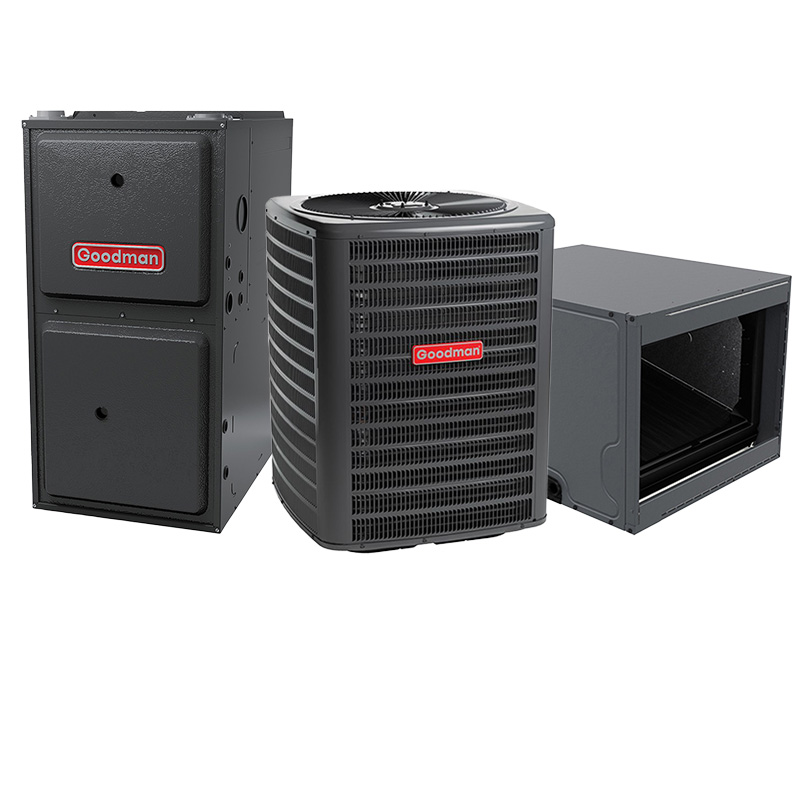
Goodman Furnace And Air Conditioner 2 Ton 16 SEER2 AC With 80000 BTU 80% AFUE Two Stage Multi-Speed ECM Gas Furnace System – Horizontal | R32
View on AC Direct see your lowest price →Check current price on AC Direct →
Key features
- 2-ton cooling capacity rated at 16 SEER2 for above-minimum energy efficiency
- 80,000 BTU two-stage gas furnace rated at 80% AFUE
- Multi-speed ECM blower motor reduces electricity use and improves humidity control
- Horizontal airflow configuration for attic, crawlspace, or closet installations
- R-32 refrigerant with lower global warming potential than R-410A
- Factory-matched system designed to meet AHRI-certified performance ratings together
About this system
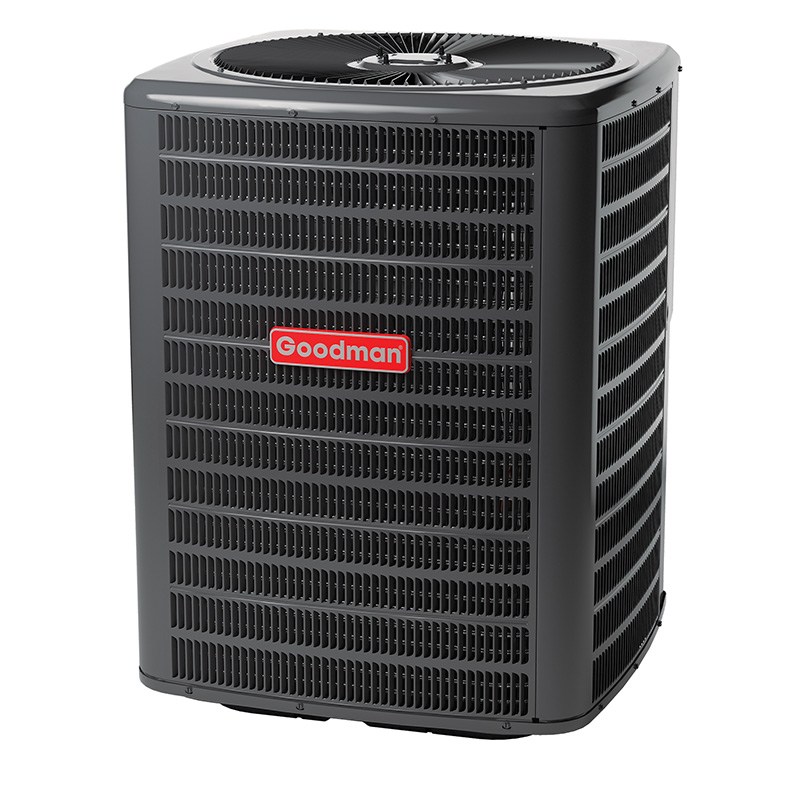
This Goodman bundle pairs a 2-ton, 16 SEER2 split-system air conditioner with an 80,000 BTU, 80% AFUE two-stage gas furnace in a horizontal configuration, making it a practical choice for homes with attic or crawlspace installations where vertical airflow is not possible. The 16 SEER2 rating places it comfortably above the current federal minimum efficiency threshold, meaning real-world cooling costs will be noticeably lower than older or entry-level equipment without crossing into the premium-tier price bracket. R-32 refrigerant gives this system a lower global warming potential than the R-410A it replaces, and is increasingly the standard for new residential equipment.
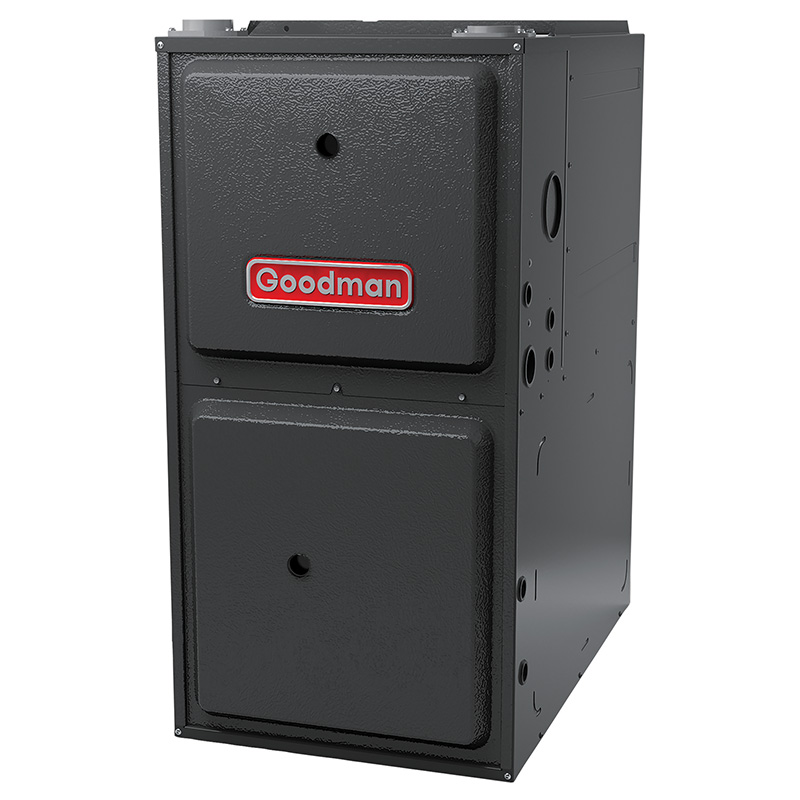
The two-stage furnace and multi-speed ECM blower motor are the most meaningful upgrades in this package over basic single-stage systems. Two-stage heating runs on a lower fire rate during milder weather, which extends run times, evens out temperatures between rooms, and reduces the short-cycling that wears components faster. The ECM motor draws significantly less electricity than a standard PSC motor and also supports better dehumidification performance from the air conditioner during cooling season. The horizontal configuration does limit your install options to specific orientations, so confirm with your contractor that your installation space matches before ordering.
This system is sized for smaller homes, typically in the 700 to 1,100 square foot range depending on climate, insulation, and ceiling height. A proper Manual J load calculation is especially important at this tonnage because oversizing a 2-ton unit even slightly leads to short cycles, humidity problems, and faster wear. Goodman’s value positioning means you are paying less upfront than you would for a comparable Trane or Carrier bundle, but that gap narrows if components need early replacement.
This Goodman bundle offers a legitimate efficiency and comfort upgrade over basic single-stage equipment at a price point that undercuts premium brands by a meaningful margin. The two-stage furnace and ECM blower are genuinely useful features, not just spec-sheet padding. The honest caveat is that Goodman's long-term reliability record is uneven, and the value calculation depends heavily on install quality and whether you factor in possible mid-life repair costs.
Overall score is the average of the five ratings above.
What we like
- Priced 15 to 25 percent below comparable Trane, Lennox, and Carrier bundles
- Two-stage furnace operation improves comfort and reduces short-cycling wear
- ECM blower motor lowers operating electricity costs versus standard PSC motors
- 16 SEER2 rating delivers real efficiency gains over minimum-efficiency alternatives
- R-32 refrigerant is a forward-looking choice as R-410A is phased out
Trade-offs
- Compressor lifespan averages 10 to 14 years, shorter than the 15 to 20 years typical of premium brands
- Dual-run capacitor failures are the most commonly reported issue, typically appearing after year 5 to 7
- Evaporator coil leaks appear in a meaningful share of owner reports, a potentially costly repair
- 80% AFUE furnace loses more heat through the flue than 90-plus AFUE alternatives, a real cost difference in cold climates
What homeowners and pros say about Goodman
Homeowners who discuss Goodman equipment online tend to land in two camps. Those who had a clean install from an experienced contractor often report years of trouble-free operation and point to the lower purchase price as money well spent. Those who ran into problems more frequently cite repair bills that arrived around year 7 or later, a pattern reflected in Goodman’s ConsumerAffairs score of roughly 2.5 out of 5, a channel that skews toward complaints but where the clustering of frustration in the mid-to-late ownership window is consistent enough to take seriously. Google dealer reviews average closer to 3.8 out of 5, where affordability is the praise that comes up most often, suggesting buyers who did their homework on expectations tend to be more satisfied.
HVAC technicians who work on Goodman equipment regularly point to dual-run capacitor failures as the most routine service call, usually a straightforward fix in the 300 to 600 dollar range but one that comes up more often than on premium brands. More consequential are evaporator coil leaks, which appear in a meaningful share of owner accounts and represent a more serious repair bill. Compressor longevity is the other honest concern: Goodman compressors average 10 to 14 years in real-world use, compared to 15 to 20 years for Trane and Carrier. For this specific horizontal two-stage system, technicians also note that installation precision matters more than usual because horizontal coil orientation and proper refrigerant charge in R-32 systems both affect long-term performance in ways that a rushed or under-experienced install can compromise from day one.
Sources: ConsumerAffairs Goodman owner reviews, AHRI Directory of Certified Product Performance, U.S. DOE appliance and equipment efficiency standards, Goodman product specification sheets.
What it costs to run
At 16 SEER2, cooling this 2-ton system for a typical 1200-hour cooling season at the U.S. average electricity rate of $0.17/kWh works out to roughly $306 per year in cooling, about $59 less per year than a minimum-efficiency 13.4 SEER2 unit of the same size. Your real cost depends on your climate and local rate.
Method: (24,000 BTU/hr ÷ 16 SEER2) × 1200 hours ÷ 1000 × $0.17/kWh. Rate source: U.S. EIA average; cooling hours: moderate-climate estimate.
How it compares
| Brand | Comparable model | SEER2 | Stage | Price position |
|---|---|---|---|---|
| Goodman | GSXH502410 / GMVC8 Series (this system) | 16 | Two-stage | Value pick |
| Carrier | Comfort 16 (24ACC6) with 80% AFUE Fan Coil Bundle | 16 | Single-stage | Moderately higher than this system |
| Trane | XR16c with S8X2 80% AFUE Two-Stage Furnace | 16 | Two-stage | Noticeably higher than this system |
| Lennox | Merit ML16XC1 with ML195 80% AFUE Furnace | 16 | Single-stage AC, two-stage furnace | Moderately to noticeably higher than this system |
Competitor rows are comparable single-stage units at similar efficiency; price is relative position, not a quote.
Questions about this system
Is 2 tons the right size for my home, and how do I know?
A 2-ton system is generally appropriate for homes in the 700 to 1,100 square foot range, but climate zone, insulation quality, window area, and ceiling height all affect the correct size significantly. The only reliable way to confirm is a Manual J load calculation performed by your HVAC contractor before purchase, not a rule-of-thumb square footage estimate.
What does the horizontal configuration actually mean, and does it affect my installation?
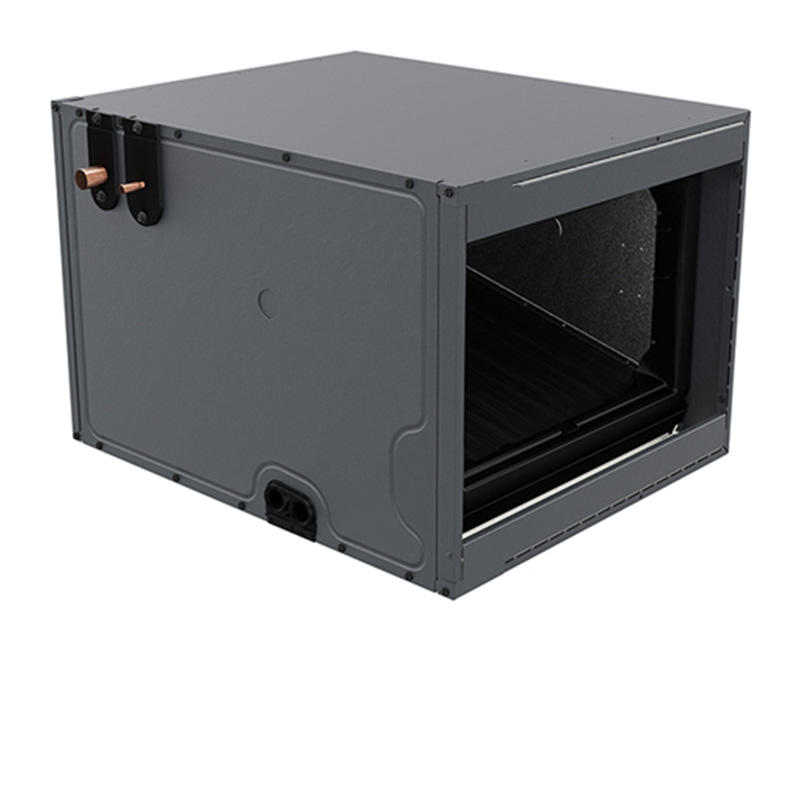
Horizontal means the air handler section is designed to lie on its side with airflow moving horizontally rather than vertically upward or downward. This is common in attic platforms, low crawlspaces, and some closet installations. If your existing furnace was installed vertically, this unit will not drop in as a direct swap without repositioning or a different model.
What are the most likely repairs I should budget for over the system's life?
Based on documented owner experience with Goodman equipment, dual-run capacitor replacement is the most common service call and typically costs between 300 and 600 dollars including labor. Evaporator coil leaks are reported by a meaningful share of owners and are a more significant expense. Compressors on Goodman units have averaged 10 to 14 years, so budgeting for possible replacement in that window is prudent.
Why does this furnace use 80% AFUE instead of 90-plus, and should I upgrade?
An 80% AFUE furnace exhausts roughly 20 percent of combustion heat through the flue, while a 95% AFUE unit loses only about 5 percent. In climates with long, cold winters, the efficiency difference adds up to real money annually. If you are in the South or a mild climate, the upfront cost premium for 90-plus AFUE may not pay back quickly enough to justify it; in the northern U.S., it often does.
Does R-32 refrigerant cause any practical differences for maintenance or service?
R-32 requires technicians to be certified for A2L refrigerant handling, which is becoming standard but is not universal at every shop yet. Confirm your servicing contractor is equipped for R-32 before installation. Leak handling protocols differ slightly from R-410A, but for a properly installed system day-to-day operation is functionally the same from a homeowner's perspective.
Specifications
| Cooling capacity | 2 Ton |
| Efficiency | 16 SEER2 |
| Furnace output | 80000 BTU |
| Furnace efficiency | 80% AFUE |
| Configuration | Horizontal |
| Refrigerant | R-32 |