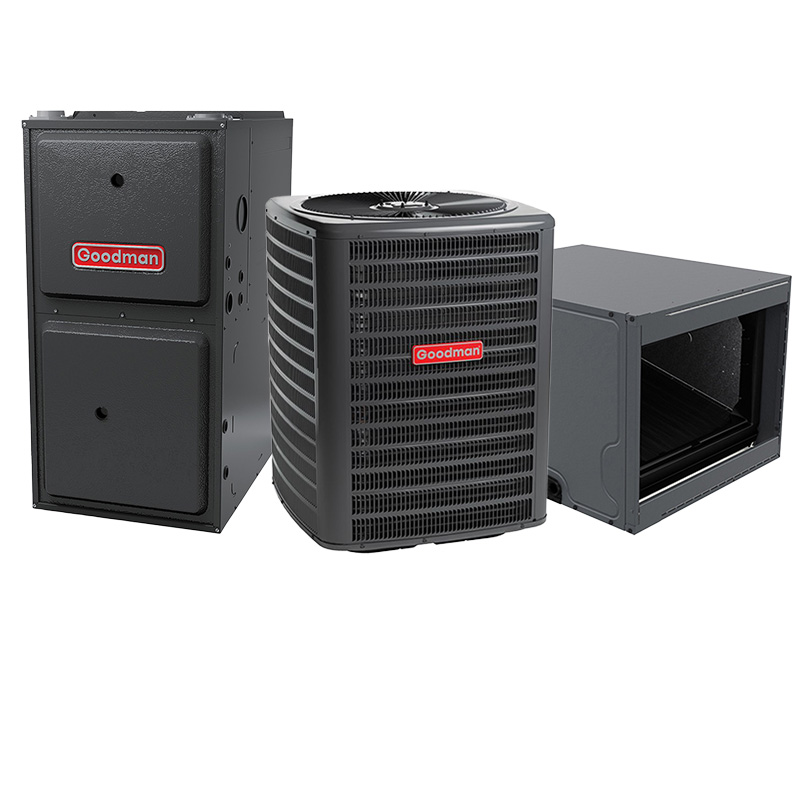
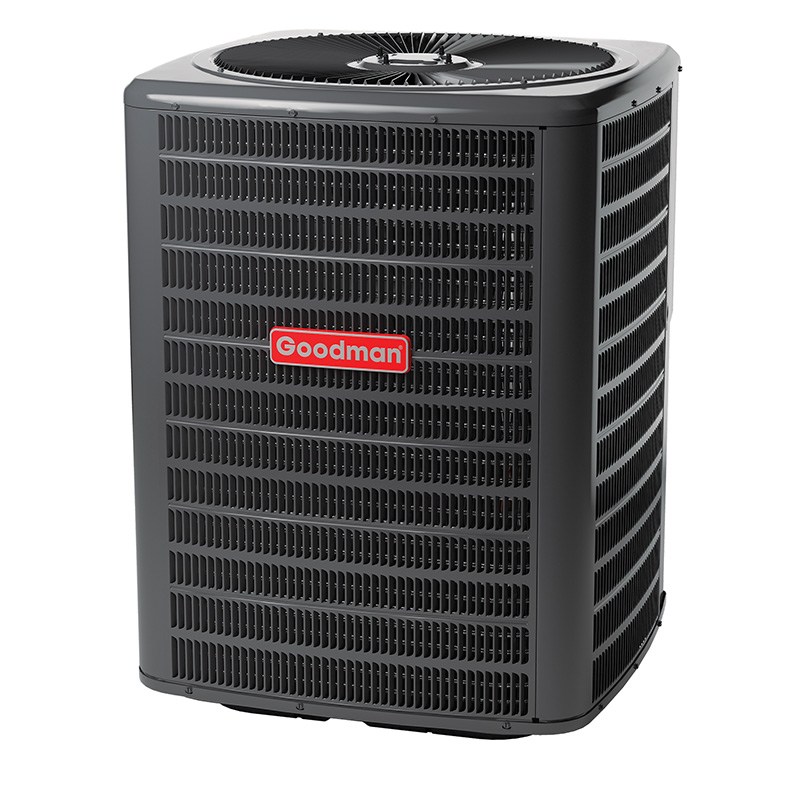
Goodman Furnace And Air Conditioner 2.5 Ton 16 SEER2 AC With 80000 BTU 80% AFUE Two Stage Multi-Speed ECM Gas Furnace System – Horizontal | R32
View on AC Direct see your lowest price →Check current price on AC Direct →
Key features
- 2.5-ton cooling capacity with 16 SEER2 efficiency rating
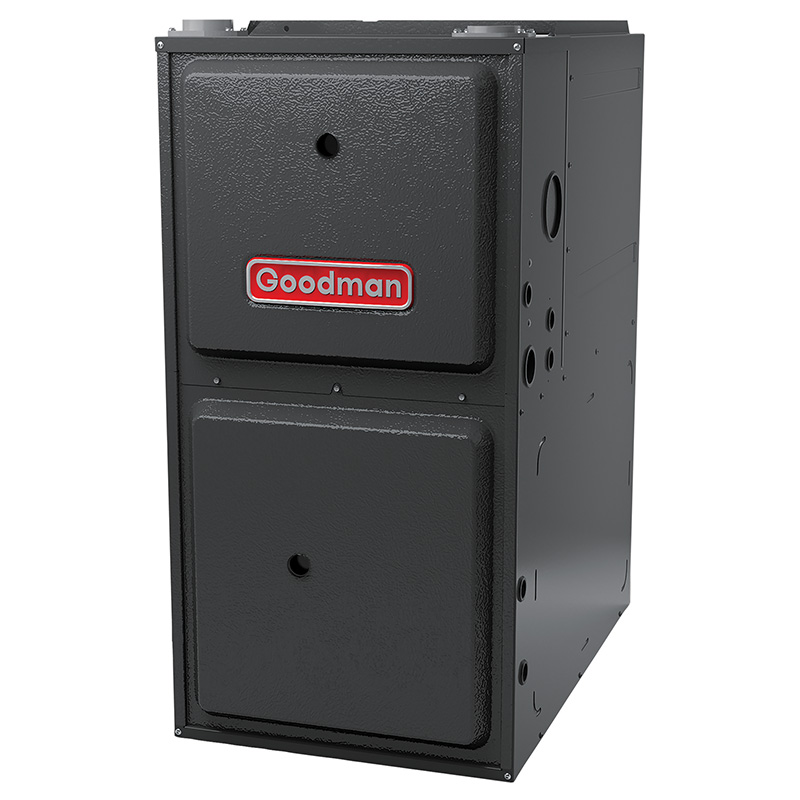
- 80,000 BTU two-stage gas furnace at 80% AFUE
- Multi-speed ECM blower motor for quieter, more efficient airflow
- Horizontal configuration for attic or crawlspace installations
- R-32 refrigerant with lower global warming potential than R-410A
- Matched system design allows single-warranty coverage across both units
About this system
This Goodman bundle pairs a 2.5-ton, 16 SEER2 air conditioner with an 80,000 BTU, 80% AFUE two-stage gas furnace configured for horizontal installation. The 16 SEER2 rating puts it at the entry point of the mid-efficiency tier, meaningfully above federal minimums and likely to cut cooling costs compared with older 13 or 14 SEER equipment, though it falls short of the savings you’d see from a 18+ SEER2 variable-capacity unit. The 80% AFUE furnace means one dollar in five of your gas spend goes up the flue, which is worth noting if you live in a cold climate where a 96% AFUE unit could pay back the price difference in a few heating seasons.
The two-stage furnace and multi-speed ECM blower motor are real practical upgrades over single-stage equipment. Two stages let the system run at lower capacity on milder days, which improves humidity control, reduces temperature swings, and runs quieter than a furnace that only knows full blast or off. The ECM motor is notably more efficient than a standard PSC blower and contributes to quieter, steadier airflow. The R-32 refrigerant has a lower global warming potential than the R-410A it replaces, and is now the direction the industry is moving, so this system is positioned for current and near-term regulatory compliance.
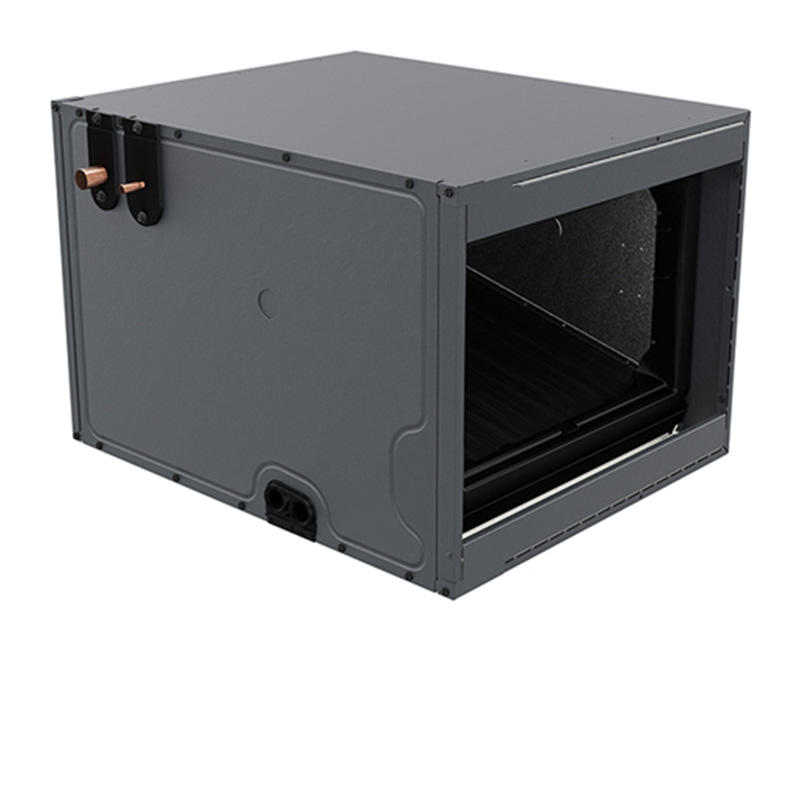
The horizontal configuration targets homes with attic or crawlspace installations, or any application where the air handler must lie on its side rather than stand upright. That orientation adds some nuance to the install, particularly around condensate drainage, so it is especially important to hire a technician who has experience with horizontal setups. This bundle suits a homeowner in a moderate-to-warm climate, in a roughly 1,200 to 1,800 square foot home, who wants to step up from builder-grade efficiency without paying Carrier or Trane prices.
This Goodman bundle delivers genuine mid-tier efficiency at a price point that undercuts comparable Carrier, Trane, and Lennox systems by a meaningful margin. The two-stage furnace and ECM blower are real comfort upgrades, but the brand's documented track record on capacitors, evaporator coil leaks, and compressor longevity means budgeting for potential repairs after year seven is prudent. It is a reasonable buy when installed by an experienced technician and backed by the factory warranty, not a set-and-forget premium system.
Overall score is the average of the five ratings above.
What we like
- Priced 15 to 25 percent below comparable Trane, Carrier, and Lennox systems
- Two-stage furnace operation improves humidity control and reduces temperature swings
- ECM blower motor cuts electrical consumption versus standard PSC motors
- R-32 refrigerant meets current and anticipated near-term regulatory requirements
- Matched bundle simplifies warranty claims and system compatibility
Trade-offs
- 80% AFUE is a significant efficiency gap versus 95 to 96% AFUE units in cold climates
- Compressors historically average 10 to 14 years, shorter than the 15 to 20 years typical of premium brands
- Horizontal installation adds condensate drainage complexity and demands experienced installers
- Owner reviews document evaporator coil leaks and refrigerant loss, particularly in early years and after year seven
What homeowners and pros say about Goodman
Homeowners and HVAC technicians tend to land in the same place on Goodman: it is a workable system at a price that is hard to argue with at the point of sale, but its long-term record is more uneven than the premium brands. On ConsumerAffairs, Goodman scores around 2.5 out of 5, though that channel skews toward unhappy owners who bother to write reviews. The recurring theme in those reviews is repair costs climbing after roughly year seven, which aligns with the brand’s documented compressor lifespan of 10 to 14 years versus the 15 to 20 years more commonly seen on Carrier and Trane equipment. Google dealer reviews are more balanced, averaging around 3.8 out of 5, where affordability is the most cited reason buyers chose the brand.
On the specific failure modes documented for Goodman, dual-run capacitor failures are the most frequently mentioned by technicians. They call it a common and generally low-cost repair in the 300 to 600 dollar range, but it does require a service call. Evaporator coil leaks show up in a meaningful share of owner reviews and are a more significant repair. A smaller number of owners report refrigerant leaks in the first year, which most experienced installers attribute to charge or connection issues at install rather than factory defects. For this particular system, the horizontal configuration raises the install-quality stakes even further, since improper condensate handling in a horizontal orientation is its own category of problem. The consensus from both homeowners and technicians is that a well-installed Goodman, maintained on schedule, performs reasonably well through the warranty period; the question is what comes after.
Sources: ConsumerAffairs Goodman owner reviews, AHRI Directory of Certified Product Performance, U.S. DOE appliance and equipment efficiency standards, Goodman product specification sheets.
What it costs to run
At 16 SEER2, cooling this 2.5-ton system for a typical 1200-hour cooling season at the U.S. average electricity rate of $0.17/kWh works out to roughly $382 per year in cooling, about $75 less per year than a minimum-efficiency 13.4 SEER2 unit of the same size. Your real cost depends on your climate and local rate.
Method: (30,000 BTU/hr ÷ 16 SEER2) × 1200 hours ÷ 1000 × $0.17/kWh. Rate source: U.S. EIA average; cooling hours: moderate-climate estimate.
How it compares
| Brand | Comparable model | SEER2 | Stage | Price position |
|---|---|---|---|---|
| Goodman | GSXH502510 + GCVC800803BX (this system) | 16 | Two-stage | Value pick |
| Carrier | Comfort 16 (25HCE6) | 16 | Two-stage | Typically 15 to 25 percent more than this Goodman bundle |
| Trane | XR16 (4TTR6) | 16 | Single-stage | Typically 15 to 20 percent more than this Goodman bundle |
| Lennox | Merit 16ACX | 16 | Single-stage | Typically 20 to 25 percent more than this Goodman bundle |
Competitor rows are comparable single-stage units at similar efficiency; price is relative position, not a quote.
Questions about this system
Is 80% AFUE good enough, or should I upgrade to a 96% furnace?
It depends heavily on your climate and heating season length. In the South or mild climates where you run the furnace a few months a year, 80% AFUE is defensible and the price difference rarely pays back quickly. In colder northern climates with long heating seasons, the 15 to 16 cents of every gas dollar lost to a 80% furnace versus a 96% unit adds up fast enough that upgrading often makes financial sense over a 10-year horizon.
What does horizontal configuration mean and does it affect how the system is installed?
Horizontal means the air handler is designed to lie on its side, which is required in attics and some crawlspaces where there is no vertical clearance. The main installation consideration is condensate drainage, since the drain pan and trap must be positioned correctly when the unit is on its side to prevent standing water and mold. Hiring a technician with documented horizontal installation experience is genuinely important here, not just a standard caution.
What are the most common repairs on this Goodman system and what do they cost?
Dual-run capacitors are the most frequently reported failure and are generally a straightforward repair in the 300 to 600 dollar range. Evaporator coil leaks are documented in a meaningful share of owner reviews and are more expensive, often running into the low thousands depending on labor and refrigerant costs. Some owners report refrigerant leaks in the first year, which is usually a charge or install issue rather than a component defect.
How does R-32 refrigerant affect service and future costs?
R-32 is a single-component refrigerant, which means a technician can recover and recharge it without blending, which simplifies service compared with some alternatives. It is increasingly available as the industry transitions away from R-410A. The main practical note is that R-32 is mildly flammable, so technicians need to be trained for A2L refrigerants, which most current HVAC pros either are or are in the process of becoming.
Does buying a matched Goodman bundle affect the warranty compared to mixing brands?
Yes, using a matched Goodman indoor and outdoor unit is typically required to qualify for the full parts warranty, which on Goodman equipment runs 10 years on registered systems. Mixing brands or using a non-matched coil can void or reduce warranty coverage, and it can also affect rated SEER2 efficiency since those numbers are tested on matched combinations. Always register the system with Goodman within the required window after installation.
Specifications
| Cooling capacity | 2.5 Ton |
| Efficiency | 16 SEER2 |
| Furnace output | 80000 BTU |
| Furnace efficiency | 80% AFUE |
| Configuration | Horizontal |
| Refrigerant | R-32 |