Goodman Furnace And Air Conditioner 1.5 Ton 14.5 SEER2 AC With 40000 BTU 80% AFUE Two Stage Multi-Speed ECM Gas Furnace System – Low NOX For California Downflow | R32
View on AC Direct see your lowest price →Check current price on AC Direct →
Key features
- 1.5-ton cooling capacity rated at 14.5 SEER2 for California and federal compliance
- 40,000 BTU two-stage gas furnace with 80% AFUE efficiency
- Multi-speed ECM blower motor for quieter operation and improved humidity control
- Downflow configuration designed for closet or platform installations with downward air delivery
- R-32 refrigerant charge meets California low-NOx and environmental standards
- Factory-matched system bundle simplifies permitting and equipment compatibility verification
About this system
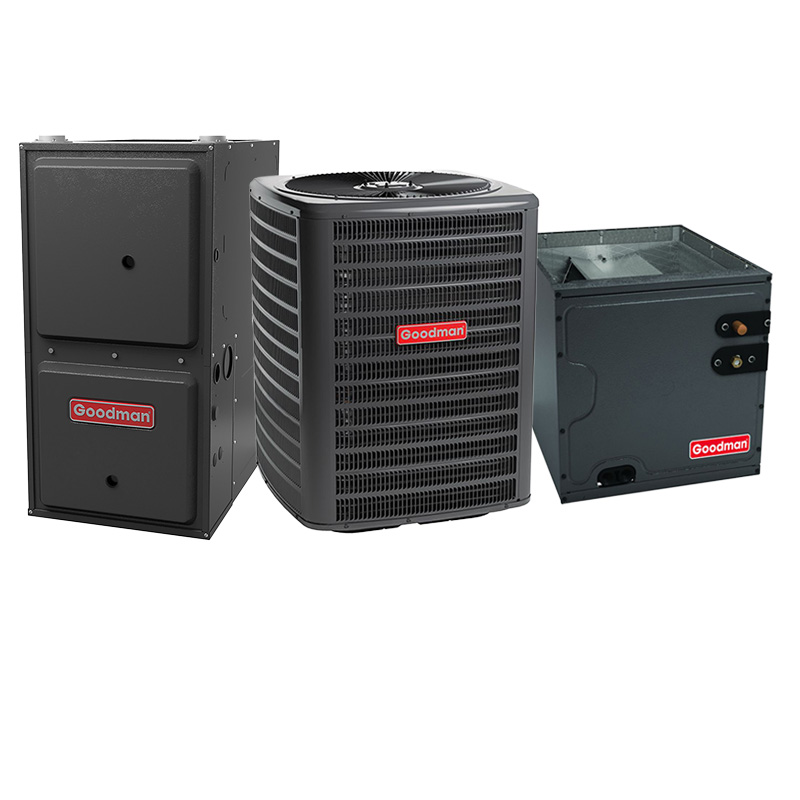
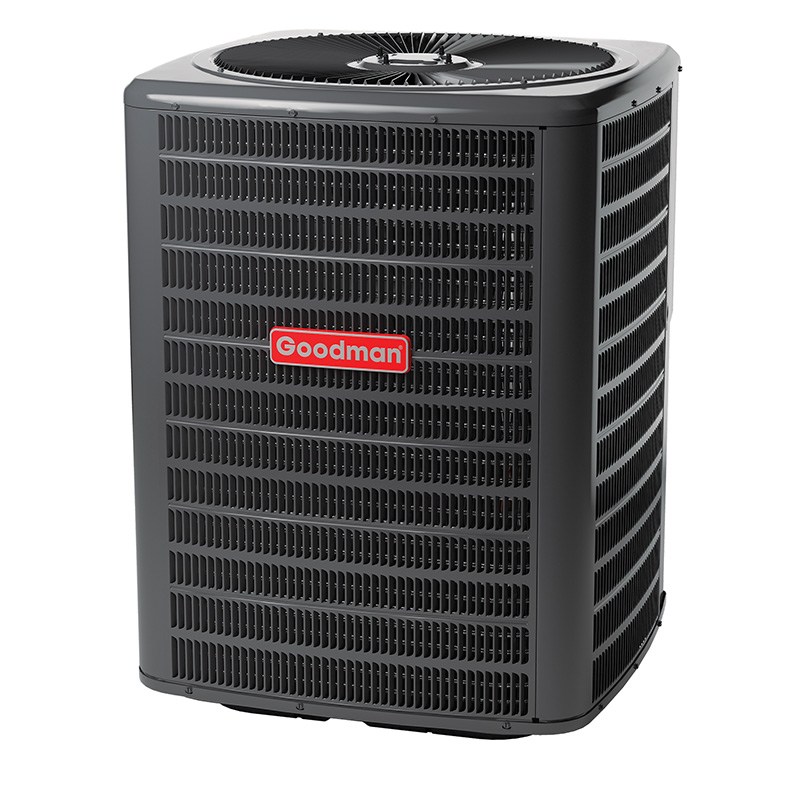
This Goodman bundle pairs a 1.5-ton, 14.5 SEER2 central air conditioner with a 40,000 BTU, 80% AFUE two-stage gas furnace in a downflow configuration, making it a purpose-built option for homes where the air handler sits in a closet or platform above the living space and conditioned air flows downward into the ductwork. The R-32 refrigerant charge meets California’s low-NOx and evolving environmental standards, so the system is sold and installed legally in the state without additional compliance hurdles. At 1.5 tons, it is sized for smaller conditioned footprints, typically 600 to 900 square feet depending on insulation, climate zone, and ceiling height.
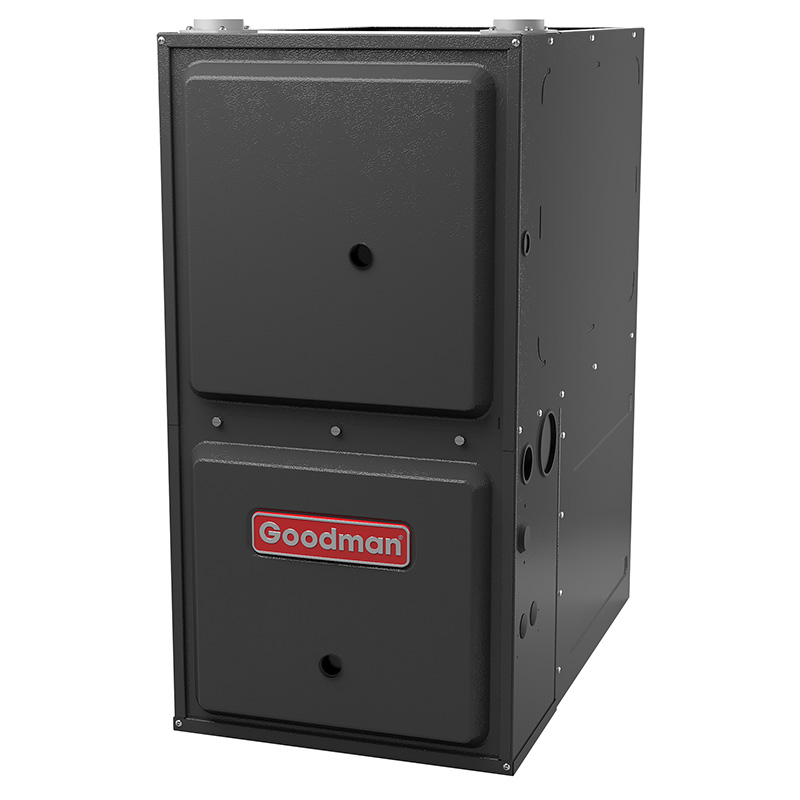
The two-stage furnace is the standout spec here. Unlike a single-stage unit that fires at full capacity every cycle, a two-stage design runs at a lower firing rate during mild weather, which means longer, quieter, more even heat cycles rather than short blasts. The multi-speed ECM blower motor adjusts airflow to match demand, which also helps with humidity control and quieter operation compared to a standard PSC motor. The 80% AFUE rating means 20 cents of every fuel dollar exits as exhaust, which is code-minimum efficiency in most regions and a meaningful step below 95-plus percent condensing furnaces, but the lower installed cost and simpler venting requirements can make it the right call for certain homes and budgets.
This is an entry-level to mid-range system in terms of price point. Goodman sits 15 to 25 percent below comparable Trane, Lennox, and Carrier equipment, which is a real advantage for buyers watching upfront costs. The trade-off is that long-term costs depend heavily on install quality and maintenance, more so than with premium brands that have tighter tolerances and more robust component sourcing.
This Goodman bundle delivers a functional, code-compliant two-stage heating and cooling system at a price point that is hard to match from Trane, Lennox, or Carrier. The two-stage furnace and ECM motor are genuine comfort upgrades over bare-bones single-stage alternatives at this price. The honest caveat is that component longevity and repair frequency lean heavily on who installs it and how well it is maintained over the years.
Overall score is the average of the five ratings above.
What we like
- Two-stage furnace operation reduces temperature swings and short-cycling compared to single-stage units
- ECM blower motor runs quieter and uses less electricity than standard PSC motors
- R-32 refrigerant is already California-compliant, removing a future swap or compliance concern
- Priced 15 to 25 percent below comparable Carrier, Trane, and Lennox systems
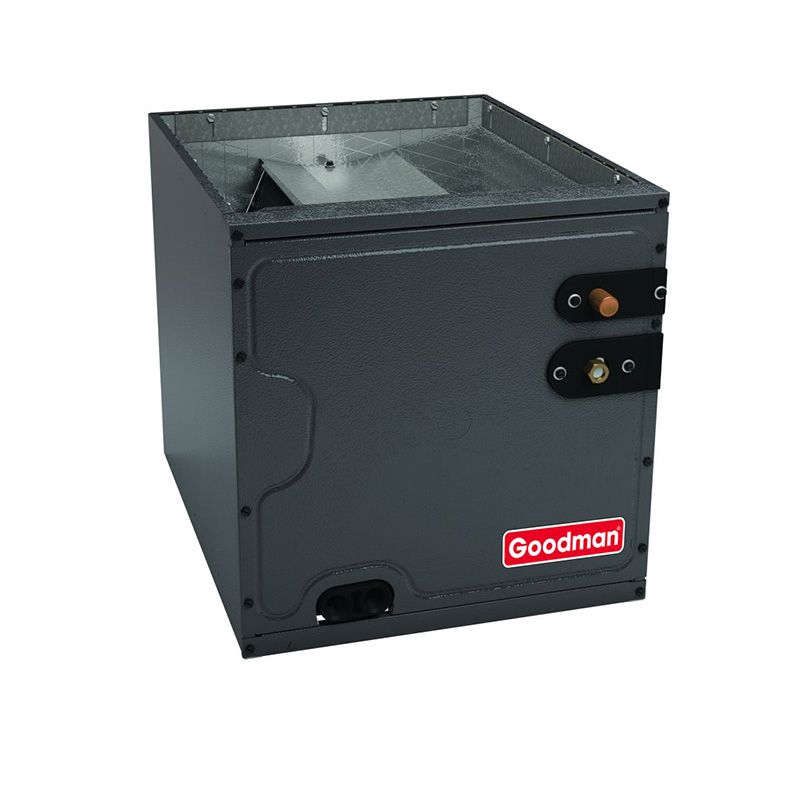
- Downflow configuration and factory-matched bundle simplifies permit documentation and coil compatibility
Trade-offs
- 80% AFUE is code-minimum efficiency in most climates and meaningfully less efficient than 95-plus percent condensing alternatives over a long heating season
- Dual-run capacitors are the most frequently reported failure, typically surfacing mid-system life and costing $300 to $600 to repair
- Compressor lifespan averages 10 to 14 years versus 15 to 20 years for premium-brand compressors, which matters for total cost of ownership
- Evaporator coil leaks and first-year refrigerant loss appear in a meaningful share of owner reports, often tracing back to install or charge quality
What homeowners and pros say about Goodman
Homeowners who have purchased Goodman equipment tend to split along a familiar line. Those who had a skilled contractor handle the installation and schedule annual tune-ups often report years of uneventful operation and point to the lower purchase price as a genuine win. That experience is reflected in Google dealer review scores that average around 3.8 out of 5 across dealer locations, where affordability is the praise that comes up most often. On the other side, ConsumerAffairs aggregates a complaint-heavy audience and Goodman sits at roughly 2.5 out of 5 there, with repair costs climbing after roughly year seven being the recurring theme in negative feedback. Neither score tells the whole story, but together they paint a picture of a brand where outcomes vary more than they do with premium alternatives.
HVAC technicians who service Goodman equipment consistently name dual-run capacitors as the most common call they receive on these systems, usually a straightforward repair in the $300 to $600 range when the homeowner has not let it sit too long. More consequential are evaporator coil leaks, which show up in a meaningful share of owner reviews and can escalate into a refrigerant recharge or full coil replacement. Compressor lifespan is another honest gap: Goodman compressors tend to average 10 to 14 years in documented experience, compared to 15 to 20 years for premium-brand hardware. Pros will tell you that none of these failure modes is unique to Goodman, but they do show up with enough regularity that skipping installation shortcuts and keeping annual maintenance current is less optional here than with a Trane or Carrier of similar age.
Sources: ConsumerAffairs Goodman owner reviews, AHRI Directory of Certified Product Performance, U.S. DOE appliance and equipment efficiency standards, Goodman product specification sheets.
What it costs to run
At 14.5 SEER2, cooling this 1.5-ton system for a typical 1200-hour cooling season at the U.S. average electricity rate of $0.17/kWh works out to roughly $253 per year in cooling, about $21 less per year than a minimum-efficiency 13.4 SEER2 unit of the same size. Your real cost depends on your climate and local rate.
Method: (18,000 BTU/hr ÷ 14.5 SEER2) × 1200 hours ÷ 1000 × $0.17/kWh. Rate source: U.S. EIA average; cooling hours: moderate-climate estimate.
How it compares
| Brand | Comparable model | SEER2 | Stage | Price position |
|---|---|---|---|---|
| Goodman | GSXH501810 + GC9C800403AX (this system) | 14.5 | Two-stage | Value pick |
| Carrier | Comfort 14 (24ACC4) with 58SB0 furnace | 14.3 | Single-stage | 15 to 20 percent above this Goodman system |
| Trane | XR14c (4TTR4) with S8X1 furnace | 14.3 | Single-stage | 20 to 25 percent above this Goodman system |
| Lennox | Merit 14ACX with ML180 furnace | 14.3 | Single-stage | 20 to 25 percent above this Goodman system |
Competitor rows are comparable single-stage units at similar efficiency; price is relative position, not a quote.
Questions about this system
Is this system actually legal and ready to install in California without modifications?
Yes. The R-32 refrigerant and low-NOx furnace rating are both California-compliant as configured. You will still need a licensed California HVAC contractor to pull permits and perform the installation, but no additional compliance upgrades to the equipment itself are required.
Why does the downflow configuration matter, and can I use this system in an upflow or horizontal setup?
Downflow means the furnace is designed to pull return air in at the top and push conditioned air downward into the supply ductwork below, which is the layout used when equipment sits in a closet above the living area. Using a downflow furnace in an upflow or horizontal application requires a different cabinet design and is not recommended. Confirm your existing ductwork and equipment closet orientation before purchasing.
What does two-stage heating actually feel like compared to a single-stage furnace?
A two-stage furnace fires at a lower capacity during mild weather and only ramps to full capacity when needed, which produces longer, steadier heat cycles rather than short, intense blasts. Most homeowners notice fewer hot and cold spots and a quieter, more consistent temperature throughout the day.
How worried should I be about the capacitor and coil leak issues mentioned in owner reviews?
Capacitor failures are the most commonly reported Goodman repair and are typically a low-cost, fast fix in the $300 to $600 range when caught promptly during annual maintenance. Evaporator coil leaks are a more serious concern because they can mean a refrigerant recharge or coil replacement; having a licensed technician perform a thorough startup inspection and keeping up with annual service visits reduces the risk of either issue becoming a surprise.
Should I expect the 10-year parts warranty to cover the compressor if it fails at year 11 or 12?
The standard Goodman 10-year parts warranty, when registered within the required window after installation, covers the compressor for that period. Once the warranty expires, any compressor replacement falls to you, and Goodman compressors have been documented to average 10 to 14 years versus 15 to 20 for premium brands, so budgeting for that possibility in years 10 through 14 is prudent.
Specifications
| Cooling capacity | 1.5 Ton |
| Efficiency | 14.5 SEER2 |
| Furnace output | 40000 BTU |
| Furnace efficiency | 80% AFUE |
| Configuration | Downflow |
| Refrigerant | R-32 |