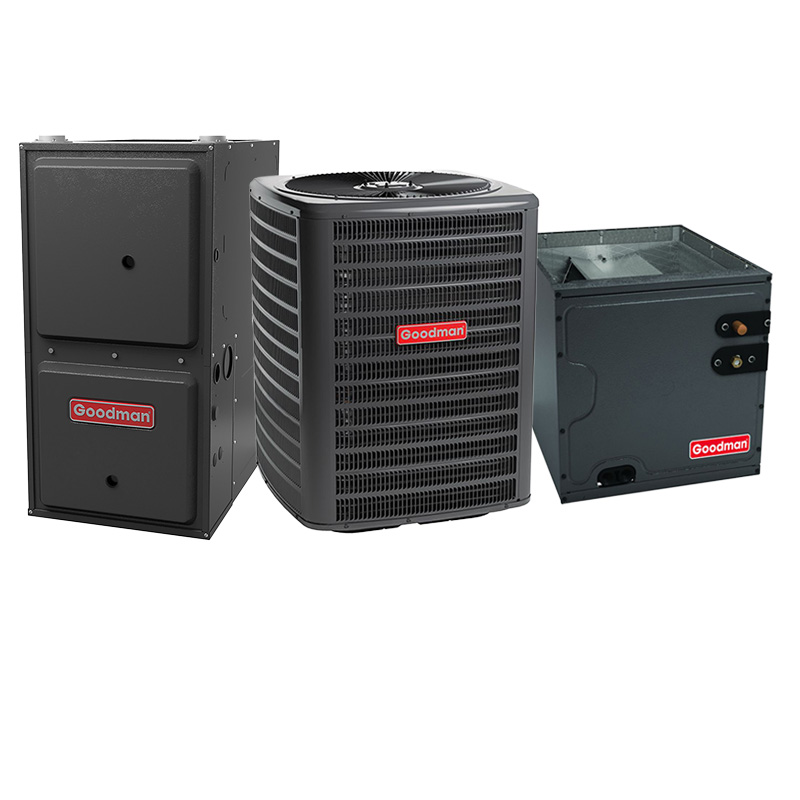
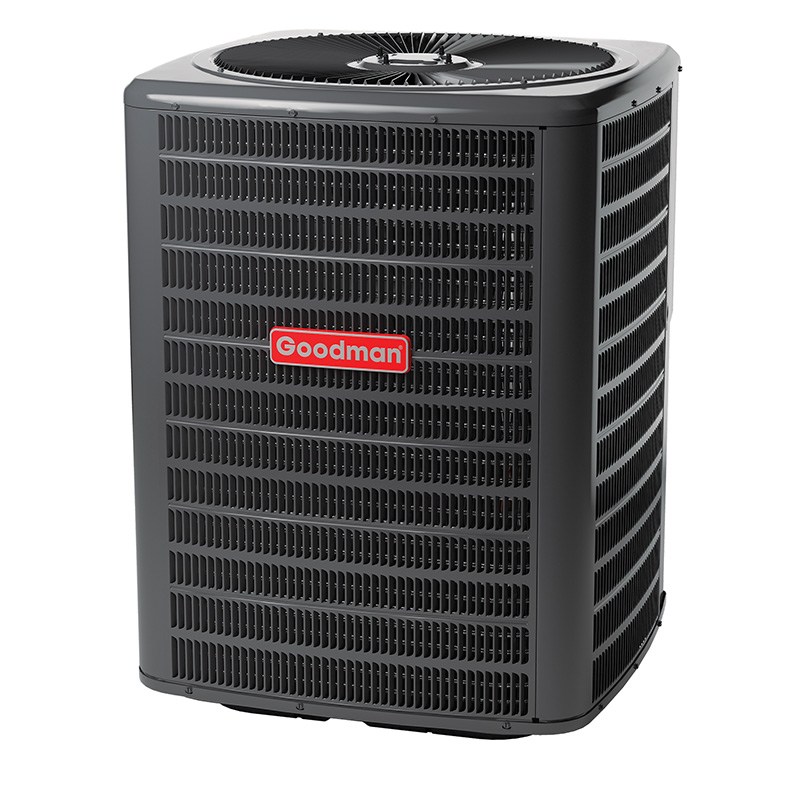
Goodman Furnace And Air Conditioner 1.5 Ton 14.5 SEER2 AC With 60000 BTU 80% AFUE Two Stage Multi-Speed ECM Gas Furnace System – Low NOX For California Downflow | R32
View on AC Direct see your lowest price →Check current price on AC Direct →
Key features
- 1.5-ton, 14.5 SEER2 cooling rated for California Low NOX compliance with R-32 refrigerant
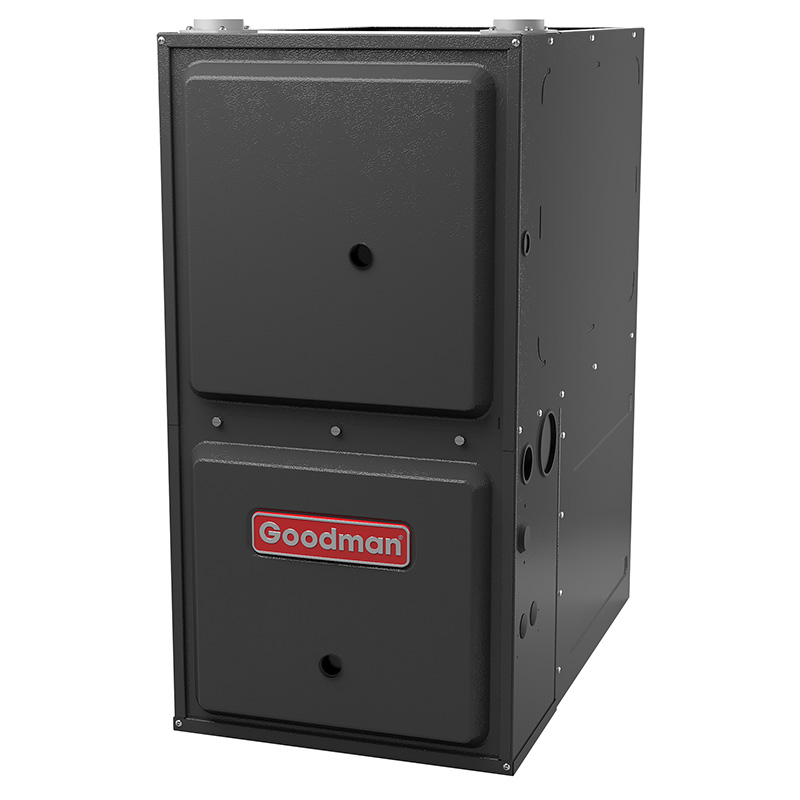
- 60,000 BTU two-stage gas furnace fires at reduced capacity first, cutting short-cycling and uneven heating
- 80% AFUE standard-efficiency furnace, no condensate drain required unlike 90%+ units
- Multi-speed ECM blower motor reduces electricity use and improves airflow consistency
- Downflow configuration designed for closet or platform installs where supply air exits through the bottom
- Bundled system from a single manufacturer helps ensure matched-component compatibility and unified warranty
About this system
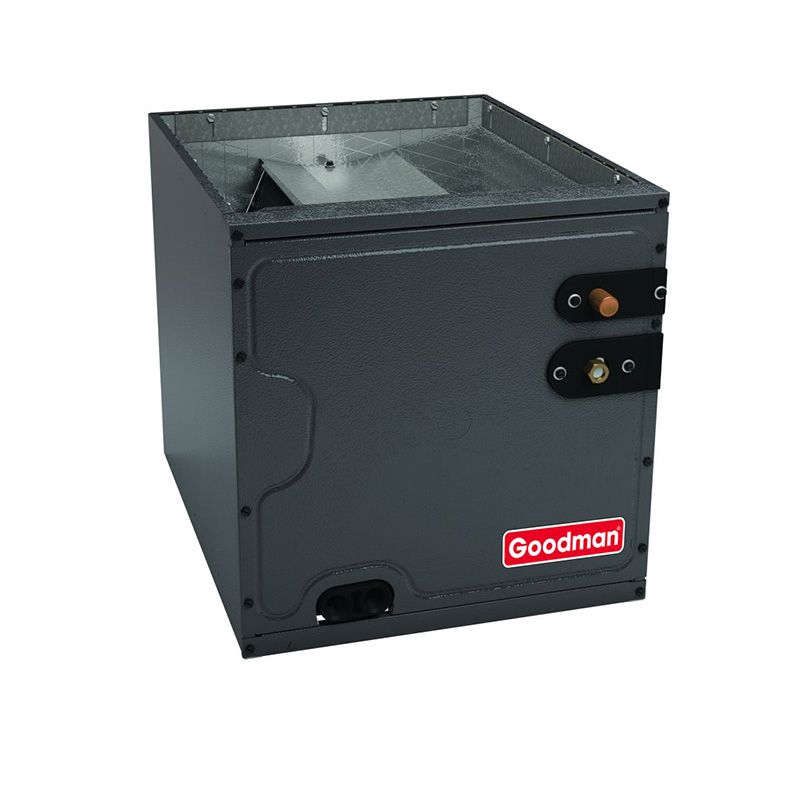
This Goodman bundle pairs a 1.5-ton, 14.5 SEER2 central air conditioner with a 60,000 BTU, 80% AFUE two-stage gas furnace in a downflow configuration, making it a purpose-built choice for homes where the air handler sits in a closet, utility room, or platform above the living space and blows conditioned air downward through floor registers. The R-32 refrigerant charge meets California’s Low NOX and environmental requirements, so it is compliant for installation in the state without additional regulatory hurdles. At 1.5 tons, this system is sized for smaller homes or well-insulated spaces, typically in the 600 to 900 square foot range depending on climate zone and building envelope.
The two-stage furnace and multi-speed ECM blower motor are the real workhorses here. Two-stage heating means the furnace runs on a lower first stage most of the time, cycling less aggressively, distributing heat more evenly, and reducing temperature swings compared to a single-stage unit. The ECM motor adjusts airflow to match demand rather than running at one fixed speed, which lowers blower electricity consumption and supports better humidity control during both heating and cooling seasons. At 80% AFUE, this furnace converts 80 cents of every dollar of gas into usable heat, which is a standard efficiency tier, not a high-efficiency one. Homeowners in cold climates should weigh whether a 90% or higher AFUE unit would pay back the price difference over time.
This system delivers a capable, code-compliant two-stage setup at a price point well below Carrier, Trane, and Lennox equivalents, making it a reasonable choice for budget-conscious buyers in smaller homes. The two-stage furnace and ECM motor are genuine comfort upgrades over single-stage economy alternatives. That said, Goodman's documented track record of capacitor failures, evaporator coil leaks, and compressor longevity that trails premium brands means long-term ownership costs can narrow the upfront savings gap.
Overall score is the average of the five ratings above.
What we like
- Priced 15 to 25 percent below comparable Trane, Carrier, and Lennox systems, keeping upfront cost low
- Two-stage heating reduces temperature swings and improves comfort compared to single-stage furnaces
- ECM blower motor lowers blower electricity consumption versus standard PSC motors
- R-32 refrigerant is California Low NOX compliant, simplifying permitting in regulated areas
- Downflow configuration directly addresses homes where platform or closet installs require bottom discharge
Trade-offs
- 80% AFUE is an entry-level efficiency tier and will cost more to operate than 90%+ furnaces in cold climates
- Dual-run capacitors are the most commonly reported failure point, though repairs typically run $300 to $600
- Evaporator coil leaks show up in a meaningful share of owner reports and can be costly outside the warranty window
- Compressor lifespan averages 10 to 14 years versus 15 to 20 years for premium brands, a real long-term consideration
What homeowners and pros say about Goodman
Homeowners who have installed Goodman systems frequently point to the lower upfront cost as the main reason they chose the brand, a pattern reflected in Google dealer review averages that sit around 3.8 out of 5, where affordability is the most repeated praise. That satisfaction tends to hold through the first several years of ownership when the units generally run without incident. The picture shifts after roughly year seven, which is when the ConsumerAffairs score of about 2.5 out of 5 becomes more relevant. That channel skews toward complaint-driven feedback, and the recurring theme there is repair costs accelerating in the back half of the system’s life. The two most documented failure modes are dual-run capacitor failures, which are usually a low-cost fix in the $300 to $600 range, and evaporator coil leaks, which are more disruptive and expensive. A smaller share of owners have reported refrigerant leaks within the first year, and technicians generally attribute those to installation or charging issues rather than factory defects.
HVAC professionals tend to have a straightforward view of Goodman: the equipment is adequate, and installation quality is the variable that matters most. A properly commissioned Goodman system with correct refrigerant charge, tight duct connections, and matched components will perform close to spec. A rushed or poorly checked install will produce the kinds of early problems that feed negative reviews. For this specific downflow, two-stage configuration, installers note that the downflow orientation is less common than upflow and requires attention to flue routing and cabinet clearances. The compressor longevity question is real: Goodman compressors have documented average lifespans of roughly 10 to 14 years, which trails the 15 to 20 years seen in premium brands, and that gap matters when comparing total cost of ownership against the initial savings.
Sources: ConsumerAffairs Goodman owner reviews, AHRI Directory of Certified Product Performance, U.S. DOE appliance and equipment efficiency standards, Goodman product specification sheets.
What it costs to run
At 14.5 SEER2, cooling this 1.5-ton system for a typical 1200-hour cooling season at the U.S. average electricity rate of $0.17/kWh works out to roughly $253 per year in cooling, about $21 less per year than a minimum-efficiency 13.4 SEER2 unit of the same size. Your real cost depends on your climate and local rate.
Method: (18,000 BTU/hr ÷ 14.5 SEER2) × 1200 hours ÷ 1000 × $0.17/kWh. Rate source: U.S. EIA average; cooling hours: moderate-climate estimate.
How it compares
| Brand | Comparable model | SEER2 | Stage | Price position |
|---|---|---|---|---|
| Goodman | GSXH5 / GCVC8 Series (this system) | 14.5 | two-stage | Value pick |
| Carrier | Comfort 24ACC6 / 58TP | 14.5 | two-stage | Typically 15 to 25 percent higher than this Goodman bundle |
| Trane | XR15 / S9X1 | 15.0 | two-stage | Typically 20 to 30 percent higher than this Goodman bundle |
| Lennox | Merit ML14XC1 / ML180 | 14.3 | single-stage (base Merit tier) | Typically 15 to 25 percent higher than this Goodman bundle |
Competitor rows are comparable single-stage units at similar efficiency; price is relative position, not a quote.
Questions about this system
Is this system really legal and ready to install in California without modification?
Yes. The unit uses R-32 refrigerant and meets California's Low NOX combustion requirements, so it clears the two most common California-specific compliance hurdles for residential HVAC. You will still need a licensed contractor to pull permits and verify local jurisdiction requirements, but no special equipment modifications should be needed.
Why is this a downflow furnace and how do I know if my house needs that configuration?
A downflow furnace discharges supply air out of the bottom of the cabinet, feeding ductwork that runs below the unit, typically under a floor or in a crawlspace. If your current furnace sits in a closet or on a raised platform with the duct system below it, downflow is the correct configuration. Installing a downflow unit in an application that calls for upflow or horizontal will not work without significant modification.
What does two-stage actually mean for day-to-day comfort in a small house?
The furnace runs at a lower first stage for most of the heating season, which means longer, quieter, more even heat cycles rather than short blasts of full heat. For a small space, this tends to reduce hot and cold spots and can improve humidity control slightly. The second stage only kicks in during the coldest conditions when full output is needed.
What is the most likely repair I should budget for after the warranty period?
Dual-run capacitors are the most commonly reported failure point on Goodman systems and are typically a straightforward repair in the $300 to $600 range. Evaporator coil leaks are a second documented failure mode that appears in owner feedback and can be more expensive depending on whether refrigerant has been lost and whether the coil itself needs replacement.
Does the 80% AFUE furnace need a condensate drain like a high-efficiency unit?
No. An 80% AFUE furnace uses a standard flue and does not produce the condensation that 90%+ AFUE condensing furnaces generate. That simplifies installation because you do not need to run a condensate drain line, which can be a meaningful practical advantage when retrofitting an existing closet or tight utility space.
Specifications
| Cooling capacity | 1.5 Ton |
| Efficiency | 14.5 SEER2 |
| Furnace output | 60000 BTU |
| Furnace efficiency | 80% AFUE |
| Configuration | Downflow |
| Refrigerant | R-32 |