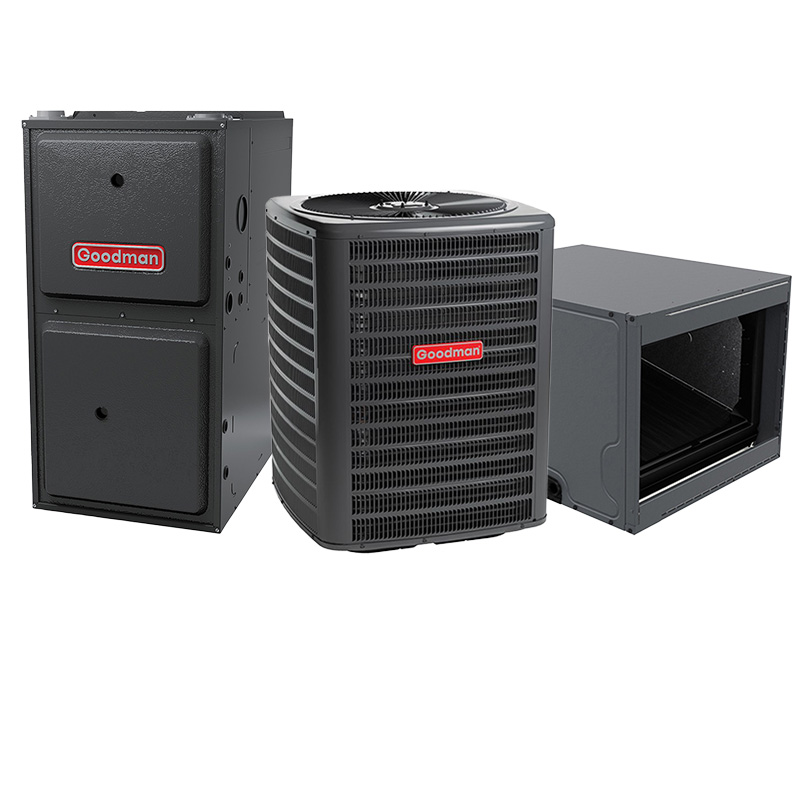
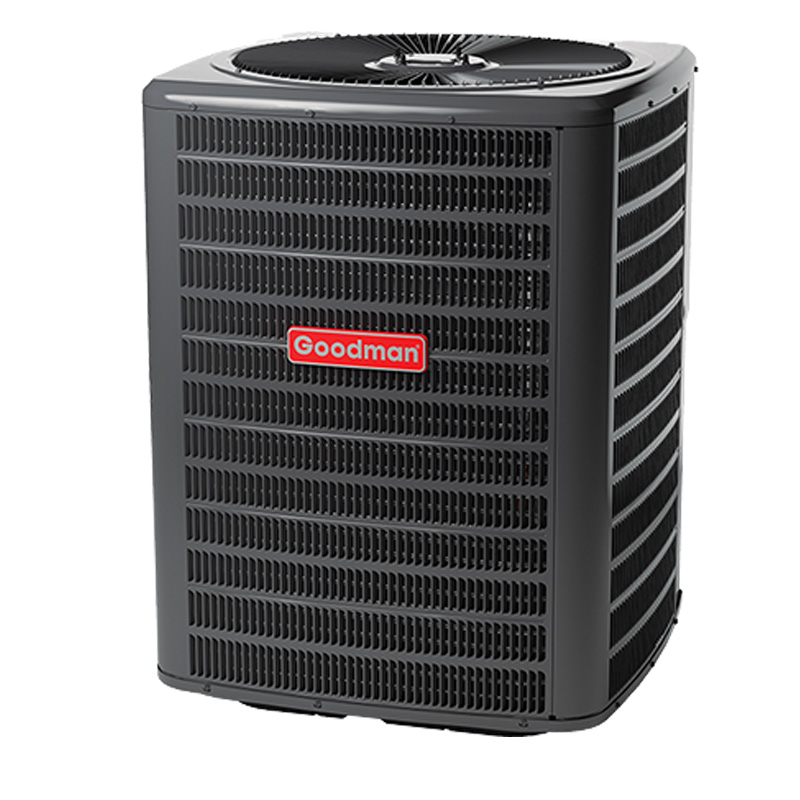
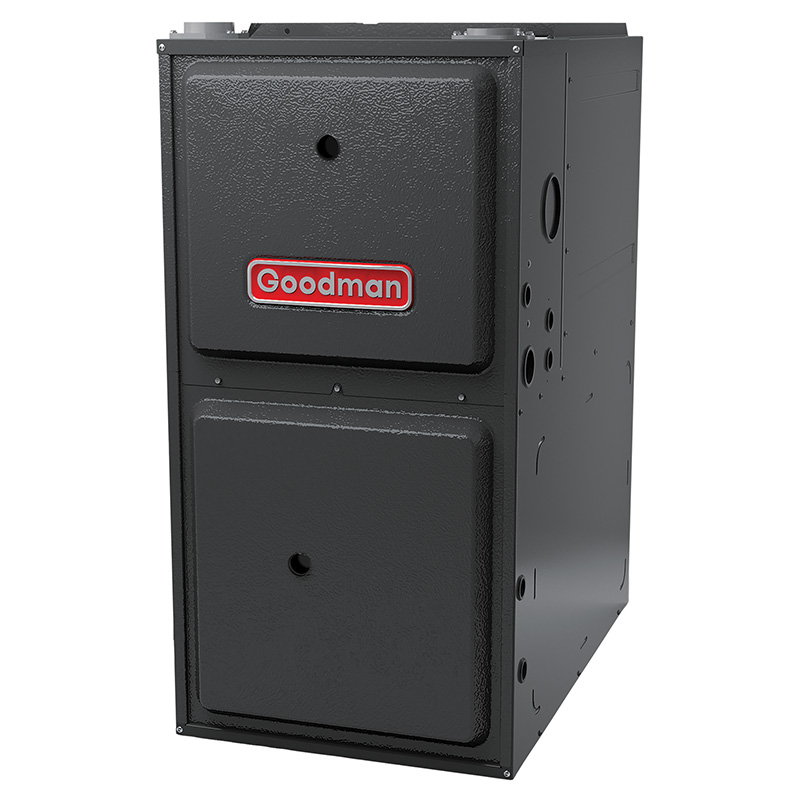
Goodman Furnace And Air Conditioner 1.5 Ton 15.2 SEER2 AC With 60000 BTU 96% AFUE Multi-Speed ECM Gas Furnace System – Horizontal | R32
View on AC Direct see your lowest price →Check current price on AC Direct →
Key features
- 1.5-ton cooling capacity suited to smaller homes, typically 600 to 900 sq ft depending on load calculations
- 15.2 SEER2 efficiency rating meets current federal minimums and improves on older 14 SEER systems
- 96% AFUE gas furnace with multi-speed ECM blower for quieter, more even heat distribution
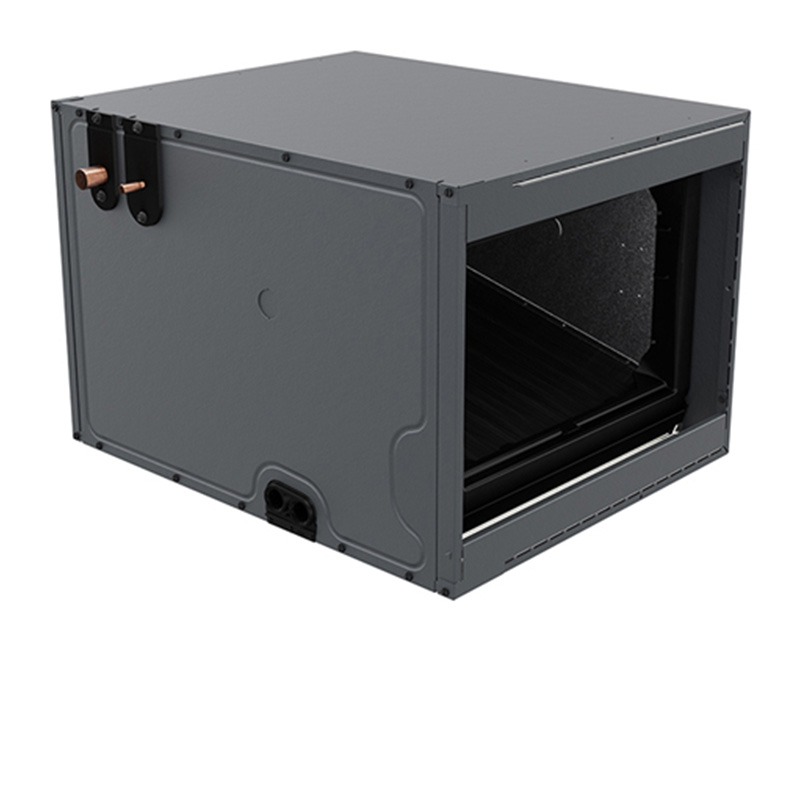
- Horizontal configuration designed for attic, crawl space, or side-discharge installations
- R-32 refrigerant with lower global warming potential than R-410A
- 60,000 BTU furnace output appropriate for moderate heating climates in smaller structures
About this system
This Goodman 1.5-ton system pairs a 15.2 SEER2 air conditioner with a 60,000 BTU, 96% AFUE multi-speed ECM gas furnace in a horizontal configuration, making it a practical choice for homes with crawl spaces, attic air handlers, or side-discharge installations where vertical clearance is limited. The R-32 refrigerant is a step forward environmentally, carrying a lower global warming potential than the R-410A it replaces, and is increasingly common as the industry moves away from older refrigerants. At 1.5 tons, this system is sized for smaller homes, typically in the 600 to 900 square foot range depending on climate, insulation, and local Manual J calculations.
The 96% AFUE furnace means roughly 96 cents of every dollar spent on gas goes to usable heat, which is near the top of what non-condensing and standard condensing equipment can achieve. The multi-speed ECM (electronically commutated motor) blower is more efficient than a single-speed PSC motor and runs more quietly at lower speeds, helping maintain more even temperatures between heating cycles. The 15.2 SEER2 rating clears the federal minimum for most U.S. climate regions and offers a meaningful efficiency improvement over older 14 SEER equipment, though it sits at the entry level of the efficiency tier rather than the premium end. For a smaller home with moderate cooling loads, this system hits a practical balance between upfront cost and operating efficiency.
This system offers a competitive price-to-efficiency ratio for smaller homes needing a horizontal-configuration replacement or new install, and the 96% AFUE furnace is a genuine strength. The trade-off is Goodman's real-world reliability record, which trails premium brands and depends heavily on installation quality to reach its service life potential.
Overall score is the average of the five ratings above.
What we like
- Priced 15 to 25 percent below comparable Trane, Lennox, and Carrier systems for the same efficiency tier
- 96% AFUE furnace is near the top of achievable gas efficiency and reduces long-term heating costs
- Multi-speed ECM blower provides quieter operation and better humidity control compared to single-speed alternatives
- R-32 refrigerant is more environmentally responsible and increasingly supported by service technicians
- Horizontal configuration addresses installation scenarios that upflow or downflow units cannot accommodate
Trade-offs
- Dual-run capacitors are the most commonly reported failure point, typically requiring repair between year 3 and year 7
- Compressor lifespan averages 10 to 14 years versus 15 to 20 years for premium brands, which matters on a long-horizon cost analysis
- A minority of owners report refrigerant leaks in the first year, usually tied to install or initial charge issues rather than the unit itself
- Evaporator coil leaks appear in a notable share of owner reviews, which can be a costly mid-life repair
What homeowners and pros say about Goodman
Owners and dealers who leave feedback on Google rate Goodman equipment at roughly 3.8 out of 5 stars, with affordability and straightforward parts availability cited most often as the reasons to choose it. ConsumerAffairs tells a different story, sitting around 2.5 out of 5, though that channel skews toward people who have had problems rather than satisfied owners. The consistent theme across both sources is that Goodman systems which are properly sized and installed by an experienced contractor tend to perform without major issues for the first several years, while those installed carelessly show problems much sooner.
Among HVAC technicians, the brand has a reputation for being easy to work on and inexpensive to service in the early years, with dual-run capacitor failures being the most routine call they see on Goodman units. The concern that comes up in longer-term owner accounts is repair cost accumulation after roughly year 7, when evaporator coil leaks and compressor wear begin to appear more frequently than on premium brands. Compressors on Goodman equipment tend to average 10 to 14 years of service life versus 15 to 20 years for Trane, Carrier, or Lennox, which matters when calculating whether the lower purchase price holds up over a full ownership cycle. For the horizontal-configuration buyer on a tighter budget, the system is a reasonable starting point, provided the installer is experienced and the refrigerant charge is verified at startup to reduce the small but real risk of early refrigerant leaks.
Sources: ConsumerAffairs Goodman owner reviews, AHRI Directory of Certified Product Performance, U.S. DOE appliance and equipment efficiency standards, Goodman product specification sheets.
What it costs to run
At 15.2 SEER2, cooling this 1.5-ton system for a typical 1200-hour cooling season at the U.S. average electricity rate of $0.17/kWh works out to roughly $242 per year in cooling, about $32 less per year than a minimum-efficiency 13.4 SEER2 unit of the same size. Your real cost depends on your climate and local rate.
Method: (18,000 BTU/hr ÷ 15.2 SEER2) × 1200 hours ÷ 1000 × $0.17/kWh. Rate source: U.S. EIA average; cooling hours: moderate-climate estimate.
How it compares
| Brand | Comparable model | SEER2 | Stage | Price position |
|---|---|---|---|---|
| Goodman | GSXH5/GMVC96 Series (this system) | 15.2 | Single-stage / Multi-speed | Value pick |
| Carrier | Comfort 15 / 58MCA Series | 15.2 | Single-stage | Typically 15 to 20 percent more than this Goodman |
| Trane | XR15 / S9X1 Series | 15.0 to 15.5 | Single-stage | Typically 18 to 25 percent more than this Goodman |
| Lennox | Merit ML15 / ML196 Series | 15.2 | Single-stage | Typically 15 to 22 percent more than this Goodman |
Competitor rows are comparable single-stage units at similar efficiency; price is relative position, not a quote.
Questions about this system
Is 1.5 tons enough for my house, or should I size up?
Tonnage should always be determined by a Manual J load calculation for your specific home, not square footage rules of thumb. 1.5 tons is typically appropriate for well-insulated homes in the 600 to 900 square foot range in moderate climates, but oversizing causes short-cycling and humidity problems, and undersizing leaves the system running constantly. Have your contractor run the numbers before ordering.
Why does this system use R-32 instead of R-410A?
R-32 has a global warming potential roughly 68 percent lower than R-410A, and the industry is transitioning toward lower-GWP refrigerants under updated EPA regulations. R-32 is mildly flammable (A2L classification), so your installing technician needs to be certified to handle it, but it is widely supported by current HVAC equipment and service tools.
What does the horizontal configuration mean, and does it limit my options?
Horizontal means the air handler is designed to lie on its side, discharging air through the end rather than the top or bottom. This is the correct configuration for attic installations, crawl space applications, and some closet setups where vertical clearance is not available. Installing a horizontal unit in an upflow application is not recommended and can cause drainage and performance issues.
What are the most common repairs owners run into with Goodman systems?
The most frequently reported failure is the dual-run capacitor, which typically costs 300 to 600 dollars to diagnose and replace and can occur anywhere from year 3 onward. Evaporator coil leaks show up in a notable share of longer-term owner reviews and are more expensive to address. A smaller number of owners report refrigerant leaks within the first year, which is usually a sign of an installation or charge issue rather than a defective unit.
Does the 96% AFUE furnace require special venting?
Yes. A 96% AFUE condensing furnace produces a cooler exhaust and condensate water, so it cannot use a traditional metal flue. It requires PVC or CPVC venting and a condensate drain line. If you are replacing an older 80% furnace, your installer will need to factor in the cost of new vent runs, which can add to the overall installation price.
Specifications
| Cooling capacity | 1.5 Ton |
| Efficiency | 15.2 SEER2 |
| Furnace output | 60000 BTU |
| Furnace efficiency | 96% AFUE |
| Configuration | Horizontal |
| Refrigerant | R-32 |