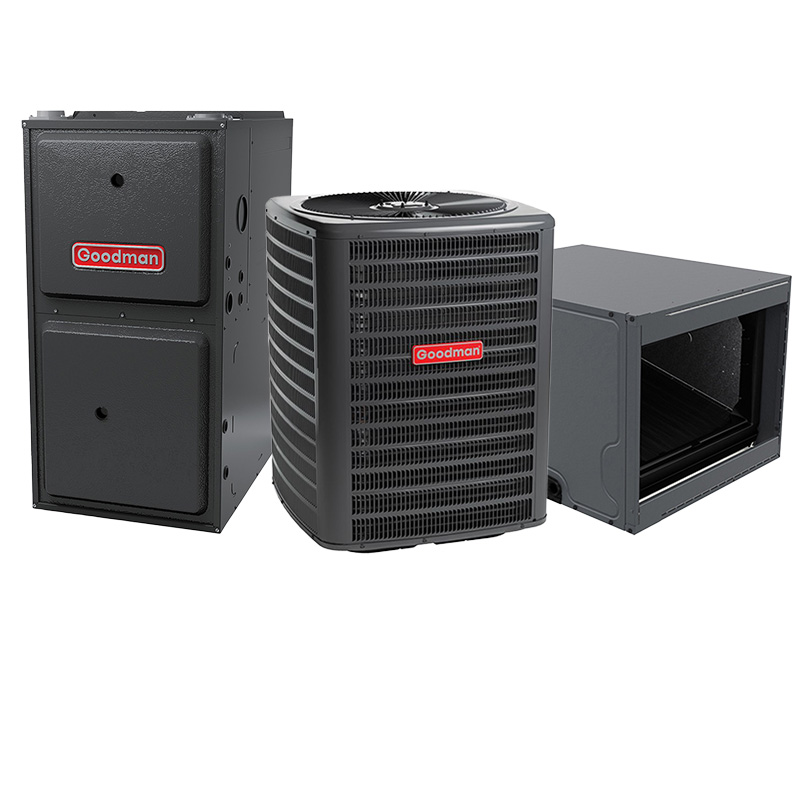
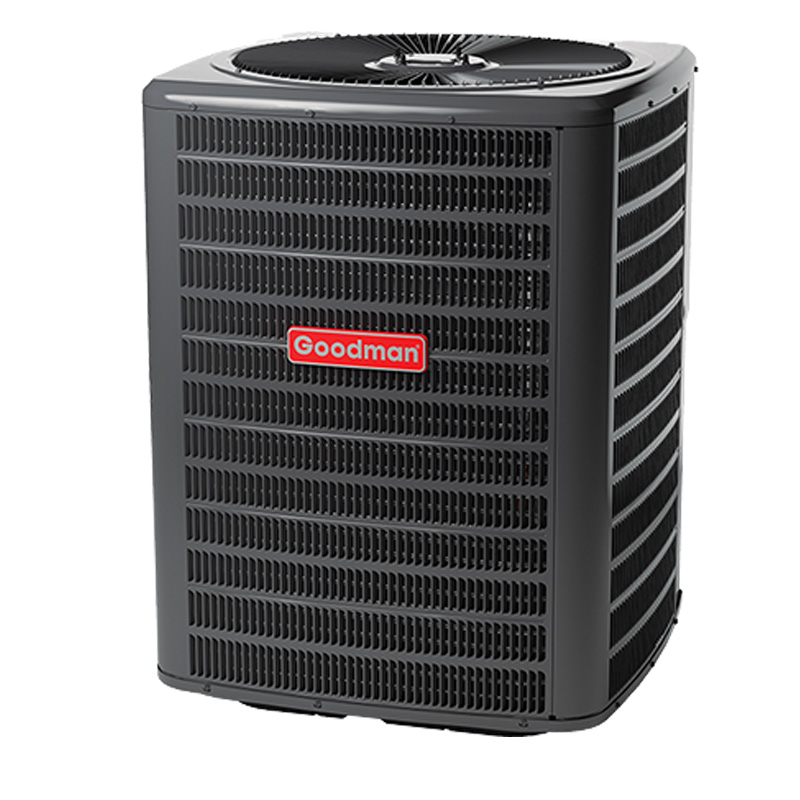
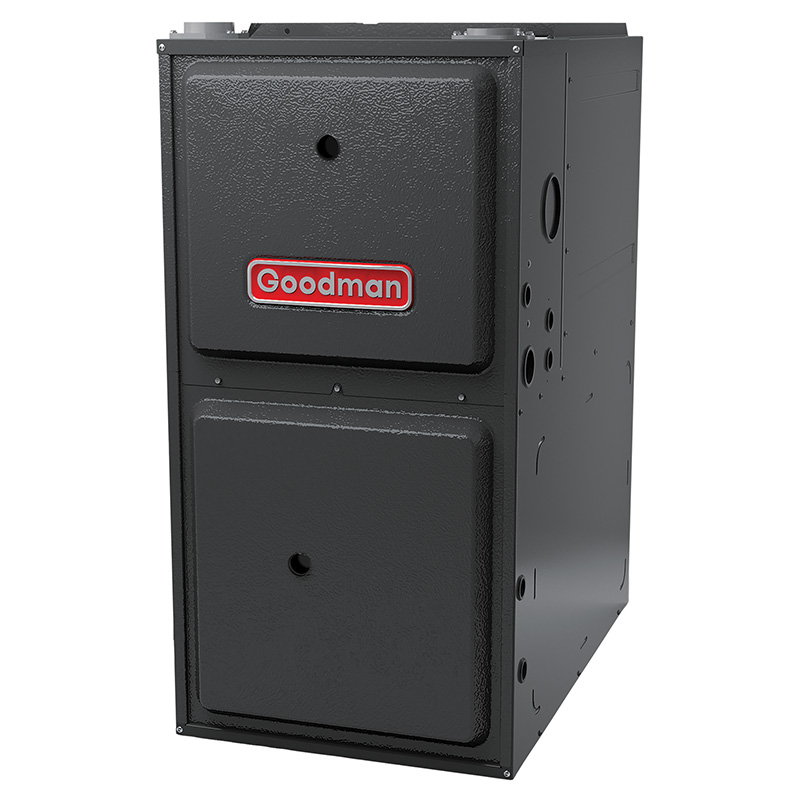
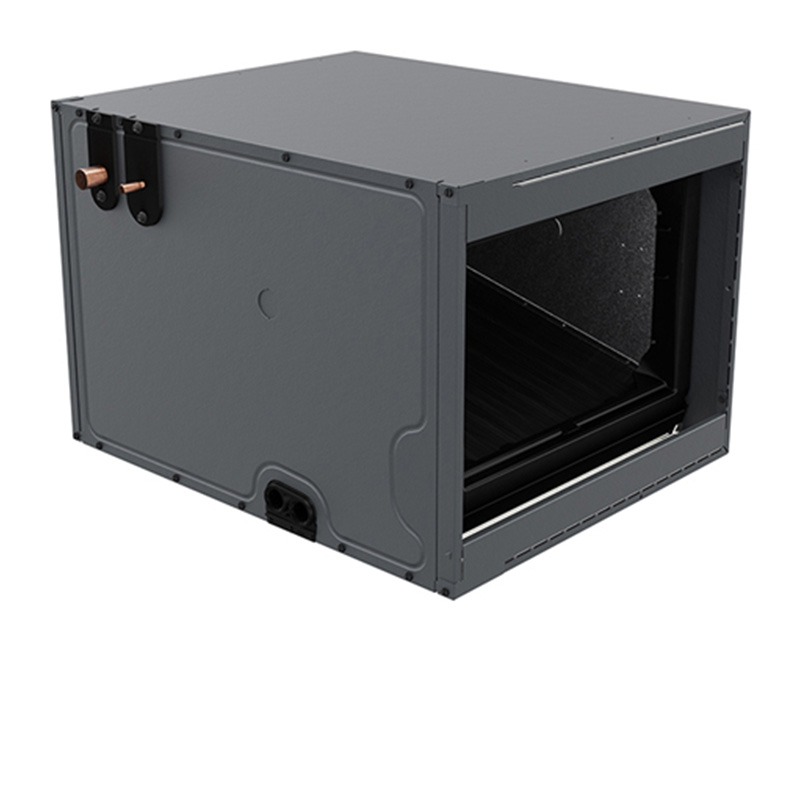
Goodman Furnace And Air Conditioner 2 Ton 15.2 SEER2 AC With 80000 BTU 96% AFUE Multi-Speed ECM Gas Furnace System – Horizontal | R32
View on AC Direct see your lowest price →Check current price on AC Direct →
Key features
- 15.2 SEER2 cooling efficiency, meeting federal minimums with moderate operating costs
- 96% AFUE high-efficiency gas furnace, eligible for federal energy efficiency tax credits
- Multi-speed ECM blower motor for quieter operation and reduced fan energy use
- Horizontal configuration designed for attic or crawlspace installations where vertical units cannot fit
- R-32 refrigerant with lower global warming potential and reduced charge volume versus R-410A
- 80,000 BTU heating capacity suited to smaller and mid-size homes in most U.S. climate zones
About this system
This Goodman two-ton split system pairs a 15.2 SEER2 air conditioner with an 80,000 BTU, 96% AFUE multi-speed ECM gas furnace sized for smaller to mid-size homes, typically in the 900 to 1,400 square foot range depending on climate and insulation. The horizontal configuration makes it the right call when attic or crawlspace installation is the only option and upflow or downflow simply will not fit. R-32 refrigerant carries a lower global warming potential than the R-410A it replaces and requires less refrigerant by weight, which matters both environmentally and in terms of recharge cost if a leak ever occurs.
The 96% AFUE rating means nearly all of the fuel burned converts to usable heat, putting this furnace squarely in the high-efficiency tier and making it eligible for federal tax credits under current energy efficiency incentive programs. The multi-speed ECM blower motor adjusts airflow rather than running full blast constantly, which smooths temperature swings, reduces energy draw at the air handler, and operates more quietly than a single-speed unit. At 15.2 SEER2, the cooling side clears the federal minimum for most regions but sits at the lower end of the mid-efficiency range rather than the top, so ongoing cooling costs will be moderate rather than minimal in hot climates.
This system suits budget-conscious homeowners who need a reliable workhorse for a smaller space, want real heating efficiency without paying premium-brand prices, and have access to a qualified installer. Because Goodman’s long-term performance is closely tied to installation quality, the technician you hire matters as much as the equipment itself.
This Goodman system delivers genuine high-efficiency heating and competent cooling at a price point that undercuts Trane, Lennox, and Carrier by a meaningful margin, making it a practical choice for budget-focused buyers who prioritize upfront savings. The trade-off is a shorter expected compressor lifespan than premium brands, a documented history of capacitor and evaporator coil failures, and performance that hinges heavily on the quality of the installation. It earns its place in the market but is not the last furnace you will ever buy.
Overall score is the average of the five ratings above.
What we like
- Priced 15 to 25 percent below comparable Carrier, Trane, and Lennox systems
- 96% AFUE furnace qualifies for federal energy efficiency tax credits, offsetting some upfront cost
- Multi-speed ECM motor improves comfort and lowers blower energy consumption versus single-speed units
- R-32 refrigerant reduces environmental impact and typically costs less to recharge than R-410A
- Horizontal configuration fills a real installation need that standard upflow units cannot serve
Trade-offs
- Compressor lifespan averages 10 to 14 years, shorter than the 15 to 20 years typical of premium brands
- Dual-run capacitors are the most frequently reported failure, adding recurring service costs after year seven
- Evaporator coil leaks appear in a meaningful share of owner reports and can be expensive to address
- A minority of owners report refrigerant leaks within the first year, pointing to sensitivity around charge quality at installation
What homeowners and pros say about Goodman
Homeowners who choose Goodman most often cite the upfront price as the deciding factor, and dealer Google reviews averaging around 3.8 out of 5 reflect a base of customers who feel they got solid value for the money. The picture shifts when you look at ConsumerAffairs, where Goodman scores around 2.5 out of 5, though that channel draws disproportionately from people who are frustrated enough to write a review, and the recurring theme there is repair bills beginning to climb after roughly year seven of ownership. Neither number tells the whole story on its own, but together they suggest a system that starts strong and becomes more maintenance-dependent over time than premium alternatives.
HVAC technicians tend to be candid about what they see in the field. Dual-run capacitor failures come up repeatedly as the most common service call on Goodman equipment, and while the fix is quick and affordable in the 300 to 600 dollar range, it is a known cost of ownership to plan for. Evaporator coil leaks show up in a meaningful share of owner reports and are a more significant repair. Compressor longevity is a real consideration, with Goodman compressors averaging 10 to 14 years against 15 to 20 years for Trane and Carrier, and pros consistently say that a careful installation with a verified refrigerant charge is the single biggest thing a buyer can do to push that number toward the higher end. For a horizontal application on a tight budget with a good installer in the picture, this system is a reasonable choice with eyes open about what the long-term service history looks like.
Sources: ConsumerAffairs Goodman owner reviews, AHRI Directory of Certified Product Performance, U.S. DOE appliance and equipment efficiency standards, Goodman product specification sheets.
What it costs to run
At 15.2 SEER2, cooling this 2-ton system for a typical 1200-hour cooling season at the U.S. average electricity rate of $0.17/kWh works out to roughly $322 per year in cooling, about $43 less per year than a minimum-efficiency 13.4 SEER2 unit of the same size. Your real cost depends on your climate and local rate.
Method: (24,000 BTU/hr ÷ 15.2 SEER2) × 1200 hours ÷ 1000 × $0.17/kWh. Rate source: U.S. EIA average; cooling hours: moderate-climate estimate.
How it compares
| Brand | Comparable model | SEER2 | Stage | Price position |
|---|---|---|---|---|
| Goodman | GLXS4BA24 + GMVC960804CN (this system) | 15.2 | Multi-speed | Value pick |
| Carrier | Comfort 24ACC636 + 59SC5 | 15.2 | Single-stage | Moderately higher than this system |
| Trane | XR15 + S9V2 | 15.0 | Single-stage | Moderately to significantly higher than this system |
| Lennox | Merit ML15 + ML196 | 15.2 | Single-stage | Moderately higher than this system |
Competitor rows are comparable single-stage units at similar efficiency; price is relative position, not a quote.
Questions about this system
Is horizontal the only configuration available for this system, or can it be installed upflow in a closet?
This specific model is configured for horizontal installation only, meaning it is designed to lie on its side in an attic, crawlspace, or similar tight space. If you need upflow or downflow orientation, you would need a different Goodman furnace model matched to the same condenser. Confirm the orientation with your installer before purchasing.
What does 15.2 SEER2 actually mean for my monthly cooling bill?
SEER2 is a standardized measure of cooling output per unit of electricity consumed over a season. At 15.2 SEER2, this unit clears the federal minimum for most U.S. regions and will deliver moderate efficiency savings, but it will not match the operating cost reductions you would see from an 18 or 20 SEER2 system. In a hot climate with long cooling seasons, the efficiency gap adds up over a decade and may justify spending more upfront.
Why do some owners report refrigerant leaks in the first year, and how do I avoid that?
Goodman's documented first-year refrigerant leak reports are generally tied to installation issues, specifically an improper refrigerant charge or flawed line-set connections rather than a factory defect. The best protection is hiring an HVAC technician who pressure-tests the system thoroughly, verifies the charge to manufacturer specifications, and checks all connections before startup. Skipping that step is where most early leaks originate.
What is the warranty on this system and what does it actually cover?
Goodman typically offers a 10-year parts warranty when the system is registered within a set window after installation, covering components like the compressor, coil, and heat exchanger. Labor is not included in the manufacturer warranty, so any repair after the install period comes out of pocket for the service call and technician time. Confirm current warranty terms and registration requirements at the time of purchase, as these details can change.
The capacitor failures people mention, how expensive is that repair and how often does it happen?
Dual-run capacitor replacement is one of the most common HVAC service calls across all brands, but it appears with notable frequency in Goodman owner reports, often surfacing after roughly year seven. The repair itself is relatively inexpensive, typically in the 300 to 600 dollar range including the service call, and most technicians can complete it in under an hour. Keeping a maintenance agreement or scheduling annual tune-ups improves the odds of catching a weakening capacitor before it causes a full system shutdown.
Specifications
| Cooling capacity | 2 Ton |
| Efficiency | 15.2 SEER2 |
| Furnace output | 80000 BTU |
| Furnace efficiency | 96% AFUE |
| Configuration | Horizontal |
| Refrigerant | R-32 |