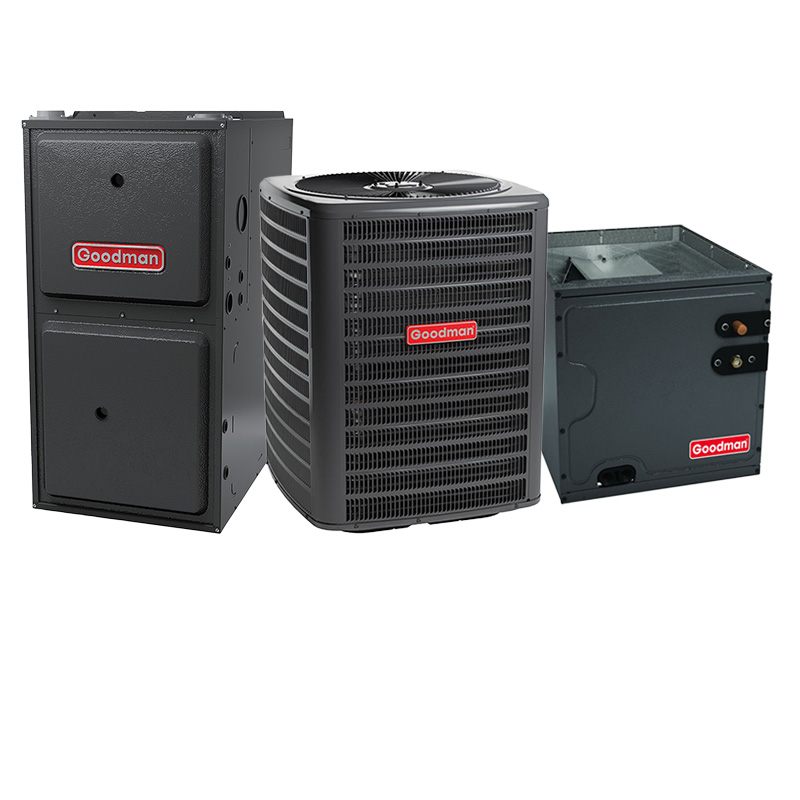
Goodman Furnace And AC – 4 Ton 14.3 SEER2 AC With 100000 BTU 96% AFUE Two Stage Multi-Speed ECM Gas Furnace System – Upflow | R32
View on AC Direct see your lowest price →Check current price on AC Direct →
Key features
- 4-ton cooling capacity with 14.3 SEER2 efficiency rating
- 100,000 BTU two-stage gas furnace at 96% AFUE
- Multi-speed ECM blower motor for quieter, lower-wattage fan operation
- R-32 refrigerant with lower global warming potential than R-410A
- Upflow configuration for basement or main-floor utility closet installs
- Two-stage heating reduces short cycling and improves comfort on mild days
About this system
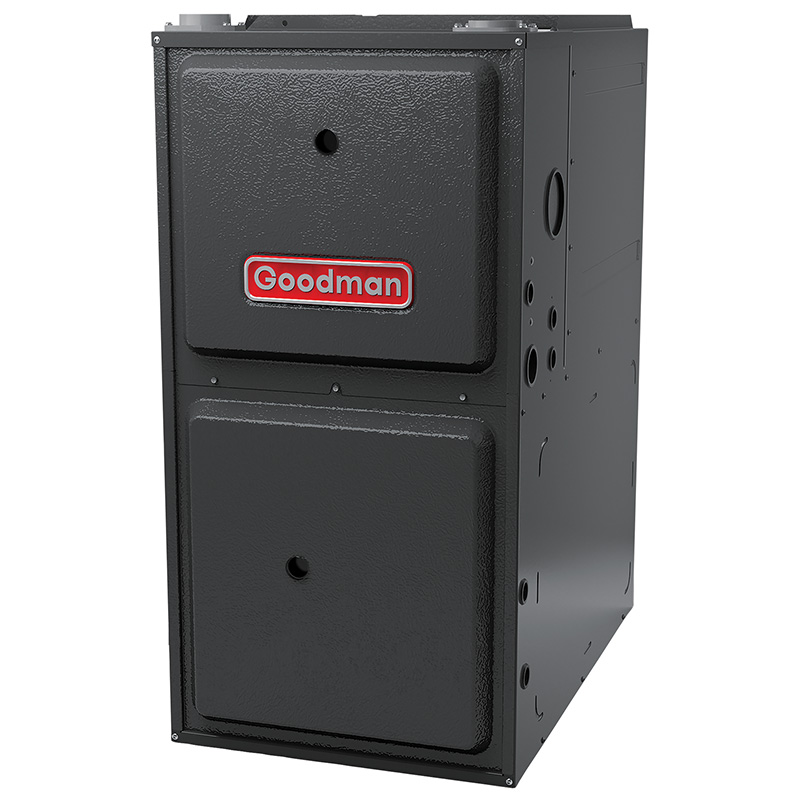
This Goodman bundle pairs a 4-ton, 14.3 SEER2 air conditioner with a 100,000 BTU, 96% AFUE two-stage gas furnace in an upflow configuration, making it a practical fit for homes in the 2,000 to 2,600 square foot range that need both serious heating capacity and competent summer cooling. The 96% AFUE rating means 96 cents of every dollar spent on gas goes toward heat, which is solidly in the high-efficiency tier and will reduce annual fuel bills compared with an 80% AFUE unit. The two-stage furnace operation runs at a lower output on milder days, cutting short cycling and improving humidity control before the second stage kicks in during peak cold snaps.
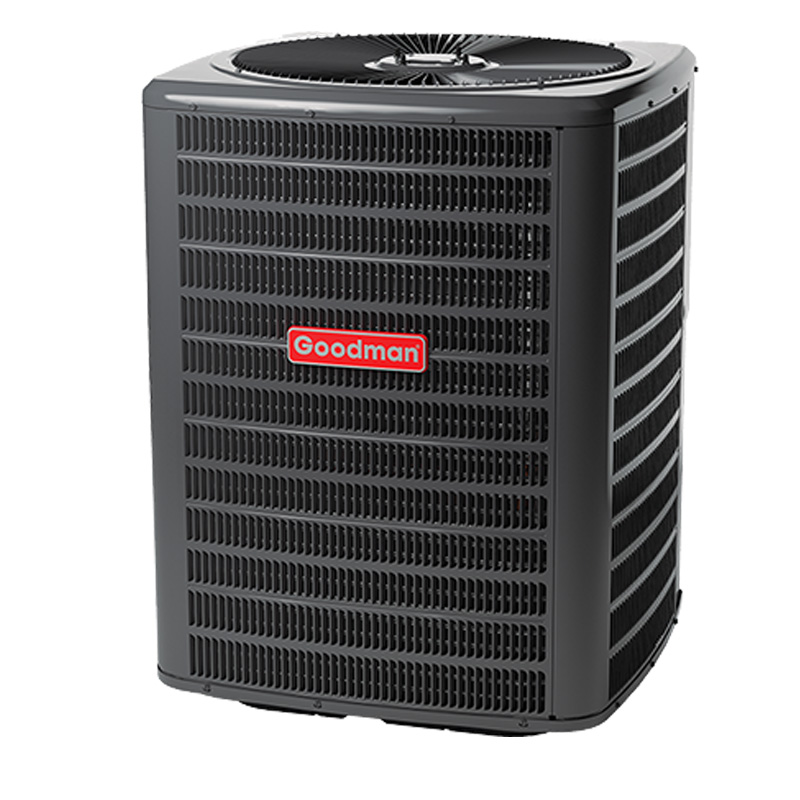
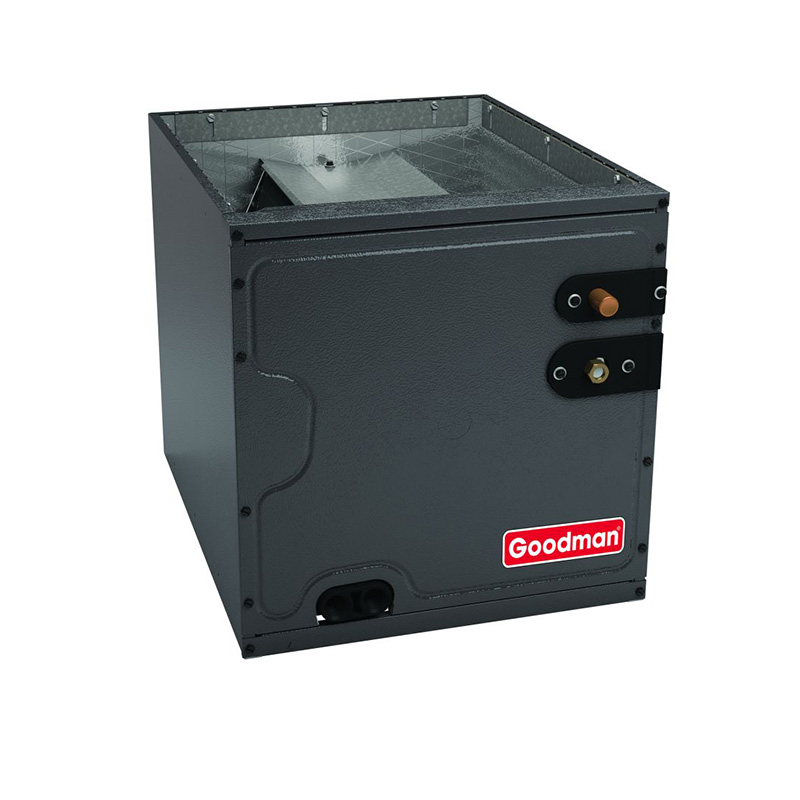
On the cooling side, 14.3 SEER2 meets the current federal minimum for most of the country and sits at the entry tier of today’s efficiency landscape. It is not a top-efficiency system, but it is a meaningful step above older 13 or 14 SEER equipment being replaced. The multi-speed ECM blower motor is a genuine upgrade over PSC motors, running more quietly and consuming less electricity during fan operation. R-32 refrigerant has a lower global warming potential than the R-410A it replaces across most of the industry, and it is what regulators and manufacturers are moving toward, so this system is reasonably future-proof on that front.
The upflow configuration suits the majority of U.S. homes where the furnace sits in a basement or utility closet and conditioned air rises through ductwork overhead. If your mechanical room is in an attic or the ducts run below the unit, this configuration would not be the right fit. Like all Goodman equipment, the outcome here depends heavily on who installs it and how carefully they size, charge, and commission the system.
This Goodman bundle delivers high-efficiency heating and entry-level-efficient cooling at a price point noticeably below Carrier, Trane, and Lennox equivalents, which makes it a reasonable choice for budget-conscious buyers who can vet their installer carefully. The 96% AFUE furnace and ECM blower are genuine value adds, but the compressor lifespan and documented coil leak history mean buyers should factor in long-term service costs before assuming total-cost-of-ownership will match a premium brand. It is a solid system when installed and maintained well, not a set-and-forget one.
Overall score is the average of the five ratings above.
What we like
- 96% AFUE puts heating efficiency in the high-efficiency tier, reducing monthly gas bills
- Two-stage furnace improves comfort and humidity management over single-stage units
- ECM blower motor cuts fan electricity use and reduces noise compared with PSC motors
- R-32 refrigerant positions the system well ahead of regulatory shifts away from R-410A
- Priced 15 to 25 percent below comparable Trane, Lennox, and Carrier equipment
Trade-offs
- Compressor longevity averages 10 to 14 years versus 15 to 20 years for premium-brand compressors
- Evaporator coil leaks are a documented recurring complaint in owner reviews
- A minority of owners report refrigerant leaks in year one, often tied to install or charge issues
- 14.3 SEER2 is the entry efficiency tier; higher SEER2 options exist at modest additional cost
What homeowners and pros say about Goodman
On Google dealer review pages, where verified customers leave ratings after completed installations, Goodman equipment averages around 3.8 out of 5 stars across hundreds of reviews per location. The most consistent praise is affordability and the fact that the systems run without issue when the install is done right. ConsumerAffairs tells a rougher story, averaging around 2.5 out of 5 on a channel that skews toward owners motivated by frustration. The pattern that emerges from that platform is repair costs climbing after roughly year seven, which aligns with the documented compressor lifespan of 10 to 14 years for Goodman versus the 15 to 20 years more commonly cited for premium-brand compressors.
HVAC technicians in trade forums broadly characterize Goodman as a workable brand when the install is thorough and the homeowner keeps up with maintenance, and a headache when shortcuts are taken. The failure modes they flag most often are dual-run capacitors, which are a low-cost fix but require a service call; evaporator coil leaks, which show up in a meaningful portion of owner complaints and can be a more significant repair; and refrigerant leaks within the first year that typically point back to an install or charge issue rather than a factory defect. For this specific system, the two-stage furnace and ECM motor earn genuine credit from installers as real comfort upgrades, while the base 14.3 SEER2 AC is seen as adequate but not the reason to choose this bundle over a competitor.
Sources: ConsumerAffairs Goodman owner reviews, AHRI Directory of Certified Product Performance, U.S. DOE appliance and equipment efficiency standards, Goodman product specification sheets.
What it costs to run
At 14.3 SEER2, cooling this 4-ton system for a typical 1200-hour cooling season at the U.S. average electricity rate of $0.17/kWh works out to roughly $685 per year in cooling, about $46 less per year than a minimum-efficiency 13.4 SEER2 unit of the same size. Your real cost depends on your climate and local rate.
Method: (48,000 BTU/hr ÷ 14.3 SEER2) × 1200 hours ÷ 1000 × $0.17/kWh. Rate source: U.S. EIA average; cooling hours: moderate-climate estimate.
How it compares
| Brand | Comparable model | SEER2 | Stage | Price position |
|---|---|---|---|---|
| Goodman | GMEC96 + GSXH5 (this system) | 14.3 | two-stage | Value pick |
| Carrier | Performance 59TP6 Furnace + 24ACC6 AC | 15.2 | two-stage | Priced roughly 20 to 25 percent above this Goodman bundle |
| Trane | S9X2 Furnace + XR15 AC | 15.0 | two-stage | Priced roughly 20 to 30 percent above this Goodman bundle |
| Lennox | ML196 Furnace + XC16 AC | 15.5 | two-stage | Priced roughly 25 to 35 percent above this Goodman bundle |
Competitor rows are comparable single-stage units at similar efficiency; price is relative position, not a quote.
Questions about this system
Is 4 tons the right size for my home, or should I get a load calculation done first?
A proper Manual J load calculation is the only reliable way to confirm sizing for your specific home, climate, insulation level, and window area. Oversizing a 4-ton system in a smaller or tighter home will cause short cycling, poor humidity removal, and added wear on the compressor. Do not skip this step even if a neighbor with a similar square footage uses the same size.
How does R-32 refrigerant affect service and maintenance compared with R-410A?
R-32 requires technicians to use equipment rated and certified for it, since it is mildly flammable at high concentrations. Most newer recovery and charging equipment handles R-32, but you should confirm your service company is equipped for it before signing a maintenance contract. Leak handling and disposal also follow slightly different protocols than R-410A.
What does the Goodman warranty actually cover on this system, and what can void it?
Goodman typically offers a 10-year parts warranty on registered residential equipment, but coverage requires registration within a set window after installation, and it covers parts only, not labor. Failure to register usually drops coverage to five years, and the warranty can be voided by improper installation, use of non-approved refrigerants, or lack of documented maintenance. Read the specific warranty card that ships with your unit.
The dual-run capacitor is listed as a common failure point. How worried should I be, and what does that repair cost?
Capacitor failure is one of the most common HVAC repairs across all brands, not just Goodman, and it is also one of the cheapest to fix, typically in the 300 to 600 dollar range including labor. Keeping a preventive maintenance contract and having a technician check capacitor health each spring before cooling season is the most practical way to catch this before it causes a no-cool situation mid-summer.
What should I ask an installer before hiring them to put in this specific Goodman system?
Ask whether they will perform a Manual J load calculation, pull the required permits, pressure-test and vacuum the refrigerant lines before charging, verify static pressure in the duct system, and provide documentation of the completed installation for warranty registration. Technicians who skip these steps are the primary reason Goodman systems underperform, and getting confirmation up front separates qualified contractors from those who do a rough hook-and-go install.
Specifications
| Cooling capacity | 4 Ton |
| Efficiency | 14.3 SEER2 |
| Furnace output | 100000 BTU |
| Furnace efficiency | 96% AFUE |
| Configuration | Upflow |
| Refrigerant | R-32 |