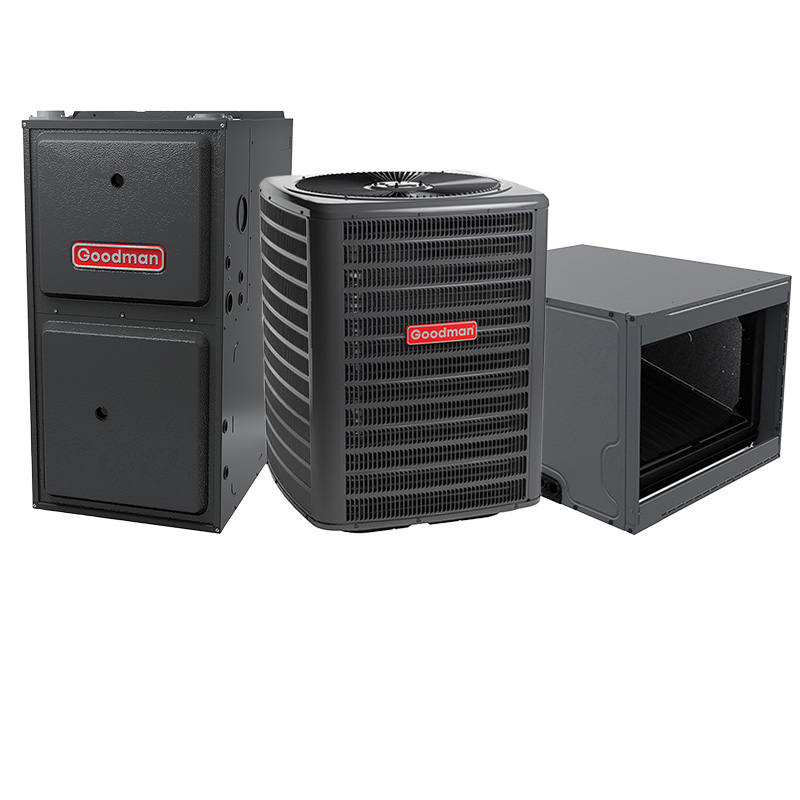
Goodman Furnace And AC – 3 Ton 15.2 SEER2 AC With 100000 BTU 96% AFUE Two Stage Multi-Speed ECM Gas Furnace System – Horizontal | R32
View on AC Direct see your lowest price →Check current price on AC Direct →
Key features
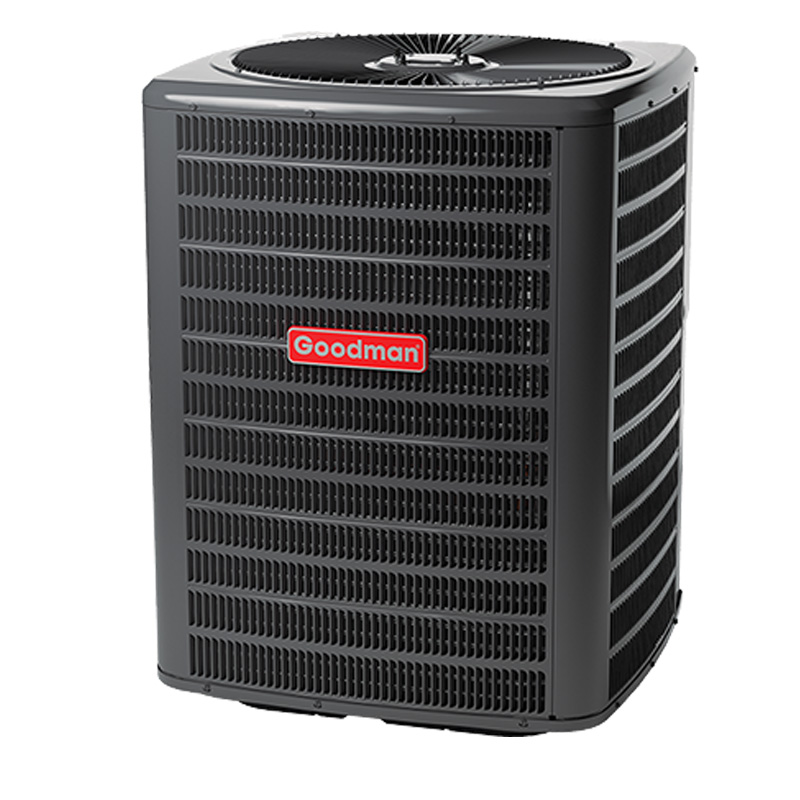
- 3-ton, 15.2 SEER2 air conditioner using R-32 refrigerant with lower global warming potential than R-410A
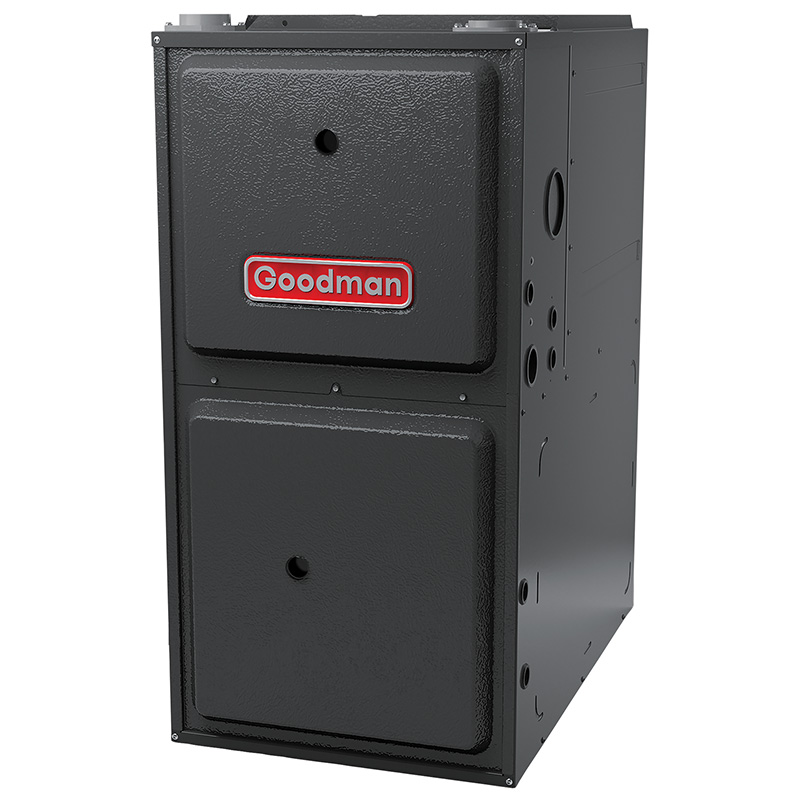
- 100,000 BTU two-stage gas furnace operates at reduced capacity on mild days to limit temperature swings
- 96% AFUE heating efficiency converts roughly 96 cents of every gas dollar into usable heat
- Multi-speed ECM blower motor lowers fan electricity use and supports more even airflow versus PSC motors
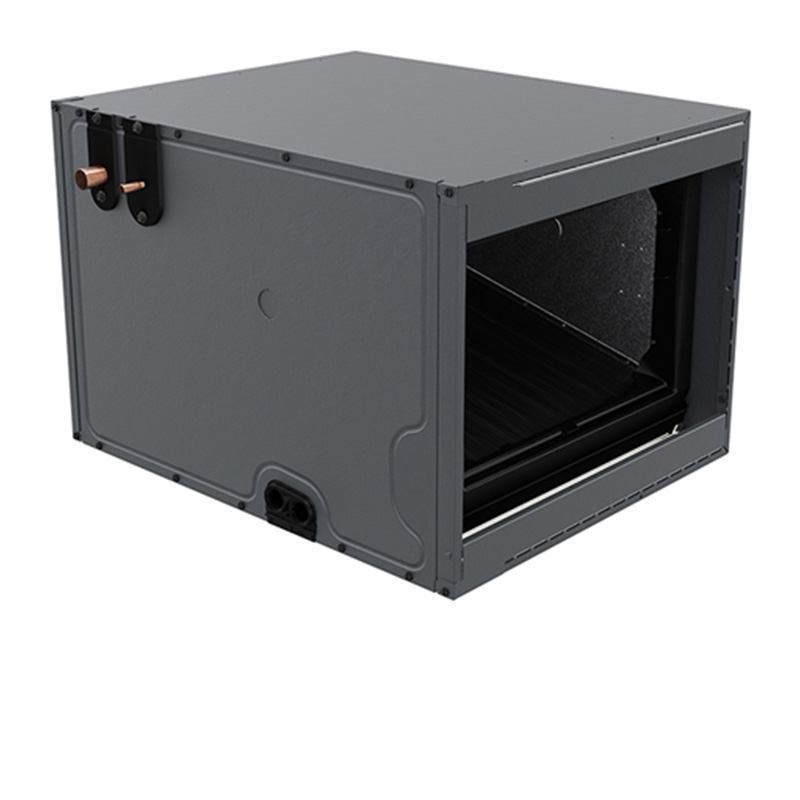
- Horizontal cabinet configuration designed for attic, crawlspace, or side-installation applications
- Factory-matched system designed and rated as a paired unit for consistent performance and warranty compliance
About this system
This Goodman combination system pairs a 3-ton, 15.2 SEER2 R-32 air conditioner with a 100,000 BTU, 96% AFUE two-stage gas furnace configured for horizontal installation, making it a practical fit for attic or crawlspace installations where vertical cabinet orientation is not possible. The 15.2 SEER2 rating clears the federal minimum efficiency threshold with modest headroom, placing it in the entry-to-mid efficiency tier rather than the premium range. The 96% AFUE furnace, however, is a genuinely high-efficiency unit, meaning only about 4 cents of every dollar spent on gas escapes as exhaust, which translates to real savings for homeowners in cold climates with long heating seasons.
The two-stage furnace operation and multi-speed ECM blower motor are meaningful upgrades over single-stage, entry-level equipment. Two-stage heating allows the furnace to run at a lower capacity on milder days, reducing temperature swings and short-cycling. The ECM blower adjusts airflow more precisely than a standard PSC motor, which supports more even distribution, lower electricity consumption during fan operation, and better compatibility with whole-home filtration or zoning add-ons. The switch to R-32 refrigerant is worth noting: R-32 carries a significantly lower global warming potential than the R-410A it replaces and is increasingly standard in new equipment.
This system suits homeowners replacing aging equipment in a mid-size home who want a step up from the bare minimum without committing to the price of a Trane, Lennox, or Carrier premium line. The horizontal configuration limits its audience to specific installation scenarios, so confirming your mechanical space dimensions and existing ductwork orientation with a licensed installer before purchasing is essential.
The Goodman 3-ton 15.2 SEER2 and 96% AFUE horizontal system offers a capable, feature-equipped package at a price meaningfully below comparable Trane, Lennox, and Carrier units. The two-stage furnace and ECM blower add genuine comfort value, but buyers should be prepared for the brand's documented weak points around capacitors, evaporator coil longevity, and compressor lifespan that trails premium competitors. How long this system serves you is tied closely to installation quality and how proactively it is maintained.
Overall score is the average of the five ratings above.
What we like
- Priced roughly 15 to 25 percent below equivalent Trane, Lennox, and Carrier configurations
- 96% AFUE furnace provides premium-tier heating efficiency even in an entry-to-mid priced package
- Two-stage operation reduces short-cycling and supports more consistent room temperatures
- ECM blower motor lowers electricity consumption during continuous fan operation compared to PSC motors
- R-32 refrigerant is a forward-looking choice with a lower environmental impact than outgoing R-410A systems
Trade-offs
- Dual-run capacitors are the most frequently reported failure, typically occurring before year 10 and costing 300 to 600 dollars to repair
- Evaporator coil leaks appear in a notable share of owner reviews, which can become an expensive repair outside of warranty coverage
- Compressor lifespan averages 10 to 14 years, measurably shorter than the 15 to 20 years typical of premium-brand compressors
- A minority of owners have reported refrigerant leaks in the first year, generally traced to installation or initial charge issues rather than a factory defect
What homeowners and pros say about Goodman
Homeowners who share feedback on Goodman equipment tend to split along a clear line: those who had a smooth installation and kept up with annual tune-ups report years of uneventful service and point to the lower purchase price as the reason they would buy again. Those who ran into problems more frequently cite repair bills that felt disproportionate to the age of the unit, which aligns with the brand’s ConsumerAffairs score of roughly 2.5 out of 5, where the recurring complaint thread is costs climbing noticeably after year 7. Dealer-level Google reviews average closer to 3.8 out of 5, where the word most likely to appear in positive feedback is simply affordable. For a system like this horizontal two-stage setup, installation complexity is higher than a standard upflow unit, and HVAC technicians are consistent in noting that Goodman equipment in particular is more sensitive to charge accuracy and airflow setup than premium brands with tighter factory tolerances.
On the service side, technicians who work on Goodman equipment regularly point to dual-run capacitor replacement as a routine call, typically landing between 300 and 600 dollars and more common before the 10-year mark than owners expect. Evaporator coil leaks are the concern that draws more frustration, since a failed coil in a horizontal unit can be a labor-intensive replacement. Compressor longevity is the longer-range consideration: independent service data suggests Goodman compressors average 10 to 14 years, which is a real gap compared to the 15 to 20 years more commonly seen on Trane, Lennox, and Carrier compressors. For this specific system, the 96% AFUE furnace and ECM blower are genuine strengths that hold up well in technician assessments, and the R-32 refrigerant is a straightforward modern choice rather than a liability. The honest take from the field is that Goodman is a workable system when it is installed correctly and serviced consistently, and a source of frustration when either of those conditions is not met.
Sources: ConsumerAffairs Goodman owner reviews, AHRI Directory of Certified Product Performance, U.S. DOE appliance and equipment efficiency standards, Goodman product specification sheets.
What it costs to run
At 15.2 SEER2, cooling this 3-ton system for a typical 1200-hour cooling season at the U.S. average electricity rate of $0.17/kWh works out to roughly $483 per year in cooling, about $65 less per year than a minimum-efficiency 13.4 SEER2 unit of the same size. Your real cost depends on your climate and local rate.
Method: (36,000 BTU/hr ÷ 15.2 SEER2) × 1200 hours ÷ 1000 × $0.17/kWh. Rate source: U.S. EIA average; cooling hours: moderate-climate estimate.
How it compares
| Brand | Comparable model | SEER2 | Stage | Price position |
|---|---|---|---|---|
| Goodman | 3-Ton 15.2 SEER2 / 100K BTU 96% AFUE Two-Stage ECM Horizontal | 15.2 | Two-stage | Value pick |
| Carrier | Performance 15 / 58CV Two-Stage Furnace Bundle | 15.2 | Two-stage | Typically 15 to 20 percent more than this Goodman system |
| Trane | XR15 / S9V2 Two-Stage Furnace Bundle | 15.0–16.0 | Two-stage | Typically 20 to 25 percent more than this Goodman system |
| Lennox | Merit ML15 / ML196E Two-Stage Furnace Bundle | 15.2 | Two-stage | Typically 15 to 20 percent more than this Goodman system |
Competitor rows are comparable single-stage units at similar efficiency; price is relative position, not a quote.
Questions about this system
Is 15.2 SEER2 good enough, or should I spend more for a higher-efficiency AC in this system?
15.2 SEER2 meets current federal minimums with a small buffer and will deliver reasonable utility bills in moderate climates. If you live somewhere with long, hot summers and high electricity rates, stepping up to a 17 or 18 SEER2 unit may pay back the cost difference over time, but for average climates the 15.2 tier is a defensible choice for the price.
What does horizontal configuration mean, and how do I know if it is right for my home?
A horizontal unit is oriented on its side rather than upright, and is typically installed in a low-clearance attic, suspended from joists, or in a crawlspace where a vertical cabinet cannot fit. Your HVAC installer should verify ceiling height, structural support, and existing duct connections before ordering a horizontal unit, since substituting an upflow or downflow cabinet later is not practical.
Goodman has mixed reviews online. Should I be worried about reliability?
Goodman's ConsumerAffairs score sits around 2.5 out of 5, which reflects a complaint-heavy audience and a pattern of repair costs rising after roughly year 7. Its dealer Google scores average closer to 3.8 out of 5, where affordability is the most common praise. The documented weak points are capacitor failures (a relatively inexpensive fix), evaporator coil leaks, and compressor lifespans shorter than premium brands. Choosing a skilled installer and committing to annual maintenance are the most effective ways to push toward the longer end of its service range.
Does this system use R-32 refrigerant, and is that a problem for service?
Yes, this system uses R-32, which is becoming the new standard as R-410A is phased down. R-32 requires technicians to use equipment and procedures certified for mildly flammable refrigerants, so you should confirm your service contractor is trained and equipped for R-32 work before scheduling any future maintenance or repair.
What warranty does this Goodman system carry, and are there conditions I need to meet?
Goodman typically offers a 10-year parts warranty when the system is registered within a specified window after installation, often 60 days. Registration is usually required to receive the full term rather than a shorter base warranty. The warranty covers parts but not labor, which is a common industry standard and means a repair outside of a labor warranty from your installer can still carry a meaningful service bill. Confirm current warranty terms at the time of purchase since program details can change.
Specifications
| Cooling capacity | 3 Ton |
| Efficiency | 15.2 SEER2 |
| Furnace output | 100000 BTU |
| Furnace efficiency | 96% AFUE |
| Configuration | Horizontal |
| Refrigerant | R-32 |