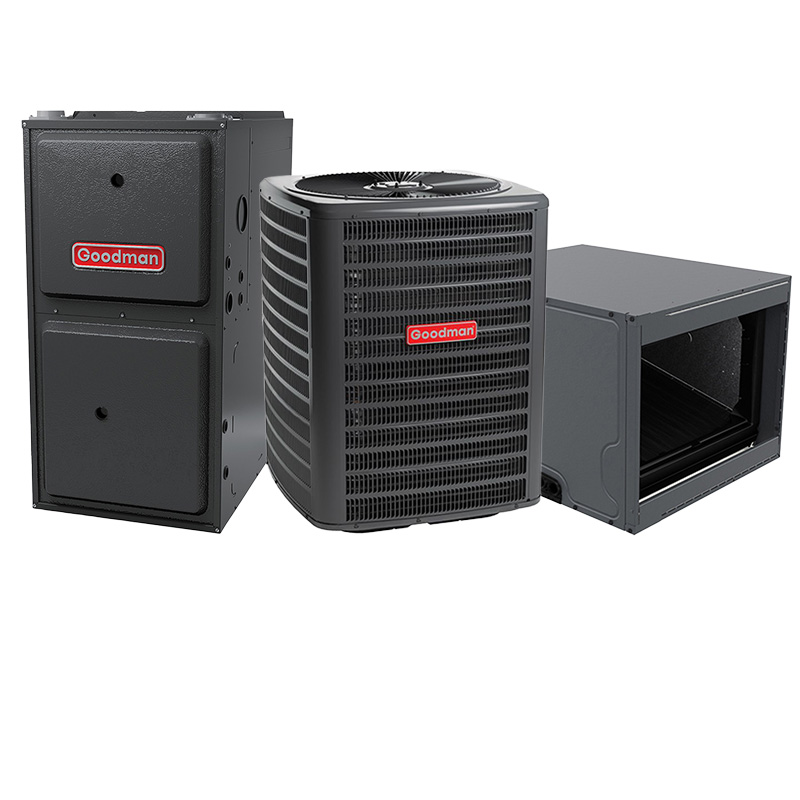
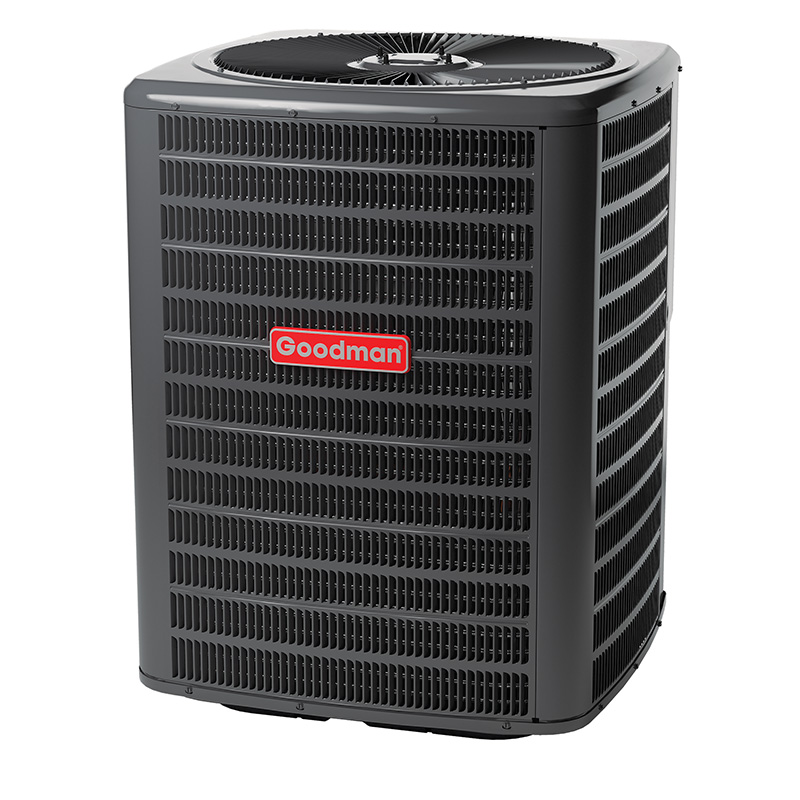
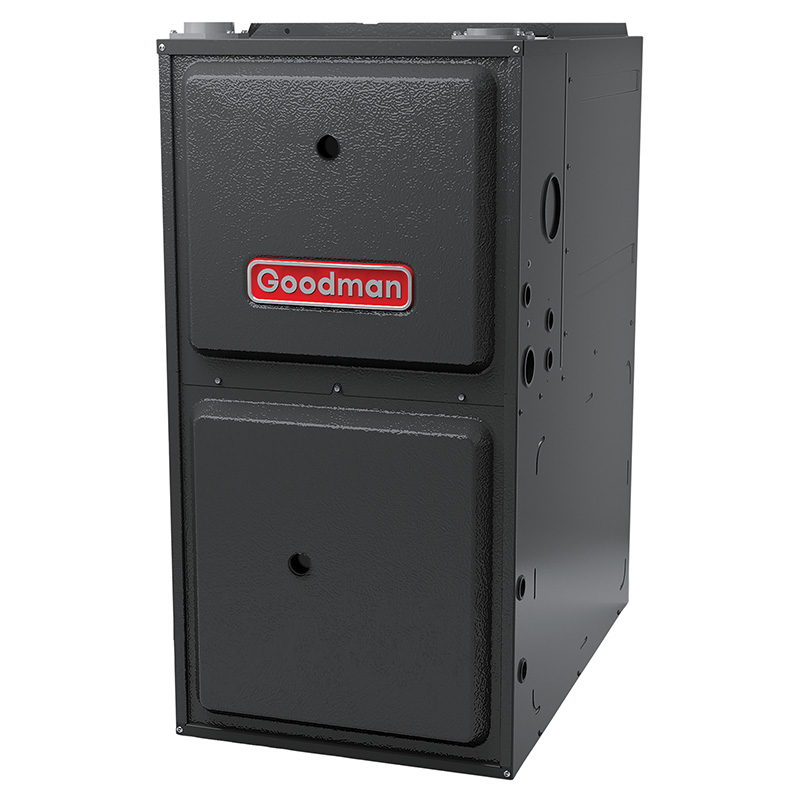
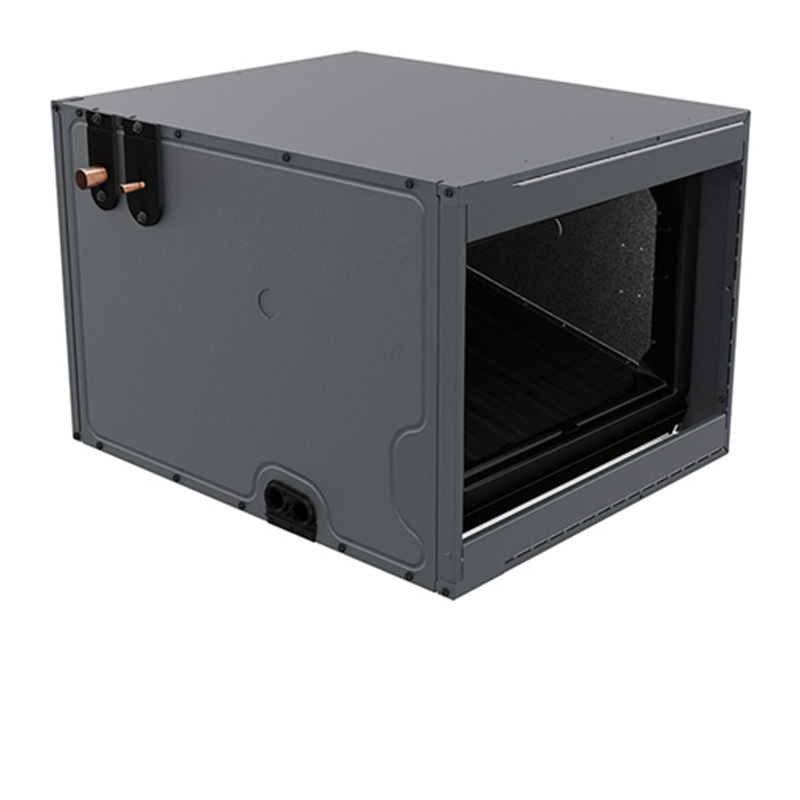
Goodman Furnace AC – 2 Ton 15.2 SEER2 AC With 80000 BTU 96% AFUE Multi-Speed ECM Gas Furnace System – Horizontal | R32
View on AC Direct see your lowest price →Check current price on AC Direct →
Key features
- 15.2 SEER2 cooling efficiency meets current federal minimum standards with modest headroom
- 96% AFUE gas furnace recovers 96 cents of heat energy per dollar of natural gas burned
- Multi-speed ECM blower motor reduces electricity use and improves comfort versus single-speed PSC motors
- Horizontal cabinet orientation designed for attic, crawlspace, or tight-closet installations
- R-32 refrigerant replaces R-410A with a lower global-warming potential
- 2-ton capacity suited to approximately 800 to 1,200 square feet in a well-insulated home
About this system
This Goodman bundle pairs a 2-ton, 15.2 SEER2 central air conditioner with an 80,000 BTU, 96% AFUE multi-speed ECM gas furnace configured for horizontal installation. The horizontal layout makes it the right call for attic or crawlspace applications where a standard upflow or downflow cabinet simply will not fit. R-32 refrigerant gives this system a lower global-warming potential than the older R-410A it replaces, and several utilities have begun accepting it for efficiency rebates, so check your local program before you buy.
The 96% AFUE rating means the furnace converts 96 cents of every dollar of gas into usable heat, which puts it in the upper tier of gas furnace efficiency without crossing into the condensing-two-stage or modulating category. The multi-speed ECM blower motor is a genuine step up from single-speed PSC motors: it ramps airflow gradually, reduces short-cycling, and cuts blower electricity consumption noticeably over a full heating and cooling season. At 2 tons, this system is sized for roughly 800 to 1,200 square feet in a well-insulated home, though an accurate Manual J load calculation by your installer should confirm that before anything ships.
Goodman prices this bundle 15 to 25 percent below comparable Trane, Lennox, and Carrier equipment, which is the core reason buyers consider it. That savings is real. The trade-off is a shorter expected compressor lifespan and a reliability record that sits below the premium tier, so it suits budget-conscious homeowners who understand the math: lower upfront cost, a higher chance of a mid-life repair bill, and the knowledge that most of those repairs are relatively affordable if you keep a service relationship with a qualified technician.
This Goodman horizontal system delivers solid efficiency numbers and a legitimate upfront savings over premium brands, making it a reasonable choice for homeowners who prioritize purchase price and can accept a higher probability of a repair call in years 7 through 14. Install quality will determine more of this system's longevity than any spec on the sheet, so the contractor you hire matters at least as much as the equipment itself. It is not the most durable option on the market, but it is a workable one when the budget is firm.
Overall score is the average of the five ratings above.
What we like
- Priced 15 to 25 percent below comparable Trane, Lennox, and Carrier systems
- 96% AFUE furnace efficiency is near the top of the single-stage gas furnace category
- ECM multi-speed blower improves humidity control and lowers fan operating costs versus PSC motors
- Horizontal configuration opens up installation locations that standard upflow units cannot serve
- R-32 refrigerant is increasingly accepted by utility rebate programs and has lower environmental impact than R-410A
Trade-offs
- Compressor lifespan averages 10 to 14 years versus 15 to 20 years for premium-brand compressors
- Evaporator coil leaks appear in a meaningful share of owner reviews and can be costly to address
- Dual-run capacitor failures are the most frequently reported repair, typically surfacing after year 7
- A minority of owners report refrigerant leaks in the first year, usually tied to install or initial charge quality
What homeowners and pros say about Goodman
Goodman sits at roughly 3.8 out of 5 across Google dealer reviews, where the praise most often centers on the lower purchase price relative to Carrier, Trane, and Lennox. Homeowners who went in with realistic expectations and a good installer tend to report satisfaction in the early years. On ConsumerAffairs, the score falls to around 2.5 out of 5, a platform that skews toward owners motivated enough by a problem to write a review. The recurring theme there is repair costs that begin climbing after roughly year 7, which aligns with the brand’s documented pattern.
HVAC technicians who service Goodman equipment regularly point to dual-run capacitor failure as the most common call they make on these systems, usually a straightforward and relatively low-cost repair in the 300 to 600 dollar range. More concerning to many pros are evaporator coil leaks, which show up in a meaningful portion of owner reports and require more involved repair work. Compressor longevity is another honest point of difference: Goodman compressors tend to run 10 to 14 years on average, compared to 15 to 20 years reported for premium-brand compressors. A small minority of owners have also reported refrigerant leaks within the first year, which technicians generally attribute to install or initial charge issues rather than a factory defect. For this particular horizontal-configuration system, install quality is even more critical than usual, since improper leveling and drain line setup can accelerate coil and drain pan problems.
Sources: ConsumerAffairs Goodman owner reviews, AHRI Directory of Certified Product Performance, U.S. DOE appliance and equipment efficiency standards, Goodman product specification sheets.
What it costs to run
At 15.2 SEER2, cooling this 2-ton system for a typical 1200-hour cooling season at the U.S. average electricity rate of $0.17/kWh works out to roughly $322 per year in cooling, about $43 less per year than a minimum-efficiency 13.4 SEER2 unit of the same size. Your real cost depends on your climate and local rate.
Method: (24,000 BTU/hr ÷ 15.2 SEER2) × 1200 hours ÷ 1000 × $0.17/kWh. Rate source: U.S. EIA average; cooling hours: moderate-climate estimate.
How it compares
| Brand | Comparable model | SEER2 | Stage | Price position |
|---|---|---|---|---|
| Goodman | 2-Ton 15.2 SEER2 AC / 80k BTU 96% AFUE ECM Horizontal Bundle | 15.2 | Single-stage | Value pick |
| Carrier | Comfort 24ACC636A003 / 59SC5 furnace bundle | 15.2 | Single-stage | Typically 15 to 25 percent higher than this Goodman bundle |
| Trane | XR15 / S9X1 furnace bundle | 15.0 to 15.5 | Single-stage | Typically 20 to 30 percent higher than this Goodman bundle |
| Lennox | Merit ML14XC1 / ML196E furnace bundle | 15.0 to 16.0 | Single-stage | Typically 20 to 30 percent higher than this Goodman bundle |
Competitor rows are comparable single-stage units at similar efficiency; price is relative position, not a quote.
Questions about this system
Why is this configured as horizontal, and can I install it in a standard upflow position instead?
The cabinet and coil in this bundle are built and factory-configured for horizontal airflow, which is required for attic or on-side crawlspace installs. Installing a horizontal-specific unit in an upflow position is not supported and will cause drainage and performance problems. If you need upflow or downflow, you need a different cabinet configuration.
Is R-32 refrigerant safe, and will my technician be able to service it?
R-32 is mildly flammable (classified A2L), which means technicians need specific recovery equipment and certification to handle it safely. Most HVAC companies are already equipping for R-32 as the industry transitions away from R-410A, but confirm your installer is set up for it before scheduling. Homeowners should not handle refrigerant themselves under any circumstances.
What is the real warranty on this system, and what does it cover?
Goodman generally offers a 10-year parts warranty when the system is registered within a set window after install, and a limited lifetime warranty on the heat exchanger. Labor is not covered, which is the most expensive part of any service call. Read the registration deadline carefully because missing it drops coverage significantly.
The specs say 2 tons is right for 800 to 1,200 square feet. My house is 1,100 square feet. Is that close enough?
Square footage is a rough starting point, not a final answer. Ceiling height, insulation levels, window area, local climate, and duct condition all affect the correct size. An undersized or oversized system causes short-cycling, humidity problems, and premature wear. Have your installer run a Manual J load calculation before ordering equipment.
How worried should I be about the capacitor and coil failure reports for Goodman?
Dual-run capacitor failure is the most common documented repair on Goodman equipment, typically showing up after year 7. It is usually a 300 to 600 dollar fix and a straightforward service call. Evaporator coil leaks are more expensive and more disruptive, and they appear in a meaningful share of owner reviews. Neither is guaranteed to happen, but building a service budget of a few hundred dollars per year into your ownership plan is reasonable for this brand.
Specifications
| Cooling capacity | 2 Ton |
| Efficiency | 15.2 SEER2 |
| Furnace output | 80000 BTU |
| Furnace efficiency | 96% AFUE |
| Configuration | Horizontal |
| Refrigerant | R-32 |