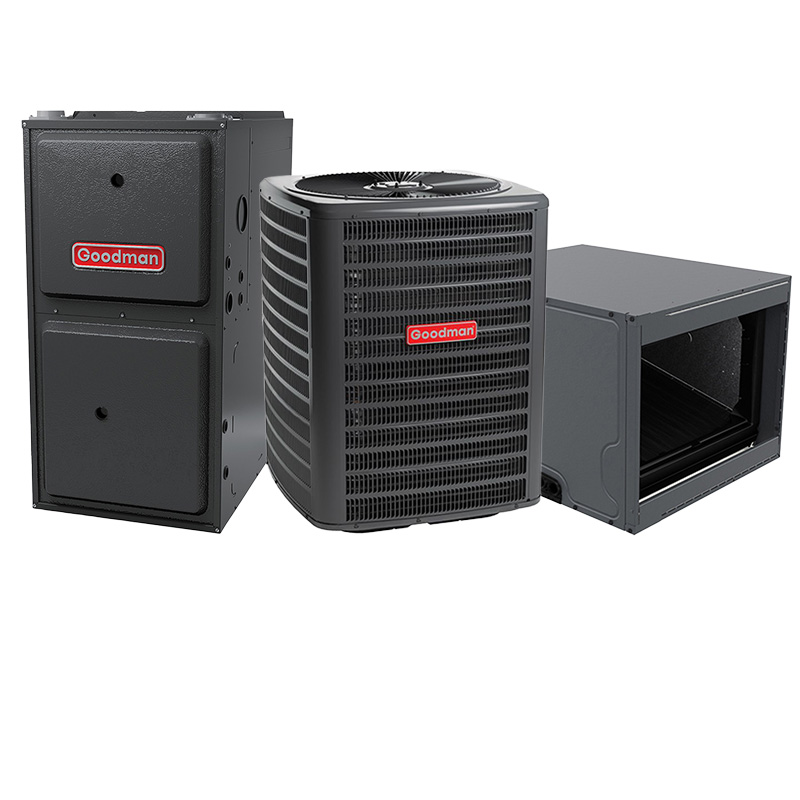
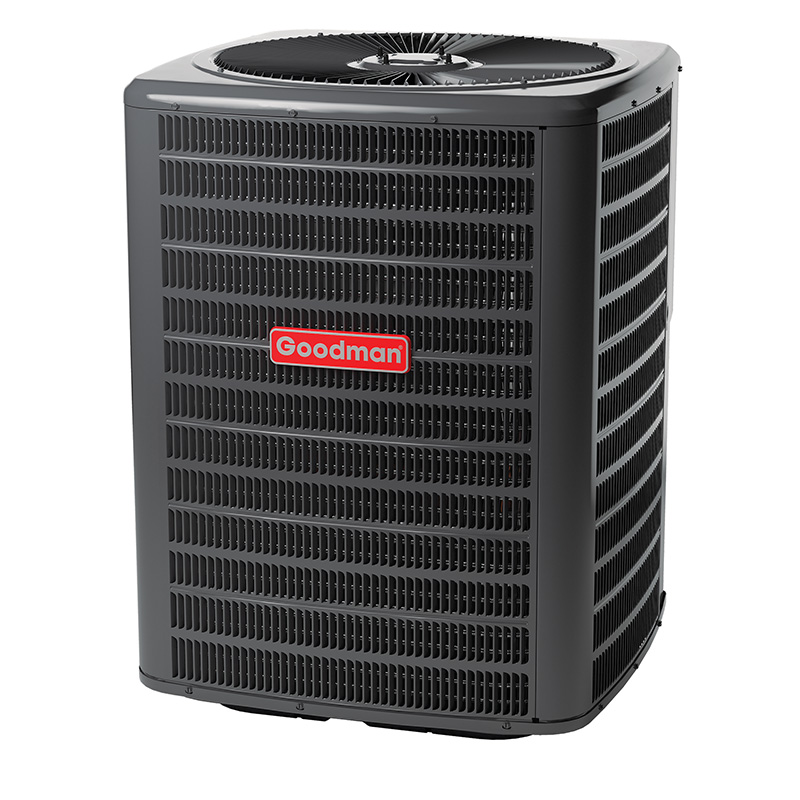
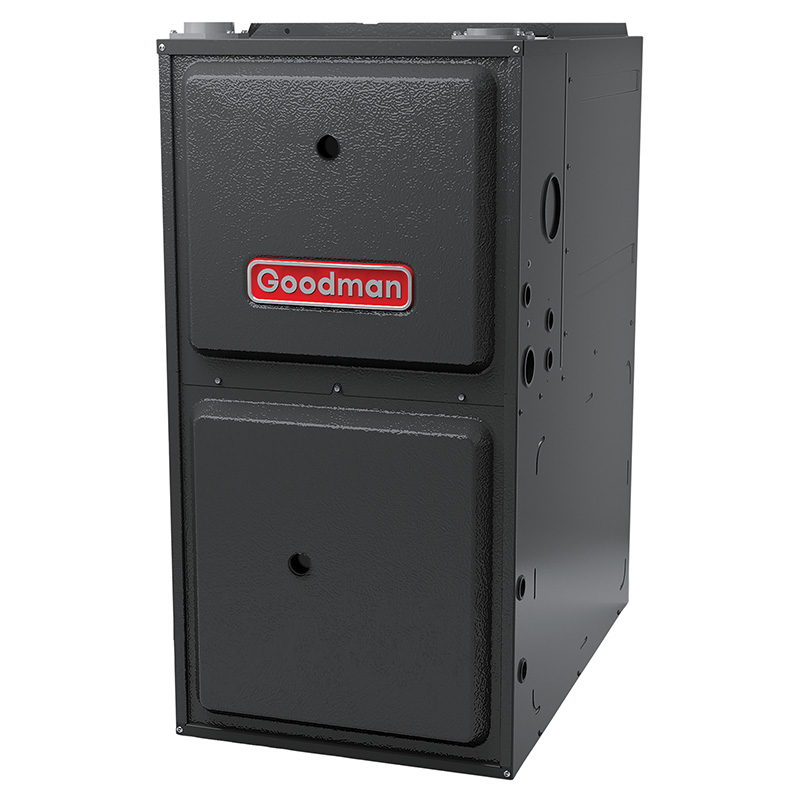
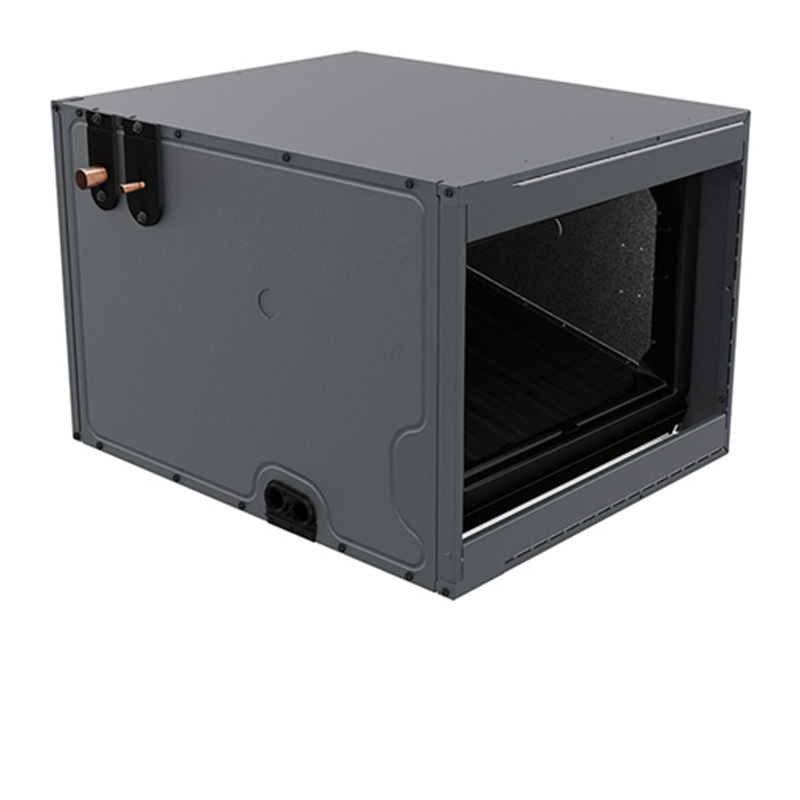
Goodman Furnace AC – 4 Ton 15.2 SEER2 AC With 120000 BTU 96% AFUE Multi-Speed ECM Gas Furnace System – Horizontal | R32
View on AC Direct see your lowest price →Check current price on AC Direct →
Key features
- 15.2 SEER2 cooling efficiency meets current federal minimums for most U.S. climate regions
- 96% AFUE gas furnace loses only about 4% of fuel energy, qualifying as high-efficiency
- Multi-speed ECM blower motor adjusts airflow for quieter operation and better dehumidification
- Horizontal configuration designed for attic, crawlspace, or side-discharge installations
- R-32 refrigerant with lower global-warming potential than legacy R-410A systems
- 4-ton / 120,000 BTU capacity suited to larger homes, roughly 2,400 to 3,200 sq ft depending on load
About this system
This Goodman combination system pairs a 4-ton, 15.2 SEER2 central air conditioner with a 120,000 BTU, 96% AFUE multi-speed ECM gas furnace sized for larger homes, typically in the 2,400 to 3,200 square foot range depending on climate zone and insulation. The horizontal configuration is purpose-built for attic, crawlspace, or side-discharge installations where vertical clearance is limited, making it a practical choice for homes that cannot accommodate a standard upright air handler or furnace. The system runs on R-32 refrigerant, a lower global-warming-potential option that is becoming standard in newer equipment and is worth noting for future service costs and technician familiarity in your area.
On the efficiency side, 15.2 SEER2 clears the federal minimum for most U.S. regions but sits at the entry level of the efficiency spectrum rather than near the top. The 96% AFUE furnace is a genuine high-efficiency rating, meaning only about 4% of fuel energy is lost through the flue, which delivers real heating-season savings over an 80% AFUE unit. The multi-speed ECM blower motor is a meaningful upgrade over single-speed models: it ramps airflow to demand, improves dehumidification in cooling mode, and runs more quietly at lower speeds. Together, these specs represent a competent, code-compliant system for cost-conscious buyers who want above-average heating efficiency without paying for top-tier cooling efficiency.
This Goodman bundle delivers a genuine high-efficiency furnace and code-compliant AC at a price point that undercuts Carrier, Trane, and Lennox by a meaningful margin, making it a reasonable choice for budget-aware buyers in larger homes. The trade-off is a brand track record that shows higher-than-average repair frequency after year seven and compressor longevity that typically runs shorter than premium competitors. If your priority is minimizing upfront cost and you are prepared to budget for possible mid-life repairs, this system earns its place; if long-term worry-free ownership matters more than purchase price, you should weigh the premium brands carefully.
Overall score is the average of the five ratings above.
What we like
- 96% AFUE furnace provides real heating-season fuel savings over standard 80% AFUE equipment
- Priced roughly 15 to 25 percent below comparable Carrier, Trane, and Lennox systems
- Multi-speed ECM motor improves comfort, humidity control, and part-load noise compared to single-speed
- Horizontal configuration opens up installation locations unavailable to vertical equipment
- R-32 refrigerant is a forward-looking choice with lower environmental impact than R-410A
Trade-offs
- Compressor lifespan averages 10 to 14 years versus 15 to 20 years for premium-brand compressors
- Dual-run capacitor failures are a documented recurring issue, typically adding a repair call around years 5 to 8
- Evaporator coil leaks appear in a meaningful share of owner reviews, a potentially costly mid-life repair
- A minority of owners report refrigerant leaks in year one, often tied to installation quality rather than a factory defect, underscoring how critical contractor selection is
What homeowners and pros say about Goodman
Homeowners who go with Goodman equipment most often point to the upfront price as the deciding factor, and dealer Google ratings that hover around 3.8 out of 5 reflect that affordability remains the brand’s clearest strength. Satisfaction tends to be higher in the first several years, and owners who paired their system with a careful, experienced installer report fewer early problems. The picture shifts in owner forums and on ConsumerAffairs, where the brand scores closer to 2.5 out of 5, a channel that skews toward complaints but still points to a consistent pattern: repair costs and part failures become more common after roughly year seven, and those experiences drive the sharpest criticism.
Among HVAC technicians, the documented failure modes are well known. Dual-run capacitors are the most frequently replaced part on Goodman systems, usually a straightforward repair in the 300 to 600 dollar range but one that adds up if it happens more than once. Evaporator coil leaks show up in enough owner accounts to be worth budgeting for, and compressor longevity that typically runs 10 to 14 years falls short of the 15 to 20 years that premium brands tend to achieve. For this specific horizontal configuration, which involves more constraints on service access than a standard upright install, technicians are especially consistent in saying that the install quality matters more than the brand name on the cabinet. First-year refrigerant leaks, when they occur, are almost always traced to charging or line set issues at installation rather than a factory problem, reinforcing why contractor selection deserves as much attention as equipment selection.
Sources: ConsumerAffairs Goodman owner reviews, AHRI Directory of Certified Product Performance, U.S. DOE appliance and equipment efficiency standards, Goodman product specification sheets.
What it costs to run
At 15.2 SEER2, cooling this 4-ton system for a typical 1200-hour cooling season at the U.S. average electricity rate of $0.17/kWh works out to roughly $644 per year in cooling, about $87 less per year than a minimum-efficiency 13.4 SEER2 unit of the same size. Your real cost depends on your climate and local rate.
Method: (48,000 BTU/hr ÷ 15.2 SEER2) × 1200 hours ÷ 1000 × $0.17/kWh. Rate source: U.S. EIA average; cooling hours: moderate-climate estimate.
How it compares
| Brand | Comparable model | SEER2 | Stage | Price position |
|---|---|---|---|---|
| Goodman | 4-Ton 15.2 SEER2 / 120,000 BTU 96% AFUE Multi-Speed ECM Horizontal Bundle | 15.2 | Multi-speed | Value pick |
| Carrier | Comfort Series (24ACC636 paired with 59SC2) | 15.2 – 16 | Single-stage / Two-stage | Typically 15 to 25 percent more than this Goodman bundle |
| Trane | XR15 paired with S9X2 Gas Furnace | 15 – 15.5 | Single-stage | Typically 20 to 30 percent more than this Goodman bundle |
| Lennox | Merit Series ML15XC1 paired with ML196E Furnace | 15.5 | Single-stage | Typically 20 to 30 percent more than this Goodman bundle |
Competitor rows are comparable single-stage units at similar efficiency; price is relative position, not a quote.
Questions about this system
Is 15.2 SEER2 going to qualify for a federal tax credit?
The current Inflation Reduction Act tax credit for central air conditioners requires at least 16 SEER2 for split systems in most configurations, so this unit at 15.2 SEER2 does not meet that cooling threshold on its own. The 96% AFUE furnace may qualify separately as a high-efficiency heating component; check IRS Form 5695 and consult a tax professional for your specific situation.
Why does the horizontal configuration matter, and can this furnace be installed vertically?
Horizontal-only furnaces are factory-set for side-discharge airflow and are not convertible to upright vertical installations without a different cabinet model. If your installation site is an attic platform, a crawlspace slab, or a closet with limited height, this configuration fits well; if you need an upright unit in a basement or utility room, you would need to select a different model.
How hard is it to find a technician who services R-32 equipment?
R-32 is increasingly common in new residential equipment and most established HVAC companies are already handling it, but it does require specific recovery equipment and certification. Before buying, confirm that at least two or three local service companies in your area are already working with R-32 so you are not dependent on a single contractor for future repairs.
What does Goodman's warranty actually cover on this system, and what are the conditions?
Goodman typically offers a 10-year parts limited warranty when the equipment is registered within a set window after installation, dropping to a shorter period on unregistered units. The warranty covers parts replacement but not labor, refrigerant, or diagnostic costs, which is standard in the industry but means a compressor failure under warranty can still cost several hundred dollars in service fees. Confirm the current registration terms at the time of purchase, as Goodman has revised its warranty structure in recent years.
How much does installer quality actually affect this system's performance and lifespan?
HVAC technicians consistently identify installation as the single largest variable in how a Goodman system performs and how long it lasts. Proper refrigerant charge, correct duct sizing, accurate airflow setup for the ECM motor, and leak-free line set connections all matter more with a value-tier brand that leaves less room for error. The documented first-year refrigerant leak issue in some Goodman units is most commonly traced back to install or charge problems rather than factory defects, so spending time selecting a licensed, experienced contractor is at least as important as the equipment choice itself.
Specifications
| Cooling capacity | 4 Ton |
| Efficiency | 15.2 SEER2 |
| Furnace output | 120000 BTU |
| Furnace efficiency | 96% AFUE |
| Configuration | Horizontal |
| Refrigerant | R-32 |