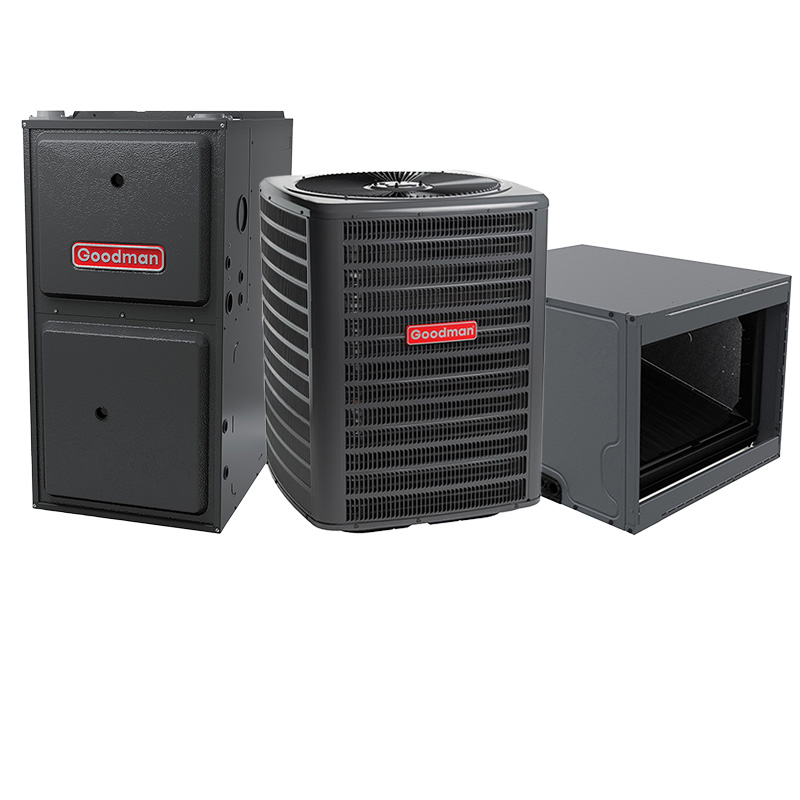
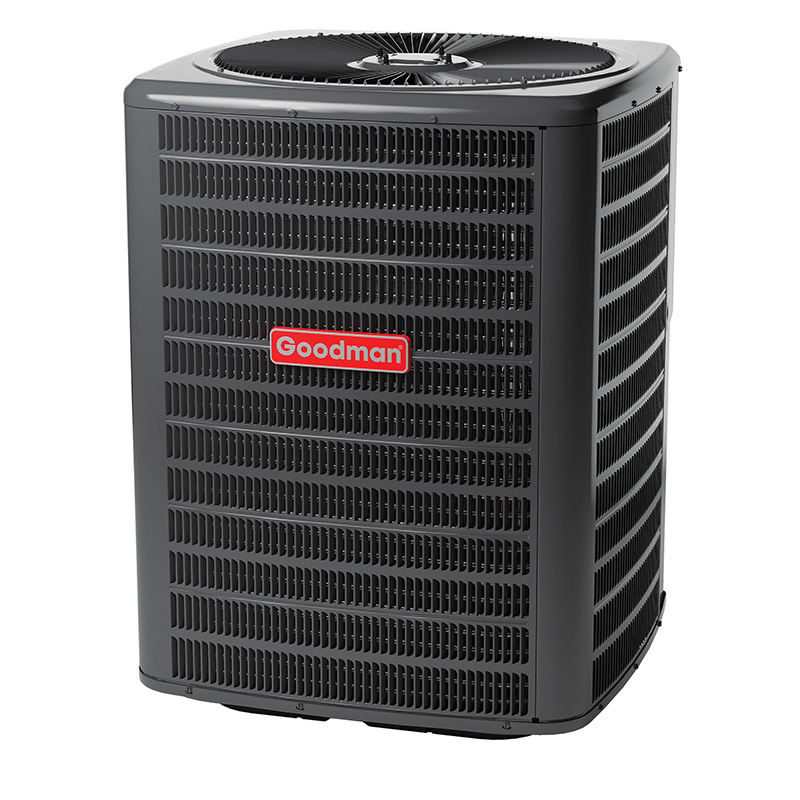
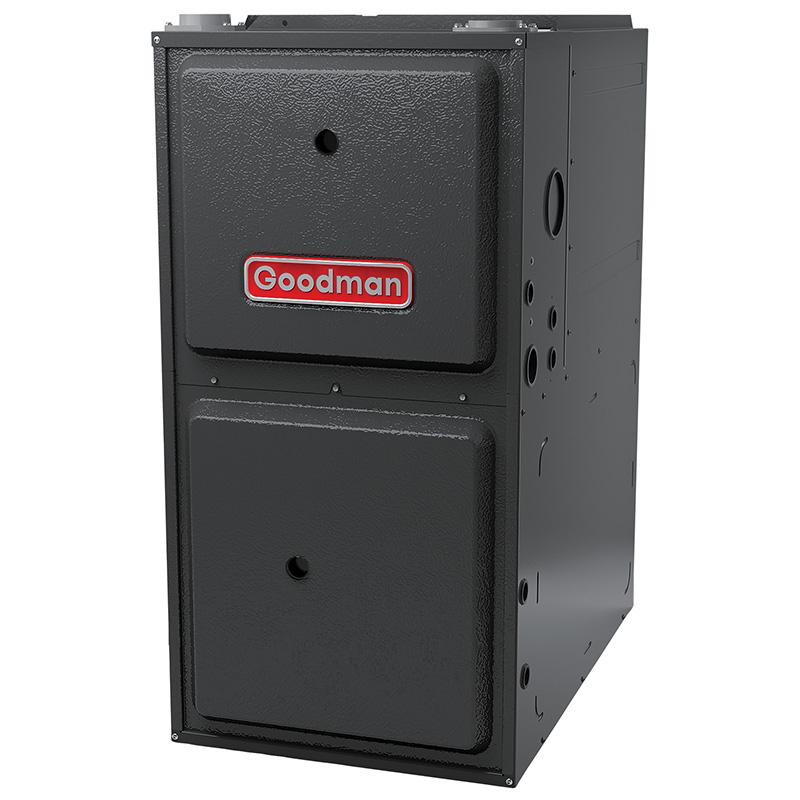
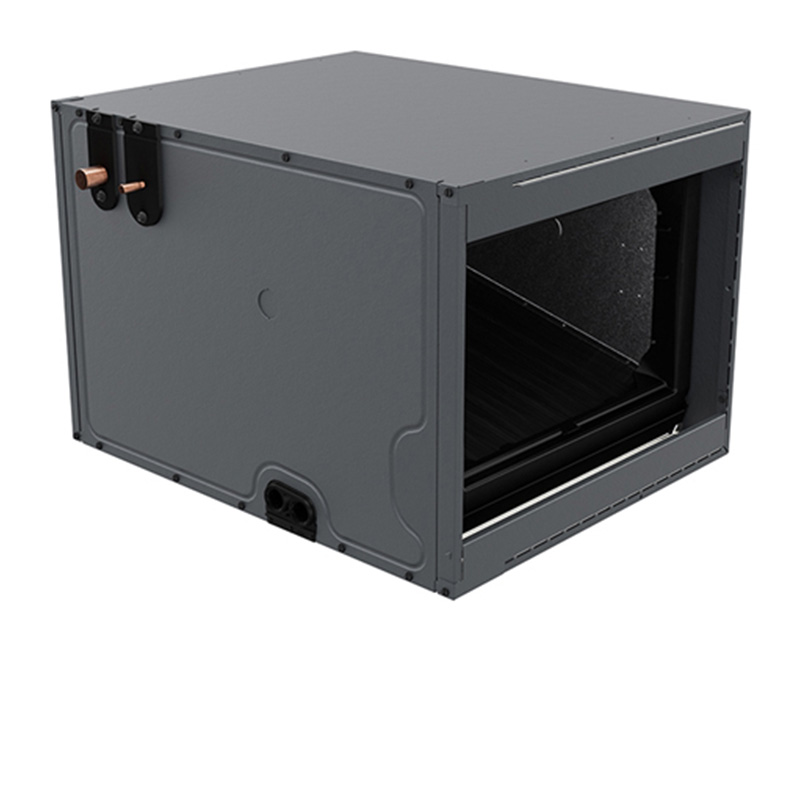
Goodman Air Conditioning And Heating – 3 Ton 15.2 SEER2 AC With 60000 BTU 96% AFUE Two Stage Multi-Speed ECM Gas Furnace System – Horizontal | R32
View on AC Direct see your lowest price →Check current price on AC Direct →
Key features
- 3-ton cooling capacity at 15.2 SEER2 efficiency rating
- Two-stage gas furnace at 96% AFUE for high-efficiency heating
- Multi-speed ECM blower motor reduces electricity use and noise
- Horizontal configuration suited for attic and crawl-space installs
- R-32 refrigerant with lower global warming potential than R-410A
- 60,000 BTU heating output for mid-size home coverage
About this system
This Goodman bundle pairs a 3-ton, 15.2 SEER2 air conditioner with a 60,000 BTU, 96% AFUE two-stage gas furnace in a horizontal configuration, making it a practical fit for attic or crawl-space installations where vertical clearance is limited. The R-32 refrigerant charge is a forward-looking choice: R-32 has a lower global warming potential than the R-410A it replaces, and its higher energy density allows the system to run with a smaller refrigerant volume. The multi-speed ECM blower motor modulates airflow to match demand rather than simply switching on at full blast, which improves comfort consistency and trims blower electricity costs compared with a PSC motor.
The two-stage furnace operation is a meaningful real-world upgrade over single-stage designs. On the majority of winter days, the furnace runs on the lower stage, cycling less aggressively, maintaining more even temperatures, and running quieter. The 96% AFUE rating means that 96 cents of every dollar spent on natural gas reaches your living space as heat, putting this unit in the high-efficiency category without climbing to the premium price of a modulating furnace. For a mid-size home in a mixed or cold climate, this combination of adequate cooling capacity, high heating efficiency, and horizontal flexibility covers a broad range of installation scenarios.
Buyers should understand that this is a kit, not a plug-and-play appliance. The system’s long-term performance depends heavily on correct sizing, proper refrigerant charging, tight duct connections, and accurate flue venting. Goodman equipment sold through licensed contractors and installed to specification performs reasonably well; the brand’s reputation suffers most when corners are cut on installation.
This Goodman system delivers genuinely good specs on paper: a two-stage furnace at 96% AFUE and an ECM blower are features you would pay considerably more for from Carrier, Trane, or Lennox. The trade-off is a brand with a documented history of capacitor failures, evaporator coil leaks, and compressors that tend to fall short of premium-brand longevity, meaning the initial savings can narrow over a 12 to 15 year ownership window. For budget-conscious buyers who want capable, code-compliant equipment and are prepared for the possibility of a repair or two in the back half of the system's life, this bundle represents a rational purchase.
Overall score is the average of the five ratings above.
What we like
- Two-stage furnace and ECM blower deliver noticeably better comfort than entry-level single-stage competitors at this price point
- 96% AFUE puts heating efficiency on par with premium-brand high-efficiency units costing significantly more
- R-32 refrigerant is future-proofed against tightening environmental regulations on older refrigerants
- Horizontal configuration opens up installation options in homes without a dedicated vertical mechanical closet
- 15 to 25 percent lower upfront cost versus comparable Carrier, Trane, and Lennox systems
Trade-offs
- Dual-run capacitors are the most frequently reported failure, typically a 300 to 600 dollar repair that tends to surface after year 5 to 7
- Evaporator coil leaks appear in a meaningful share of long-term owner reports, which can be a costly mid-life repair
- Compressor lifespan averages 10 to 14 years versus 15 to 20 years for premium-brand counterparts, shortening the expected replacement cycle
- A minority of owners report refrigerant leaks within the first year, pointing to installation sensitivity that requires a careful, experienced technician
What homeowners and pros say about Goodman
On ConsumerAffairs, Goodman as a brand sits at roughly 2.5 out of 5, a score shaped largely by owners who sought out a review platform after experiencing problems. The recurring theme in those reports is repair costs climbing after about year 7, with dual-run capacitor failures and evaporator coil leaks appearing most frequently. Google dealer reviews tell a different story, averaging around 3.8 out of 5 across installer locations, where the most common praise is straightforward: the equipment cost less than competing brands and the installer was able to get it working well. Neither number is the complete picture, but together they suggest a brand that delivers acceptable performance when installed correctly and tends to disappoint owners who encounter the documented weak points later in the system’s life.
HVAC technicians who work on Goodman equipment regularly tend to hold two simultaneous views: the parts are inexpensive and widely available, which makes repairs less painful when they happen, and the equipment is more sensitive to installation quality than premium brands. A poorly charged R-32 system or a furnace with a marginal flue connection can degrade quickly regardless of the efficiency rating on the label. For this specific horizontal bundle, the two-stage furnace and ECM blower are genuine comfort upgrades, not just marketing language, and the 96% AFUE is a real operating efficiency that will show up on gas bills. The honest framing for a prospective buyer is that the upfront savings are real, the documented failure modes are also real, and the gap between the two outcomes is largely determined by who installs it and how well it is maintained afterward.
Sources: ConsumerAffairs Goodman owner reviews, AHRI Directory of Certified Product Performance, U.S. DOE appliance and equipment efficiency standards, Goodman product specification sheets.
What it costs to run
At 15.2 SEER2, cooling this 3-ton system for a typical 1200-hour cooling season at the U.S. average electricity rate of $0.17/kWh works out to roughly $483 per year in cooling, about $65 less per year than a minimum-efficiency 13.4 SEER2 unit of the same size. Your real cost depends on your climate and local rate.
Method: (36,000 BTU/hr ÷ 15.2 SEER2) × 1200 hours ÷ 1000 × $0.17/kWh. Rate source: U.S. EIA average; cooling hours: moderate-climate estimate.
How it compares
| Brand | Comparable model | SEER2 | Stage | Price position |
|---|---|---|---|---|
| Goodman | GSZH503610 / GMVC960603BN (this system) | 15.2 | Two-stage | Value pick |
| Carrier | Comfort 16 / 58CVA Gas Furnace bundle | 16 | Two-stage | Roughly 20 to 25 percent higher than this Goodman bundle |
| Trane | XR15 / S9V2 Gas Furnace bundle | 15.2 | Two-stage | Roughly 20 to 30 percent higher than this Goodman bundle |
| Lennox | Merit ML15XC2 / ML196E Gas Furnace bundle | 15.5 | Two-stage | Roughly 25 to 35 percent higher than this Goodman bundle |
Competitor rows are comparable single-stage units at similar efficiency; price is relative position, not a quote.
Questions about this system
Does the horizontal configuration affect efficiency or warranty coverage?
No. Goodman rates this system for horizontal installation and the published 15.2 SEER2 and 96% AFUE figures apply in that orientation. Warranty coverage is not reduced by the horizontal configuration, provided the unit is installed to Goodman's specifications by a licensed contractor.
What does two-stage mean in practice, and is it worth it over a single-stage furnace?
Two-stage means the furnace runs at a lower fire rate, typically around 65 percent of capacity, on milder days and ramps to full capacity only when outdoor temperatures drop significantly. In practice this produces fewer temperature swings, quieter operation, and somewhat better humidity control during heating season. For most climates the comfort improvement is noticeable enough that the modest cost difference over a single-stage unit is worth it.
How likely am I to need repairs in the first 10 years, and what should I budget for?
The most documented failure point on Goodman systems is the dual-run capacitor, typically a straightforward repair in the 300 to 600 dollar range that often surfaces around year 5 to 8. Evaporator coil leaks and early refrigerant loss are reported less frequently but carry higher repair costs. Setting aside a few hundred dollars per year in a maintenance fund is a reasonable approach for any HVAC system at this price tier.
Is R-32 refrigerant harder to service than R-410A, and can most technicians handle it?
R-32 requires EPA 608 certification to handle, the same standard already required for R-410A, so most licensed technicians are already qualified. The main practical difference is that R-32 is mildly flammable, so technicians need to follow A2L handling protocols. Availability and technician familiarity with R-32 are growing rapidly as the industry transitions away from R-410A.
What size home does a 3-ton, 60,000 BTU system typically suit, and how important is proper sizing?
A rough rule of thumb places a 3-ton system in the 1,500 to 2,000 square foot range in a moderate climate, but actual sizing depends on insulation, window area, ceiling height, and local design temperatures. Oversizing a two-stage system is less damaging than oversizing a single-stage unit because the lower stage helps compensate, but a Manual J load calculation before purchase is still the correct approach and is required by most building codes.
Specifications
| Cooling capacity | 3 Ton |
| Efficiency | 15.2 SEER2 |
| Furnace output | 60000 BTU |
| Furnace efficiency | 96% AFUE |
| Configuration | Horizontal |
| Refrigerant | R-32 |