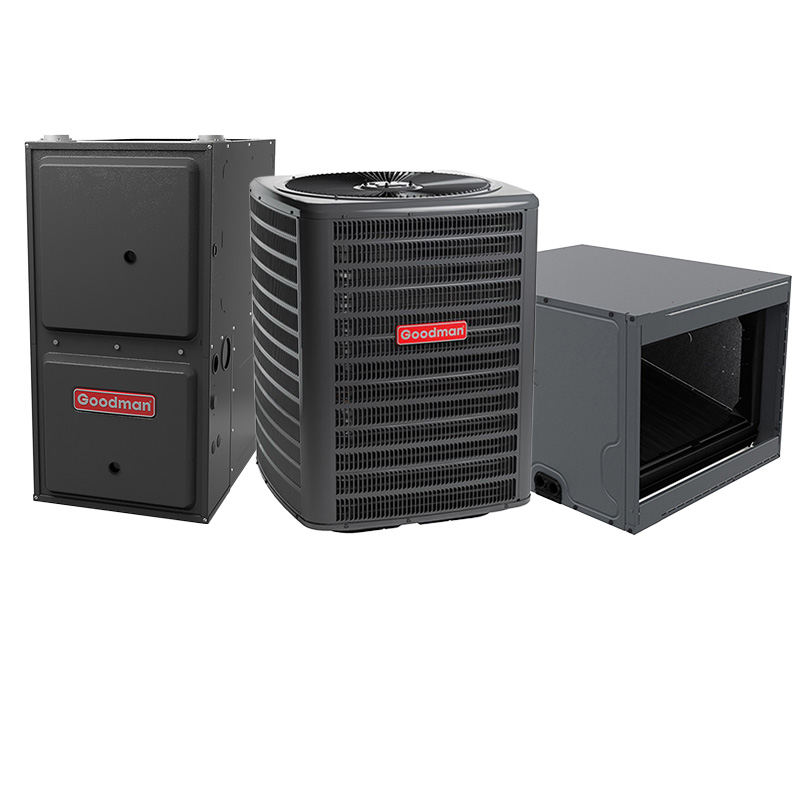
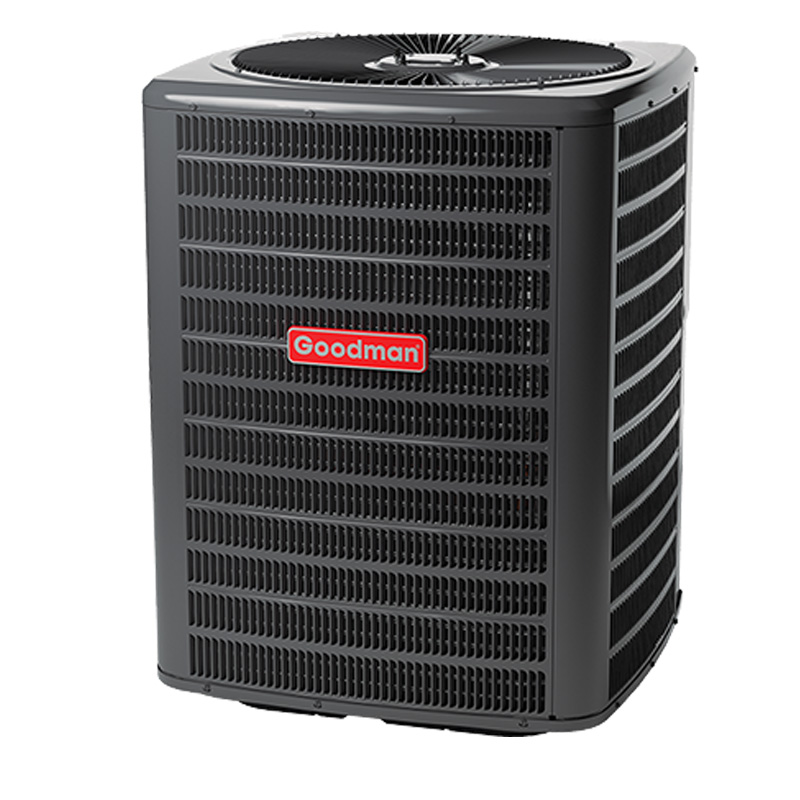
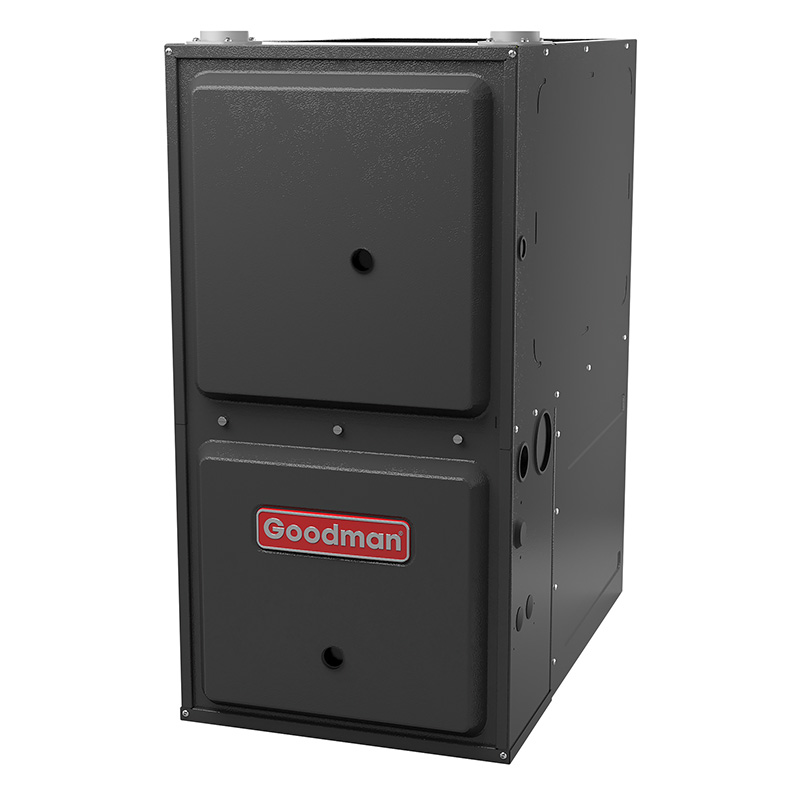
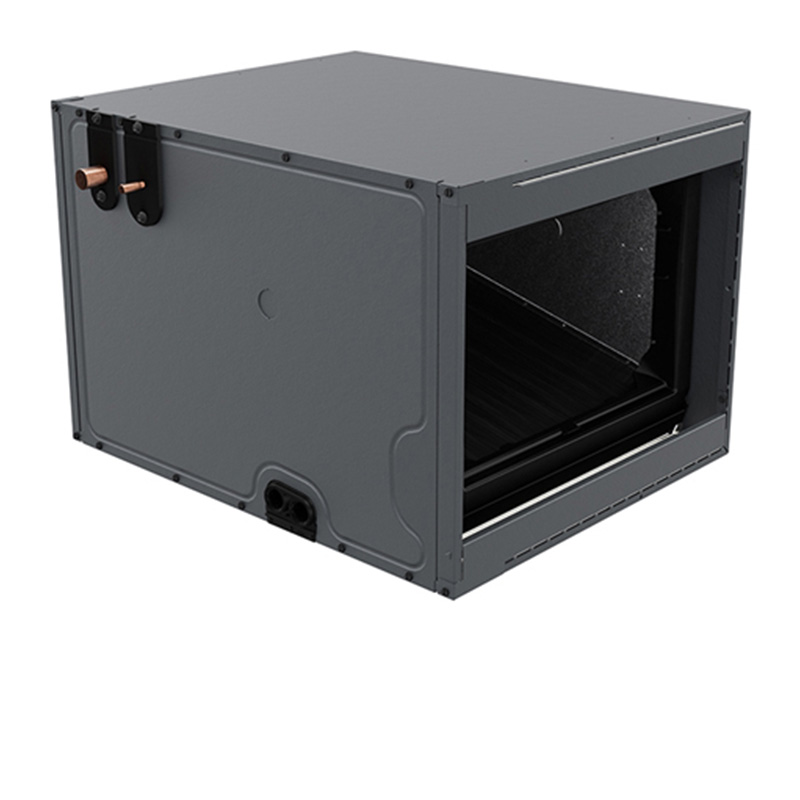
Goodman 4 Ton 14.5 SEER2 R32 AC System with 80,000 BTU 80% AFUE Gas Furnace – California & Colorado Ultra Low NOx, Horizontal, Multi-Speed ECM
View on AC Direct see your lowest price →Check current price on AC Direct →
Key features
- 4-ton cooling capacity rated at 14.5 SEER2 for baseline energy efficiency compliance
- 80,000 BTU gas furnace at 80% AFUE, meeting California and Colorado Ultra Low NOx standards
- Horizontal configuration designed for attic, crawlspace, or side-discharge installations
- Multi-speed ECM blower motor reduces fan energy use and improves humidity management
- R-32 refrigerant with lower global-warming potential than R-410A
- Compatible with most standard 24V thermostat controls and existing duct systems
About this system
The Goodman 4-ton 14.5 SEER2 system pairs an R-32 air conditioner with an 80,000 BTU, 80% AFUE gas furnace in a horizontal configuration, making it a practical choice for homes that require attic or crawlspace installations where vertical orientation is not possible. The 14.5 SEER2 rating lands at the lower end of current efficiency standards, which means operating costs will be higher than mid-efficiency or high-efficiency alternatives, but the upfront price reflects that trade-off. R-32 refrigerant is a lower global-warming-potential option compared to older R-410A, and it is increasingly standard on new equipment as the industry phases out higher-impact refrigerants.
The multi-speed ECM blower motor improves on single-speed fan performance by running at lower speeds during mild conditions, which reduces electricity consumption for air circulation and helps with humidity control. The Ultra Low NOx designation means this furnace meets California and Colorado air quality requirements, so it is one of the few configurations that clears the regulatory bar for those states without modification. At 80% AFUE, one-fifth of the fuel burned is exhausted rather than converted to heat, which is acceptable for mild climates but leaves meaningful efficiency gains on the table compared to 96% AFUE condensing alternatives in colder regions.
This system is best suited for homeowners in California or Colorado who need a code-compliant, budget-conscious replacement or new install in a home with horizontal ductwork runs. It will serve adequately in a well-insulated house with a competent installation, but buyers should understand that long-term performance depends heavily on contractor quality, not just the equipment itself.
This system delivers a serviceable, code-compliant heating and cooling solution at a price point noticeably below premium brands, but the 80% AFUE furnace and entry-level SEER2 rating mean higher ongoing energy costs relative to mid- or high-efficiency alternatives. Goodman's reputation for affordability comes with documented trade-offs in long-term reliability, particularly after year seven, and performance is closely tied to installation quality. It is a reasonable buy for budget-conscious homeowners who prioritize lower upfront cost and have access to a skilled installer.
Overall score is the average of the five ratings above.
What we like
- Priced 15 to 25 percent below comparable Carrier, Trane, and Lennox equipment
- Ultra Low NOx certification allows legal installation in California and Colorado without modification
- Horizontal configuration covers attic and crawlspace installs that other orientations cannot
- Multi-speed ECM motor improves humidity control and reduces blower electricity use versus single-speed alternatives
- R-32 refrigerant is lower-impact and increasingly supported by HVAC service technicians
Trade-offs
- 80% AFUE means 20% of fuel is wasted, a real cost penalty in cold climates or high gas-price markets
- 14.5 SEER2 is near the regulatory minimum, resulting in higher cooling electricity bills compared to 16+ SEER2 systems
- Dual-run capacitor failures and evaporator coil leaks are documented recurring issues across owner reviews
- Compressor lifespan averages 10 to 14 years versus 15 to 20 years for premium-brand compressors, affecting long-term cost of ownership
What homeowners and pros say about Goodman
Homeowners who choose Goodman most often cite price as the deciding factor, and that sentiment shows up clearly in Google dealer reviews, which average around 3.8 out of 5 across hundreds of location-based ratings. Praise in those reviews clusters around affordability and the straightforward availability of parts. The picture from ConsumerAffairs is less flattering, averaging about 2.5 out of 5, with complaints concentrating on repair costs that begin climbing after roughly year seven of ownership. The gap between those two scores reflects a real pattern: buyers who get a clean installation and stay current on maintenance tend to report reasonable satisfaction early on, while those who run into component failures later in the equipment’s life are more likely to leave negative feedback.
HVAC technicians who service Goodman equipment frequently point to dual-run capacitor failures as the most routine repair call, typically a quick fix in the 300 to 600 dollar range but one that recurs for some owners. Evaporator coil leaks appear in a notable share of owner accounts and represent a more costly repair. Compressor lifespan on Goodman units tends to land in the 10-to-14-year range on average, a measurably shorter window than the 15-to-20 years more commonly associated with premium-brand compressors. Technicians also flag install quality as the single largest variable in how long a Goodman system holds up, noting that first-year refrigerant leaks on this platform are often traced to charging or installation errors rather than factory defects. For this specific horizontal configuration, proper coil slope and condensate drainage setup are particularly important details that a less experienced installer can get wrong.
Sources: ConsumerAffairs Goodman owner reviews, AHRI Directory of Certified Product Performance, U.S. DOE appliance and equipment efficiency standards, Goodman product specification sheets.
What it costs to run
At 14.5 SEER2, cooling this 4-ton system for a typical 1200-hour cooling season at the U.S. average electricity rate of $0.17/kWh works out to roughly $675 per year in cooling, about $56 less per year than a minimum-efficiency 13.4 SEER2 unit of the same size. Your real cost depends on your climate and local rate.
Method: (48,000 BTU/hr ÷ 14.5 SEER2) × 1200 hours ÷ 1000 × $0.17/kWh. Rate source: U.S. EIA average; cooling hours: moderate-climate estimate.
How it compares
| Brand | Comparable model | SEER2 | Stage | Price position |
|---|---|---|---|---|
| Goodman | 4-Ton 14.5 SEER2 R-32 with 80,000 BTU 80% AFUE Horizontal Ultra Low NOx | 14.5 | Multi-speed | Value pick |
| Carrier | Comfort Series 24ACC636A003 with 58MXA080 | 14.5 | Single-stage | Roughly 15 to 20 percent more than this Goodman |
| Trane | XR14c with S8B1 80% AFUE Furnace | 14.5 | Single-stage | Roughly 20 to 25 percent more than this Goodman |
| Lennox | Merit ML14XC1 with ML180 80% AFUE Furnace | 14.5-15 | Single-stage | Roughly 20 to 25 percent more than this Goodman |
Competitor rows are comparable single-stage units at similar efficiency; price is relative position, not a quote.
Questions about this system
Does this system actually meet California and Colorado air quality rules right out of the box?
Yes. The Ultra Low NOx designation on this furnace means it meets the NOx emission limits required by California's South Coast AQMD and similar Colorado regulations without any field modification. You should still confirm your local district's current threshold with your contractor, as rules can vary by air quality management zone.
Why is R-32 being used instead of R-410A, and does it affect service costs?
R-32 has roughly one-third the global-warming potential of R-410A and is part of the industry's broader transition away from high-impact refrigerants. Most certified HVAC technicians can handle R-32, but it is mildly flammable (A2L classification), which means some older service equipment may need updating. Parts availability is growing steadily, so this should not be a significant service cost concern for most buyers.
Is 80% AFUE going to cost me noticeably more to run than a high-efficiency furnace?
In mild climates where the furnace runs relatively few hours per year, the gap between 80% and 96% AFUE may be small enough that payback on the higher-priced unit takes many years. In colder climates with long heating seasons and high gas prices, the efficiency difference can add up to hundreds of dollars annually, and a condensing 96% AFUE furnace would likely recover its premium faster.
What are the most likely repair costs I should budget for over the first ten years?
Dual-run capacitor replacement is the most commonly reported failure on Goodman equipment and typically costs 300 to 600 dollars including labor. Evaporator coil leaks show up in a meaningful share of owner reports and can run significantly higher depending on coil replacement or repair scope. Keeping an extended labor warranty or a service contract in place helps manage these costs.
How important is the contractor's skill level for this specific system?
It is very important. Goodman's own performance and longevity lean heavily on proper refrigerant charge, correct airflow setup, and accurate horizontal installation of the coil to prevent condensate drainage problems. A minority of first-year refrigerant leak reports on Goodman units are traced back to install or charge issues rather than factory defects, so choosing an experienced, licensed contractor is one of the most consequential decisions you will make with this purchase.
Specifications
| Cooling capacity | 4 Ton |
| Efficiency | 14.5 SEER2 |
| Furnace output | 80,000 BTU |
| Furnace efficiency | 80% AFUE |
| Configuration | Horizontal |
| Refrigerant | R-32 |