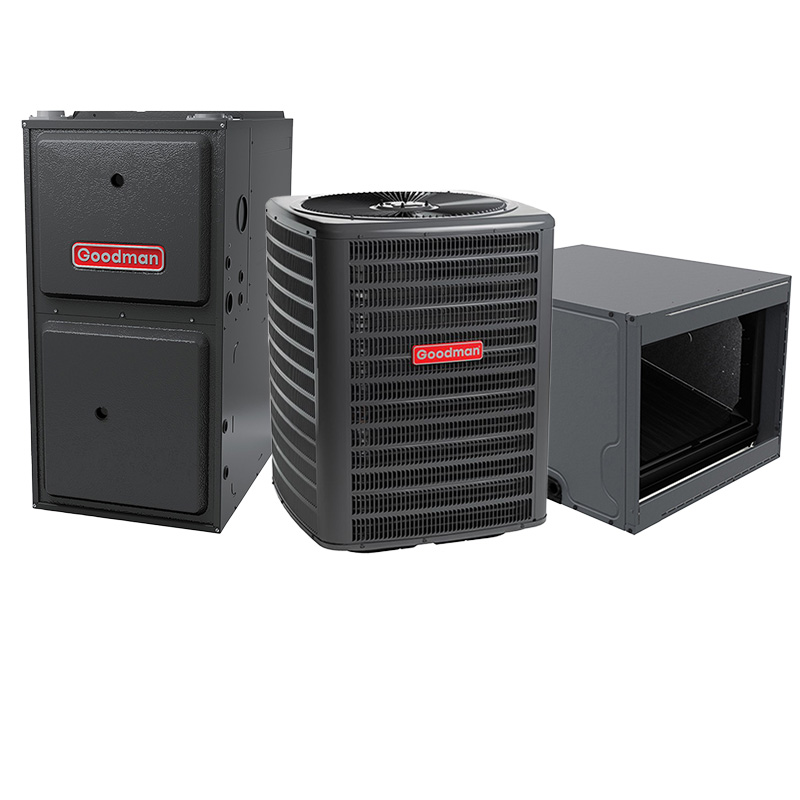
Goodman AC And Furnace – 2 Ton 17.5 SEER2 2 Stage AC With 80000 BTU 97% AFUE Modulating Variable-Speed ECM Gas Furnace System – Horizontal | R32
View on AC Direct see your lowest price →Check current price on AC Direct →
Key features
- 17.5 SEER2 two-stage compressor for improved humidity control and part-load efficiency
- 97% AFUE modulating gas furnace reduces fuel consumption and maintains steadier indoor temperatures
- Variable-speed ECM blower motor lowers electricity use and reduces airflow noise
- Horizontal configuration designed for attic, crawlspace, or side-discharge installations
- R-32 refrigerant with lower global warming potential than R-410A
- Factory-matched system simplifies equipment selection and supports warranty validation
About this system
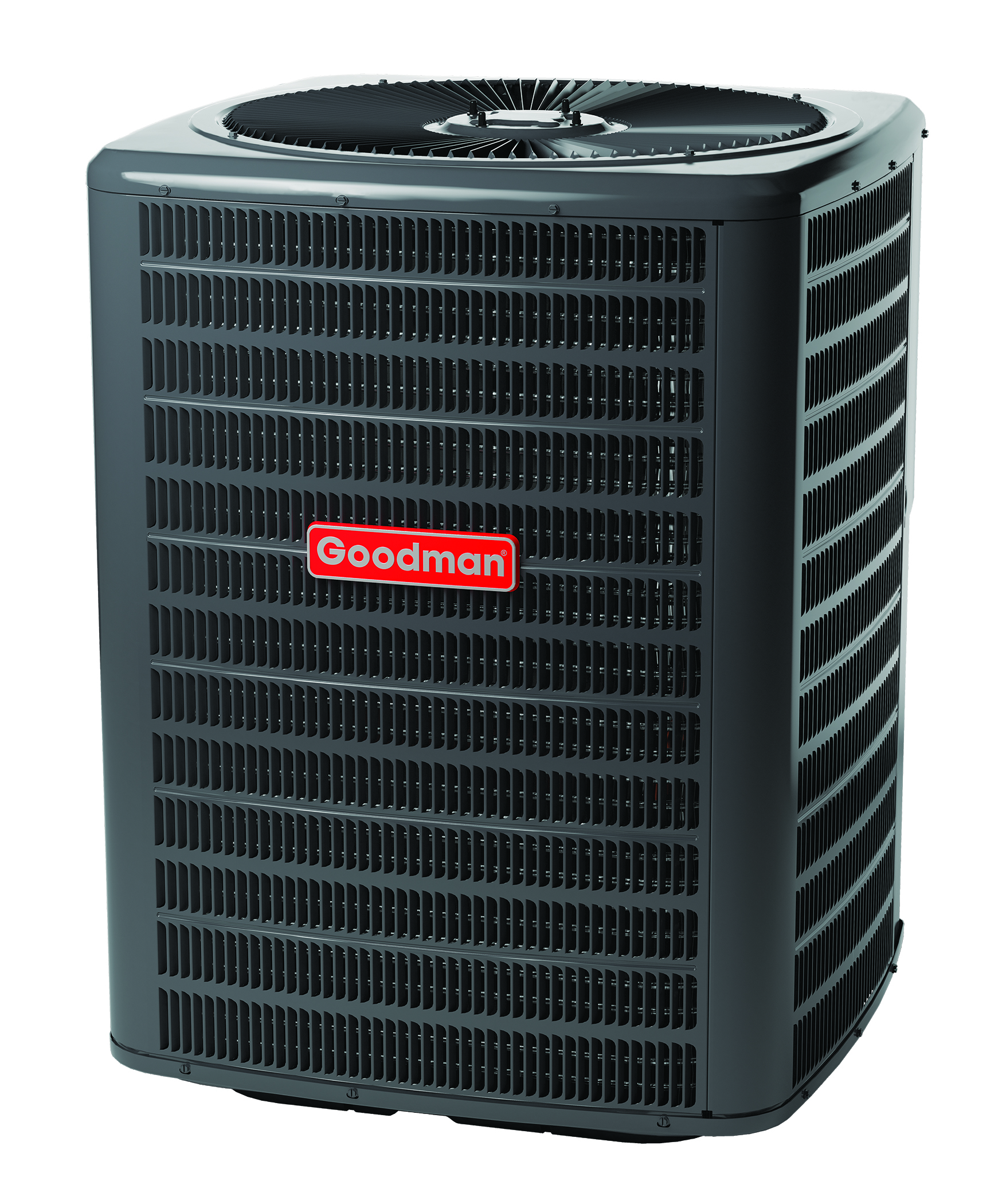
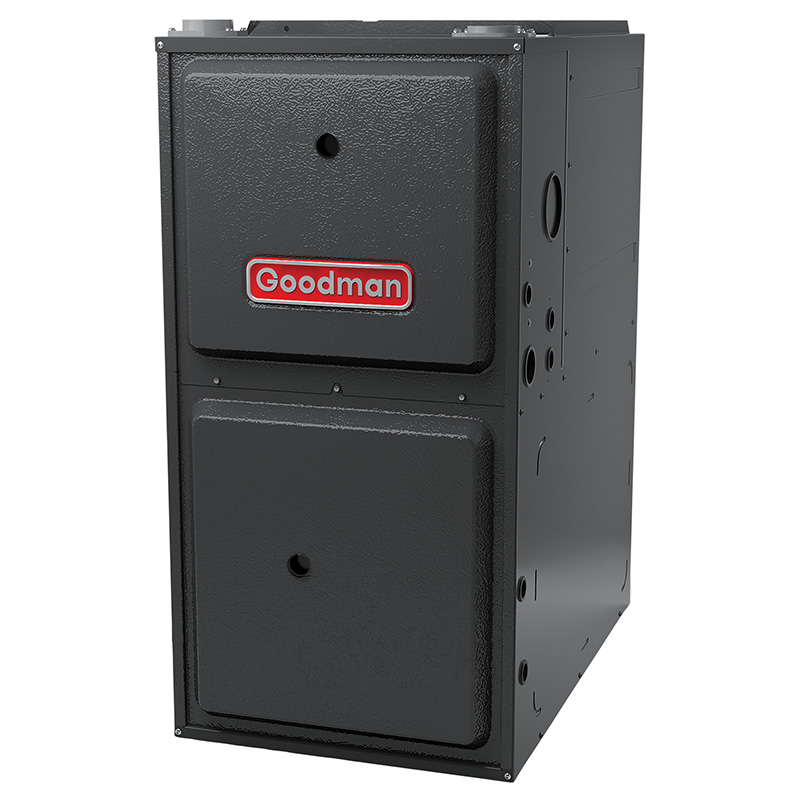
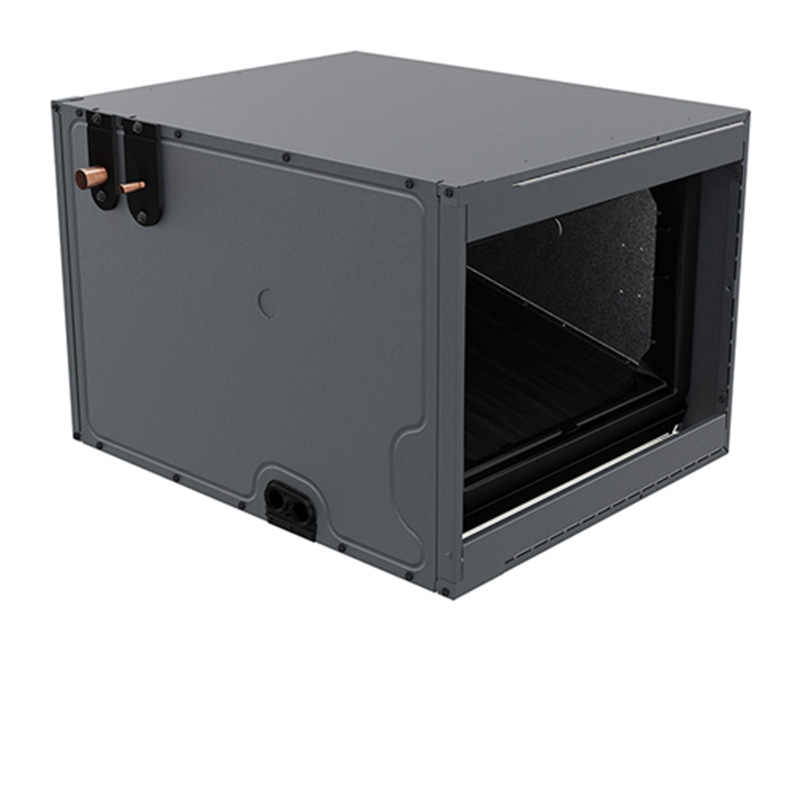
This Goodman bundle pairs a 2-ton, 17.5 SEER2 two-stage air conditioner with an 80,000 BTU, 97% AFUE modulating, variable-speed ECM gas furnace in a horizontal configuration, making it a strong candidate for attic or crawlspace installations where upflow units simply will not fit. The R-32 refrigerant charge is a forward-looking choice: R-32 has a lower global warming potential than the R-410A it replaces and is becoming the industry standard, so sourcing refrigerant for future service calls should remain straightforward for years ahead.
The specs here punch above what most buyers expect at this price tier. A 97% AFUE modulating furnace means the burner adjusts its output in fine increments rather than cycling fully on and off, which smooths out temperature swings and reduces fuel waste. The two-stage compressor on the AC side similarly runs at low capacity most of the time, cutting humidity more effectively than a single-stage unit during mild weather. Together, these two pieces of equipment suit a smaller home in a mixed climate where both winter heating costs and summer comfort matter and where a horizontal-mount unit is a practical requirement rather than a preference.
Who should consider this system? Homeowners replacing aging horizontal equipment in an attic, a manufactured home, or a tight mechanical room who want meaningful efficiency gains without moving into Trane or Carrier territory on price. Anyone expecting plug-and-play simplicity should know upfront that horizontal installs require careful attention to drain lines and condensate management, and that Goodman’s real-world performance correlates closely with the skill of the installing contractor.
This is a well-specified bundle for a budget-conscious buyer who needs horizontal equipment and wants modulating furnace technology without paying premium-brand prices. The efficiency specs are genuinely strong, but Goodman's documented reliability history means long-term ownership costs depend heavily on install quality and a willingness to service components like capacitors around year 7 and beyond. It is a smart buy for the right buyer with a trusted contractor, not a set-and-forget investment.
Overall score is the average of the five ratings above.
What we like
- 97% AFUE modulating furnace is near the top of what residential equipment offers in fuel efficiency
- 17.5 SEER2 two-stage AC meaningfully outperforms baseline single-stage units for humidity removal
- R-32 refrigerant is increasingly available and has a better environmental profile than R-410A
- Horizontal configuration fills a genuine gap for attic and manufactured-home replacements
- Priced roughly 15 to 25 percent below comparable Trane, Carrier, and Lennox systems, freeing budget for a quality install
Trade-offs
- Dual-run capacitors are the most commonly reported failure point, typically requiring a 300 to 600 dollar service call around or after year 7
- Evaporator coil leaks appear in a notable share of owner reports and can be expensive to diagnose and repair
- Compressor lifespan tends to average 10 to 14 years versus 15 to 20 for premium brands, meaning earlier replacement risk
- Horizontal installs demand precise condensate drainage setup; errors lead to water damage and void-related warranty disputes
What homeowners and pros say about Goodman
Homeowners who have gone through a Goodman installation tend to split into two camps, and the ConsumerAffairs score of about 2.5 out of 5 captures the more frustrated half: buyers who encountered rising repair bills after the seventh or eighth year, often tracing back to evaporator coil leaks or failed dual-run capacitors. The capacitor issue in particular is well documented and not unique to Goodman, but it surfaces often enough in owner forums to be worth budgeting for. Compressor longevity is the longer-term concern, with averages of 10 to 14 years reported compared to 15 to 20 years for premium-brand compressors, a gap that matters more in a higher-efficiency, more complex system like this one where a compressor replacement is a significant expense. A minority of owners also report refrigerant leaks in the first year, which technicians typically attribute to install or initial charge issues rather than a manufacturing defect.
HVAC professionals tend to view Goodman more pragmatically. On Google dealer review aggregates, the brand hovers around 3.8 out of 5, and affordability is the note that appears most often in contractor commentary. Pros who install a high volume of Goodman equipment point out that the quality gap versus premium brands has narrowed at the spec level, and that a well-executed install with proper refrigerant charge, correctly sloped horizontal drain lines, and a registered warranty can produce solid results for well over a decade. For a high-spec system like this 97% AFUE modulating furnace and 17.5 SEER2 pairing, that installer-dependency point carries extra weight: the more sophisticated the equipment, the more a thorough commissioning process determines whether you end up in the satisfied camp or the frustrated one.
Sources: ConsumerAffairs Goodman owner reviews, AHRI Directory of Certified Product Performance, U.S. DOE appliance and equipment efficiency standards, Goodman product specification sheets.
What it costs to run
At 17.5 SEER2, cooling this 2-ton system for a typical 1200-hour cooling season at the U.S. average electricity rate of $0.17/kWh works out to roughly $280 per year in cooling, about $85 less per year than a minimum-efficiency 13.4 SEER2 unit of the same size. Your real cost depends on your climate and local rate.
Method: (24,000 BTU/hr ÷ 17.5 SEER2) × 1200 hours ÷ 1000 × $0.17/kWh. Rate source: U.S. EIA average; cooling hours: moderate-climate estimate.
How it compares
| Brand | Comparable model | SEER2 | Stage | Price position |
|---|---|---|---|---|
| Goodman | 2-Ton 17.5 SEER2 Two-Stage AC + 80K BTU 97% AFUE Modulating Furnace (Horizontal, R-32) | 17.5 | Two-stage AC / Modulating furnace | Value pick |
| Carrier | Performance 17 Series (24ACC6 + 59TP6) | 17 | Two-stage AC / Two-stage furnace | Typically 15 to 25 percent above this Goodman bundle |
| Trane | XR17 AC + S9V2 Modulating Furnace | 17 | Two-stage AC / Modulating furnace | Typically 20 to 30 percent above this Goodman bundle |
| Lennox | ML18XC1 AC + SL280V Furnace | 17.5 | Two-stage AC / Variable-speed furnace | Typically 25 to 35 percent above this Goodman bundle |
Competitor rows are comparable single-stage units at similar efficiency; price is relative position, not a quote.
Questions about this system
Why does this system use R-32 refrigerant instead of R-410A, and does that affect service costs?
R-32 is being adopted industry-wide as a replacement for R-410A because it has a lower global warming potential and better thermodynamic efficiency. Most HVAC technicians are already certified to handle it, and supply availability is growing, so service costs should be comparable to R-410A work rather than more expensive.
What does 'modulating' mean on the furnace, and is it worth the added complexity over a two-stage furnace?
A modulating furnace adjusts its burner output in small steps, sometimes as finely as one percent increments, rather than switching between two fixed fire rates. This keeps indoor temperatures more consistent and reduces the short cycling that wastes fuel. The trade-off is more components, which introduces slightly more that can eventually need service, but most owners in cold climates find the comfort gain worthwhile.
Is a horizontal-configuration unit harder to service than a standard upflow furnace?
It requires a technician familiar with horizontal installs, particularly for drain pan inspection and condensate line maintenance. Access to the blower and heat exchanger can be tighter than on an upright unit, so labor time and cost for service calls may run slightly higher. Choosing a contractor experienced with horizontal placements matters more here than it would on a standard basement install.
Goodman has mixed reviews online. Should that concern me with a system at this efficiency level?
Goodman holds roughly 2.5 out of 5 on ConsumerAffairs, a platform that skews toward dissatisfied owners, where the recurring complaint is repair costs rising after about year 7. Google dealer reviews average around 3.8 out of 5, with affordability as the most cited positive. The pattern is consistent: buyers who pair Goodman equipment with a skilled installer and budget for periodic component replacement, particularly capacitors, tend to report reasonable satisfaction, while those who treat it as a maintenance-free premium system sometimes face disappointment.
What warranty comes with this system, and are there conditions that could void it?
Goodman typically offers a 10-year parts limited warranty when the equipment is registered within a set window after installation, usually 60 days. Failure to register, using an unlicensed installer, or installing the equipment in a way that does not match the listed configuration can reduce or void coverage. For a horizontal install specifically, correct condensate drainage is often flagged in warranty claims, so documenting the install with photos and keeping the contractor's license information on file is a practical precaution.
Specifications
| Cooling capacity | 2 Ton |
| Efficiency | 17.5 SEER2 |
| Furnace output | 80000 BTU |
| Furnace efficiency | 97% AFUE |
| Configuration | Horizontal |
| Refrigerant | R-32 |