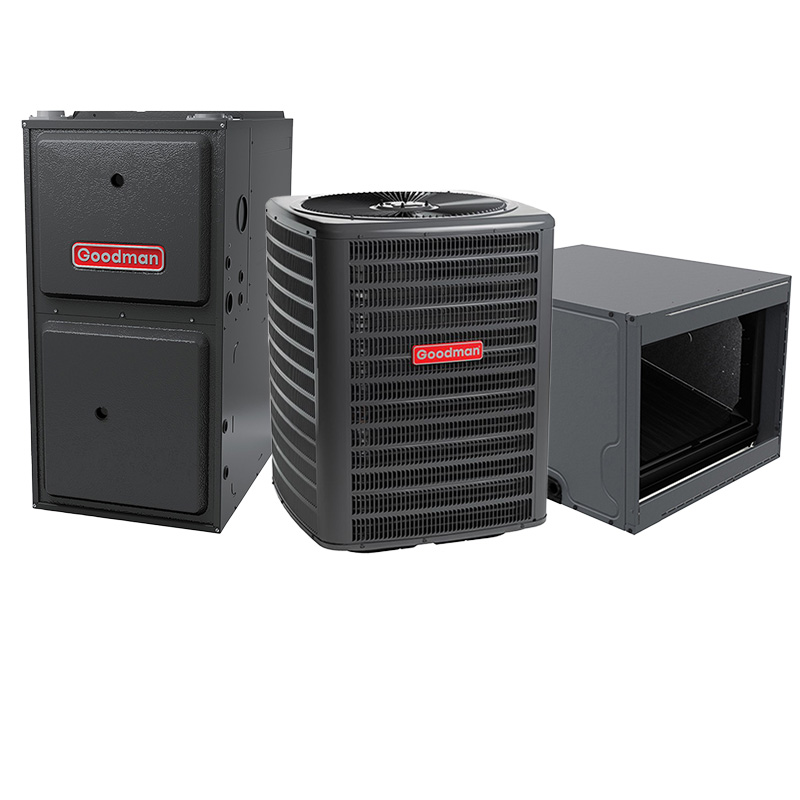
Goodman AC And Furnace – 3 Ton 17.2 SEER2 2 Stage AC With 100000 BTU 97% AFUE Modulating Variable-Speed ECM Gas Furnace System – Horizontal | R32
View on AC Direct see your lowest price →Check current price on AC Direct →
Key features
- 17.2 SEER2 two-stage compressor for reduced cycling and more even cooling
- 97% AFUE modulating gas furnace with variable-speed ECM blower motor
- Horizontal configuration designed for attic, crawl space, or side-discharge installs
- R-32 refrigerant: lower global warming potential than R-410A, smaller charge by weight
- Modulating burner adjusts heat output incrementally for steadier room temperatures
- ECM blower motor cuts fan electricity use compared to standard PSC motors
About this system
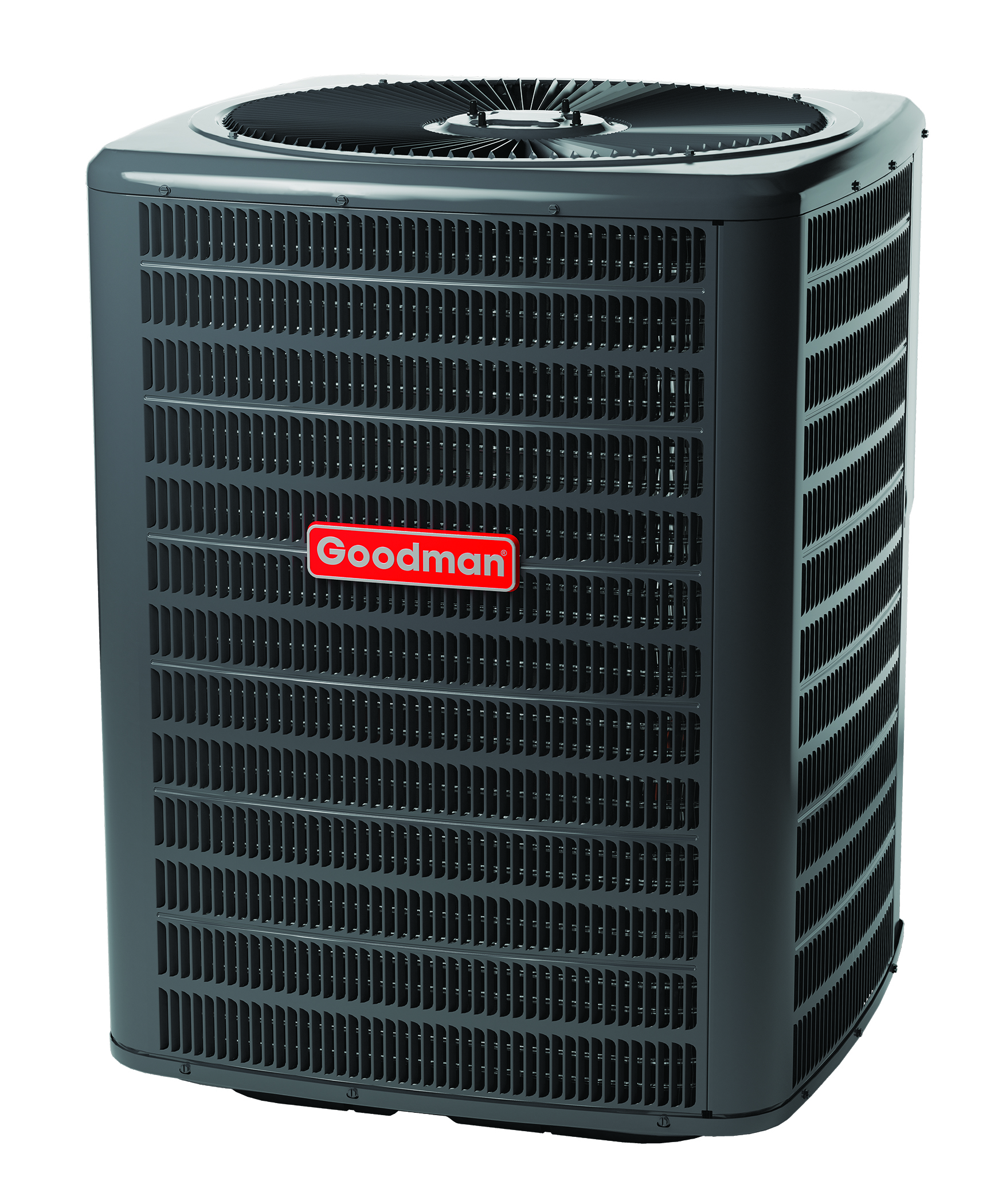
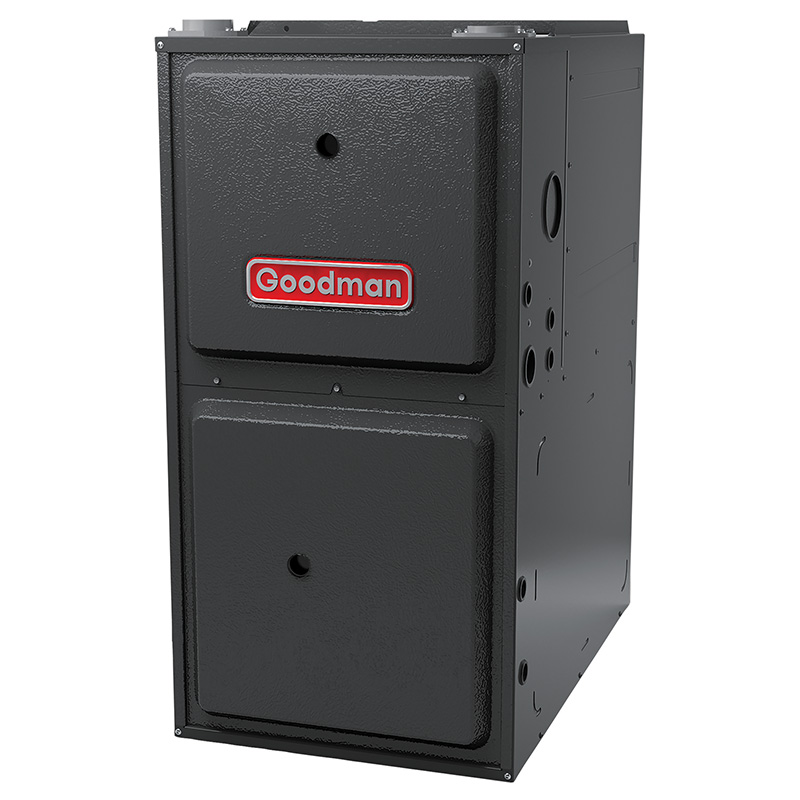
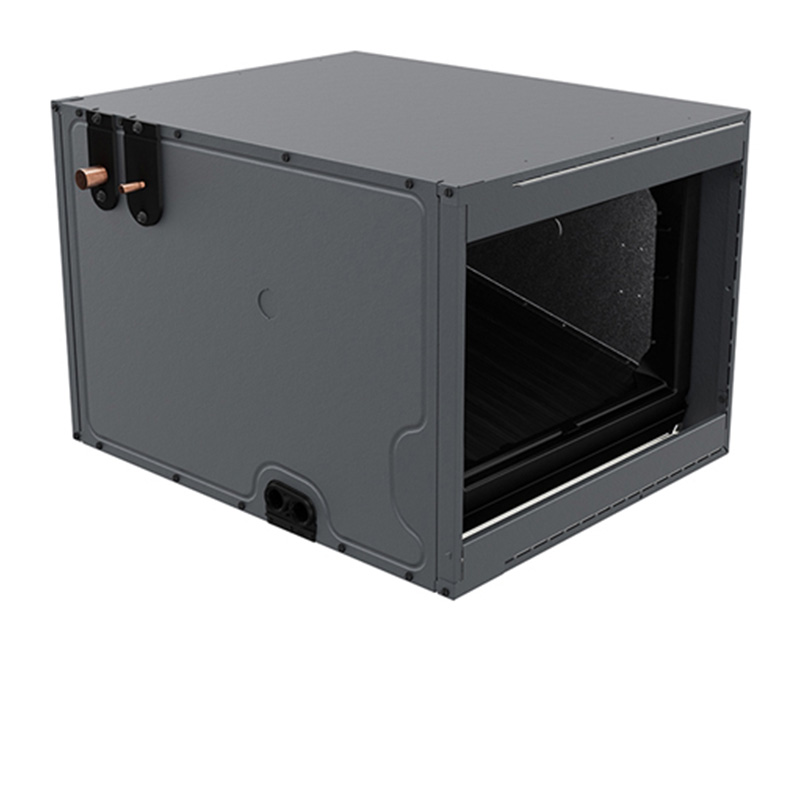
This Goodman bundle pairs a 3-ton, 17.2 SEER2 two-stage air conditioner with a 100,000 BTU, 97% AFUE modulating gas furnace in a horizontal configuration, making it a strong fit for homes where the air handler sits in a crawl space, attic, or utility closet with side-discharge ductwork. The two-stage compressor runs at low capacity most of the time, cutting down on the hard on-off cycling that strains equipment and leaves rooms with uneven temperatures. The modulating, variable-speed ECM furnace takes that a step further on the heating side, adjusting output in small increments to hold a steadier indoor temperature while keeping blower noise low and electric draw modest.
The R-32 refrigerant charge is worth noting for buyers thinking ahead. R-32 has a lower global warming potential than the R-410A it is replacing across the industry, and its higher energy density means smaller refrigerant charges for the same capacity. Servicing it does require a technician with R-32 certification, which is increasingly common but still worth confirming with any contractor you hire. At 17.2 SEER2 this system clears the federal minimum for most U.S. climate regions and qualifies for the Inflation Reduction Act tax credit if your household meets the income and installation requirements, potentially putting a meaningful dollar amount back in your pocket in year one.
Who does this suit best? Homeowners replacing an aging system in a 1,500 to 2,200 square foot home who want meaningfully better efficiency than a single-stage baseline unit but are not ready to stretch to a premium brand price point. The horizontal configuration limits this to installations where the air handler cannot stand upright, so confirm your mechanical space dimensions and duct orientation before ordering.
This Goodman system delivers genuinely strong efficiency specs at a price point that undercuts Trane, Carrier, and Lennox by a meaningful margin, and the modulating furnace paired with a two-stage AC is a real comfort upgrade over entry-level equipment. The trade-off is a brand track record that shows higher repair frequency after year seven and compressor longevity that falls short of premium competitors, so the value calculation depends on how long you plan to stay in the home and how much you trust your installing contractor.
Overall score is the average of the five ratings above.
What we like
- 17.2 SEER2 rating clears federal minimums comfortably and may qualify for IRA tax credits
- 97% AFUE modulating furnace is among the most efficient gas heat options available
- Two-stage cooling plus variable-speed blower improves dehumidification and temperature consistency
- R-32 refrigerant is more environmentally favorable and increasingly well-supported by technicians
- Priced 15 to 25 percent below comparable Trane, Lennox, and Carrier bundles
Trade-offs
- Dual-run capacitors are the most frequently reported failure point, typically after several seasons of use
- Evaporator coil leaks appear in a notable share of owner reviews, a more costly repair than a capacitor swap
- Compressor lifespan averages 10 to 14 years versus 15 to 20 for premium brands under similar conditions
- A minority of owners report refrigerant leaks within the first year, most often traced to install or initial charge issues rather than the unit itself
What homeowners and pros say about Goodman
Homeowners who have installed Goodman equipment generally fall into two camps. Those who had a skilled, thorough installer and kept up with annual maintenance often report years of trouble-free operation and point to the lower purchase price as a clear win. Those who ran into problems tend to cluster around the same issues the data already flags: capacitor failures that show up every few seasons, refrigerant leaks that trace back to the original installation, and coil or compressor issues that emerge after year seven or eight. The ConsumerAffairs score of roughly 2.5 out of 5 reflects that complaint-heavy channel rather than the full ownership population, but the pattern of repair costs rising in the second half of the system’s life is consistent enough to take seriously. Google dealer reviews average around 3.8 out of 5, where affordability and satisfactory performance are the most common themes when the install went well.
HVAC technicians have a nuanced view of Goodman. Many will install it without hesitation for cost-sensitive customers, and they note that the dual-run capacitor, the single most common service call on these units, is a fast and inexpensive fix in the 300 to 600 dollar range. What gives some pros pause is the evaporator coil leak rate and the compressor longevity gap: Goodman compressors averaging 10 to 14 years versus 15 to 20 for top-tier brands means a homeowner planning a 20-year stay may be looking at a compressor replacement mid-ownership that closes much of the upfront savings gap. For this specific bundle, the modulating furnace and two-stage AC represent the better end of what Goodman builds, and the R-32 refrigerant puts it in line with where the whole industry is heading. The value proposition is real; the key is pairing it with a careful installer and budgeting for the maintenance that keeps the components out of the failure statistics.
Sources: ConsumerAffairs Goodman owner reviews, AHRI Directory of Certified Product Performance, U.S. DOE appliance and equipment efficiency standards, Goodman product specification sheets.
What it costs to run
At 17.2 SEER2, cooling this 3-ton system for a typical 1200-hour cooling season at the U.S. average electricity rate of $0.17/kWh works out to roughly $427 per year in cooling, about $121 less per year than a minimum-efficiency 13.4 SEER2 unit of the same size. Your real cost depends on your climate and local rate.
Method: (36,000 BTU/hr ÷ 17.2 SEER2) × 1200 hours ÷ 1000 × $0.17/kWh. Rate source: U.S. EIA average; cooling hours: moderate-climate estimate.
How it compares
| Brand | Comparable model | SEER2 | Stage | Price position |
|---|---|---|---|---|
| Goodman | GSXC7 / GMVM97 Bundle (this system) | 17.2 | Two-stage / Modulating | Value pick |
| Carrier | Performance 17 (24ACC6) with 59MN7 Modulating Furnace | 17.2 | Two-stage / Modulating | Approximately 20 to 25 percent more than this Goodman bundle |
| Trane | XR17 with S9V2 Variable-Speed Furnace | 17.0 | Two-stage / Modulating | Approximately 20 to 30 percent more than this Goodman bundle |
| Lennox | EL17XC1 with SLP98V Variable-Speed Furnace | 17.0 | Two-stage / Modulating | Approximately 25 to 35 percent more than this Goodman bundle |
Competitor rows are comparable single-stage units at similar efficiency; price is relative position, not a quote.
Questions about this system
Does this system qualify for the federal energy efficiency tax credit?
At 17.2 SEER2 and 97% AFUE, both the AC and the furnace individually meet the efficiency thresholds for the Inflation Reduction Act 25C tax credit as of 2024. You should confirm current IRS guidance and your household eligibility with a tax professional, and keep the Manufacturer's Certification Statement that Goodman provides for the relevant components.
What does the horizontal configuration mean and how do I know if it applies to my house?
Horizontal means the air handler is oriented on its side, with supply and return air flowing sideways rather than upward. This is typical in low-clearance attics, crawl spaces, or utility closets where a vertical unit would not fit. If your existing system sits upright in a basement or garage, you likely need a vertical configuration instead, so measure your space and check with your installer before ordering.
Will my current HVAC technician be able to service R-32 refrigerant?
Most established HVAC contractors are now R-32 certified or are actively getting certified as the industry transitions away from R-410A, but it is worth asking your service provider directly before the install. R-32 requires specific handling procedures and a technician who is not certified cannot legally purchase or recover it.
How serious are the reported evaporator coil leaks, and are they covered under warranty?
Coil leaks are among the more expensive repairs on any system, typically involving refrigerant recovery, coil replacement, and recharge costs. Goodman's registered parts warranty covers the coil replacement cost for eligible failures within the warranty period, but labor is not covered, and you must register the unit within the required window after installation to activate full coverage. An annual maintenance visit that checks for refrigerant pressure trends can catch developing leaks early.
Is the modulating furnace in this bundle a meaningful upgrade over a two-stage furnace, or is it overkill for a 3-ton system?
For a 3-ton application, the modulating furnace genuinely adds comfort value: it ramps heat output up and down in fine increments rather than switching between just two settings, which reduces temperature swings and allows the variable-speed ECM blower to run quieter and longer at low speeds for better air filtration. Whether it justifies the cost premium over a two-stage furnace depends on how sensitive your household is to temperature swings and noise, but it is not an unnecessary specification at this system size.
Specifications
| Cooling capacity | 3 Ton |
| Efficiency | 17.2 SEER2 |
| Furnace output | 100000 BTU |
| Furnace efficiency | 97% AFUE |
| Configuration | Horizontal |
| Refrigerant | R-32 |