Goodman AC And Furnace – 2 Ton 17.5 SEER2 2 Stage AC With 60000 BTU 97% AFUE Modulating Variable-Speed ECM Gas Furnace System – Downflow | R32
View on AC Direct see your lowest price →Check current price on AC Direct →
Key features
- 17.5 SEER2 two-stage compressor for improved humidity control and part-load efficiency
- 97% AFUE modulating gas furnace reduces heat waste to roughly 3 cents on every dollar of gas
- Variable-speed ECM blower motor lowers blower electricity use and reduces noise
- Downflow cabinet orientation for crawl-space, slab, or floor-plenum installations
- R-32 refrigerant with lower global warming potential than R-410A
- Two-stage cooling allows the system to run at reduced capacity on mild days
About this system
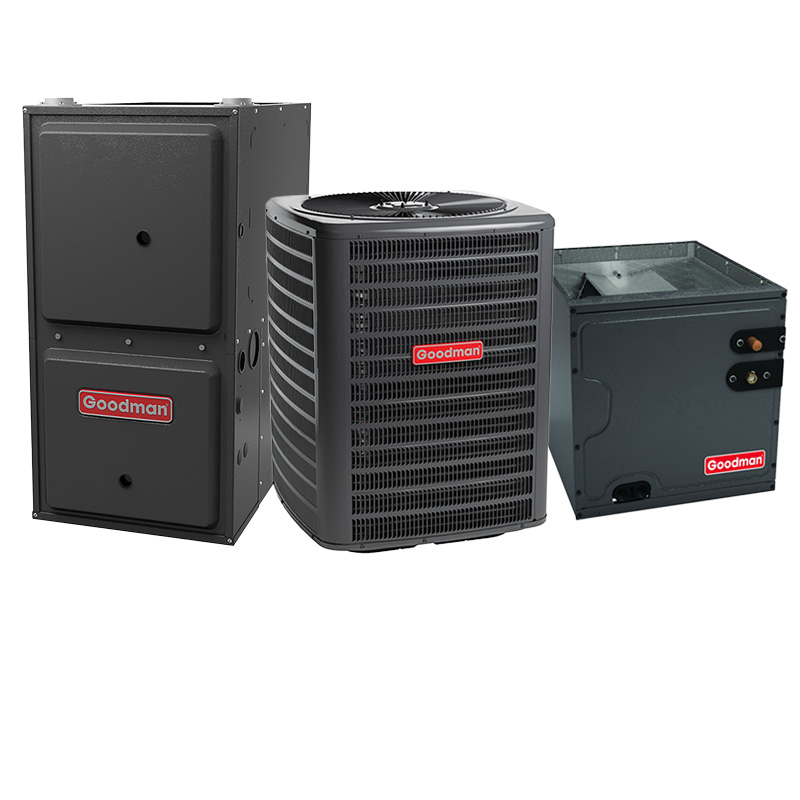
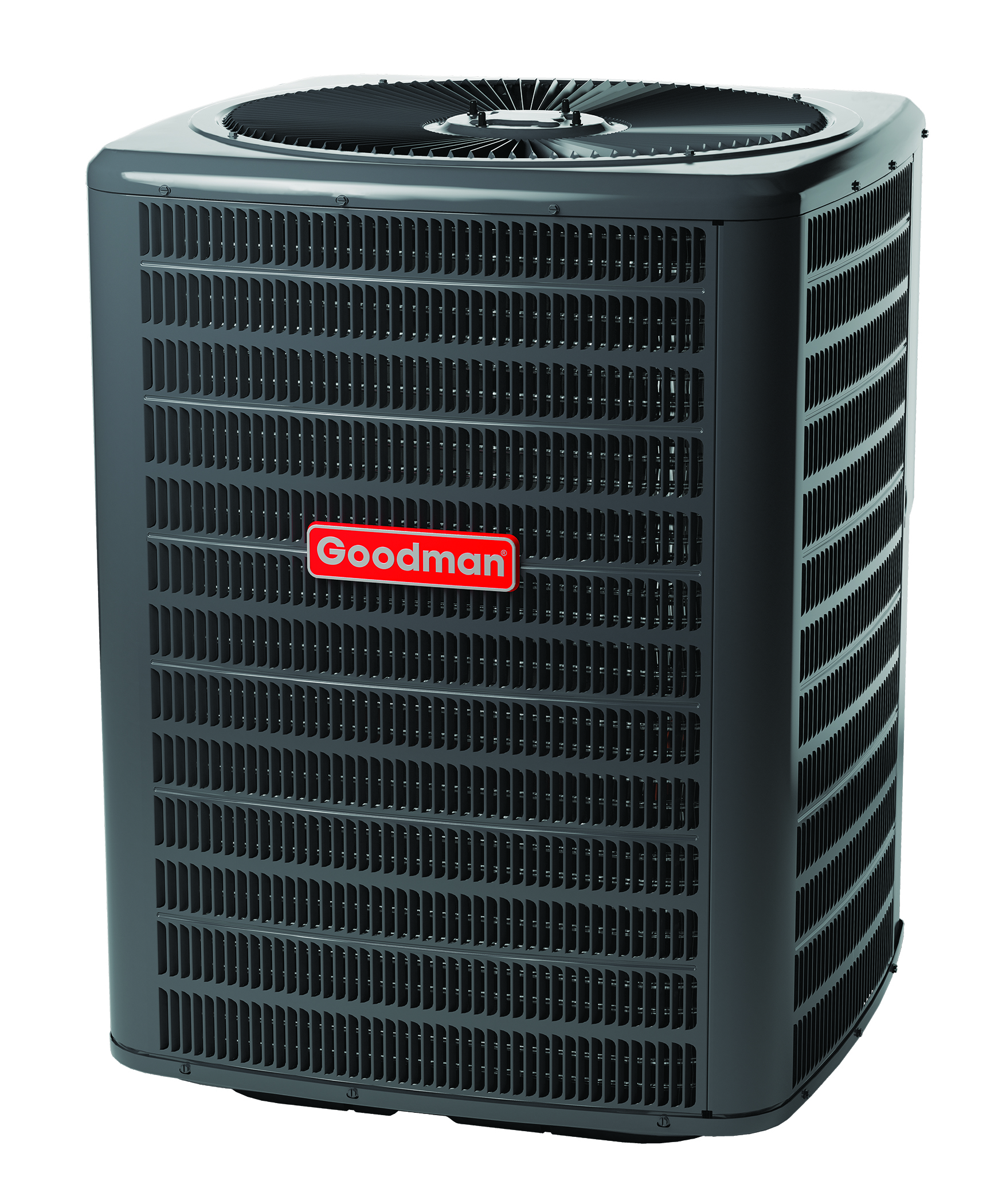
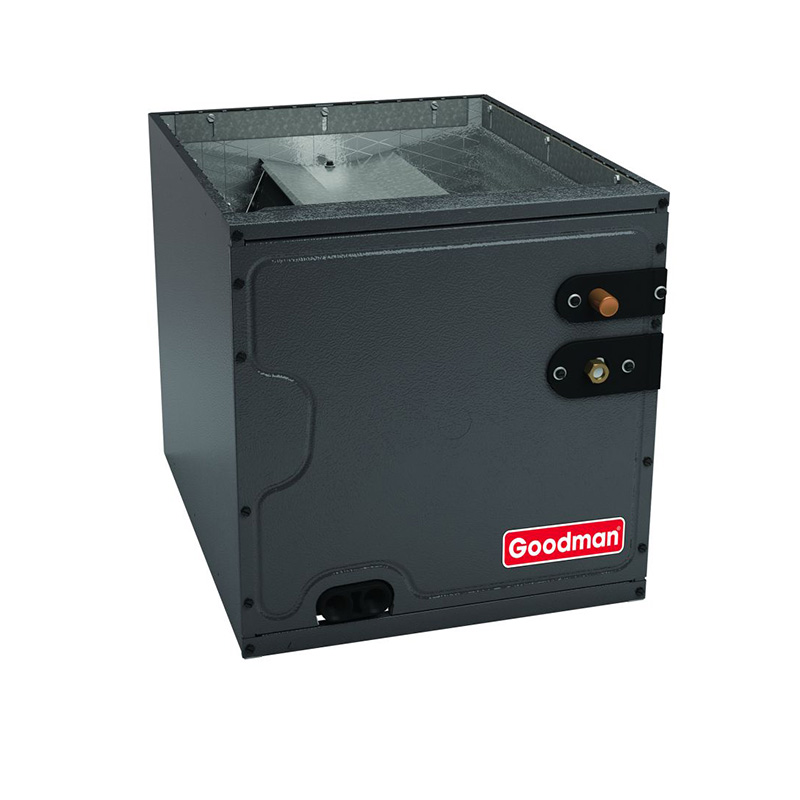
This Goodman bundle pairs a 2-ton, 17.5 SEER2 two-stage cooling system with a 60,000 BTU, 97% AFUE modulating gas furnace in a downflow configuration. The combination is aimed squarely at mid-size homes, roughly 900 to 1,400 square feet depending on climate and insulation, where a single-stage system would short-cycle or overshoot comfort targets. The two-stage compressor runs on a lower capacity most of the time, reducing humidity better than a single-stage unit and trimming electricity bills on mild days, while the modulating furnace adjusts heat output continuously rather than blasting on and off. The variable-speed ECM blower motor ties both together, moving air quietly and efficiently across both heating and cooling seasons.
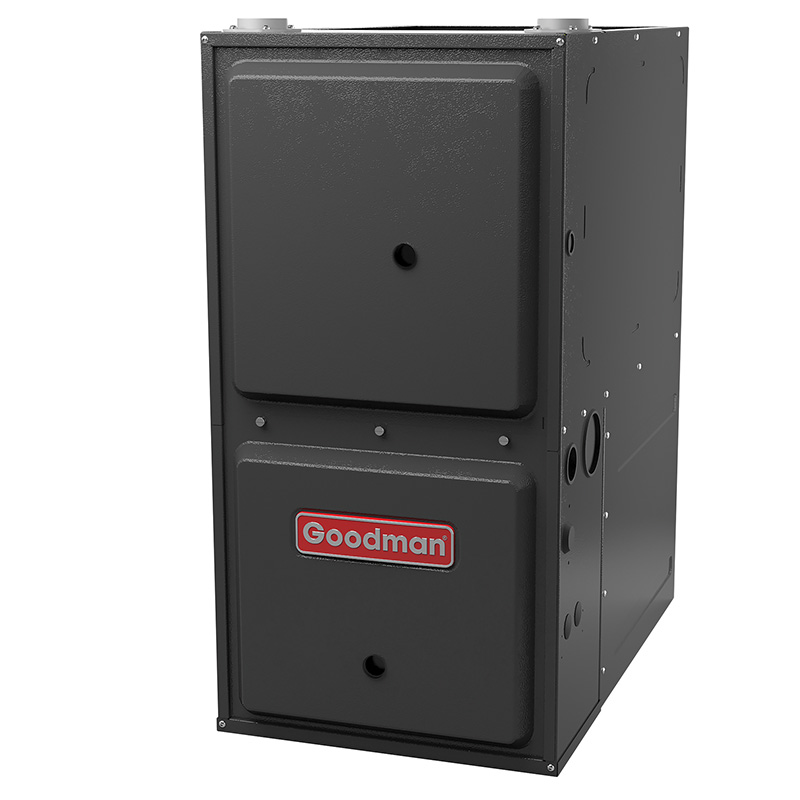
The downflow configuration means conditioned air exits the furnace cabinet through the bottom, which suits installations where the furnace sits above a crawl space, basement slab, or closet floor plenum. R-32 refrigerant replaces the older R-410A in this system; it has a lower global warming potential and slightly better thermodynamic efficiency, though it requires certified technicians who are trained on mildly flammable refrigerants. Buyers who are comparing efficiency tiers should note that 17.5 SEER2 sits comfortably in the mid-to-upper efficiency band and easily clears most regional rebate thresholds, though it stops short of the variable-speed compressor territory you would find in premium units above 19 SEER2.
This Goodman combo delivers genuinely strong efficiency specs and a well-matched furnace-and-coil pairing at a price point that undercuts comparable Carrier, Trane, and Lennox bundles by a meaningful margin. The trade-off is a brand track record that shows more long-term repair activity than the premium competition, and an outcome that depends heavily on installation quality. Buyers who vet their installer carefully and budget for a capacitor or two over a decade will likely find solid value here.
Overall score is the average of the five ratings above.
What we like
- 97% AFUE modulating furnace is among the most efficient gas heating options available at this price tier
- Two-stage compressor improves dehumidification and comfort over single-stage alternatives
- ECM blower motor cuts fan electricity consumption significantly versus a standard PSC motor
- R-32 refrigerant clears current and upcoming environmental regulations without a future swap
- Priced 15 to 25 percent below comparable Trane, Lennox, and Carrier bundles, leaving budget for a quality install
Trade-offs
- Dual-run capacitors are the most commonly reported failure point; budget for one or two replacements over the system's life
- Compressor longevity averages 10 to 14 years, shorter than the 15 to 20 years reported for premium-brand compressors
- Evaporator coil leaks appear in a meaningful share of owner reviews, which can be a costly repair outside warranty
- A minority of owners report refrigerant leaks in year one, typically traced to installation or initial charge issues rather than the equipment itself
What homeowners and pros say about Goodman
Homeowners discussing Goodman equipment online tend to split into two camps that roughly mirror the brand’s scored reputation. On Google dealer reviews, where the aggregate sits around 3.8 out of 5 across locations, the most common praise is affordability and the fact that many systems run without major issues for years when installed correctly. On ConsumerAffairs, where the brand scores closer to 2.5 out of 5, the tone shifts: the loudest complaints cluster around repair costs that begin to accumulate after roughly year 7, and owners who feel the savings at purchase were eaten up by service calls later. Neither picture is complete on its own, but together they point to a brand where the gap between a well-installed system and a poorly installed one is wider than it would be with a premium competitor.
HVAC technicians who work on Goodman equipment regularly point to dual-run capacitors as the most predictable failure point, usually a straightforward repair in the 300 to 600 dollar range but one that comes up often enough to be worth budgeting for. Evaporator coil leaks appear in a meaningful share of owner accounts and carry a higher repair cost, particularly once a system is out of the parts warranty period. Compressor lifespan on Goodman equipment tends to average 10 to 14 years, a genuine gap compared to the 15 to 20 years seen with Trane, Lennox, and Carrier compressors. The refrigerant leak complaints that surface in the first year of ownership are almost always attributed to installation or initial charge errors rather than factory defects, which reinforces the technician consensus that the installer you choose matters as much as the equipment itself.
Sources: ConsumerAffairs Goodman owner reviews, AHRI Directory of Certified Product Performance, U.S. DOE appliance and equipment efficiency standards, Goodman product specification sheets.
What it costs to run
At 17.5 SEER2, cooling this 2-ton system for a typical 1200-hour cooling season at the U.S. average electricity rate of $0.17/kWh works out to roughly $280 per year in cooling, about $85 less per year than a minimum-efficiency 13.4 SEER2 unit of the same size. Your real cost depends on your climate and local rate.
Method: (24,000 BTU/hr ÷ 17.5 SEER2) × 1200 hours ÷ 1000 × $0.17/kWh. Rate source: U.S. EIA average; cooling hours: moderate-climate estimate.
How it compares
| Brand | Comparable model | SEER2 | Stage | Price position |
|---|---|---|---|---|
| Goodman | 2-Ton 17.5 SEER2 Two-Stage AC + 60K BTU 97% AFUE Modulating Furnace (Downflow, R-32) | 17.5 | Two-stage | Value pick |
| Carrier | Performance 17 Series (24ACC636 + 59TP6) | 17 | Two-stage | Typically 15 to 25 percent higher than this Goodman bundle |
| Trane | XR17 + S9V2 Variable-Speed Furnace | 17 | Two-stage | Typically 20 to 30 percent higher than this Goodman bundle |
| Lennox | Merit 16ACX + ML196V Variable-Speed Furnace | 16 to 17 | Single-stage to two-stage depending on configuration | Typically 20 to 35 percent higher than this Goodman bundle |
Competitor rows are comparable single-stage units at similar efficiency; price is relative position, not a quote.
Questions about this system
Is a downflow furnace right for my house?
A downflow furnace discharges air through the bottom of the cabinet into a plenum below, making it the correct choice for slab-on-grade or crawl-space installations where ductwork runs under the floor. If your ducts are in the attic or you need air delivered upward, you would need an upflow or horizontal unit instead. Confirm your existing plenum and duct routing with your installer before ordering.
Do I need a specially certified technician to work on R-32 refrigerant?
Yes. R-32 is classified as mildly flammable (A2L), so technicians must have specific training and the right recovery equipment before handling it. Most established HVAC contractors already carry this certification or are obtaining it as R-32 systems become more common, but it is worth confirming before you hire someone.
The Goodman warranty sounds good on paper. What should I watch out for?
Goodman typically offers a 10-year parts warranty when you register the equipment within a required window after installation, but labor is not covered. Given the documented rate of capacitor failures and occasional coil leaks, the real cost to watch is labor and refrigerant for any repair that falls inside the parts warranty but outside any labor plan you purchase separately.
How much difference does the two-stage compressor actually make versus a single-stage unit?
On mild days the system runs at its lower stage for longer periods, which removes more moisture from the air and keeps temperature more consistent than a single-stage unit that cycles fully on and off. In humid climates this is a meaningful comfort upgrade. It also means the compressor runs at lower stress levels most of the time, though Goodman's documented compressor lifespan of 10 to 14 years still trails premium brands.
What is the most important thing I can do to protect this investment?
Installer quality is, according to HVAC technicians, the single biggest factor in how long a Goodman system lasts. Prioritize hiring a licensed contractor with Goodman experience, insist on a proper refrigerant charge verification, and schedule annual maintenance. The documented first-year refrigerant leak issue is almost always tied to installation rather than the equipment itself.
Specifications
| Cooling capacity | 2 Ton |
| Efficiency | 17.5 SEER2 |
| Furnace output | 60000 BTU |
| Furnace efficiency | 97% AFUE |
| Configuration | Downflow |
| Refrigerant | R-32 |