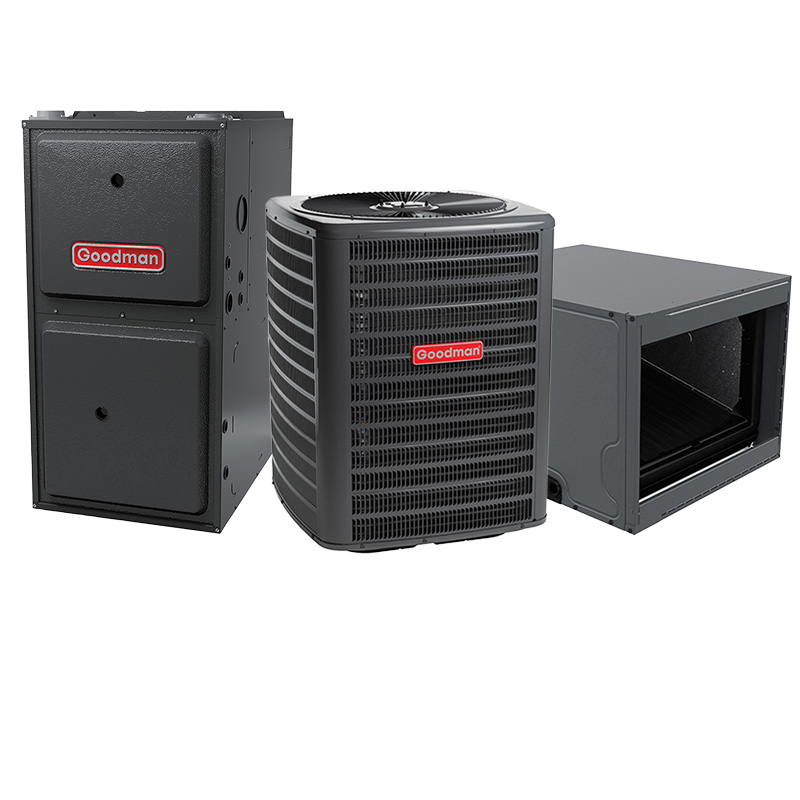
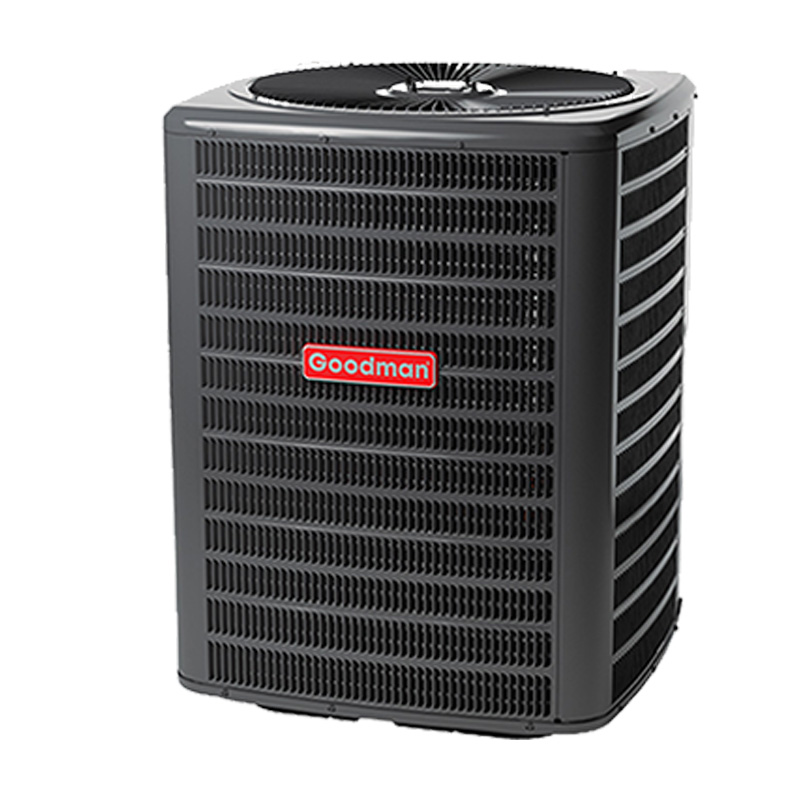
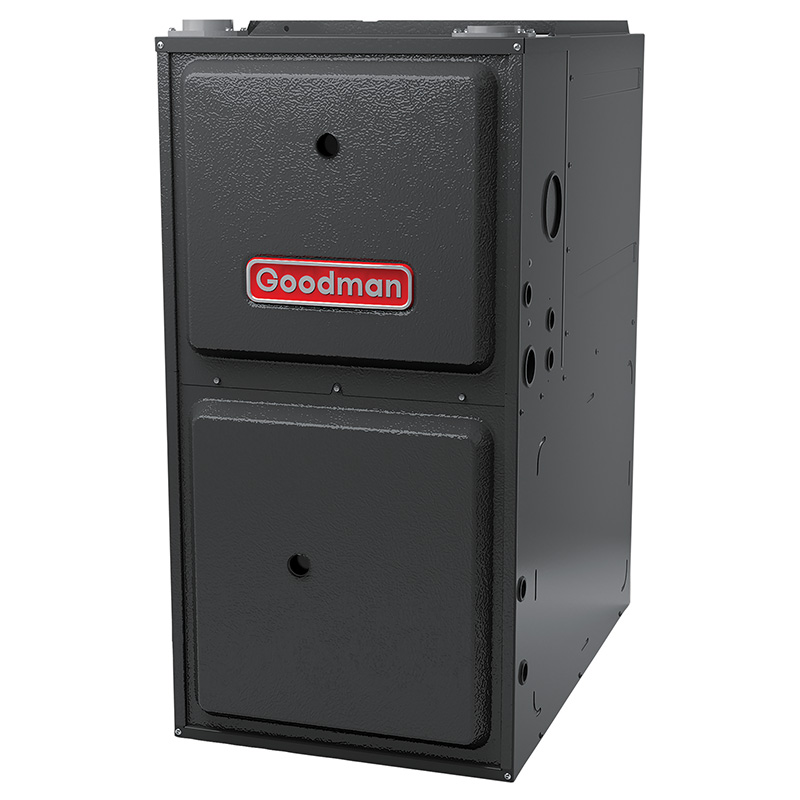
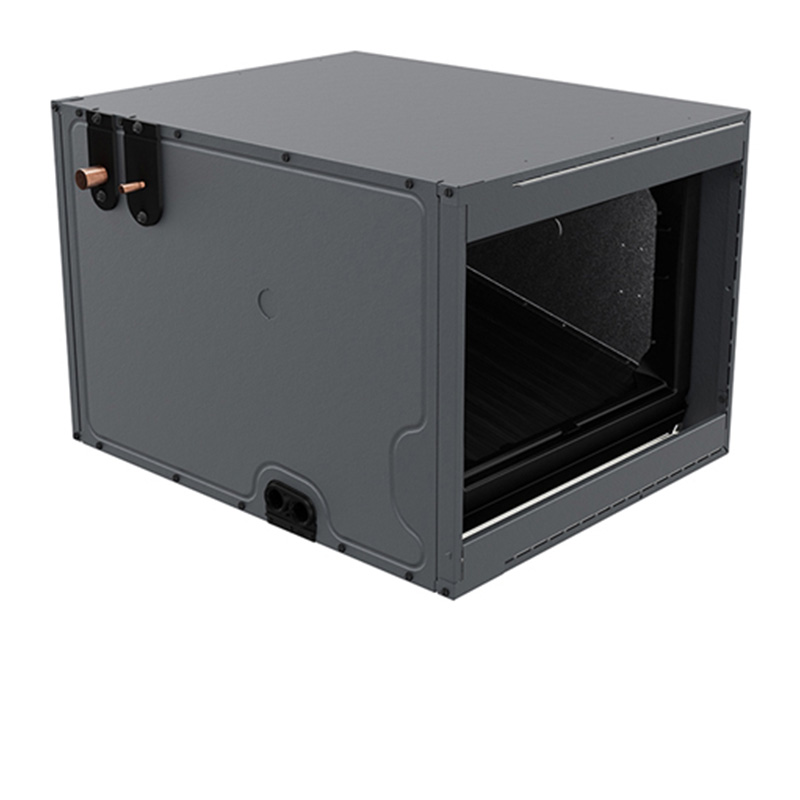
Goodman Furnace AC Combo – 2 Ton 14 SEER2 AC With 60000 BTU 97% AFUE Modulating Variable-Speed ECM Gas Furnace System – Horizontal | R32
View on AC Direct see your lowest price →Check current price on AC Direct →
Key features
- 97% AFUE modulating gas furnace reduces fuel waste to roughly 3 cents on every dollar of gas burned
- Variable-speed ECM blower motor cuts blower electricity use compared to standard single-speed motors
- 14 SEER2 cooling efficiency meets the current federal minimum standard for most U.S. regions
- Horizontal discharge configuration designed for attic, crawl space, or side-load air handler installations
- R-32 refrigerant with lower global-warming potential than R-410A, increasingly common in new equipment
- 60,000 BTU heating capacity sized for roughly 1,200 to 1,800 square feet depending on climate and insulation
About this system
This Goodman combo pairs a 2-ton, 14 SEER2 central air conditioner with a 60,000 BTU, 97% AFUE modulating gas furnace in a horizontal configuration, making it a practical fit for homes where the air handler sits in a crawl space, attic, or a side-discharge closet rather than in a vertical orientation. The horizontal layout is a specific installation requirement, so confirm your existing ductwork and platform can accommodate it before ordering. R-32 refrigerant is the newer, lower global-warming-potential replacement for R-410A, and it will become easier to service as more technicians stock it over the coming years.
The furnace side of this system earns the most attention. A 97% AFUE modulating burner with a variable-speed ECM blower is genuinely high-end furnace technology at a Goodman price point. Modulating operation means the burner adjusts output in small increments rather than cycling fully on and off, which translates to steadier indoor temperatures, quieter operation, and lower gas bills in most climates. The ECM motor also draws significantly less electricity than a standard PSC blower. On the cooling side, 14 SEER2 is the current federal minimum threshold for most regions, so you are buying entry-level efficiency on that half of the system, not a premium performer.
This combo suits homeowners replacing aging equipment in a budget-conscious renovation who want to spend their dollars on furnace quality rather than air conditioning efficiency. It is a reasonable choice for a moderately sized home in a heating-dominant climate where the furnace runs far more hours per year than the AC. Buyers in hot, humid climates who run the air conditioner heavily from May through September will get more mileage from spending up to a higher SEER2 rating on the cooling side.
This system delivers genuinely premium furnace performance at a value brand price, and that is its strongest argument. The 14 SEER2 cooling side is purely baseline, so buyers in warm climates should weigh whether a higher-SEER2 option makes more long-term sense. Goodman's cost advantage is real, but so is the brand's documented track record of repair needs after year seven and a compressor lifespan that typically runs shorter than premium competitors.
Overall score is the average of the five ratings above.
What we like
- 97% AFUE modulating furnace is top-tier efficiency technology for a value-brand price
- Variable-speed ECM blower delivers quieter, more consistent airflow and lower electrical draw
- R-32 refrigerant is the current industry direction, giving this system a longer serviceable life
- Priced roughly 15 to 25 percent below comparable Trane, Carrier, and Lennox combos
- Horizontal configuration fills a specific installation need that not every product line covers
Trade-offs
- 14 SEER2 cooling efficiency is the regulatory floor, not a strength, and will produce higher summer utility bills than mid- or high-efficiency alternatives
- Goodman compressors average 10 to 14 years versus 15 to 20 years for premium brands, meaning a potential mid-life replacement expense
- Dual-run capacitor failures and evaporator coil leaks are the brand's two most documented weak points and can appear before the 10-year mark
- A horizontal-only unit limits future flexibility if your installation situation changes and imposes stricter platform and slope requirements during install
What homeowners and pros say about Goodman
Homeowners who browse the ConsumerAffairs listing for Goodman encounter a 2.5 out of 5 rating, and it is worth understanding what that number reflects. ConsumerAffairs attracts a complaint-skewed audience, meaning people with problems are far more likely to post than satisfied owners. The recurring theme in those reviews is repair costs climbing after roughly year seven, which aligns with the brand’s documented compressor lifespan of 10 to 14 years and the known tendency for dual-run capacitors to fail in that same window. Evaporator coil leaks also appear with enough frequency in owner accounts to be a real consideration, not just an outlier. A small share of owners have reported refrigerant leaks within the first year, and technicians generally attribute those to installation or initial charge errors rather than factory defects.
Google dealer reviews tell a different story, averaging around 3.8 out of 5 across locations, with affordability as the most consistent praise. HVAC technicians who work on Goodman equipment regularly tend to describe it as serviceable equipment that performs close to spec when installed correctly, while noting that install quality is the single biggest variable in how long any Goodman system lasts. This modulating furnace with its ECM blower is regarded as a legitimate step up within the Goodman lineup, and the component quality on the furnace side narrows the gap with premium brands more than the AC side does. For budget-minded buyers willing to invest in a skilled installer and maintain the system regularly, the value proposition holds up. For buyers who want the reliability track record and compressor longevity of Carrier, Trane, or Lennox, the price savings come with real trade-offs worth weighing carefully.
Sources: ConsumerAffairs Goodman owner reviews, AHRI Directory of Certified Product Performance, U.S. DOE appliance and equipment efficiency standards, Goodman product specification sheets.
What it costs to run
At 14 SEER2, cooling this 2-ton system for a typical 1200-hour cooling season at the U.S. average electricity rate of $0.17/kWh works out to roughly $350 per year in cooling, about $15 less per year than a minimum-efficiency 13.4 SEER2 unit of the same size. Your real cost depends on your climate and local rate.
Method: (24,000 BTU/hr ÷ 14 SEER2) × 1200 hours ÷ 1000 × $0.17/kWh. Rate source: U.S. EIA average; cooling hours: moderate-climate estimate.
How it compares
| Brand | Comparable model | SEER2 | Stage | Price position |
|---|---|---|---|---|
| Goodman | This System: 2-Ton 14 SEER2 AC + 60k BTU 97% AFUE Modulating Furnace (Horizontal, R-32) | 14 | Modulating furnace / single-stage AC | Value pick |
| Carrier | Performance 14 (24ACC4) with 59MN7 Modulating Furnace | 14 | Modulating furnace / single-stage AC | 15 to 25 percent above this Goodman combo |
| Trane | XR14c with XC95m Modulating Furnace | 14 | Modulating furnace / single-stage AC | Typically 20 to 30 percent above this Goodman combo |
| Lennox | ML14XC1 with SLP98V Modulating Furnace | 14 | Modulating furnace / single-stage AC | Generally 20 to 30 percent above this Goodman combo |
Competitor rows are comparable single-stage units at similar efficiency; price is relative position, not a quote.
Questions about this system
Is 14 SEER2 going to cost me more to run than a higher-rated system?
Yes, meaningfully so if your cooling season is long. A 16 or 18 SEER2 system will use less electricity per hour of runtime, and in warm climates that gap adds up over a 10 to 15 year lifespan. In heating-dominant climates where the AC runs only a few months a year, the payback period on a higher SEER2 unit is much longer and may never fully materialize.
What does modulating mean on the furnace, and is it worth paying for?
A modulating burner adjusts its flame in small steps rather than running at one fixed output, so it keeps indoor temperatures more even and cycles on and off less abruptly. Combined with the variable-speed ECM blower, it also runs more quietly than a single-stage furnace. For a gas-heated home, the added comfort and efficiency are generally worth the cost, especially when the price premium over a single-stage Goodman is smaller than it would be at a premium brand.
What are the most common repair issues I should budget for with Goodman?
The two failure modes that show up most often in owner accounts are dual-run capacitor failures, which are a relatively inexpensive fix in the 300 to 600 dollar range, and evaporator coil refrigerant leaks, which are more involved and costly. Compressor issues become more likely after the 10-year mark based on the brand's documented lifespan range of 10 to 14 years, so setting aside a repair fund is a reasonable precaution.
Why does the horizontal configuration matter, and can this unit be installed vertically?
No, this unit is rated for horizontal installation only, meaning the air handler discharges air sideways rather than upward. It is designed for attic platforms, crawl space installations, or closets where a vertical unit will not physically fit. Installing it in the wrong orientation would void the warranty and likely damage the equipment, so confirm your existing configuration before purchasing.
Does Goodman cover refrigerant leaks under warranty if they happen in the first year?
Goodman's registered limited warranty covers parts, including the compressor and coil, but it does not typically cover refrigerant itself or labor costs. A refrigerant leak in the first year is most often traced to an installation or charge issue rather than a defective part, which means the responsibility can fall on the installing contractor rather than the manufacturer. Get clarity on your installer's workmanship warranty before the job begins.
Specifications
| Cooling capacity | 2 Ton |
| Efficiency | 14 SEER2 |
| Furnace output | 60000 BTU |
| Furnace efficiency | 97% AFUE |
| Configuration | Horizontal |
| Refrigerant | R-32 |