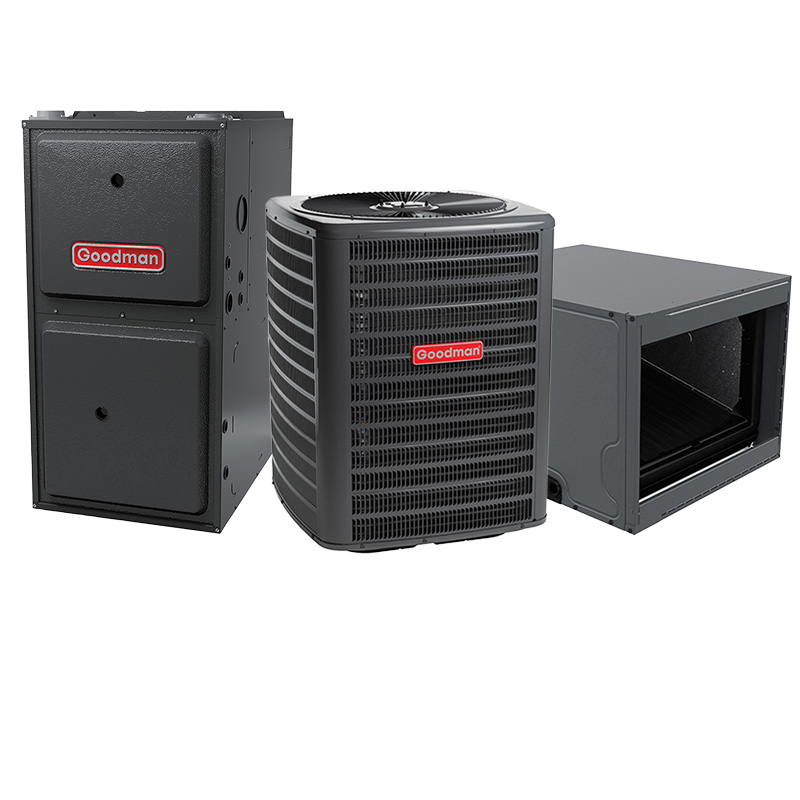
Goodman Furnace AC Combo – 3.5 Ton 13.4 SEER2 AC With 100000 BTU 97% AFUE Modulating Variable-Speed ECM Gas Furnace System – Horizontal | R32
View on AC Direct see your lowest price →Check current price on AC Direct →
Key features
- 97% AFUE modulating gas furnace reduces fuel waste and smooths temperature swings
- Variable-speed ECM blower motor lowers electricity draw versus standard PSC motors
- 3.5-ton, 13.4 SEER2 cooling capacity for mid-size homes, roughly 1,500 to 2,200 sq ft depending on climate
- Horizontal configuration designed for attic, crawlspace, or side-discharge installations
- R-32 refrigerant, a lower global-warming-potential alternative to R-410A
- Priced 15 to 25 percent below comparable Trane, Lennox, and Carrier systems
About this system
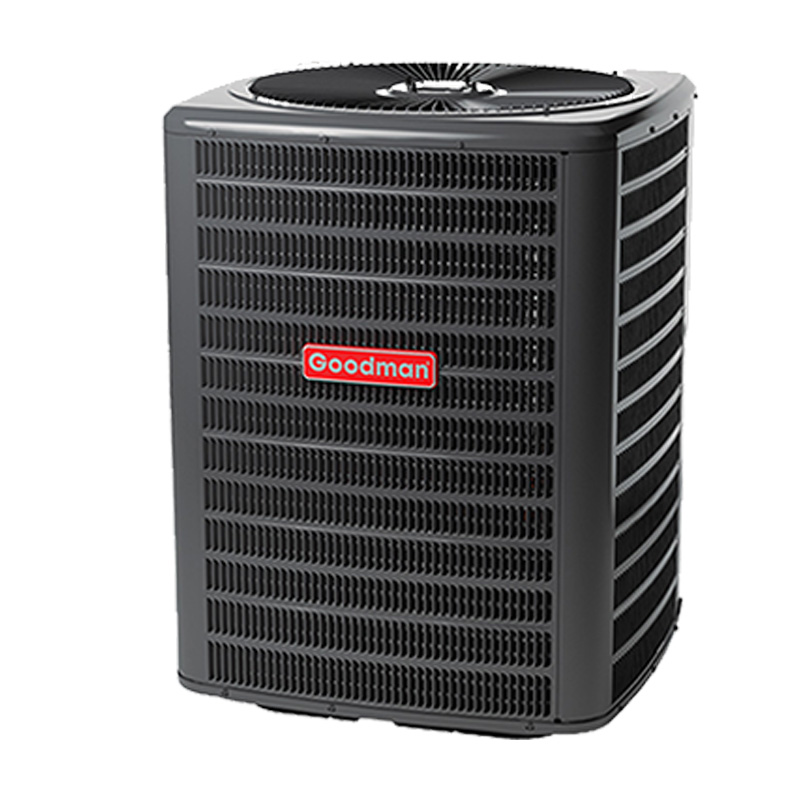
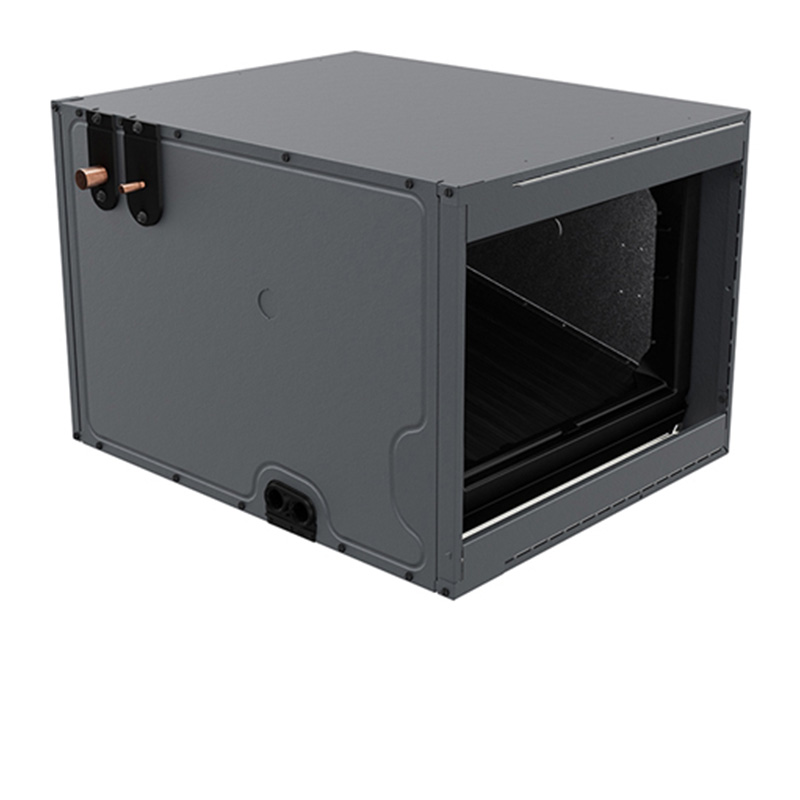
This Goodman combo pairs a 3.5-ton, 13.4 SEER2 central air conditioner with a 100,000 BTU, 97% AFUE modulating gas furnace in a horizontal configuration, making it a strong candidate for homes where the air handler sits in a crawlspace, attic, or tight mechanical closet with side-discharge ductwork. The horizontal layout is not a universal fit, so confirming your existing duct orientation before ordering is essential. The system ships ready for R-32 refrigerant, a lower-GWP alternative to R-410A that is becoming the new baseline across the industry.
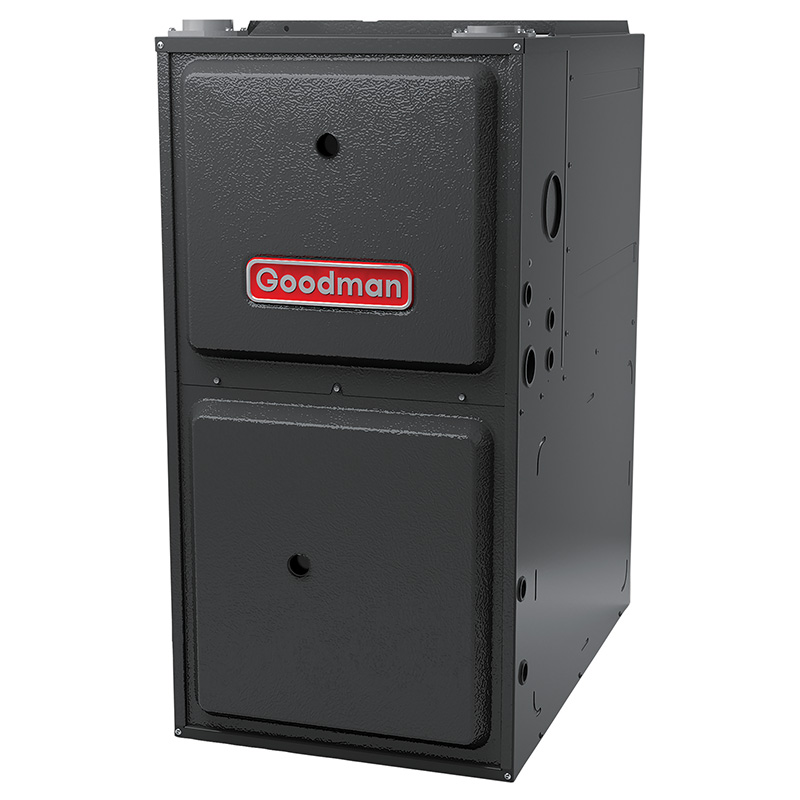
The furnace side of this package is where the specs genuinely shine. A 97% AFUE modulating burner with a variable-speed ECM blower motor is high-efficiency territory regardless of brand. Modulating means the burner adjusts output in small increments rather than cycling fully on and off, which smooths temperature swings, reduces cold-start noise, and gets the most out of every cubic foot of gas. The ECM blower also draws significantly less electricity than a standard PSC motor, trimming operating costs over time. The 13.4 SEER2 rating on the cooling side is solidly mid-tier. It clears the current federal minimum in most regions but sits below the 15 to 16 SEER2 range where utility rebates often kick in, so check your local program before purchasing.
Goodman positions this system as a value-oriented option, typically priced 15 to 25 percent below equivalent Trane, Lennox, and Carrier configurations. That spread matters because the modulating furnace and ECM motor are premium features; getting them at a Goodman price point is a legitimate draw for budget-conscious homeowners who still want sophisticated comfort control. The trade-off is that Goodman’s long-term reliability reputation sits below the premium tier, and performance here depends heavily on who installs it and how carefully the system is commissioned.
This system delivers a genuinely high-spec furnace (modulating, 97% AFUE, ECM) at a price well below premium-brand equivalents, which is its core appeal. The 13.4 SEER2 cooling is functional but unremarkable, and Goodman's documented reliability concerns, particularly around dual-run capacitors, evaporator coil leaks, and compressor longevity averaging 10 to 14 years, mean the lower upfront cost could narrow over a long ownership horizon. It is a reasonable buy when installed by a careful, Goodman-experienced technician and paired with a good extended warranty.
Overall score is the average of the five ratings above.
What we like
- Modulating furnace with ECM blower is a premium comfort feature rarely found at this price point
- 97% AFUE qualifies for many utility and federal efficiency incentives
- R-32 refrigerant is future-oriented and aligns with the industry's shift away from R-410A
- Horizontal configuration opens installation options in attics and crawlspaces where upflow units cannot fit
- 15 to 25 percent lower upfront cost than comparable Trane, Lennox, or Carrier systems
Trade-offs
- 13.4 SEER2 is mid-tier cooling efficiency and may fall below the threshold for some local utility rebates
- Compressor lifespan averages 10 to 14 years versus 15 to 20 years for premium brands, a meaningful long-term cost factor
- Dual-run capacitor failures and evaporator coil leaks are documented recurring issues in owner feedback
- Horizontal-only configuration limits where this unit can be installed; it is not a drop-in replacement for standard upflow setups
What homeowners and pros say about Goodman
Homeowners who choose Goodman frequently point to the price gap as the deciding factor, and dealer reviews averaging around 3.8 out of 5 on Google reflect that many buyers feel they got solid value when installation goes smoothly. The modulating furnace and ECM blower in a system at this price tier draw genuine appreciation from owners who did their homework and know what those features cost at competing brands. Where sentiment sours, and where Goodman’s ConsumerAffairs score of roughly 2.5 out of 5 reflects real frustration, is in the years after the initial install. The complaint pattern is consistent: systems that run fine for the first several years start requiring repairs around year seven or eight, with repair costs eroding the original savings.
HVAC technicians who work on Goodman equipment regularly are candid about specific weak points. Dual-run capacitors are the most frequently replaced component, though most techs note it is a straightforward, low-cost repair in the 300 to 600 dollar range when caught early. Evaporator coil leaks appear in a meaningful share of owner reviews and can be more disruptive to address. On the cooling side, compressor longevity averaging 10 to 14 years is noticeably shorter than the 15 to 20 years commonly seen in Trane, Carrier, and Lennox equipment. A recurring theme among pros is that Goodman’s output varies more based on install quality than premium brands do, meaning a careful commissioning by an experienced technician is not optional here. It is the single biggest variable in how long one of these systems lasts.
Sources: ConsumerAffairs Goodman owner reviews, AHRI Directory of Certified Product Performance, U.S. DOE appliance and equipment efficiency standards, Goodman product specification sheets.
What it costs to run
At 13.4 SEER2, cooling this 3.5-ton system for a typical 1200-hour cooling season at the U.S. average electricity rate of $0.17/kWh works out to roughly $639 per year in cooling, about $0 less per year than a minimum-efficiency 13.4 SEER2 unit of the same size. Your real cost depends on your climate and local rate.
Method: (42,000 BTU/hr ÷ 13.4 SEER2) × 1200 hours ÷ 1000 × $0.17/kWh. Rate source: U.S. EIA average; cooling hours: moderate-climate estimate.
How it compares
| Brand | Comparable model | SEER2 | Stage | Price position |
|---|---|---|---|---|
| Goodman | 3.5 Ton 13.4 SEER2 / 100,000 BTU 97% AFUE Modulating ECM Horizontal | 13.4 | Modulating / Variable-speed | Value pick |
| Carrier | Infinity 96 Gas Furnace + 24ACC636A003 Performance AC | 13.4–14 | Two-stage / Variable-speed | Typically 20 to 25 percent more than this Goodman system |
| Trane | S9X2 Furnace + XR15 Air Conditioner | 13.8–15 | Two-stage / Variable-speed | Typically 20 to 30 percent more than this Goodman system |
| Lennox | SLP98V Furnace + XC16 Air Conditioner | 14–16 | Modulating / Variable-speed | Typically 25 to 35 percent more than this Goodman system |
Competitor rows are comparable single-stage units at similar efficiency; price is relative position, not a quote.
Questions about this system
Does the horizontal configuration mean this unit can only be installed on its side, and will that affect anything?
Yes, this model is built and certified specifically for horizontal airflow, where air enters one end and exits the other, which suits attic or crawlspace installs with side-connected ductwork. Installing a horizontal-rated unit in a vertical upflow position is not recommended and will void certification. Confirm your existing duct arrangement matches before ordering.
What does R-32 refrigerant mean for maintenance and servicing costs compared to R-410A systems?
R-32 is being adopted across the industry as a lower-GWP replacement for R-410A, and most HVAC service companies are already equipped to handle it or are actively getting certified. Pricing for R-32 refrigerant is currently comparable to R-410A, though availability and cost may improve as adoption widens. Just confirm your servicing contractor is R-32 certified before signing a maintenance agreement.
The furnace is 100,000 BTU but my heat load calculation came in lower. Is that oversized?
Possibly, yes. A modulating burner does offset oversizing concerns somewhat because it can run at reduced output rather than short-cycling, but a furnace significantly larger than your calculated heat load can still cause comfort and humidity issues in mild weather. Having a Manual J load calculation done before purchase is the best way to confirm whether 100,000 BTU is appropriate for your home.
Goodman gets mixed reviews online. Are the complaints about this type of high-efficiency system or the lower-end units?
Goodman's ConsumerAffairs score sits around 2.5 out of 5, a channel that skews toward complaints, and Google dealer reviews average around 3.8 out of 5. The documented failure modes across the line include dual-run capacitor failures (typically a 300 to 600 dollar fix), evaporator coil leaks, and compressor lifespans averaging 10 to 14 years. These issues appear across Goodman's range, including higher-spec systems, and are not limited to entry-level units.
What warranty does this system come with, and is an extended warranty worth buying?
Goodman offers a 10-year parts warranty when the equipment is registered within a set window after installation, which is competitive on paper. However, given the documented higher-than-average repair frequency compared to premium brands, an extended labor warranty through a reputable local dealer is worth serious consideration, since parts coverage alone does not offset the cost of a service call.
Specifications
| Cooling capacity | 3.5 Ton |
| Efficiency | 13.4 SEER2 |
| Furnace output | 100000 BTU |
| Furnace efficiency | 97% AFUE |
| Configuration | Horizontal |
| Refrigerant | R-32 |