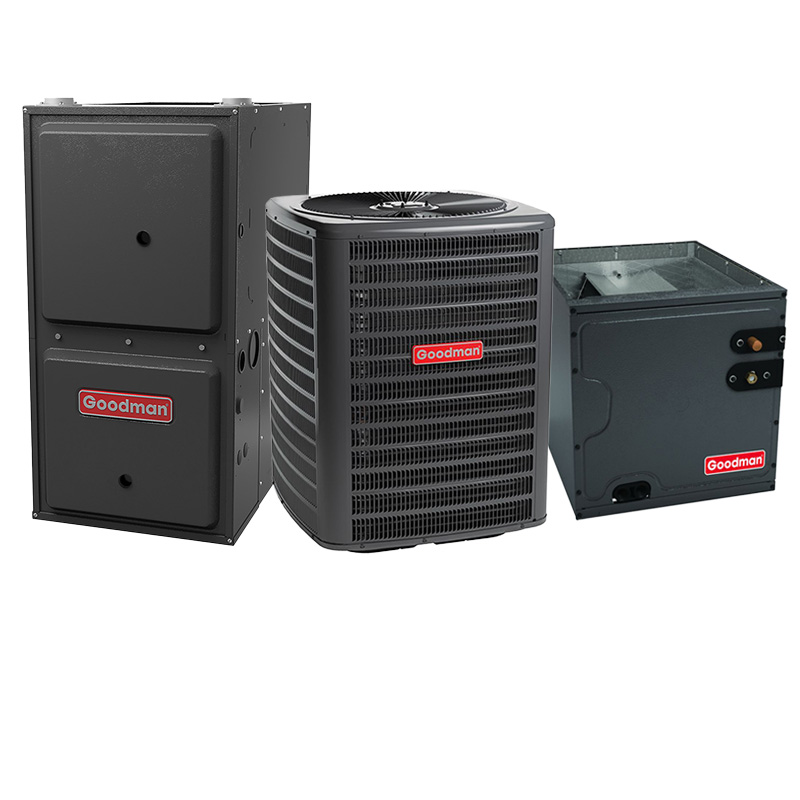
Goodman Furnace AC Combo – 3.5 Ton 13.4 SEER2 AC With 100000 BTU 97% AFUE Modulating Variable-Speed ECM Gas Furnace System – Downflow | R32
View on AC Direct see your lowest price →Check current price on AC Direct →
Key features
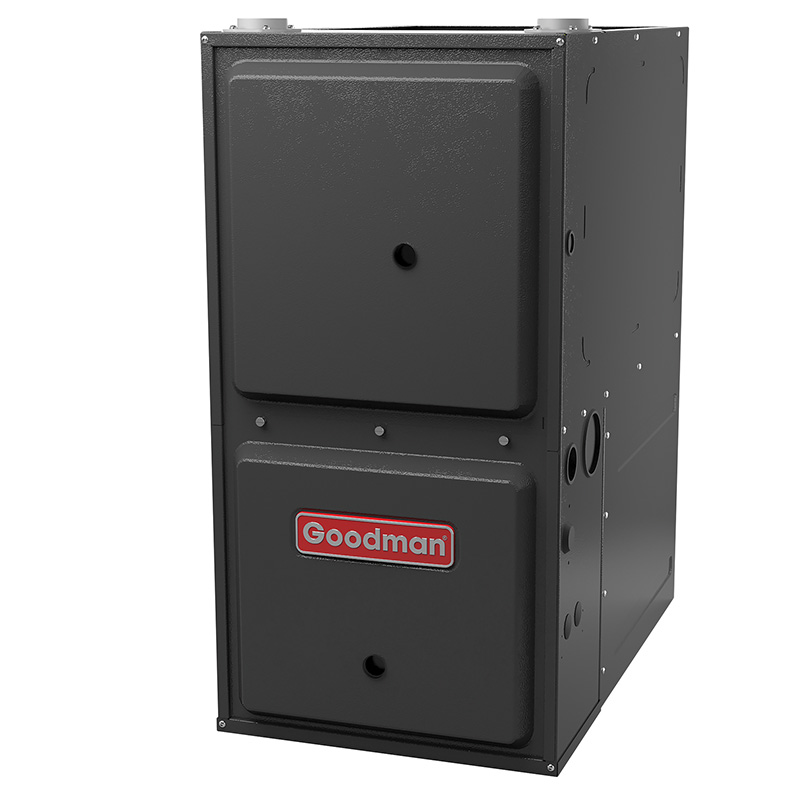
- 97% AFUE modulating gas furnace with variable-speed ECM blower motor
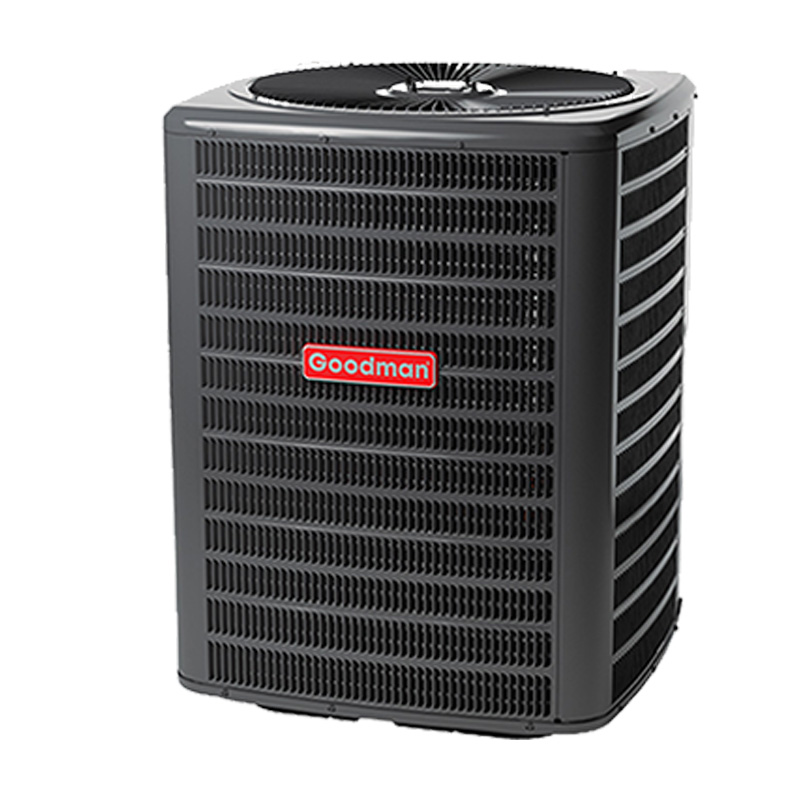
- 3.5-ton cooling capacity rated at 13.4 SEER2 using R-32 refrigerant
- Downflow configuration for installations with supply ducts below the unit
- Modulating burner continuously adjusts heat output to reduce temperature swings
- R-32 refrigerant carries a lower global warming potential than R-410A
- ECM motor reduces blower electricity consumption compared to standard PSC motors
About this system
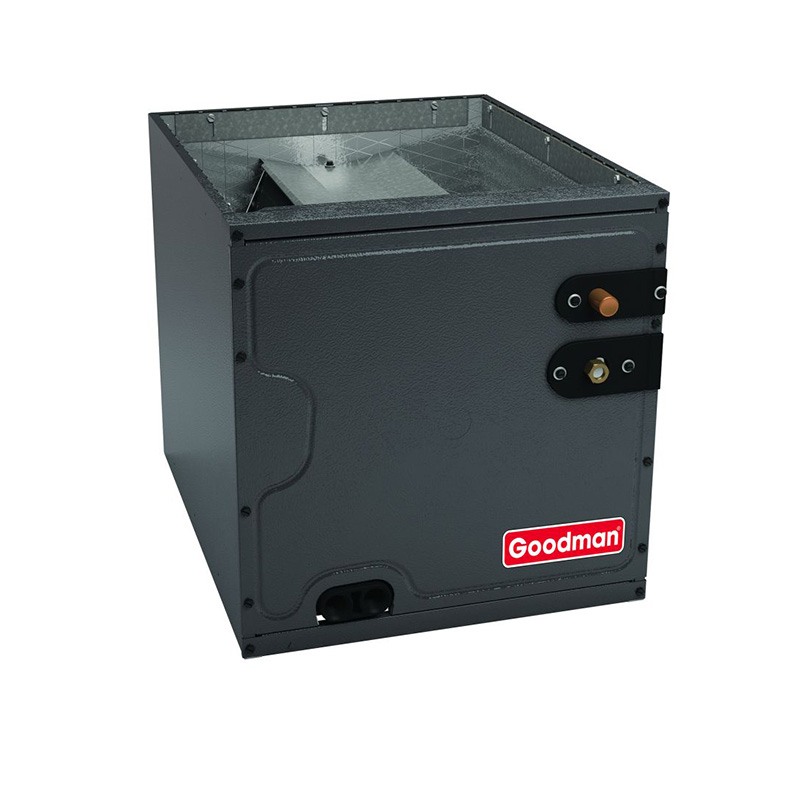
This Goodman combo pairs a 3.5-ton, 13.4 SEER2 central air conditioner with a 100,000 BTU, 97% AFUE modulating gas furnace in a downflow configuration, making it a strong candidate for homes where the air handler sits above a crawlspace or basement with supply ducts running downward. The R-32 refrigerant charge is a meaningful forward-looking detail: R-32 has a lower global warming potential than the R-410A it replaces, and it is now the industry standard direction, so this system will not face the phase-out pressures that older refrigerant lines are dealing with. At 3.5 tons it covers roughly 1,600 to 2,100 square feet depending on insulation, ceiling height, and climate zone, though a proper Manual J load calculation should always confirm sizing before purchase.
The furnace side is where this system genuinely earns attention. A 97% AFUE modulating burner with a variable-speed ECM blower motor is high-specification equipment at a Goodman price point. Modulating means the burner adjusts its output continuously rather than cycling fully on and off, which smooths temperature swings, reduces cold-air blasts on startup, and keeps humidity more consistent in heating season. The ECM motor draws significantly less electricity than a PSC motor, which adds up over a season. The AC side at 13.4 SEER2 clears the minimum federal efficiency threshold for most regions but sits at the low end of the efficiency scale, so cooling operating costs will be higher than a 16 or 18 SEER2 unit would produce. For buyers whose primary concern is heating efficiency and who want to keep upfront cost reasonable, the trade-off lands reasonably well.
This system delivers genuinely high-end furnace technology at a value price, and the 97% AFUE modulating setup will reward owners who heat more than they cool. The AC side is functional but baseline-efficient, and Goodman's real-world reliability record means long-term costs depend heavily on who installs it and how well it is maintained after year seven.
Overall score is the average of the five ratings above.
What we like
- 97% AFUE modulating furnace is top-tier efficiency that most value-brand buyers do not get at this price point
- Variable-speed ECM blower cuts electricity use and improves comfort consistency versus single-speed alternatives
- R-32 refrigerant is the industry's forward-standard, avoiding near-term phase-out concerns
- Priced roughly 15 to 25 percent below comparable Trane, Lennox, or Carrier combos with similar furnace specs
- Downflow design suits a common installation layout without needing a conversion kit
Trade-offs
- 13.4 SEER2 cooling efficiency is at the regulatory minimum for many regions, meaning higher summer operating costs versus a mid-efficiency alternative
- Goodman compressors average 10 to 14 years in real-world reports, shorter than the 15 to 20 years typical of premium brands
- Dual-run capacitor failures are the most commonly reported repair, and evaporator coil leaks appear in a meaningful share of long-term owner reviews
- A minority of owners report refrigerant leaks in the first year, an issue that usually traces back to installation quality rather than the equipment itself
What homeowners and pros say about Goodman
Homeowners who purchased Goodman equipment tend to split along a predictable line: those who had a skilled installer and kept up with maintenance are generally satisfied through the first seven or eight years, while those who did not often find themselves on forums reporting repair bills that add up quickly. Goodman carries a ConsumerAffairs rating of around 2.5 out of 5, a score that reflects the platform’s complaint-heavy nature but also points to a real pattern of repair costs climbing after roughly year seven. Google dealer reviews tell a more balanced story at around 3.8 out of 5, where affordability is the most frequently cited reason for satisfaction. Neither number is a glowing endorsement, but together they sketch a brand that delivers reasonable performance when conditions are right.
HVAC technicians working on Goodman equipment consistently point to dual-run capacitors as the most common service call, a repair that typically runs 300 to 600 dollars and is not specific to this model or system generation. More concerning in the long run are evaporator coil leaks, which show up in a meaningful share of owner accounts and can be more involved to address, and a compressor lifespan that real-world data puts at 10 to 14 years on average versus the 15 to 20 years more commonly seen on Trane or Carrier equipment. A small minority of owners also report refrigerant leaks within the first year, a problem that technicians usually attribute to installation errors or an improper charge rather than a manufacturing defect. For this particular system, the modulating furnace with its ECM motor is the strongest piece of the package, and it deserves an experienced installer who respects that complexity.
Sources: ConsumerAffairs Goodman owner reviews, AHRI Directory of Certified Product Performance, U.S. DOE appliance and equipment efficiency standards, Goodman product specification sheets.
What it costs to run
At 13.4 SEER2, cooling this 3.5-ton system for a typical 1200-hour cooling season at the U.S. average electricity rate of $0.17/kWh works out to roughly $639 per year in cooling, about $0 less per year than a minimum-efficiency 13.4 SEER2 unit of the same size. Your real cost depends on your climate and local rate.
Method: (42,000 BTU/hr ÷ 13.4 SEER2) × 1200 hours ÷ 1000 × $0.17/kWh. Rate source: U.S. EIA average; cooling hours: moderate-climate estimate.
How it compares
| Brand | Comparable model | SEER2 | Stage | Price position |
|---|---|---|---|---|
| Goodman | 3.5T 13.4 SEER2 AC + 100K BTU 97% AFUE Modulating Furnace (Downflow, R-32) | 13.4 | Modulating / Variable-speed | Value pick |
| Carrier | Performance 96 / 24ACC636A003 combo | 14.3 | Two-stage / Variable-speed | Roughly 20 to 25 percent higher than this Goodman system |
| Trane | S9V2 Furnace + XR14 AC combo | 13.8 | Two-stage / Variable-speed | Roughly 20 to 30 percent higher than this Goodman system |
| Lennox | ML14XC1 AC + SLP98V Furnace combo | 14.3 | Modulating / Variable-speed | Roughly 25 to 35 percent higher than this Goodman system |
Competitor rows are comparable single-stage units at similar efficiency; price is relative position, not a quote.
Questions about this system
Is 13.4 SEER2 going to cost me noticeably more to run than a higher-efficiency AC?
Yes, it will. Compared to a 16 SEER2 unit of the same size, you can expect meaningfully higher cooling electricity costs each season, with the gap growing in hotter climates or longer cooling seasons. If your home runs the AC heavily from May through September, it is worth pricing out a higher SEER2 option and calculating the payback period on the difference.
What does modulating actually mean for day-to-day comfort, and is it worth it in a Goodman?
A modulating furnace ramps its heat output up and down in small increments rather than cycling fully on and off, which keeps the temperature in your home steadier and eliminates the cold-air rush at startup that single-stage furnaces produce. That benefit is real regardless of brand, and getting it at Goodman pricing is one of the stronger arguments for this particular combo over a simpler two-stage or single-stage system.
The specs say R-32. Can my current technician service it, or do I need someone with special certification?
R-32 requires an EPA 608 certified technician, which most licensed HVAC professionals already hold. Some older techs may be less familiar with R-32 handling procedures since it is mildly flammable at high concentrations, so it is worth confirming your service provider has worked with it before. It is not a significant obstacle, but it is a real question to ask at service time.
Downflow is listed as the configuration. What does that mean for my installation, and can it be changed?
Downflow means the furnace draws return air from the top and pushes conditioned air out the bottom, routing it into ducts running beneath the unit. This is common when the furnace sits on a platform above a crawlspace or basement with floor-level supply registers. It is not interchangeable with upflow or horizontal configurations without buying a different model, so confirming your existing ductwork layout before ordering is critical.
What are the most likely repairs I should budget for, and when do they tend to show up?
Based on documented owner experience with Goodman equipment, dual-run capacitor failure is the most common repair, typically a 300 to 600 dollar service call and a quick fix. Evaporator coil leaks appear in a meaningful share of long-term reviews and can be more expensive. Compressors in Goodman systems average 10 to 14 years, so budgeting for potential replacement or a new system in that window is realistic planning.
Specifications
| Cooling capacity | 3.5 Ton |
| Efficiency | 13.4 SEER2 |
| Furnace output | 100000 BTU |
| Furnace efficiency | 97% AFUE |
| Configuration | Downflow |
| Refrigerant | R-32 |