Goodman Furnace AC Combo – 2 Ton 15 SEER2 AC With 60000 BTU 97% AFUE Modulating Variable-Speed ECM Gas Furnace System – Downflow | R32
View on AC Direct see your lowest price →Check current price on AC Direct →
Key features
- 2-ton, 15 SEER2 R-32 split-system AC optimized for smaller homes and moderate-climate zones
- 97% AFUE modulating gas furnace keeps nearly all fuel heat in the living space
- Variable-speed ECM blower motor reduces electricity use and runs quieter than PSC motors
- Modulating gas valve adjusts firing rate in small steps for more even temperatures and humidity control
- Downflow cabinet configuration directs conditioned air downward into under-floor duct systems
- R-32 refrigerant with lower global warming potential than R-410A, aligned with current industry direction
About this system
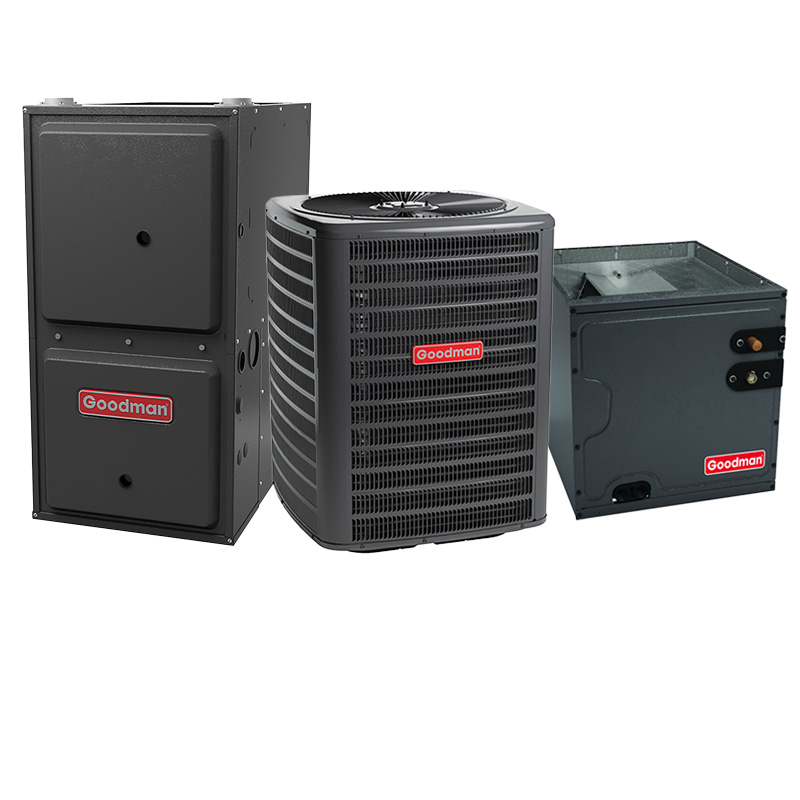
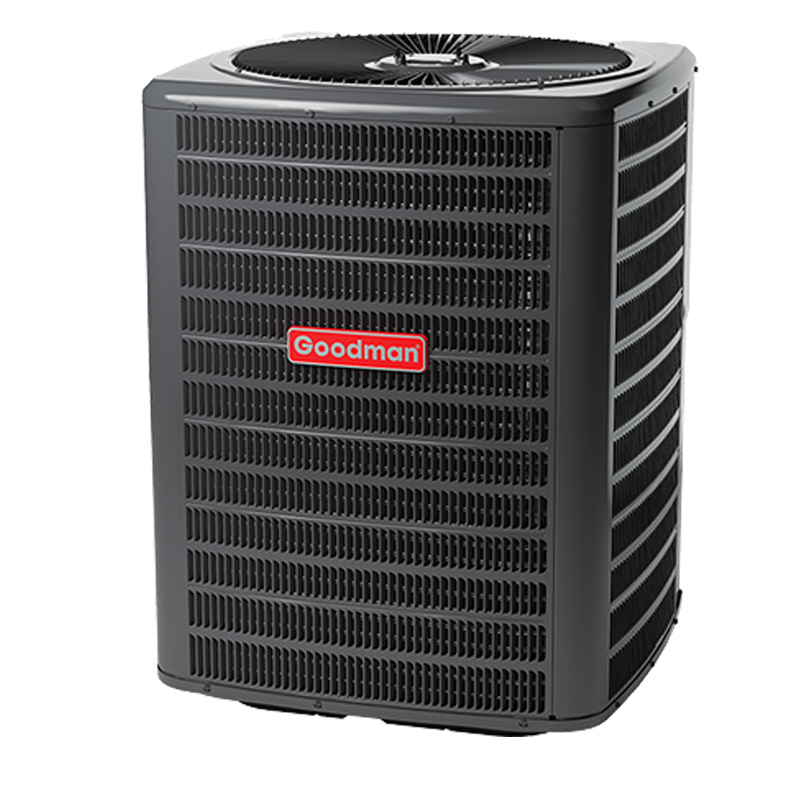
The Goodman GLXS4BA2410 pairs a 2-ton, 15 SEER2 air conditioner with a 60,000 BTU, 97% AFUE modulating gas furnace in a downflow configuration that suits homes where supply air flows downward into a basement or crawlspace plenum. The R-32 refrigerant charge is a forward-looking choice: R-32 carries a lower global warming potential than the R-410A it replaces and is increasingly the industry standard as older refrigerants are phased out. At 15 SEER2 the cooling side clears the federal minimum for most northern U.S. climates and edges into the lower-mid efficiency tier, delivering meaningful savings over older 13 or 14 SEER equipment without the price premium of 18-plus SEER2 systems.
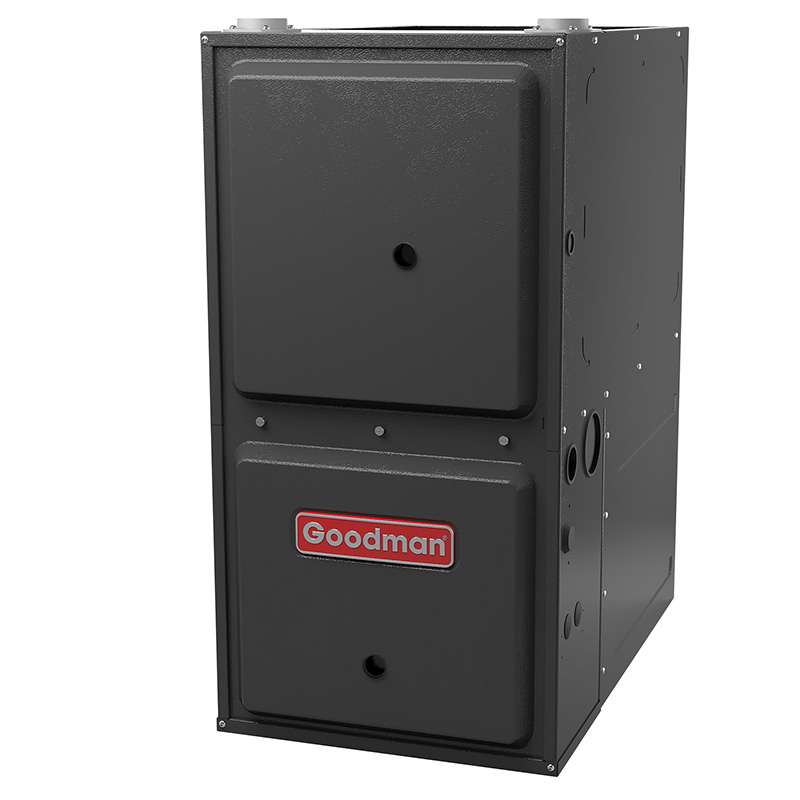
The furnace half of this combo is genuinely strong on paper. A 97% AFUE rating means only three cents of every fuel dollar escapes as exhaust, which puts this unit in the same efficiency class as premium-brand condensing furnaces. The modulating gas valve adjusts heat output in small increments rather than slamming on at full capacity, and the variable-speed ECM blower motor follows suit, running quietly at lower speeds for most of the heating season and ramping up only when demand calls for it. That combination tends to produce more even room temperatures, better humidity control in winter, and lower electricity draw from the blower compared with a standard single-stage, PSC-motor furnace. The downflow-only configuration is a real constraint: this system is specifically designed for installation above the conditioned space with ductwork beneath it, so it is not interchangeable with upflow or horizontal applications without a different cabinet.
This combo delivers a genuinely high-efficiency furnace paired with entry-level-adequate cooling at a price point noticeably below comparable Trane, Lennox, or Carrier bundles. The 97% AFUE modulating furnace is the standout component; the 15 SEER2 AC is competent but not exceptional. Long-term satisfaction will depend heavily on installation quality and whether repair costs after year seven fit your budget.
Overall score is the average of the five ratings above.
What we like
- 97% AFUE modulating furnace is among the most efficient gas heat options available at any price point
- Variable-speed ECM blower reduces operating noise and monthly electricity costs compared with standard blowers
- R-32 refrigerant is a future-ready choice as R-410A production is phased down
- Priced 15 to 25 percent below comparable Trane, Lennox, and Carrier systems, lowering the upfront barrier
- Modulating firing delivers more consistent room temperatures and better winter humidity control than single-stage furnaces
Trade-offs
- Dual-run capacitors are the most frequently reported failure point on Goodman AC units, typically adding a repair bill of $300 to $600 around or after year five
- Compressor lifespan averages 10 to 14 years versus 15 to 20 years for premium-brand compressors, meaning replacement may come sooner
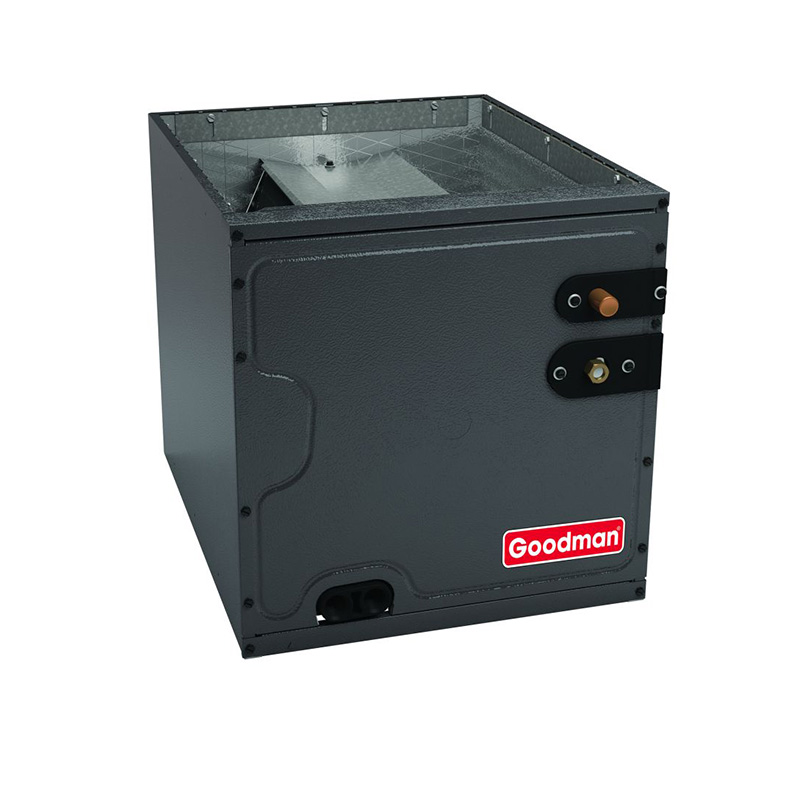
- Evaporator coil leaks appear in a meaningful share of owner reports, and a minority of units have shown refrigerant leaks within the first year, often tied to install quality
- Downflow-only configuration limits where this system can be installed; it cannot be repurposed for upflow or horizontal applications
What homeowners and pros say about Goodman
Homeowners who chose Goodman overwhelmingly cite upfront cost as the deciding factor, and that pattern holds for this modulating furnace and AC bundle. On Google dealer reviews, where Goodman locations average around 3.8 out of 5 across hundreds of reviews per location, the word that comes up most is affordable, often paired with satisfaction that the system does what it is supposed to do in the early years. The ConsumerAffairs channel tells a harder story, with a rating of roughly 2.5 out of 5 driven largely by owners who hit repair bills after the first several years of service. The recurring complaint there is that costs start climbing after about year seven, which tracks with the documented compressor lifespan averaging 10 to 14 years compared with 15 to 20 years for premium-brand units.
HVAC technicians tend to hold a middle-ground view: Goodman equipment is considered installable and serviceable, but pros are consistent in saying that installation quality determines nearly everything about how long a Goodman system lasts. Specific failure modes that come up regularly in service records include dual-run capacitor failures, usually a quick fix in the $300 to $600 range, evaporator coil leaks appearing in a notable share of units over time, and a smaller number of refrigerant leaks in the first year that are typically traced back to charge or connection issues at install rather than factory defects. For this particular combo, the 97% AFUE modulating furnace draws more consistent praise than the cooling side, with technicians noting that the variable-speed ECM blower holds up well and the modulating valve does deliver genuine comfort improvements over single-stage alternatives.
Sources: ConsumerAffairs Goodman owner reviews, AHRI Directory of Certified Product Performance, U.S. DOE appliance and equipment efficiency standards, Goodman product specification sheets.
What it costs to run
At 15 SEER2, cooling this 2-ton system for a typical 1200-hour cooling season at the U.S. average electricity rate of $0.17/kWh works out to roughly $326 per year in cooling, about $39 less per year than a minimum-efficiency 13.4 SEER2 unit of the same size. Your real cost depends on your climate and local rate.
Method: (24,000 BTU/hr ÷ 15 SEER2) × 1200 hours ÷ 1000 × $0.17/kWh. Rate source: U.S. EIA average; cooling hours: moderate-climate estimate.
How it compares
| Brand | Comparable model | SEER2 | Stage | Price position |
|---|---|---|---|---|
| Goodman | GLXS4BA2410 with GMVM970603BN | 15 | Variable/Modulating | Value pick |
| Carrier | 24ACC636A003 with 59MN7060V17–14 | 15-16 | Variable/Modulating | 15 to 25 percent above this Goodman bundle |
| Trane | 4TTR6024 with S9V2B060U3PSB | 15-16 | Two-stage/Variable-speed | 15 to 25 percent above this Goodman bundle |
| Lennox | 14ACX-024 with EL296V060XE36B | 14.3-15 | Single-stage/Two-stage | Comparable to slightly above this Goodman bundle depending on dealer |
Competitor rows are comparable single-stage units at similar efficiency; price is relative position, not a quote.
Questions about this system
Is the downflow configuration a problem if my house currently has an upflow furnace?
Yes, this is a hard constraint. Downflow cabinets are engineered specifically to discharge air downward, and installing one in an upflow application creates heat exchanger and safety issues. If your existing system is upflow, you need a different cabinet orientation entirely.
Does using R-32 mean I need a specially certified technician for service?
R-32 requires an EPA 608-certified technician, which covers most working HVAC professionals, but not all service trucks stock R-32 yet. It is worth confirming that your local service company carries R-32 before you finalize the purchase, since availability is still catching up to equipment adoption.
What does 'modulating' actually mean for day-to-day comfort compared with a two-stage furnace?
A modulating furnace can fire at many incremental output levels, not just high and low, so it can closely match the heat loss of your home on any given day. In practice this means fewer temperature swings, quieter operation at low demand, and better humidity control in winter compared with even a two-stage unit.
How likely is a capacitor failure, and what does it actually cost to fix?
Dual-run capacitor failure is the single most commonly reported repair on Goodman AC units. It is generally a straightforward fix that most technicians complete in under an hour, with total costs typically landing in the $300 to $600 range including the service call. Having a service agreement in place can soften that cost.
Goodman's ConsumerAffairs rating is low. Should that change my decision?
ConsumerAffairs skews toward complaint-driven submissions, so Goodman's roughly 2.5 out of 5 there overstates the failure rate relative to the broader owner population. Google dealer reviews average around 3.8 out of 5, where affordability is the most common praise. The honest picture is that Goodman produces acceptable equipment at a lower price, but repair frequency tends to climb after year seven and compressor longevity trails premium brands, so factor potential service costs into your total ownership math.
Specifications
| Cooling capacity | 2 Ton |
| Efficiency | 15 SEER2 |
| Furnace output | 60000 BTU |
| Furnace efficiency | 97% AFUE |
| Configuration | Downflow |
| Refrigerant | R-32 |
| Model | GLXS4BA2410 |