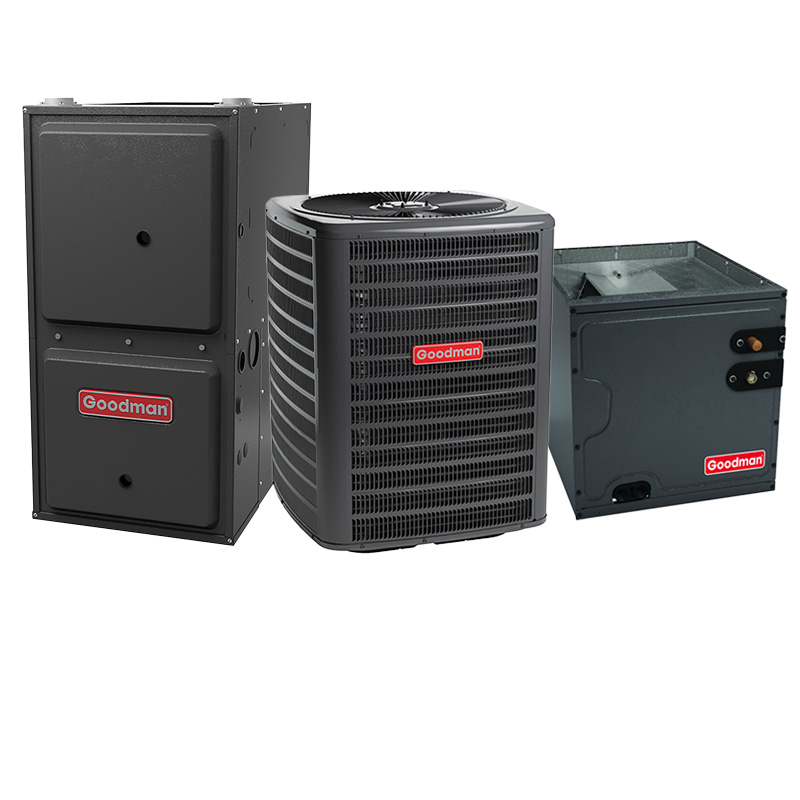
Goodman Furnace AC Combo – 2.5 Ton 15.2 SEER2 AC With 60000 BTU 97% AFUE Modulating Variable-Speed ECM Gas Furnace System – Downflow | R32
View on AC Direct see your lowest price →Check current price on AC Direct →
Key features
- 2.5-ton cooling capacity with 15.2 SEER2 efficiency rating
- 60,000 BTU modulating gas furnace at 97% AFUE for high-efficiency heating
- Variable-speed ECM blower motor reduces electricity use and operating noise
- Downflow configuration designed for closet, utility room, or over-crawlspace installations
- R-32 refrigerant with lower global-warming potential than R-410A
- Modulating burner stages output gradually to reduce temperature swings
About this system
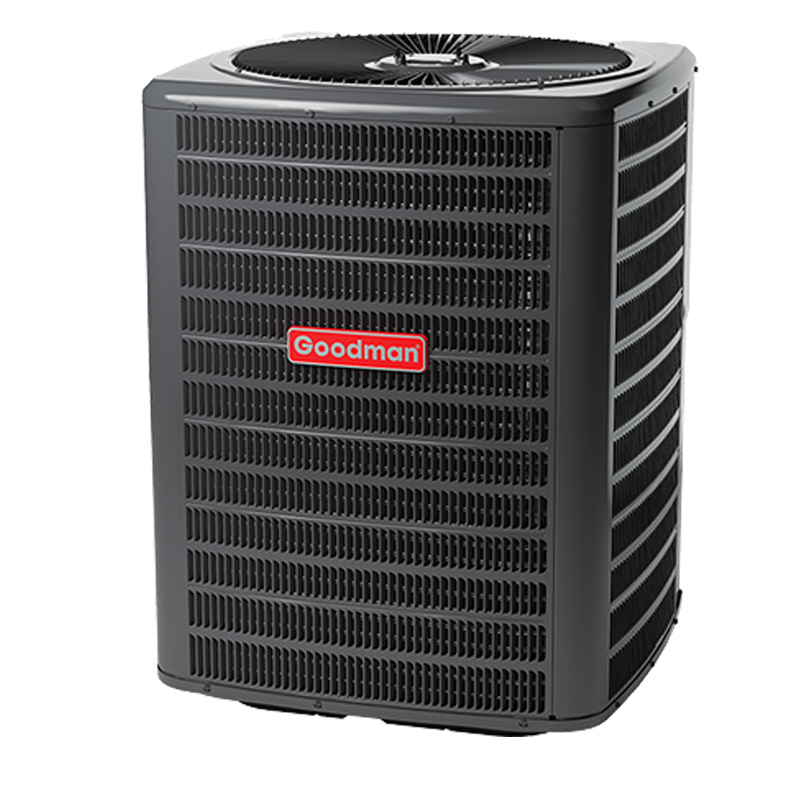
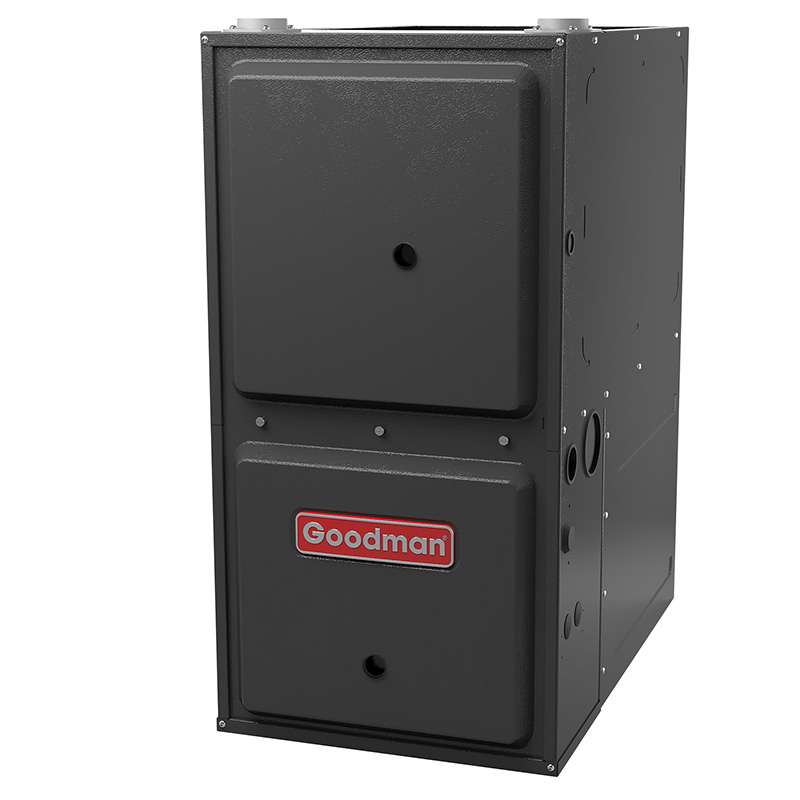
The Goodman GLXS4BA3010 pairs a 2.5-ton, 15.2 SEER2 central air conditioner with a 60,000 BTU, 97% AFUE modulating gas furnace in a downflow configuration, making it a practical choice for homes where the air handler sits in a closet, utility room, or above a crawl space with supply air flowing downward. The modulating burner adjusts heat output in small increments rather than switching fully on or off, which smooths out temperature swings and reduces the cold-start blasts that single-stage furnaces are known for. The variable-speed ECM blower motor runs at lower speeds most of the time, trimming electricity consumption and moving air more quietly than a standard PSC motor.
R-32 refrigerant is a lower global-warming-potential alternative to R-410A and is becoming the industry standard for new residential equipment, so parts and service should remain accessible for the foreseeable future. At 15.2 SEER2 the cooling side clears the federal minimum for most U.S. climate zones but sits closer to the baseline than to the high-efficiency tier, meaning long-term utility savings will be real but modest compared with 18 SEER2 and above systems. The 97% AFUE furnace is a genuine high-efficiency rating that can cut heating costs meaningfully versus an 80% AFUE unit, especially in colder climates with long heating seasons. Together these specs make the combo a reasonable fit for budget-conscious homeowners in mixed heating and cooling climates who want legitimate efficiency on the furnace side without paying a premium brand markup.
This Goodman combo delivers a genuinely high-efficiency furnace and a code-clearing air conditioner at a price point that undercuts comparable Trane, Lennox, and Carrier systems by 15 to 25 percent. The trade-off is a brand track record that shows more variability in long-term reliability than the premium tier, and the system's performance will depend heavily on how well it is installed and commissioned. Buyers who use a careful, experienced installer and budget for routine maintenance will likely get solid value; those looking for set-it-and-forget-it peace of mind may find a premium brand worth the extra cost.
Overall score is the average of the five ratings above.
What we like
- 97% AFUE modulating furnace is a legitimate high-efficiency rating that reduces heating bills in cold climates
- Variable-speed ECM blower cuts electricity use and provides quieter, steadier airflow versus single-speed motors
- Priced 15 to 25 percent below comparable Trane, Lennox, and Carrier equipment
- R-32 refrigerant is increasingly standard, supporting long-term parts and service availability
- Modulating burner reduces temperature overshoots and improves comfort compared with single-stage heat
Trade-offs
- Dual-run capacitors are the most commonly reported failure point, typically requiring a 300 to 600 dollar repair
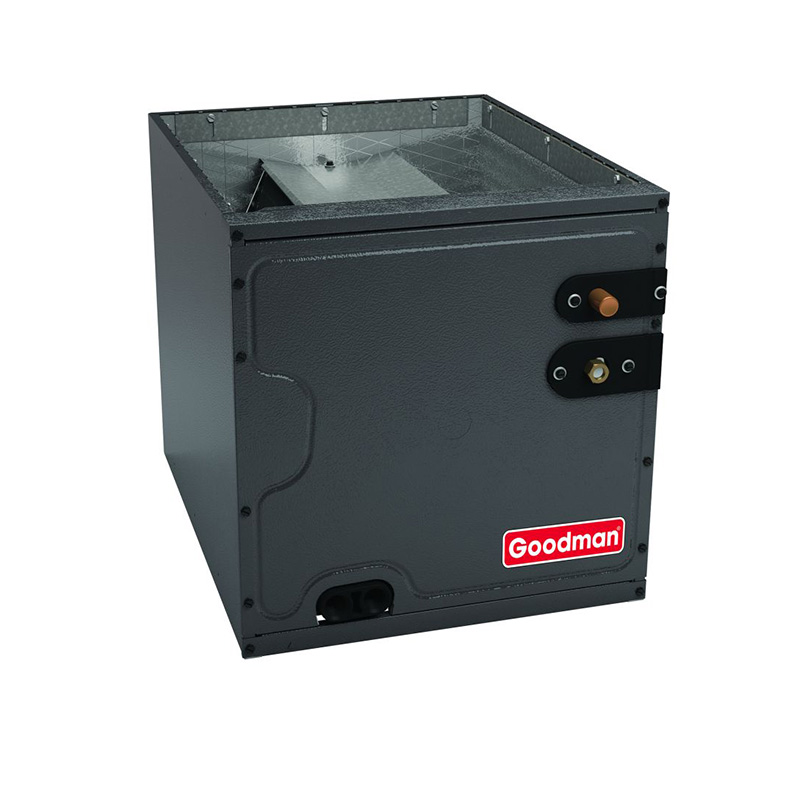
- Evaporator coil leaks appear in a meaningful share of owner reviews and can be a costly mid-life repair
- Compressor lifespan averages 10 to 14 years versus 15 to 20 years for premium brands
- 15.2 SEER2 cooling efficiency is near the federal minimum baseline, offering limited utility savings compared with higher-efficiency options
What homeowners and pros say about Goodman
Homeowners who have lived with Goodman equipment for several years tend to describe a split experience: those who had a good install and kept up with maintenance often report the system runs fine for a decade or more and cite affordability as the main reason they chose it, which aligns with the roughly 3.8 out of 5 score seen across Google dealer reviews where value for money is the most frequently praised attribute. The picture on ConsumerAffairs is less flattering, sitting around 2.5 out of 5, though that platform skews toward owners who had a problem worth writing about. The pattern that emerges from both channels is that repair costs start climbing for some owners around year seven, and the two failure modes that come up most often are dual-run capacitor replacements, typically a quick and relatively affordable fix in the 300 to 600 dollar range, and evaporator coil leaks, which are a more serious and costly repair when they occur.
HVAC technicians who work on Goodman equipment regularly tend to note that the brand performs closer to its spec sheet when installed carefully, with proper refrigerant charge, correct static pressure, and clean startup procedures. The specific concerns they raise about this product tier include compressor longevity averaging 10 to 14 years rather than the 15 to 20 years more commonly seen with Trane, Carrier, or Lennox compressors, and a minority of first-year refrigerant leaks that typically trace back to install or factory charge issues rather than a systemic product defect. For a modulating, variable-speed combo at this price point, the consensus among experienced technicians is that Goodman represents a reasonable gamble for buyers who understand the reliability trade-off and will not skip annual maintenance or ignore small issues before they become expensive ones.
Sources: ConsumerAffairs Goodman owner reviews, AHRI Directory of Certified Product Performance, U.S. DOE appliance and equipment efficiency standards, Goodman product specification sheets.
What it costs to run
At 15.2 SEER2, cooling this 2.5-ton system for a typical 1200-hour cooling season at the U.S. average electricity rate of $0.17/kWh works out to roughly $403 per year in cooling, about $54 less per year than a minimum-efficiency 13.4 SEER2 unit of the same size. Your real cost depends on your climate and local rate.
Method: (30,000 BTU/hr ÷ 15.2 SEER2) × 1200 hours ÷ 1000 × $0.17/kWh. Rate source: U.S. EIA average; cooling hours: moderate-climate estimate.
How it compares
| Brand | Comparable model | SEER2 | Stage | Price position |
|---|---|---|---|---|
| Goodman | GLXS4BA3010 (this system) | 15.2 | Modulating / Variable | Value pick |
| Carrier | Performance 16 (24ACC6 + 59TP6) | 16 | Two-stage | Priced noticeably higher than this Goodman system |
| Trane | XR15 + S9V2 (variable-speed furnace combo) | 15.2 | Single-stage AC, modulating furnace | Priced moderately higher than this Goodman system |
| Lennox | Merit ML14XC1 + SLP98V combo | 15+ | Single-stage AC, variable-speed furnace | Priced notably higher than this Goodman system |
Competitor rows are comparable single-stage units at similar efficiency; price is relative position, not a quote.
Questions about this system
Is the downflow configuration the right choice for my home, and can I convert it to upflow?
Downflow furnaces are built specifically for installations where the unit sits above the living space or in a closet with ductwork running under the floor, and they are not field-convertible to upflow. Before purchasing, confirm with your installer that your existing ductwork and platform are compatible with a downflow setup, as using the wrong orientation can create safety and efficiency problems.
What does the modulating furnace actually do differently from a two-stage furnace?
A modulating burner can vary its heat output across a wide range of levels, not just high and low, so it runs at the lowest output needed to maintain your set temperature rather than cycling on and off fully. In practice this means more even temperatures room to room, less humidity swing in shoulder seasons, and quieter operation, though the efficiency gain over a good two-stage unit in mild climates is relatively small.
How serious is the evaporator coil leak issue reported by some Goodman owners?
Evaporator coil leaks appear in a meaningful share of Goodman owner reviews and are worth taking seriously because a coil replacement can cost several hundred to over a thousand dollars in parts and labor. Registering the equipment promptly for the full parts warranty and having your installer pressure-test the system at startup can catch issues early before refrigerant loss causes compressor damage.
Does this system use R-32 refrigerant, and will that make service more expensive or harder to find?
Yes, this unit uses R-32, which is becoming the new residential standard as R-410A is phased out. Most HVAC service companies are already certified to handle R-32, and the refrigerant itself is widely available, so service should not be harder to find than R-410A service was. R-32 requires slightly different handling procedures, so confirm your servicing technician has experience with it.
What warranty does this Goodman system come with, and are there conditions I need to meet?
Goodman typically offers a 10-year parts warranty when the equipment is registered within a set window after installation, dropping to a shorter period if registration is missed. The warranty covers parts replacement but not labor costs, which can be a significant out-of-pocket expense for repairs. Read the specific warranty documentation for this model before purchase and register the unit immediately after installation.
Specifications
| Cooling capacity | 2.5 Ton |
| Efficiency | 15.2 SEER2 |
| Furnace output | 60000 BTU |
| Furnace efficiency | 97% AFUE |
| Configuration | Downflow |
| Refrigerant | R-32 |
| Model | GLXS4BA3010 |