Goodman 60000 BTU Gas Furnace – 2 Stage 96% Efficient Variable Speed ECM Upflow / Horizontal | R32 (GDVT960603BN)
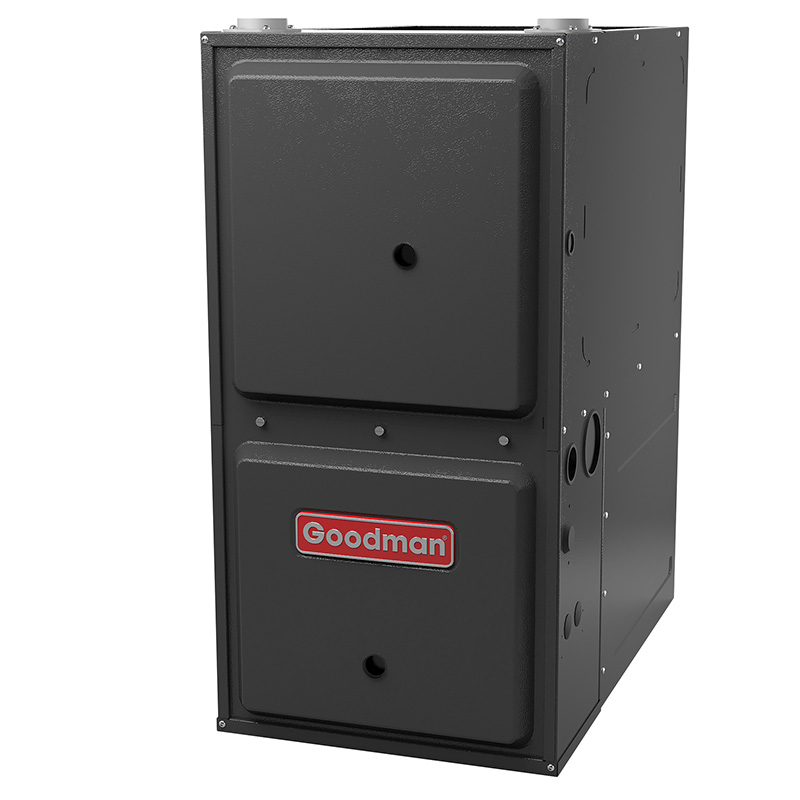
View on AC Direct see your lowest price →Check current price on AC Direct →
Key features
- 96% AFUE high-efficiency two-stage gas combustion
- Variable-speed ECM blower motor for quieter, more efficient airflow
- 60,000 BTU output suited to mid-size homes in most climates
- Upflow and horizontal installation flexibility for basement, closet, or utility room placement
- Two-stage gas valve reduces fuel use and temperature swings on mild days
- Stainless steel secondary heat exchanger designed for long-term corrosion resistance
About this system
The Goodman GDVT960603BN is a 60,000 BTU, 96% AFUE two-stage gas furnace built in an upflow/horizontal configuration, meaning it can be installed in a basement, closet, or utility room where air moves upward through the cabinet or horizontally into a duct run. The 96% AFUE rating means 96 cents of every dollar spent on natural gas becomes usable heat, placing this unit solidly in the high-efficiency tier. The two-stage gas valve lets the furnace run at a lower firing rate on milder days and ramp up only when outdoor temperatures demand it, which reduces temperature swings, lowers fuel consumption, and puts less on-off stress on the heat exchanger over time. The variable-speed ECM blower motor is the other headline feature: it ramps up gradually, runs at the lowest speed that satisfies demand, and consumes significantly less electricity than a standard PSC motor, while also moving air more quietly.
At 60,000 BTU, this unit is sized for a mid-range home, generally in the 1,200 to 2,000 square foot range depending on climate, insulation, and layout. The R-32 refrigerant designation on the model spec card is worth clarifying: this is a furnace, not a heat pump or air handler with a refrigerant circuit. The R-32 reference in the model line likely reflects a system pairing or series designation rather than an active refrigerant charge in the furnace itself. Buyers should confirm coil and condensing unit compatibility with their installing contractor before ordering. This furnace is best understood as the heating half of a split system, and its real-world performance will depend heavily on proper sizing, duct design, and commissioning.
The GDVT960603BN offers genuine high-efficiency performance at a price point that sits 15 to 25 percent below comparable Trane, Lennox, and Carrier units, making it a reasonable choice for budget-conscious buyers willing to prioritize a quality install. The two-stage operation and variable-speed ECM motor are real functional advantages, not marketing language. The trade-off is that Goodman's ownership track record shows rising repair costs after year seven and compressor and coil longevity that lags premium brands, so the long-term cost picture is less clear-cut than the purchase price alone suggests.
Overall score is the average of the five ratings above.
What we like
- 96% AFUE places it in the highest efficiency tier available for gas furnaces, reducing monthly fuel bills
- Variable-speed ECM motor cuts electrical consumption compared to single-speed blowers and runs noticeably quieter
- Two-stage firing reduces short-cycling and keeps indoor temperatures more consistent
- Purchase price runs 15 to 25 percent below Trane, Lennox, and Carrier equivalents, freeing budget for a quality installation
- Upflow/horizontal flexibility makes it compatible with a wider range of home configurations
Trade-offs
- Dual-run capacitors are the most frequently reported failure point; while repairs typically run $300 to $600, they become more common after year seven
- Goodman compressors on paired cooling equipment tend to average 10 to 14 years versus 15 to 20 for premium brands, which affects total system lifespan
- Evaporator coil leaks appear in a meaningful share of owner reviews, suggesting quality control is less consistent than top-tier brands
- Performance is heavily dependent on installation quality, meaning a poor install can wipe out the efficiency and reliability advantages quickly
What homeowners and pros say about Goodman
Owners and HVAC pros who comment on Goodman furnaces tend to land in two camps. Homeowners who had a skilled installer do a thorough commissioning job often report years of trouble-free operation and point to the lower purchase price as straightforward value. That tracks with the roughly 3.8 out of 5 average seen across Google dealer reviews, where affordability is the most commonly praised attribute. The other camp, more visible on complaint-weighted channels like ConsumerAffairs where Goodman averages around 2.5 out of 5, describes frustration with repair costs that start accumulating around year seven or eight. The recurring theme there is not catastrophic early failure but rather a steady drumbeat of component replacements that chip away at the initial savings.
Among the specific failure modes that show up repeatedly in owner accounts: dual-run capacitors are the most commonly cited issue, typically a $300 to $600 fix and not a system-killer, but annoying when it happens more than once. Evaporator coil leaks appear in a meaningful slice of reviews, and a minority of owners report refrigerant-related issues within the first year, which experienced technicians usually attribute to charge errors at install rather than a factory defect. On longevity, compressors in Goodman-paired systems tend to reach 10 to 14 years on average, a real gap versus the 15 to 20 years more commonly seen with Trane, Carrier, and Lennox equipment. For a furnace specifically, those compressor figures matter less, but they reflect a broader pattern of component quality that buyers should factor into their long-term cost estimate.
Sources: ConsumerAffairs Goodman owner reviews, AHRI Directory of Certified Product Performance, U.S. DOE appliance and equipment efficiency standards, Goodman product specification sheets.
How it compares
| Brand | Comparable model | SEER2 | Stage | Price position |
|---|---|---|---|---|
| Goodman | GDVT960603BN | N/A (furnace only) | Two-stage | Value pick |
| Carrier | Performance 96 (58TP6) | N/A (furnace only) | Two-stage | Typically 15 to 25 percent more than this Goodman |
| Trane | S9V2 (XR96) | N/A (furnace only) | Two-stage | Typically 20 to 30 percent more than this Goodman |
| Lennox | Merit ML196V | N/A (furnace only) | Two-stage | Typically 20 to 35 percent more than this Goodman |
Competitor rows are comparable single-stage units at similar efficiency; price is relative position, not a quote.
Questions about this system
Is 60,000 BTU the right size for my house?
Furnace sizing depends on your home's square footage, ceiling height, insulation levels, window area, and local design temperature, not a simple square-footage rule of thumb. A qualified HVAC contractor should perform a Manual J load calculation before ordering this or any furnace. Oversizing causes short-cycling that accelerates wear; undersizing leaves the home cold on the coldest nights.
What does the R-32 designation mean on a gas furnace model number?
R-32 is a refrigerant used in heat pumps and air conditioning equipment, not in gas furnaces. On the GDVT960603BN, the R-32 reference in the model series likely indicates system pairing or series categorization within Goodman's lineup rather than an active refrigerant charge inside the furnace. Confirm with your contractor or Goodman's tech line before pairing this unit with a specific coil or condensing unit.
What is Goodman's warranty on this furnace, and what does it actually cover?
Goodman typically offers a Lifetime Heat Exchanger Limited Warranty and a 10-Year Parts Limited Warranty on units like this when registered within 60 days of installation by a licensed contractor. The parts warranty covers components but not labor, which can be the larger cost in a repair. Read the registration requirements carefully, as failing to register on time can reduce coverage to five years on parts.
How much does a variable-speed ECM motor actually save compared to a standard blower?
ECM motors typically use 60 to 80 percent less electricity than a standard PSC motor when running at low speeds, which is most of the time in a two-stage system. The dollar savings depend on how many hours per year your system runs and your local electricity rate, but in colder climates with long heating seasons the difference in annual operating cost can be meaningful. The quieter operation is a bonus that shows up immediately.
How important is installer quality with a Goodman furnace specifically?
Very important, and this is not a polite disclaimer. HVAC technicians consistently identify install quality as the single biggest factor in how long a Goodman unit lasts and how efficiently it runs. Issues like incorrect gas pressure, poor duct design, improper condensate drainage on a high-efficiency unit, or an uncalibrated control board can cause early failures that have nothing to do with the equipment itself. Getting multiple contractor bids and asking specifically about their Goodman installation experience is worth the time.
Specifications
| Furnace output | 60000 BTU |
| Configuration | Upflow |
| Refrigerant | R-32 |
| Model | GDVT960603BN |