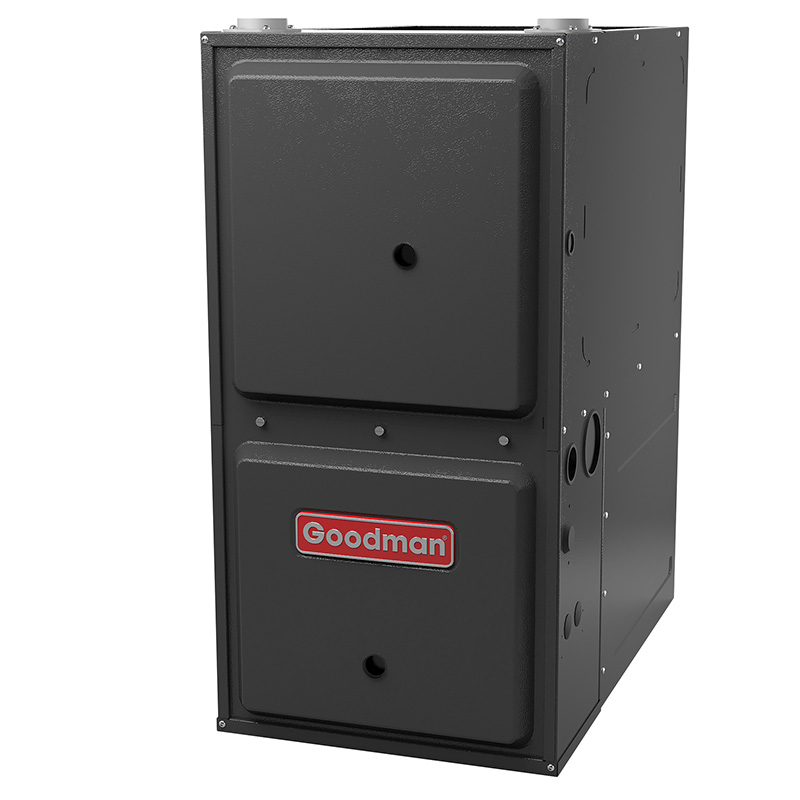
Goodman 80000 BTU Gas Furnace – 2 Stage 96% Efficient Variable Speed ECM Upflow / Horizontal | R32 (GDVT960804CN)
View on AC Direct see your lowest price →Check current price on AC Direct →
Key features
- 96% AFUE two-stage gas furnace rated at 80,000 BTU output
- Variable-speed ECM blower motor for lower electricity use and quieter operation
- Upflow and horizontal configurations supported for flexible installation
- Two-stage burner reduces short-cycling and improves temperature consistency
- High-efficiency condensing design with stainless steel secondary heat exchanger
- Compatible with Goodman matched systems using R-32 refrigerant configurations
About this system
The Goodman GDVT960804CN is an 80,000 BTU, 96% AFUE two-stage gas furnace built for upflow or horizontal installations. The 96% AFUE rating means roughly 96 cents of every dollar spent on natural gas becomes usable heat, placing this unit in the upper tier of residential furnace efficiency and potentially qualifying it for utility rebates in many states. Two-stage operation lets the burner run at a lower fire rate on milder days, which reduces short-cycling, keeps temperatures more even room to room, and puts less wear on the heat exchanger over time compared to single-stage models.
The variable-speed ECM blower motor is one of the more meaningful specs here. ECM motors use significantly less electricity than standard PSC motors and ramp up gradually rather than blasting on at full speed, which reduces cold air drafts at startup and lowers monthly operating costs. The R-32 refrigerant designation on a furnace reflects compatibility with modern refrigerant standards in matched system configurations. This unit is well suited to medium-sized homes in cold climates where high efficiency and quiet, consistent airflow are priorities, and where the homeowner wants to keep upfront cost lower than premium-brand alternatives without dropping to a single-stage or lower-efficiency unit.
As with all Goodman equipment, the quality of the installing contractor matters enormously. Proper sizing, duct sealing, and flue venting are not optional steps with a 96% condensing furnace. The acidic condensate produced by high-efficiency furnaces requires correct drain line setup, and skipping that detail is a common source of early service calls. Budget accordingly for a thorough installation rather than the lowest-bid job.
The GDVT960804CN delivers genuine 96% efficiency and a capable ECM blower at a price noticeably below comparable Trane or Carrier two-stage furnaces, making it a reasonable choice for budget-conscious buyers who can secure a skilled installer. The value proposition is real, but Goodman's track record shows repair frequency tends to rise after year seven, and the savings at purchase need to be weighed against that longer-term cost pattern. Buyers who treat installation quality as non-negotiable will get the most out of this unit.
Overall score is the average of the five ratings above.
What we like
- 96% AFUE places it among the most efficient residential furnaces available, reducing annual fuel bills meaningfully versus 80% units
- Two-stage operation cuts short-cycling and delivers more even heat distribution than single-stage alternatives
- Variable-speed ECM motor lowers blower electricity consumption and reduces startup noise
- Purchase price typically runs 15 to 25 percent below equivalent Trane, Lennox, and Carrier two-stage models
- Upflow and horizontal flexibility makes it adaptable to a wider range of mechanical room configurations
Trade-offs
- Goodman's ConsumerAffairs rating of about 2.5 out of 5 reflects a pattern of rising repair costs after roughly year seven that buyers should budget for
- A condensing furnace at 96% AFUE demands precise installation including correct flue venting and condensate drainage; errors at install often show up as early service calls
- Dual-run capacitor failures are among the most commonly reported issues across Goodman equipment, though repairs typically run in the affordable 300 to 600 dollar range
- Long-term reliability does not match premium-brand benchmarks, and homeowners who keep systems 15 or more years may find total cost of ownership narrows the gap with higher-priced competitors
What homeowners and pros say about Goodman
Homeowners who have lived with Goodman furnaces tend to split into two camps that mirror the brand’s ConsumerAffairs score of roughly 2.5 out of 5 and its Google dealer score of around 3.8 out of 5. Early in a system’s life, the most common feedback is positive and focused on price. Buyers report that getting a two-stage, variable-speed furnace at a cost significantly below Carrier or Trane felt like a genuine win, and in the first five to six years many owners report no issues worth noting. The Google dealer scores, driven largely by installation experiences, reflect that satisfaction. The ConsumerAffairs picture is harder to ignore, though. That platform draws complaints disproportionately, and the recurring theme there is that repair costs start accumulating after roughly year seven, which tracks with Goodman’s position as a value brand rather than a longevity leader.
HVAC technicians who work on Goodman equipment regularly tend to describe it as serviceable hardware that rewards a careful installation and punishes a careless one. The most documented failure mode they mention is the dual-run capacitor, which is a straightforward and relatively affordable fix but does show up often enough to be a known pattern. Technicians also flag that evaporator coil leaks appear in a meaningful share of owner histories, and that compressor lifespan on Goodman equipment tends to average in the 10 to 14 year range rather than the 15 to 20 years seen on premium brands. For a 96% AFUE two-stage furnace specifically, pros emphasize that the condensate system and flue venting have to be done correctly from day one, and that this unit, like all condensing furnaces, is less forgiving of a cut-rate installation than an 80% unit would be.
Sources: ConsumerAffairs Goodman owner reviews, AHRI Directory of Certified Product Performance, U.S. DOE appliance and equipment efficiency standards, Goodman product specification sheets.
How it compares
| Brand | Comparable model | SEER2 | Stage | Price position |
|---|---|---|---|---|
| Goodman | GDVT960804CN | N/A (furnace only) | Two-stage | Value pick |
| Carrier | Performance 96 (59TP6) | N/A (furnace only) | Two-stage | Approximately 20 to 30 percent above this Goodman |
| Trane | S9V2 (96% Variable Speed) | N/A (furnace only) | Two-stage | Approximately 25 to 35 percent above this Goodman |
| Lennox | EL296V | N/A (furnace only) | Two-stage | Approximately 20 to 30 percent above this Goodman |
Competitor rows are comparable single-stage units at similar efficiency; price is relative position, not a quote.
Questions about this system
Does this furnace require a special drain line for condensate because of the 96% efficiency rating?
Yes. A 96% AFUE condensing furnace extracts so much heat from combustion gases that water vapor condenses in the heat exchanger and must be drained. Your installer needs to run a proper condensate drain line, often with a neutralizer if local codes require it, because the condensate is mildly acidic. Skipping or improperly sizing this step is one of the most common causes of early service calls on high-efficiency furnaces.
What does two-stage operation actually mean for comfort in a typical home?
Two-stage means the burner has a low-fire setting for mild weather and a high-fire setting for very cold days. On most winter days the furnace runs longer at low fire, which keeps temperatures more even throughout the house and reduces the blasts of hot air followed by silence that single-stage furnaces produce. It also reduces wear on the heat exchanger over time compared to a unit that only runs at full capacity.
Goodman has mixed reviews online. Should I be worried about buying this furnace?
The concern is worth taking seriously but not overstating. Goodman scores around 2.5 out of 5 on ConsumerAffairs, which is a complaint-heavy channel, and around 3.8 out of 5 on Google dealer reviews where affordability is frequently praised. The pattern in complaints is that repair frequency tends to climb after roughly year seven. Budgeting for one or two service calls in the second half of the system's life is more realistic with Goodman than with premium brands.
What is the most likely repair this furnace will need, and what does it typically cost?
Across Goodman equipment, dual-run capacitor failures are the most frequently reported issue. They are also one of the less expensive repairs, typically falling in the 300 to 600 dollar range including labor. Keeping a service contract or setting aside a small repair fund is a reasonable precaution given Goodman's track record after year seven.
Can I install this furnace myself to save money on installation?
DIY installation of a 96% AFUE gas furnace is not recommended and in most jurisdictions is not legal without the proper licenses. High-efficiency condensing furnaces require correct PVC flue venting, condensate drainage, gas line work, and electrical connections, all of which affect both safety and equipment longevity. With Goodman in particular, installers frequently cite installation quality as the single biggest factor in how long the equipment lasts, so hiring an experienced, licensed HVAC contractor is one of the most important decisions you will make with this purchase.
Specifications
| Furnace output | 80000 BTU |
| Configuration | Upflow |
| Refrigerant | R-32 |
| Model | GDVT960804CN |