Goodman 100000 BTU Gas Furnace – 2 Stage 96% Efficient Variable Speed ECM Upflow / Horizontal | R32 (GDVT961005CN)
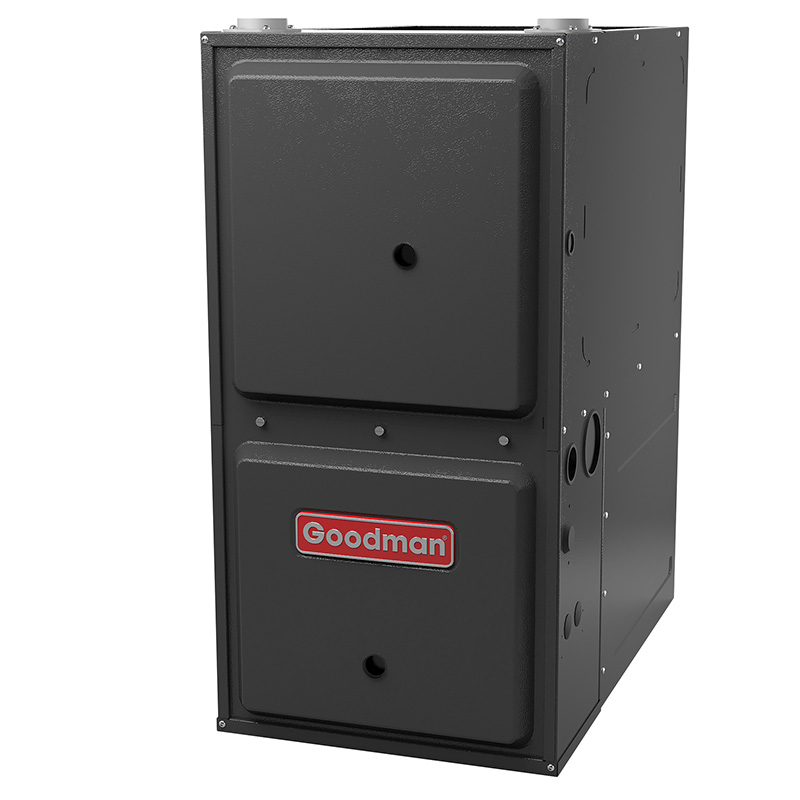
View on AC Direct see your lowest price →Check current price on AC Direct →
Key features
- 96% AFUE efficiency rating for high-efficiency gas heat
- Two-stage burner reduces fuel consumption during moderate cold
- Variable-speed ECM blower for quieter operation and even heat distribution
- Upflow and horizontal configuration flexibility for various install locations
- Compatible with R-32 refrigerant coil and cooling systems
- 100,000 BTU output suited for larger homes in cold climates
About this system
The Goodman GDVT961005CN is a 100,000 BTU, 96% AFUE two-stage gas furnace built for upflow or horizontal installations. The 96% AFUE rating means roughly 96 cents of every dollar spent on gas becomes usable heat, placing this unit in the higher efficiency tier and making it eligible for potential utility rebates in many regions. Two-stage operation lets the furnace run at a reduced capacity most of the time, cycling up to full output only on the coldest days, which smooths temperature swings and can lower fuel bills compared to a single-stage unit running at full blast and then shutting off completely.
The variable-speed ECM blower motor is arguably the most impactful component on comfort and operating cost. ECM motors ramp up and down gradually, reducing drafts and cold spots, running quietly at lower speeds during mild weather, and moving air more efficiently than a standard PSC motor. The R-32 refrigerant designation on this model refers to a system pairing specification rather than a component of the furnace itself, since furnaces do not use refrigerant. This unit is designed to pair with compatible R-32 coils and cooling equipment. At 100,000 BTU, this furnace suits larger homes in colder climates, typically in the 2,500 to 3,500 square foot range depending on insulation, ceiling height, and local design temperature.
Goodman sits in the value segment, typically priced 15 to 25 percent below comparable units from Trane, Lennox, and Carrier. That gap makes the GDVT961005CN appealing to cost-conscious buyers who want a high-efficiency, variable-speed product without paying a premium brand premium. The caveat that comes with Goodman across product lines is that installation quality matters more here than on some competing brands, and that reality should factor into how you select and vet your installing contractor.
The GDVT961005CN delivers genuinely high-efficiency, variable-speed comfort at a price point that undercuts major premium brands by a meaningful margin. The trade-off is a brand track record that shows higher repair frequency after year seven and a compressor lifespan that trails Trane, Lennox, and Carrier by several years. Buyers who prioritize upfront cost and pair this unit with a skilled installer will get solid value; buyers who want the lowest long-term ownership cost should consider whether the savings offset the reliability gap.
Overall score is the average of the five ratings above.
What we like
- 96% AFUE is among the more efficient ratings available in gas furnaces and may qualify for utility rebates
- Variable-speed ECM blower delivers noticeably quieter operation and more consistent room temperatures than single-speed alternatives
- Two-stage operation reduces short-cycling and improves humidity control during shoulder seasons
- Priced 15 to 25 percent below comparable Trane, Lennox, and Carrier models, a real and significant difference
- Upflow and horizontal flexibility makes it usable in a wider range of installation scenarios
Trade-offs
- Dual-run capacitor failures are the most commonly documented issue across Goodman equipment, typically appearing after several years of use
- Compressor lifespan averages 10 to 14 years versus 15 to 20 years reported for premium brands, meaning replacement may come sooner
- ConsumerAffairs reviews average around 2.5 out of 5, with repair cost complaints rising noticeably after approximately year seven
- A minority of owners report refrigerant-related issues within the first year, often traceable to installation or charge problems rather than the equipment itself
What homeowners and pros say about Goodman
Homeowners who choose Goodman equipment tend to land in two camps: those who are satisfied with the upfront savings and years of uneventful operation, and those who run into service costs that erode the initial price advantage. On Google dealer review pages, Goodman scores around 3.8 out of 5 across hundreds of reviews per location, with affordability consistently cited as the main driver of satisfaction. On ConsumerAffairs, the picture is rougher at approximately 2.5 out of 5, a channel that skews toward complaint-motivated reviewers, where the recurring frustration is repair bills arriving more frequently after roughly year seven of ownership. Neither score tells the whole story on its own, but together they suggest a brand that performs acceptably when conditions are favorable and struggles when they are not.
HVAC technicians who service Goodman equipment regularly point to dual-run capacitor failures as the most common call they receive on these systems, a repair that typically runs 300 to 600 dollars and is straightforward to address. More consequential are evaporator coil leaks, which appear in a meaningful share of owner reviews and can be costlier to resolve. On the compressor side, Goodman units tend to average 10 to 14 years of service life, a real gap compared to the 15 to 20 years more commonly reported for Trane, Carrier, and Lennox. Technicians are also quick to note that a minority of early refrigerant complaints trace back to installation or charging errors rather than the equipment itself, which reinforces the consistent industry observation that how a Goodman unit is installed shapes its long-term performance more than almost any other factor. For a variable-speed, two-stage, 96% AFUE furnace at a value price, the GDVT961005CN is a reasonable choice when paired with a thorough contractor selection process.
Sources: ConsumerAffairs Goodman owner reviews, AHRI Directory of Certified Product Performance, U.S. DOE appliance and equipment efficiency standards, Goodman product specification sheets.
How it compares
| Brand | Comparable model | SEER2 | Stage | Price position |
|---|---|---|---|---|
| Goodman | GDVT961005CN | N/A (furnace only) | Two-stage | Value pick |
| Carrier | Performance 96 (58TP6) | N/A (furnace only) | Two-stage | Moderately higher than Goodman |
| Trane | S9V2 (XR96) | N/A (furnace only) | Two-stage | Noticeably higher than Goodman |
| Lennox | Merit ML296V | N/A (furnace only) | Two-stage | Moderately to noticeably higher than Goodman |
Competitor rows are comparable single-stage units at similar efficiency; price is relative position, not a quote.
Questions about this system
What size home is the 100,000 BTU output appropriate for?
In a cold climate with average insulation, 100,000 BTU generally suits homes in the 2,500 to 3,500 square foot range. However, proper sizing requires a Manual J load calculation performed by your HVAC contractor, since ceiling height, insulation quality, window area, and local design temperatures all affect the correct BTU selection. Installing an oversized furnace leads to short-cycling that hurts comfort and efficiency.
What does the R-32 designation mean on a gas furnace?
R-32 on this furnace refers to the refrigerant used in the compatible coil and air conditioning equipment it is designed to pair with, not a component inside the furnace itself. Gas furnaces do not contain or use refrigerant. When pairing this furnace with a cooling system, you will need a coil and outdoor unit rated for R-32 to ensure proper system compatibility and warranty coverage.
How much should I expect to spend on repairs over the first ten years?
Dual-run capacitor replacements are the most commonly reported Goodman service call, typically costing between 300 and 600 dollars and usually resolved quickly. Beyond that, owner feedback on ConsumerAffairs indicates repair costs tend to climb noticeably after roughly year seven. Budgeting for one or two service calls in the back half of the first decade is a reasonable expectation, though a well-executed install and annual maintenance can help extend trouble-free operation.
Does the variable-speed ECM blower make a noticeable difference in comfort and noise?
Yes, in most homes the difference is audible and felt. ECM motors ramp up gradually rather than starting at full speed, which reduces the blast of air you feel when a single-speed blower kicks on. At lower speeds during mild weather the blower runs considerably quieter. The extended low-speed runtime also helps distribute heat more evenly and can improve humidity control when paired with a compatible thermostat.
What warranty does the GDVT961005CN carry, and what do I need to do to keep it valid?
Goodman typically covers this class of furnace with a limited lifetime heat exchanger warranty and a ten-year parts warranty, but registration with Goodman within a specified window after installation is required to receive the full coverage terms. Unregistered units often default to a shorter five-year parts warranty. You should also confirm that installation is performed by a licensed contractor, as improper installation can be used to dispute warranty claims.
Specifications
| Furnace output | 100000 BTU |
| Configuration | Upflow |
| Refrigerant | R-32 |
| Model | GDVT961005CN |