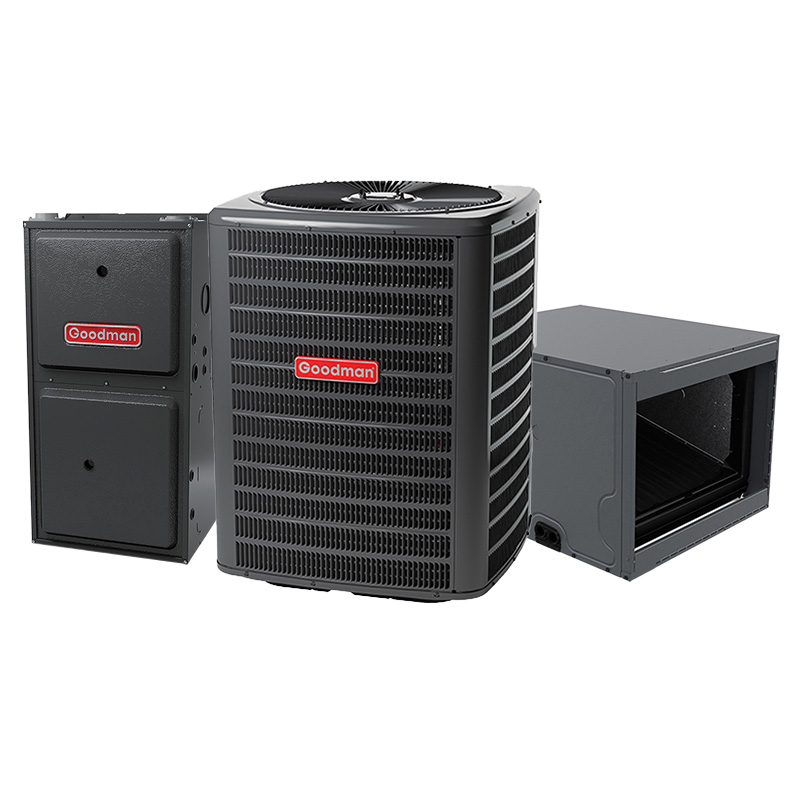
Goodman 2 Ton 14.3 SEER2 AC With 80000 BTU 96% AFUE 2-Stage Variable-Speed ECM Gas Furnace System – Horizontal | R32
View on AC Direct see your lowest price →Check current price on AC Direct →
Key features
- 14.3 SEER2 cooling efficiency meets current federal minimum standards for most U.S. regions
- 96% AFUE two-stage gas furnace reduces fuel waste and moderates temperature swings
- Variable-speed ECM blower motor lowers electricity use and reduces indoor noise at partial load
- Horizontal configuration designed for attic and crawl-space installations where vertical units cannot fit
- R-32 refrigerant has a lower global-warming potential than the R-410A it replaces
- Goodman pricing typically runs 15 to 25 percent below comparable Trane, Lennox, and Carrier systems
About this system
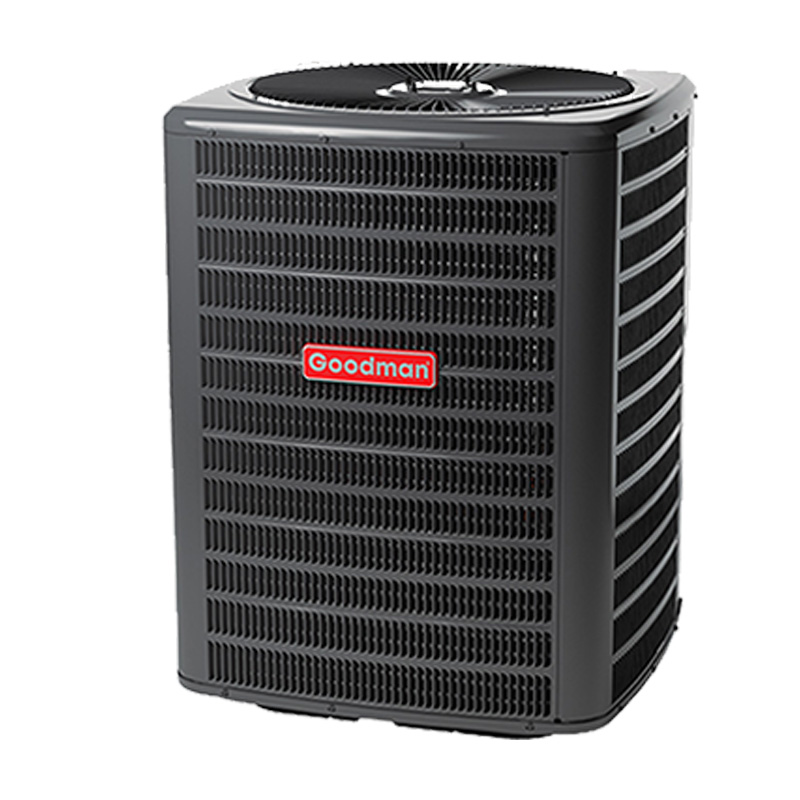
This Goodman package pairs a 2-ton, 14.3 SEER2 air conditioner with an 80,000 BTU, 96% AFUE two-stage gas furnace in a horizontal configuration, making it a practical choice for crawl-space or attic installations where vertical units simply will not fit. The R-32 refrigerant charge is a step toward lower global-warming-potential equipment now appearing in newer residential systems. At 2 tons, this system is sized for roughly 900 to 1,200 square feet under typical load assumptions, though a proper Manual J calculation by your installer is the only reliable way to confirm sizing for your home.
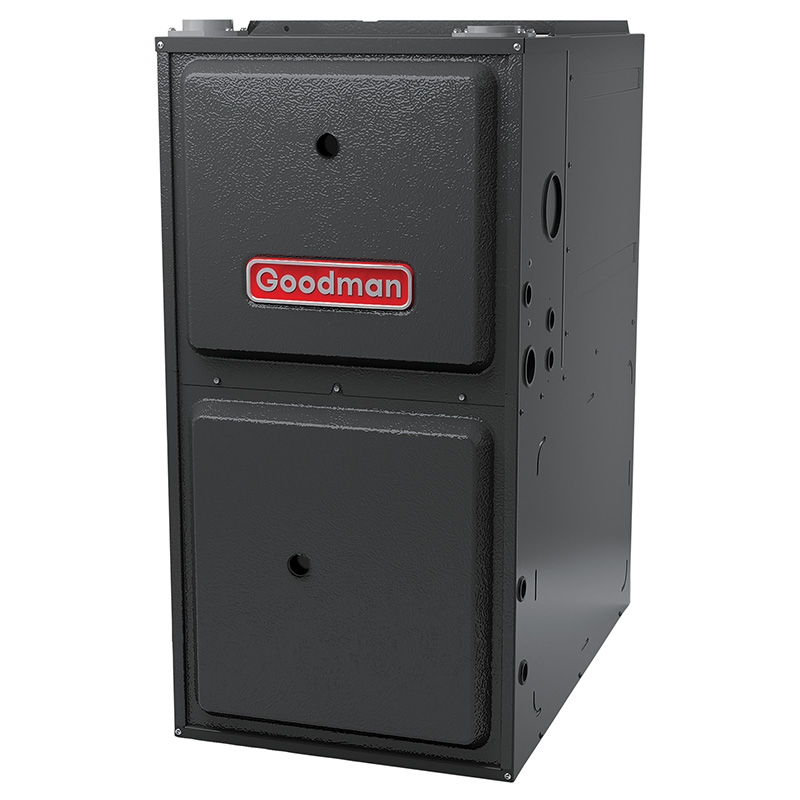
The 96% AFUE rating means nearly all of the gas burned becomes usable heat, placing this furnace in the high-efficiency tier and qualifying it for rebates in many utility territories. The two-stage gas valve and variable-speed ECM blower motor add meaningful comfort over single-stage equipment: the furnace runs at low fire most of the time, cycling less frequently, maintaining steadier temperatures, and running the blower quietly at lower speeds to improve air circulation and filtration. These are genuine upgrades over base-level bundles, and they come in a value-brand package priced well below comparable two-stage systems from Trane, Lennox, or Carrier.
This system delivers a genuinely capable two-stage, high-efficiency heating and cooling combination at a price point that undercuts most name-brand alternatives by a noticeable margin. The trade-off is a brand track record that shows more long-term repair frequency than premium competitors, and a horizontal configuration that demands experienced installation to perform reliably. Buyers who prioritize upfront cost savings and plan to budget for maintenance will find real value here; those expecting set-it-and-forget-it ownership over 15-plus years should weigh the options carefully.
Overall score is the average of the five ratings above.
What we like
- Two-stage operation and variable-speed ECM blower provide comfort noticeably better than single-stage budget systems
- 96% AFUE places the furnace in the high-efficiency tier, often qualifying for utility rebates
- R-32 refrigerant is lower in global-warming potential than the R-410A used in older inventory
- Horizontal configuration fills a real installation need where vertical units are not an option
- Goodman pricing runs 15 to 25 percent below comparable Trane, Lennox, and Carrier equipment
Trade-offs
- Dual-run capacitors are the most commonly reported failure point; budget 300 to 600 dollars for that eventual repair
- Evaporator coil leaks appear with enough frequency in owner reviews to be a meaningful concern over time
- Compressor lifespan averages 10 to 14 years versus 15 to 20 years seen in premium-brand equipment
- A minority of owners report refrigerant leaks within the first year, most often tied to install or initial charge issues rather than the equipment itself
What homeowners and pros say about Goodman
Homeowners who bought Goodman equipment cite affordability as the clearest reason they chose the brand, and dealer Google reviews bear that out at around 3.8 out of 5 across hundreds of location-level ratings. The satisfaction picture gets more complicated over time: on ConsumerAffairs, where the rating sits near 2.5 out of 5, the most consistent theme is repair costs that begin accumulating after roughly year 7. The specific failure modes that show up repeatedly are not random. Dual-run capacitor failures are the single most common complaint and are generally an inexpensive fix, usually in the 300 to 600 dollar range, but they do happen. Evaporator coil leaks appear in a meaningful share of longer-term owner accounts, and compressor longevity tends to clock in at 10 to 14 years rather than the 15 to 20 years owners of Trane or Carrier equipment report more often.
HVAC technicians who work on Goodman equipment regularly tend to hold a pragmatic view: the equipment is what the price suggests, and installation quality is the variable that separates a system that runs well for a decade from one that generates callbacks in the first two years. A minority of owners report refrigerant leaks within the first year, and technicians attribute most of those to charge or connection issues at install rather than factory defects. For this particular horizontal configuration, proper condensate slope, line set support, and a thorough leak check at startup are not optional steps. Buyers who go in with clear eyes about the brand tier, choose a careful installer, and keep a modest repair budget in mind tend to report reasonable satisfaction. Those expecting the ownership profile of a premium brand at a value price are the ones most likely to be disappointed.
Sources: ConsumerAffairs Goodman owner reviews, AHRI Directory of Certified Product Performance, U.S. DOE appliance and equipment efficiency standards, Goodman product specification sheets.
What it costs to run
At 14.3 SEER2, cooling this 2-ton system for a typical 1200-hour cooling season at the U.S. average electricity rate of $0.17/kWh works out to roughly $342 per year in cooling, about $23 less per year than a minimum-efficiency 13.4 SEER2 unit of the same size. Your real cost depends on your climate and local rate.
Method: (24,000 BTU/hr ÷ 14.3 SEER2) × 1200 hours ÷ 1000 × $0.17/kWh. Rate source: U.S. EIA average; cooling hours: moderate-climate estimate.
How it compares
| Brand | Comparable model | SEER2 | Stage | Price position |
|---|---|---|---|---|
| Goodman | 2T 14.3 SEER2 AC / 96% AFUE 2-Stage ECM Furnace Horizontal R-32 | 14.3 | Two-stage | Value pick |
| Carrier | Performance 15 / 58CVA Two-Stage Furnace Bundle | 15 | Two-stage | Roughly 20 to 25 percent higher than this Goodman system |
| Trane | XR15 / S9X2 Two-Stage Furnace Bundle | 15 | Two-stage | Roughly 20 to 30 percent higher than this Goodman system |
| Lennox | Merit 14ACX / ML196E Two-Stage Furnace Bundle | 14.3 | Two-stage | Roughly 15 to 25 percent higher than this Goodman system |
Competitor rows are comparable single-stage units at similar efficiency; price is relative position, not a quote.
Questions about this system
Is 14.3 SEER2 going to qualify for any tax credits or utility rebates?
The federal 25C tax credit for central air conditioning requires a minimum of 16 SEER2, so this unit does not qualify on its own. However, the 96% AFUE furnace may qualify separately under the heating equipment category, and many utility companies offer rebates for high-efficiency furnaces regardless of the AC rating. Check the DSIRE database and your utility's website for programs in your area.
Why does horizontal configuration matter, and what should I ask my installer about it?
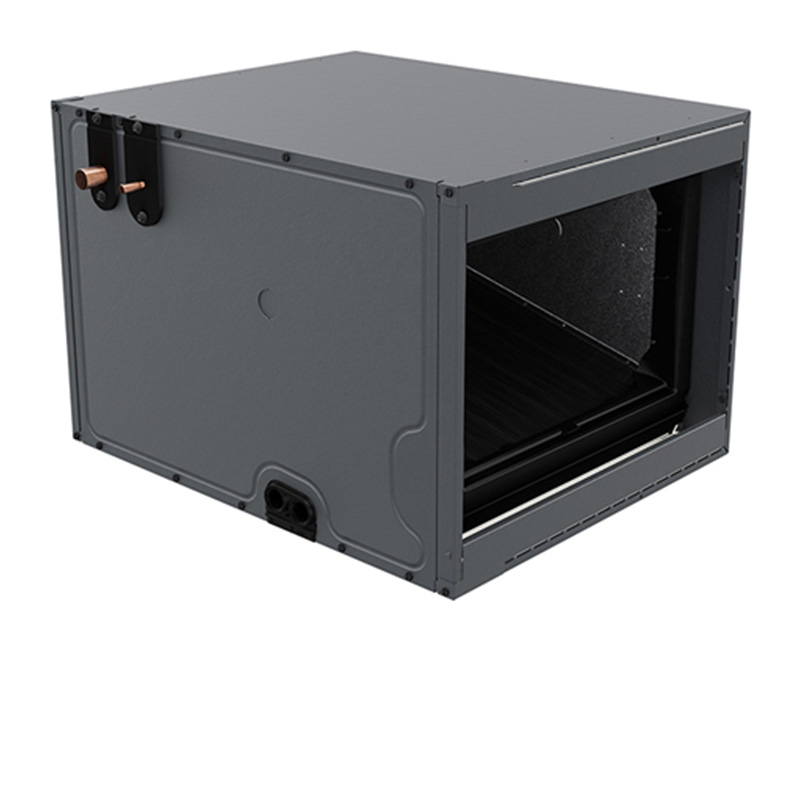
Horizontal units are built to lie on their side, which is required in attic platforms, crawl spaces, and some closet configurations where a vertical unit physically cannot stand upright. Ask your installer specifically about condensate drainage slope, refrigerant line support, and clearance for service access, because improper horizontal setup is one of the more common sources of early problems on these installs.
What is R-32 refrigerant and do I need to do anything differently because of it?
R-32 is a single-component refrigerant with a global-warming potential roughly two-thirds lower than R-410A. It operates at similar pressures to R-410A, but it is mildly flammable, classified A2L, so your installer must be certified to handle it and should use appropriate equipment. As an owner, there is nothing different you need to do day to day.
The ConsumerAffairs rating for Goodman is around 2.5 out of 5. Should that worry me?
ConsumerAffairs skews toward complaint-driven submissions, so a 2.5 there reflects the experience of owners who had problems, not a representative sample of all owners. The more meaningful signals are the recurring themes: repair costs climbing after roughly year 7, capacitor failures, and coil leaks. Taking those seriously as planning inputs rather than reasons to walk away entirely is the balanced read.
Two-stage versus single-stage furnace: is the upgrade worth it on a value-brand unit?
Yes, in most cases. Two-stage operation means the furnace runs at low fire the majority of the time, which reduces temperature swings, lowers cycling noise, and can cut fuel use compared to a single-stage unit that runs full blast or not at all. Combined with the variable-speed ECM blower, the comfort difference over a base single-stage bundle is real and measurable, even if the brand itself sits at the value end of the market.
Specifications
| Cooling capacity | 2 Ton |
| Efficiency | 14.3 SEER2 |
| Furnace output | 80000 BTU |
| Furnace efficiency | 96% AFUE |
| Configuration | Horizontal |
| Refrigerant | R-32 |