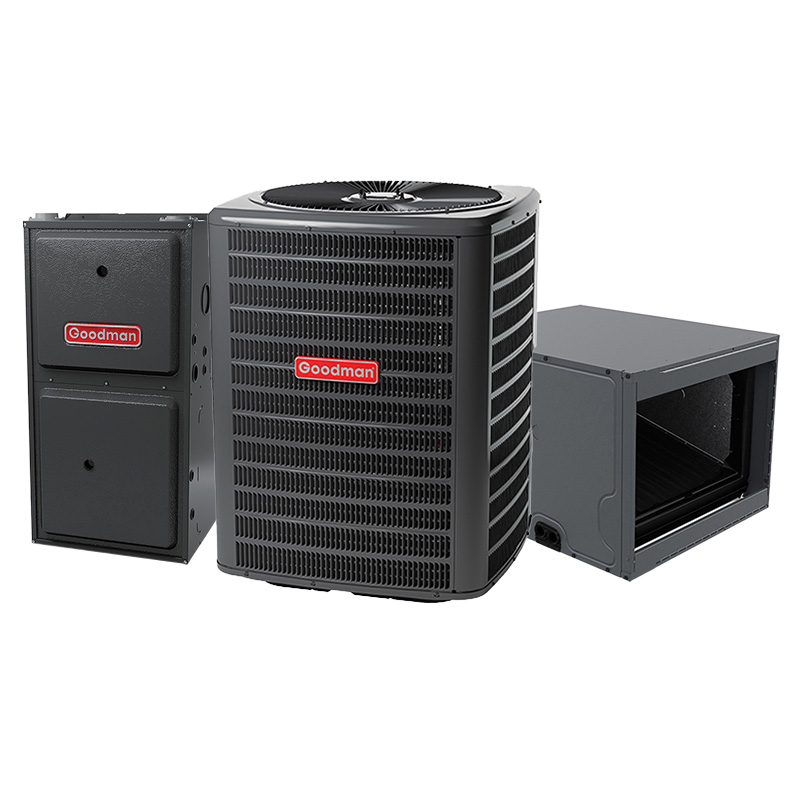
Goodman 2 Ton 14 SEER2 AC With 60000 BTU 96% AFUE 2-Stage Variable-Speed ECM Gas Furnace System – Horizontal | R32
View on AC Direct see your lowest price →Check current price on AC Direct →
Key features
- 2-ton cooling capacity suited to smaller homes or individual zones up to roughly 900 to 1,200 sq ft depending on climate and insulation
- 14 SEER2 cooling efficiency meets federal minimums for most U.S. regions without a premium price penalty
- 96% AFUE two-stage gas furnace reduces fuel waste and limits short-cycling on mild heating days
- Variable-speed ECM blower motor lowers blower electricity use and improves temperature and humidity consistency
- Horizontal configuration designed for attic, crawlspace, or side-discharge applications where vertical install is not practical
- R-32 refrigerant charge offers lower global warming potential compared to R-410A systems
About this system
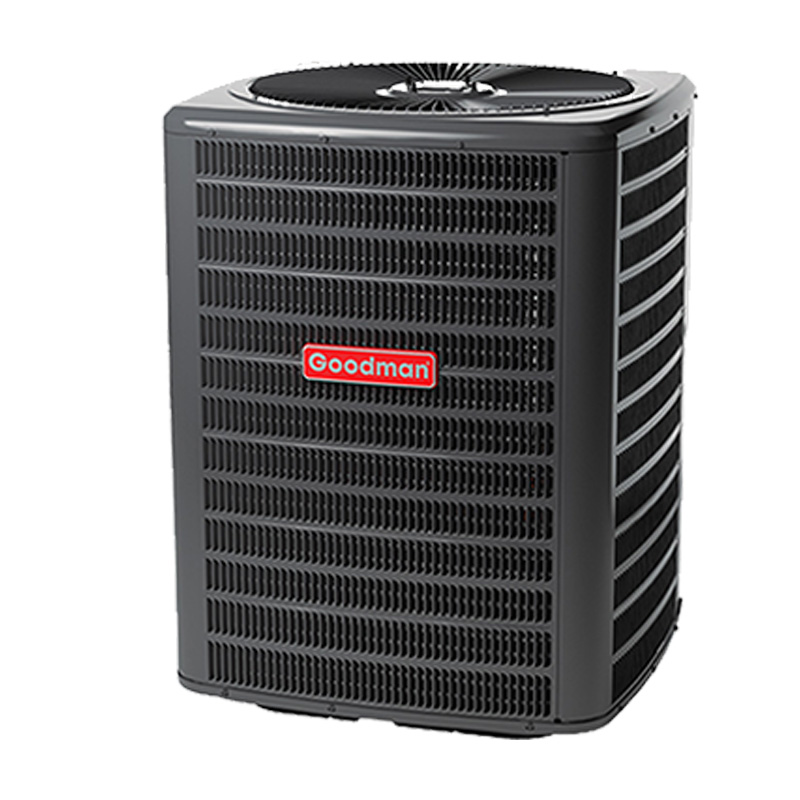
This Goodman system pairs a 2-ton, 14 SEER2 air conditioner with a 60,000 BTU, 96% AFUE two-stage gas furnace in a horizontal configuration, making it a practical choice for homes where the air handler must be mounted on its side, such as in a crawlspace or attic with limited vertical clearance. The R-32 refrigerant charge is a forward-looking detail: R-32 has a lower global warming potential than the older R-410A it replaces, and it operates at slightly higher efficiency. At 14 SEER2, this unit clears the federal minimum thresholds for most regions without reaching the premium efficiency tier, which keeps the upfront cost reasonable for a straightforward replacement or new construction project in a mild to moderate climate.
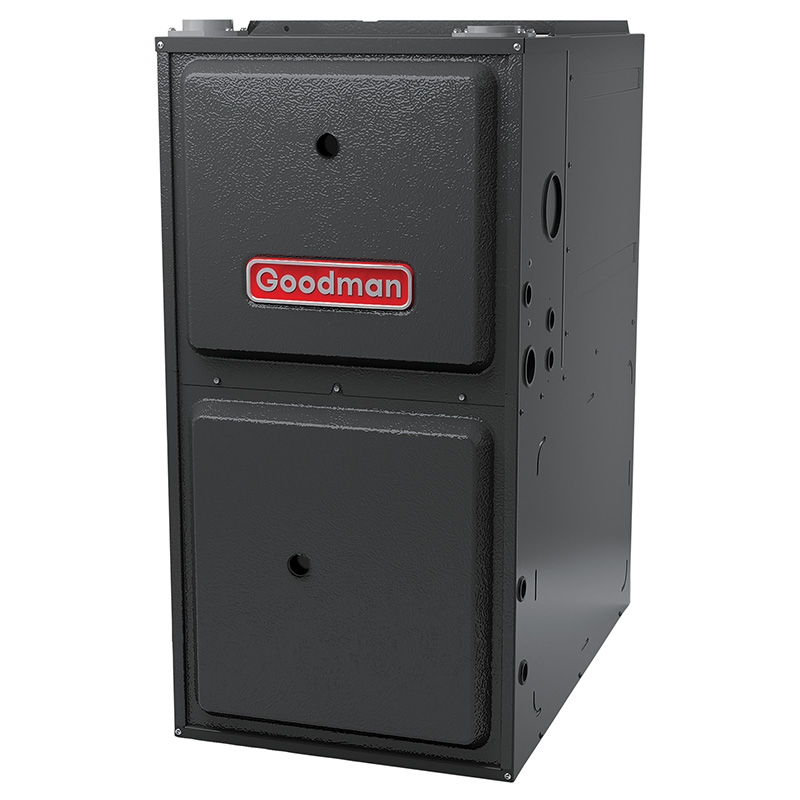
The furnace side is where this system earns its keep. A 96% AFUE rating means 96 cents of every dollar spent on gas becomes usable heat, which is solidly in the high-efficiency category. The two-stage gas valve lets the furnace run at a lower capacity on milder days, reducing short-cycling and improving humidity control versus a single-stage unit. The variable-speed ECM blower motor complements that by running continuously at lower speeds to maintain even temperatures and filter air more consistently, while consuming significantly less electricity than a standard PSC motor. Together these features make the system noticeably more comfortable than a basic single-stage setup, even if the cooling SEER2 is not class-leading.
This Goodman system delivers a genuinely capable heating side with a high-efficiency two-stage furnace and ECM motor, bundled at a price point that undercuts comparable Carrier, Trane, and Lennox configurations by a meaningful margin. The 14 SEER2 cooling efficiency is adequate rather than impressive, and Goodman's real-world longevity sits below premium brands, so buyers are essentially trading some long-term durability and peace of mind for a lower entry cost. The value proposition holds up best when a qualified installer handles the setup carefully and the owner plans to stay in the home for 10 to 12 years rather than the full 20.
Overall score is the average of the five ratings above.
What we like
- 96% AFUE furnace provides genuine fuel savings over the heating season compared to 80% AFUE units
- Two-stage operation and variable-speed ECM motor improve comfort and reduce temperature swings noticeably versus single-stage systems
- R-32 refrigerant is a modern, lower-impact choice that aligns with direction the industry is heading
- Horizontal configuration availability solves real installation constraints in attics and crawlspaces where alternatives are limited
- Purchase price typically runs 15 to 25 percent below comparable Carrier, Trane, or Lennox systems, reducing upfront outlay
Trade-offs
- 14 SEER2 is the lower end of the current efficiency range; homeowners in hot climates or those expecting significant cooling bills may want a higher SEER2 rating
- Compressor lifespan averages roughly 10 to 14 years based on owner reports, shorter than the 15 to 20 years cited for premium-brand compressors
- Dual-run capacitor failures and evaporator coil leaks are documented recurring issues that can add unexpected repair costs, particularly after year 7
- A minority of owners have reported refrigerant leaks in the first year, which points to sensitivity to install quality and charge accuracy
What homeowners and pros say about Goodman
Homeowners who have shopped this category closely tend to arrive at Goodman for one clear reason: the price gap versus Carrier, Trane, and Lennox is real and substantial. Google dealer reviews across Goodman-selling locations average around 3.8 out of 5, and affordability is the note that comes up most consistently in positive feedback. The high-efficiency furnace side of this system draws particular appreciation from owners coming off an older 80% AFUE unit, where the monthly gas bill difference is tangible from the first heating season. ConsumerAffairs tells a more cautious story, with Goodman sitting at roughly 2.5 out of 5 on that platform, though that score reflects a channel where dissatisfied owners are strongly overrepresented. The recurring theme in those negative reviews is repair costs accelerating after roughly year 7, which lines up with the documented failure modes: dual-run capacitor replacements are the most common call-out and are generally a modest expense, while evaporator coil leaks and compressor wear are the more serious concerns that show up as the system ages.
HVAC technicians are generally measured about Goodman rather than enthusiastic or dismissive. The consensus among experienced installers is that a Goodman system installed carefully, with correct refrigerant charge and airflow, will perform reliably through its expected service life, but that its tolerance for a sloppy install is lower than premium brands. The compressor lifespan question is the honest trade-off professionals raise most often: averaging 10 to 14 years versus the 15 to 20 years associated with top-tier brands means a longer-term homeowner may face a compressor replacement that a Carrier or Trane owner might avoid. For a buyer replacing an aging system with a realistic 10 to 12 year horizon, the math on Goodman often still works out favorably when the upfront savings are factored in alongside a service agreement that covers the known wear points.
Sources: ConsumerAffairs Goodman owner reviews, AHRI Directory of Certified Product Performance, U.S. DOE appliance and equipment efficiency standards, Goodman product specification sheets.
What it costs to run
At 14 SEER2, cooling this 2-ton system for a typical 1200-hour cooling season at the U.S. average electricity rate of $0.17/kWh works out to roughly $350 per year in cooling, about $15 less per year than a minimum-efficiency 13.4 SEER2 unit of the same size. Your real cost depends on your climate and local rate.
Method: (24,000 BTU/hr ÷ 14 SEER2) × 1200 hours ÷ 1000 × $0.17/kWh. Rate source: U.S. EIA average; cooling hours: moderate-climate estimate.
How it compares
| Brand | Comparable model | SEER2 | Stage | Price position |
|---|---|---|---|---|
| Goodman | 2 Ton 14 SEER2 with 96% AFUE 2-Stage ECM Furnace (Horizontal, R-32) | 14 | Two-stage cooling / two-stage heating | Value pick |
| Carrier | Comfort 24ACC4 with 58MVC Variable-Speed Furnace | 14-15 | Single-stage cooling / two-stage heating | Typically 20 to 30 percent more than this Goodman system |
| Trane | XR14c with S9V2 Two-Stage Variable-Speed Furnace | 14-15 | Single-stage cooling / two-stage heating | Typically 20 to 30 percent more than this Goodman system |
| Lennox | Merit ML14XC1 with SL280V Variable-Speed Furnace | 14-15 | Single-stage cooling / two-stage heating | Typically 25 to 35 percent more than this Goodman system |
Competitor rows are comparable single-stage units at similar efficiency; price is relative position, not a quote.
Questions about this system
Is 14 SEER2 efficient enough, or should I pay more for a higher rating?
14 SEER2 meets current federal minimums and is a reasonable choice in moderate climates or for homeowners who prioritize lower upfront cost. In climates with long, hot summers, stepping up to a 16 or higher SEER2 unit often pays back the price difference in energy savings within 5 to 8 years, so the decision depends on your local cooling season length and electricity rates.
How important is installer quality with a Goodman system specifically?
Very important. Technicians consistently note that Goodman's real-world performance and longevity depend more on installation quality than for some premium brands, which have tighter factory tolerances and more margin for imperfect installs. Proper refrigerant charge and airflow setup are especially critical: the minority of first-year refrigerant leak complaints are almost always traced back to the installation rather than a factory defect.
What is the most likely repair I should budget for over the life of this system?
Dual-run capacitor failure is the most frequently reported issue, and it is also one of the cheaper fixes, typically in the 300 to 600 dollar range with a service call. Evaporator coil leaks are the more costly concern to watch for, particularly in the 7-to-12-year window that ConsumerAffairs reviewers most commonly describe repair costs climbing.
Why does this system use R-32 refrigerant, and does that affect service costs?
R-32 is being adopted across the industry as a replacement for R-410A because it has a significantly lower global warming potential and slightly better thermodynamic properties. Service costs should be comparable to R-410A work as the refrigerant becomes more common, but you should confirm your servicing technician carries R-32 and has equipment certified to handle it before scheduling any future work.
What does the horizontal configuration actually mean, and is it harder to service?
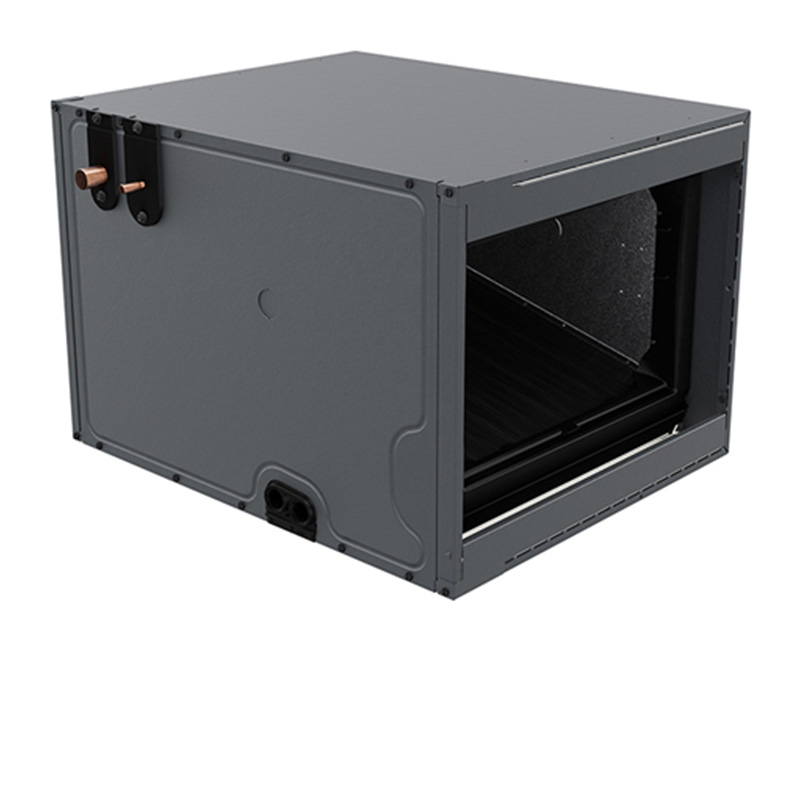
Horizontal means the air handler is designed to lie on its side, discharging air horizontally rather than vertically, which is required in attic platforms and some crawlspace installs where there is not enough headroom for an upright unit. Servicing a horizontal unit is generally not more complex once it is properly installed, though access in tight attic or crawlspace locations can make routine maintenance like filter changes more physically awkward.
Specifications
| Cooling capacity | 2 Ton |
| Efficiency | 14 SEER2 |
| Furnace output | 60000 BTU |
| Furnace efficiency | 96% AFUE |
| Configuration | Horizontal |
| Refrigerant | R-32 |