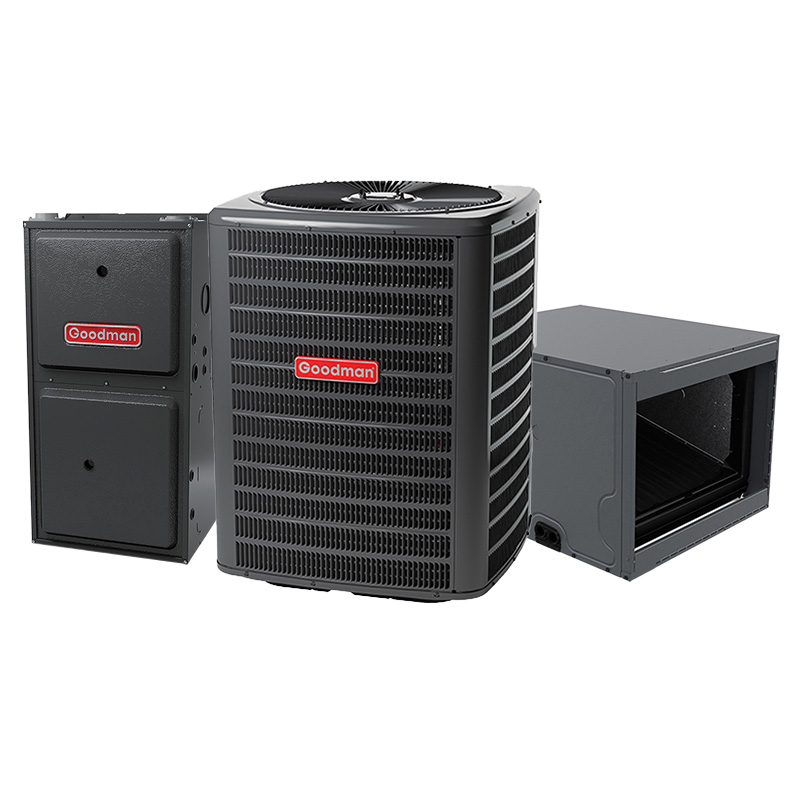
Goodman 3.5 Ton 13.4 SEER2 AC With 100000 BTU 96% AFUE 2-Stage Variable-Speed ECM Gas Furnace System – Horizontal | R32
View on AC Direct see your lowest price →Check current price on AC Direct →
Key features
- 3.5-ton cooling capacity with 13.4 SEER2 efficiency rating
- 100,000 BTU two-stage gas furnace at 96% AFUE
- Variable-speed ECM blower motor for quieter, more even airflow
- Horizontal configuration for attic, crawlspace, or side-mount installs
- R-32 refrigerant with lower global-warming potential than R-410A
- Two-stage heating reduces short-cycling and improves humidity control
About this system
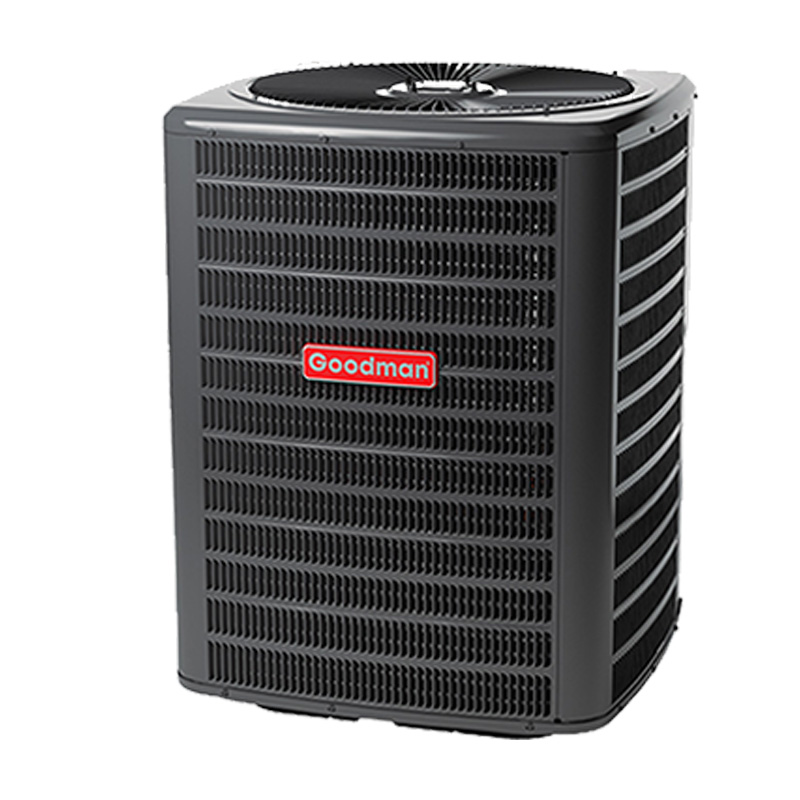
This Goodman bundle pairs a 3.5-ton, 13.4 SEER2 central air conditioner with a 100,000 BTU, 96% AFUE two-stage gas furnace in a horizontal configuration, making it specifically aimed at homes where equipment sits on its side in a crawlspace, attic, or utility chase rather than upright in a closet or basement. The R-32 refrigerant charge is a meaningful forward-looking detail: R-32 has a lower global-warming potential than the outgoing R-410A and is increasingly the industry standard, so future service calls and refrigerant top-offs should remain straightforward for years to come. The horizontal orientation does narrow the installer pool slightly, since not every residential technician works with horizontal coil setups routinely.
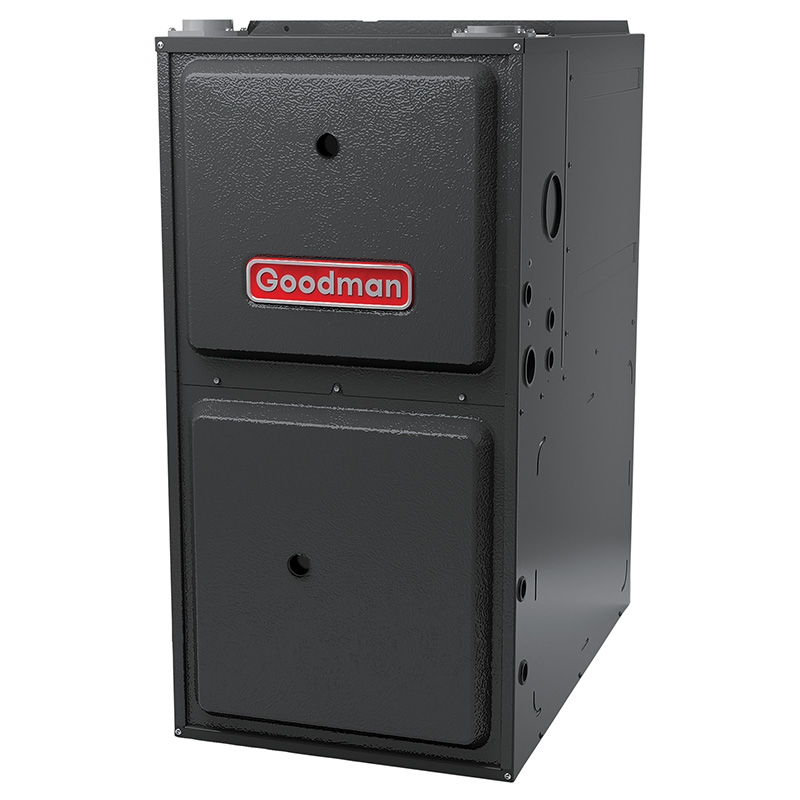
The furnace side carries two real strengths: 96% AFUE puts it at the top tier of gas efficiency, meaning very little heat goes up the flue, and the two-stage burner combined with a variable-speed ECM blower means the system can run at a lower capacity on mild days rather than cycling hard on and off. That translates to more even temperatures room to room, quieter operation at low stage, and lower humidity on humid summer nights when the AC runs long, slow cycles. At 3.5 tons the system is sized for roughly 1,600 to 2,200 square feet of well-insulated living space, though actual sizing must come from a Manual J load calculation by your installer, not a square-footage rule of thumb.
This Goodman bundle delivers genuinely strong furnace efficiency and a future-ready refrigerant at a price point well below comparable Carrier, Trane, or Lennox systems. The trade-off is a brand track record that shows elevated repair frequency after year seven and compressor longevity that typically falls short of premium competitors. Buyers who use a skilled installer and stay current on maintenance will get solid value; buyers who cut corners on installation are more likely to encounter the issues that drive Goodman's lower owner satisfaction scores.
Overall score is the average of the five ratings above.
What we like
- 96% AFUE furnace is top-tier gas efficiency, reducing monthly heating costs noticeably
- Two-stage burner plus variable-speed ECM blower improves comfort and reduces temperature swings
- R-32 refrigerant is the emerging industry standard, easing future service
- Priced roughly 15 to 25 percent below comparable Carrier, Trane, and Lennox systems
- Horizontal configuration ships ready for the specific install orientation, reducing field fabrication
Trade-offs
- Dual-run capacitors are the most common reported failure point, typically surfacing in years three through seven
- Evaporator coil leaks appear in a notable share of owner reviews and can be costly to address
- Compressor lifespan averages 10 to 14 years versus 15 to 20 years for premium-brand compressors
- A minority of owners report refrigerant leaks within the first year, usually tied to installation quality
What homeowners and pros say about Goodman
Homeowners who research Goodman before buying quickly find a split picture. On ConsumerAffairs, the brand sits at roughly 2.5 out of 5 stars, driven largely by owners who report that repair costs begin climbing noticeably after around year seven of ownership. The failure modes that come up most often are dual-run capacitor failures, which are relatively low-cost repairs in the 300 to 600 dollar range but frustrating when they happen repeatedly, and evaporator coil leaks, which tend to be more expensive to address. A smaller group of owners report refrigerant leaks within the first year, and experienced technicians point to installation quality as the most likely cause in those cases rather than a product defect. Google dealer reviews paint a more moderate picture at around 3.8 out of 5, where the most common praise centers on the lower purchase price compared to Carrier, Trane, and Lennox equipment.
HVAC technicians tend to have a pragmatic view of Goodman. Most acknowledge that the brand delivers competitive specs on paper, particularly on furnace efficiency, and that the price gap versus premium brands is real and substantial. The recurring professional caution is that Goodman’s outcome variance is wider than that of premium brands: a well-installed system maintained by a good technician can run reliably for a decade or more, while a rushed install or neglected maintenance accelerates the known weak points. Compressor longevity averaging 10 to 14 years versus the 15 to 20 years typical of premium-brand compressors is the trade-off technicians mention most when comparing total cost of ownership rather than just upfront price. For a horizontal-mount application where budget is a genuine constraint, this specific bundle is a reasonable choice provided the installer has horizontal coil experience and the warranty is registered promptly after installation.
Sources: ConsumerAffairs Goodman owner reviews, AHRI Directory of Certified Product Performance, U.S. DOE appliance and equipment efficiency standards, Goodman product specification sheets.
What it costs to run
At 13.4 SEER2, cooling this 3.5-ton system for a typical 1200-hour cooling season at the U.S. average electricity rate of $0.17/kWh works out to roughly $639 per year in cooling, about $0 less per year than a minimum-efficiency 13.4 SEER2 unit of the same size. Your real cost depends on your climate and local rate.
Method: (42,000 BTU/hr ÷ 13.4 SEER2) × 1200 hours ÷ 1000 × $0.17/kWh. Rate source: U.S. EIA average; cooling hours: moderate-climate estimate.
How it compares
| Brand | Comparable model | SEER2 | Stage | Price position |
|---|---|---|---|---|
| Goodman | This system (3.5T 13.4 SEER2 / 96% AFUE 2-Stage ECM Horizontal R-32) | 13.4 | Two-stage | Value pick |
| Carrier | Performance Series 24ACC636 with 59TP6 Two-Stage Furnace | 13.4 | Two-stage | Approximately 15 to 20 percent higher than this Goodman bundle |
| Trane | XR14 with S9V2 Variable-Speed Furnace | 13.8 | Two-stage / variable-speed | Approximately 20 to 25 percent higher than this Goodman bundle |
| Lennox | Merit ML14XC1 with ML196E Two-Stage Furnace | 13.4 | Two-stage | Approximately 20 percent higher than this Goodman bundle |
Competitor rows are comparable single-stage units at similar efficiency; price is relative position, not a quote.
Questions about this system
Why is this system specifically labeled horizontal, and does that limit where I can install it?
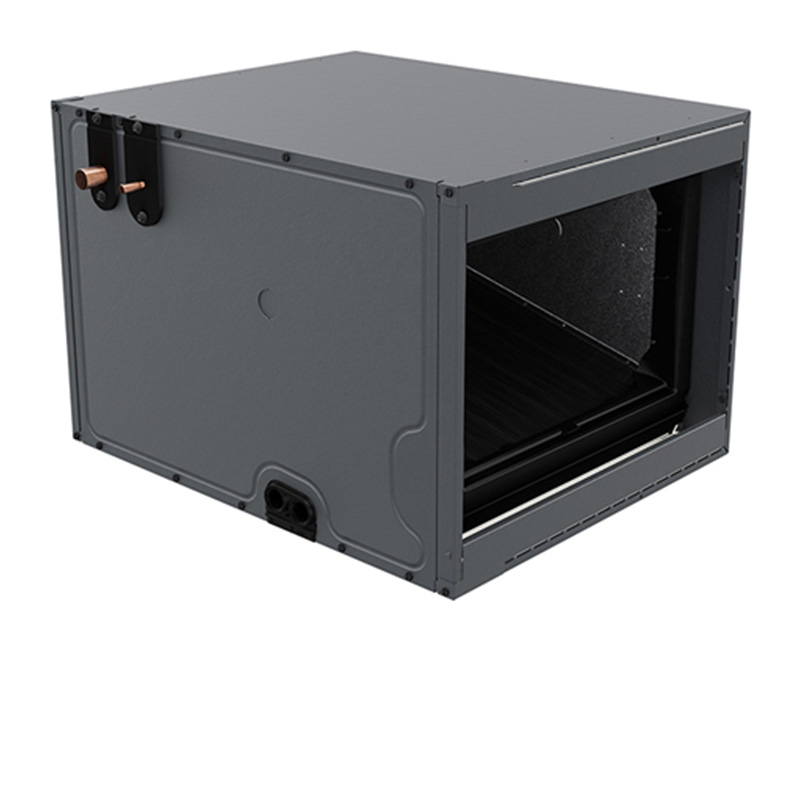
Horizontal means the air handler and coil are designed to sit on their side, which is required for attic platforms, crawlspace installations, and some utility chases where vertical clearance is not available. You cannot simply tip a standard upright unit on its side, so this configuration is intentional and necessary for those spaces. If your home has a vertical closet or basement installation, you would need the upright version of this bundle instead.
What does R-32 refrigerant mean for me as a homeowner?
R-32 is gradually replacing R-410A across the industry because it has a lower environmental impact and is more efficient to use in modern systems. For you, it means service technicians working on your system a decade from now should still be able to source refrigerant without the supply headaches that older refrigerants face. The main practical note is that R-32 is mildly flammable, so charging and service must be done by an EPA-certified technician, which is already the legal standard.
How much of a real-world difference does the two-stage furnace make compared to a single-stage?
On most days the furnace runs at its lower stage, which means quieter operation, longer run cycles that distribute heat more evenly, and less temperature overshoot. Single-stage furnaces fire at full capacity every cycle, which can create warm and cool spots and more frequent on-off cycling. The difference is most noticeable in shoulder seasons like late fall and early spring when heat demand is moderate.
Goodman has mixed reviews online. Should I be worried about long-term reliability?
The concerns are real but worth putting in context. Goodman scores around 2.5 out of 5 on ConsumerAffairs, a channel that skews toward people with complaints, with recurring mentions of rising repair costs after roughly year seven. Google dealer reviews average around 3.8 out of 5, where affordability is the most cited positive. The documented weak points are dual-run capacitor failures (a relatively inexpensive fix in the 300 to 600 dollar range), evaporator coil leaks, and compressor lifespans that average 10 to 14 years rather than the 15 to 20 years seen in premium brands. A quality installation and regular maintenance reduce but do not eliminate these risks.
What warranty comes with this Goodman system, and are there conditions I need to meet?
Goodman typically covers parts for 10 years on registered units, with the compressor often carrying a separate extended coverage period depending on the specific model registered. Registration must generally be completed within a set window after installation, and the work must be performed by a licensed HVAC contractor to keep the warranty valid. Read the warranty certificate that ships with the unit carefully, because labor is not covered, meaning a covered parts repair can still carry a significant service bill.
Specifications
| Cooling capacity | 3.5 Ton |
| Efficiency | 13.4 SEER2 |
| Furnace output | 100000 BTU |
| Furnace efficiency | 96% AFUE |
| Configuration | Horizontal |
| Refrigerant | R-32 |