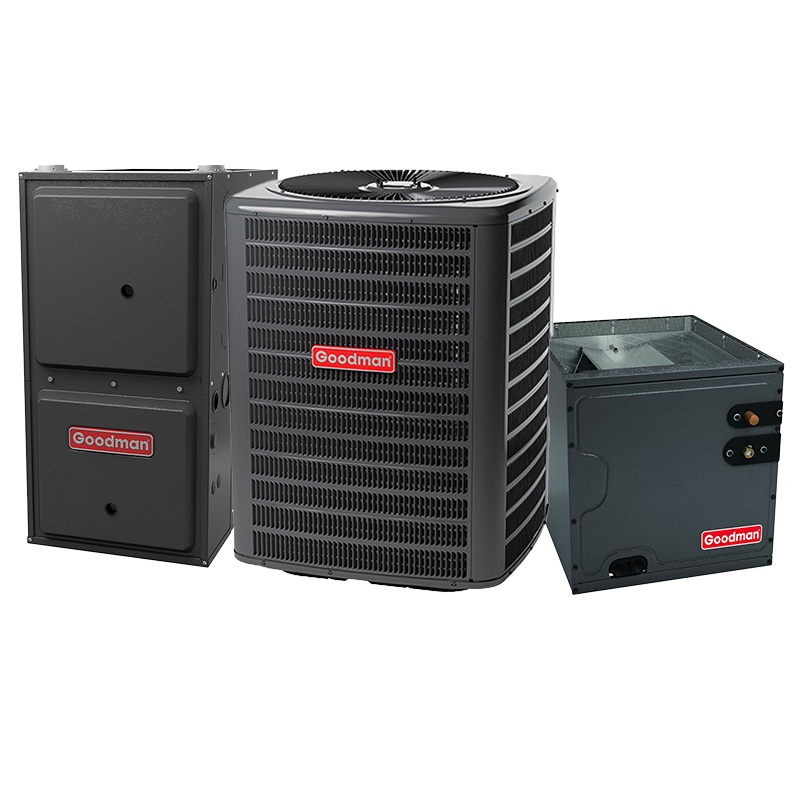
Goodman 3 Ton 14.5 SEER2 AC With 80000 BTU 96% AFUE 2-Stage Variable-Speed ECM Gas Furnace System – Downflow | R32
View on AC Direct see your lowest price →Check current price on AC Direct →
Key features
- 3-ton cooling capacity with 14.5 SEER2 efficiency rating
- 80,000 BTU two-stage gas furnace at 96% AFUE
- Variable-speed ECM blower motor for quieter, steadier airflow
- Downflow configuration for closet, utility room, or attic installs
- R-32 refrigerant with lower global-warming potential than R-410A
- Condensing furnace requires PVC flue and condensate drain
About this system
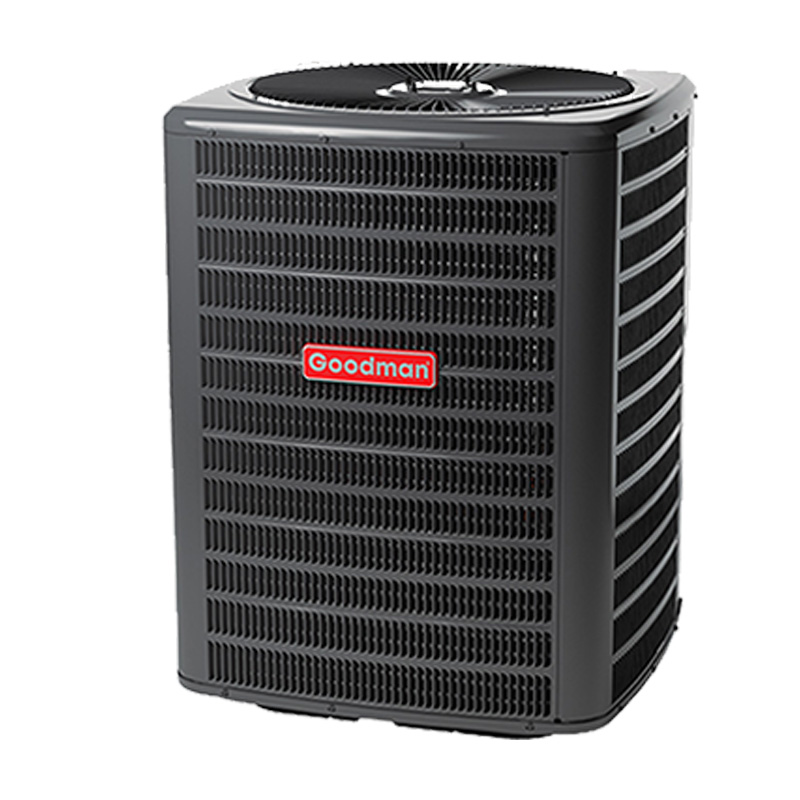
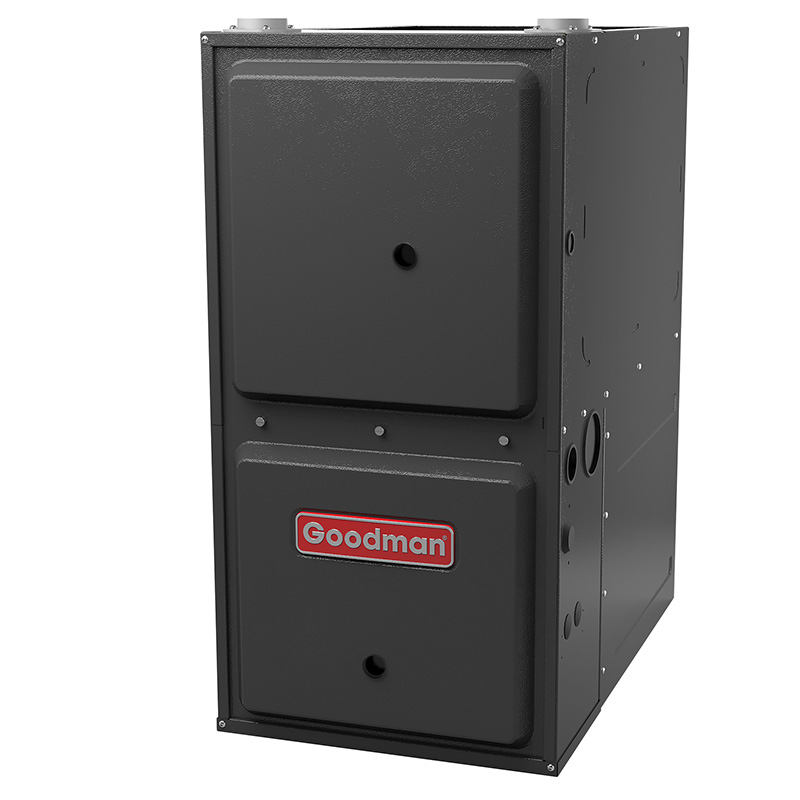
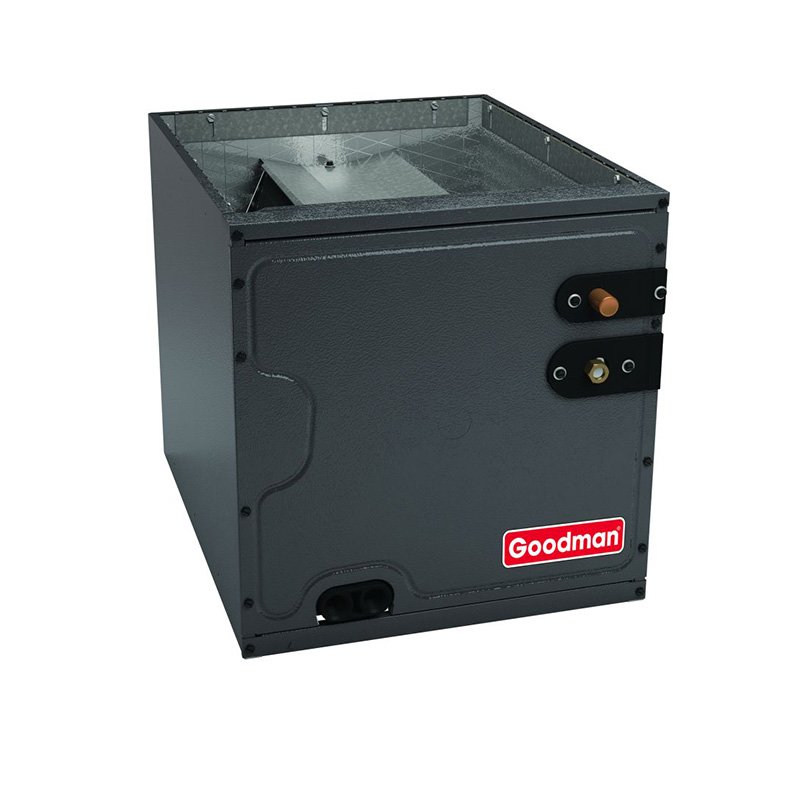
This Goodman bundle pairs a 3-ton, 14.5 SEER2 air conditioner with an 80,000 BTU, 96% AFUE two-stage gas furnace in a downflow configuration, making it a strong candidate for homes where the air handler sits in a closet, utility room, or attic with supply air directed downward. The R-32 refrigerant charge is a forward-looking choice: R-32 has a lower global-warming potential than R-410A and is becoming the industry standard, so future service technicians will have an easier time sourcing it as the transition continues. The variable-speed ECM blower motor is a genuine comfort upgrade over single-speed alternatives, running at lower speeds most of the time to maintain steadier temperatures and reduce humidity spikes.
The 14.5 SEER2 rating lands right at the federal minimum efficiency threshold for most U.S. climate zones, which means you are not paying a premium for top-tier efficiency but you are also meeting current code requirements. The 96% AFUE furnace is a high-efficiency condensing unit, so installation requires a PVC flue rather than a traditional B-vent, and a condensate drain must be planned for. The two-stage furnace operation allows the system to run at a lower capacity on mild days, reducing short-cycling and improving comfort over a single-stage unit. Together, the ECM motor and two-stage burner make this a noticeably more comfortable system day-to-day than a base entry-level package at a similar price point.
This Goodman system delivers a real mid-tier comfort package at an entry-tier price, with the two-stage furnace and ECM blower genuinely improving day-to-day comfort over base models. The trade-off is a brand track record that shows higher repair frequency after year 7 and a compressor lifespan that typically runs shorter than premium competitors. Buyers who prioritize upfront savings and are comfortable with the possibility of earlier component service will find solid value here.
Overall score is the average of the five ratings above.
What we like
- Priced roughly 15 to 25 percent below comparable Carrier, Trane, and Lennox systems
- Two-stage furnace reduces short-cycling and improves humidity control on mild days
- Variable-speed ECM blower runs quieter and maintains more consistent airflow than single-speed alternatives
- 96% AFUE furnace keeps heating fuel costs competitive with premium-brand condensing units
- R-32 refrigerant is better positioned for long-term service availability as the industry transitions away from R-410A
Trade-offs
- Dual-run capacitors are the most commonly reported failure point, typically requiring a 300 to 600 dollar repair
- Evaporator coil leaks appear in a meaningful portion of owner reviews, adding potential mid-life repair costs
- Compressor lifespan averages 10 to 14 years, shorter than the 15 to 20 years often seen with premium brands
- A minority of owners report refrigerant leaks within the first year, usually traced to install quality rather than the unit itself
What homeowners and pros say about Goodman
Homeowners shopping Goodman frequently point to the price gap as the deciding factor, and that holds true here. Google dealer reviews average around 3.8 out of 5 across hundreds of location-level reviews, with affordability showing up as the most repeated positive. The picture shifts on ConsumerAffairs, where the brand averages about 2.5 out of 5, though that channel disproportionately captures frustrated owners rather than satisfied ones. The recurring concern in those reports is repair costs that begin accumulating after roughly year 7, which tracks with the documented failure patterns: dual-run capacitors going out, evaporator coil leaks surfacing in a meaningful share of units, and compressors that tend to reach the end of their useful life somewhere between 10 and 14 years rather than the 15 to 20 years more commonly seen with Trane, Carrier, or Lennox equipment.
HVAC technicians who work on Goodman equipment regularly tend to hold a pragmatic view: the equipment is acceptable, but installation quality is the single largest variable in how long any given unit lasts and how reliably it runs. A careful, thorough install by an experienced contractor can extend the useful life and reduce the frequency of those documented issues. A rushed or cut-rate install tends to surface the brand’s documented weak points faster, particularly the early refrigerant leaks that a minority of owners report in the first year and that are almost always tied to poor charging or connection work rather than a factory defect. For this system specifically, the two-stage furnace and ECM blower add complexity, which makes choosing a contractor with demonstrated experience on variable-speed and multi-stage systems more important than it would be with a simpler unit.
Sources: ConsumerAffairs Goodman owner reviews, AHRI Directory of Certified Product Performance, U.S. DOE appliance and equipment efficiency standards, Goodman product specification sheets.
What it costs to run
At 14.5 SEER2, cooling this 3-ton system for a typical 1200-hour cooling season at the U.S. average electricity rate of $0.17/kWh works out to roughly $506 per year in cooling, about $42 less per year than a minimum-efficiency 13.4 SEER2 unit of the same size. Your real cost depends on your climate and local rate.
Method: (36,000 BTU/hr ÷ 14.5 SEER2) × 1200 hours ÷ 1000 × $0.17/kWh. Rate source: U.S. EIA average; cooling hours: moderate-climate estimate.
How it compares
| Brand | Comparable model | SEER2 | Stage | Price position |
|---|---|---|---|---|
| Goodman | GSXH503610 + GCVC961005CX (this system) | 14.5 | two-stage | Value pick |
| Carrier | Comfort 24ACC636A003 + 59SC5C080S21– | 14.5 | single-stage / two-stage | Roughly 15 to 20 percent more than this system |
| Trane | XR15 4TTR5036 + S9V2C080U4PSAA | 15.0 | two-stage | Roughly 20 to 25 percent more than this system |
| Lennox | Merit ML14XC1-036 + ML196UH080XE48C | 14.3 | single-stage / two-stage | Roughly 18 to 25 percent more than this system |
Competitor rows are comparable single-stage units at similar efficiency; price is relative position, not a quote.
Questions about this system
Why does this furnace need a PVC flue instead of a metal B-vent?
At 96% AFUE, the furnace extracts so much heat from combustion gases that the exhaust exits at a low enough temperature to be safely vented through PVC pipe. The flip side is that the combustion process also produces condensate, so your installer must run a condensate drain line, which adds a small amount of labor and planning compared to a standard 80% furnace install.
Is R-32 refrigerant harder to find or more expensive to service than R-410A?
Right now, R-410A is still more widely stocked, but that gap is closing quickly as new equipment ships with R-32. R-32 is also a single-component refrigerant, which means a technician can top off a charge without replacing the entire refrigerant load, a practical advantage over blended refrigerants. Within the next few years, R-32 service availability is expected to match or exceed R-410A in most markets.
What does the downflow configuration actually mean for my house?
Downflow means the air handler draws return air in at the top and discharges conditioned supply air downward, which suits installs where ductwork runs beneath the unit, such as a main-floor closet above a crawlspace or basement. It is not a universal configuration, so confirm your existing ductwork layout and any platform or clearance requirements with your installer before ordering.
How often do the dual-run capacitors fail, and is it a serious repair?
Capacitor failure is the single most commonly reported issue across Goodman owner reviews, and it tends to show up after a few years of use. The good news is that it is one of the less expensive HVAC repairs, generally falling in the 300 to 600 dollar range including labor, and a skilled technician can usually complete it in under an hour. Keeping a service agreement in place makes this kind of routine failure much less disruptive.
Does Goodman's warranty require professional registration, and what does it actually cover?
Yes, Goodman's full parts warranty, typically 10 years on covered components, requires registration within a set window after installation. Without registration the coverage period is shorter. The warranty covers parts but not labor, which means a repair during the warranty period still comes with a technician bill. Confirm the current registration deadline and labor coverage options with your dealer at the time of purchase.
Specifications
| Cooling capacity | 3 Ton |
| Efficiency | 14.5 SEER2 |
| Furnace output | 80000 BTU |
| Furnace efficiency | 96% AFUE |
| Configuration | Downflow |
| Refrigerant | R-32 |