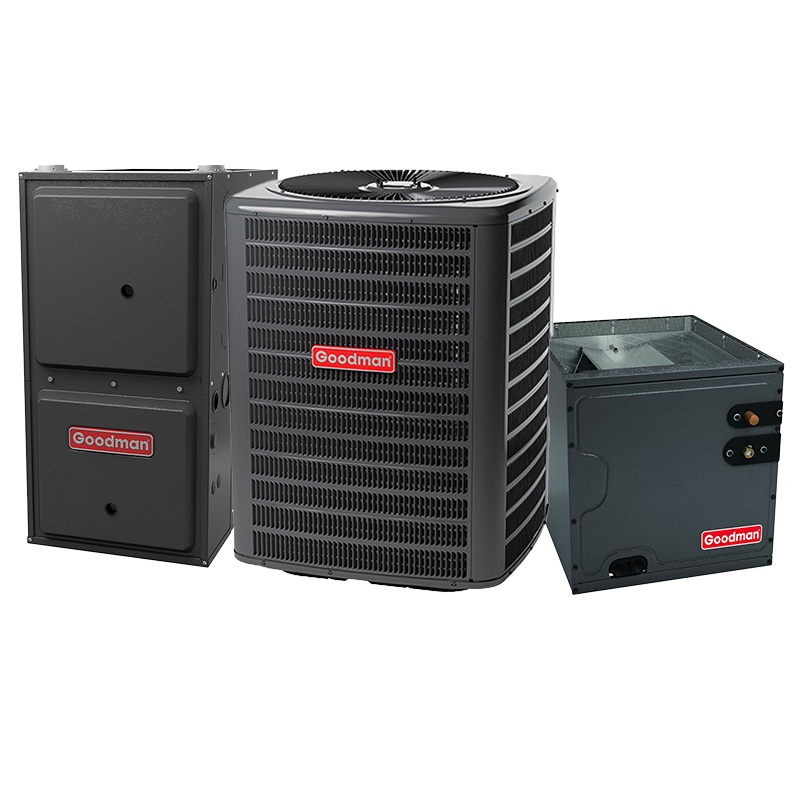
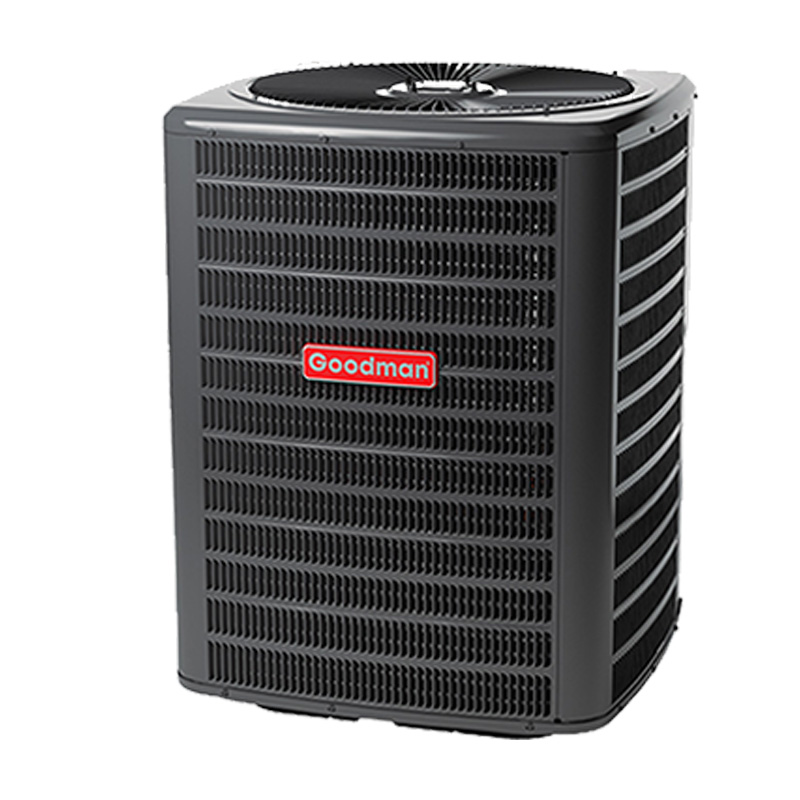
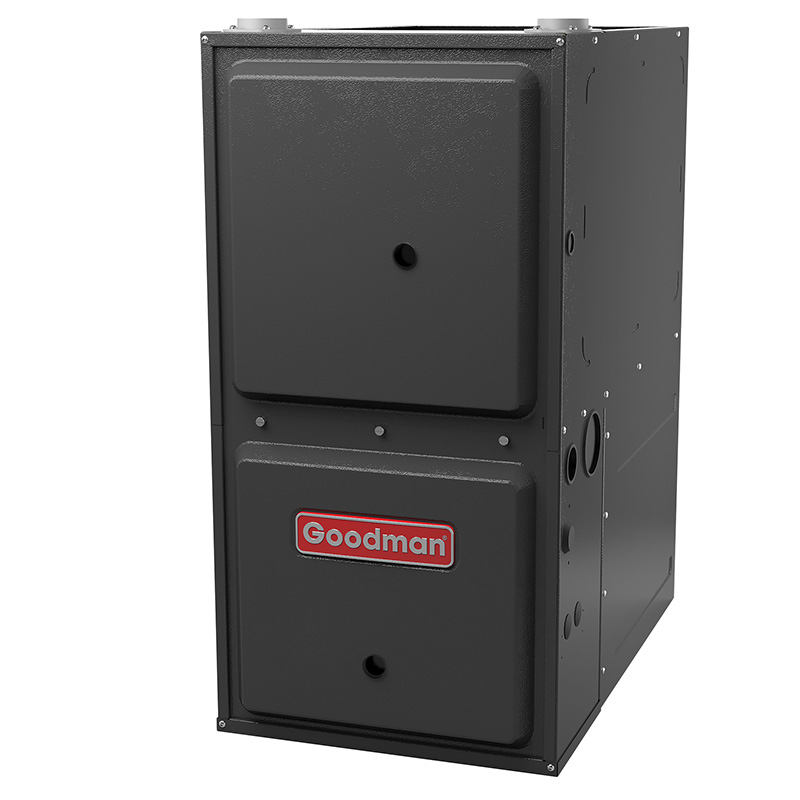
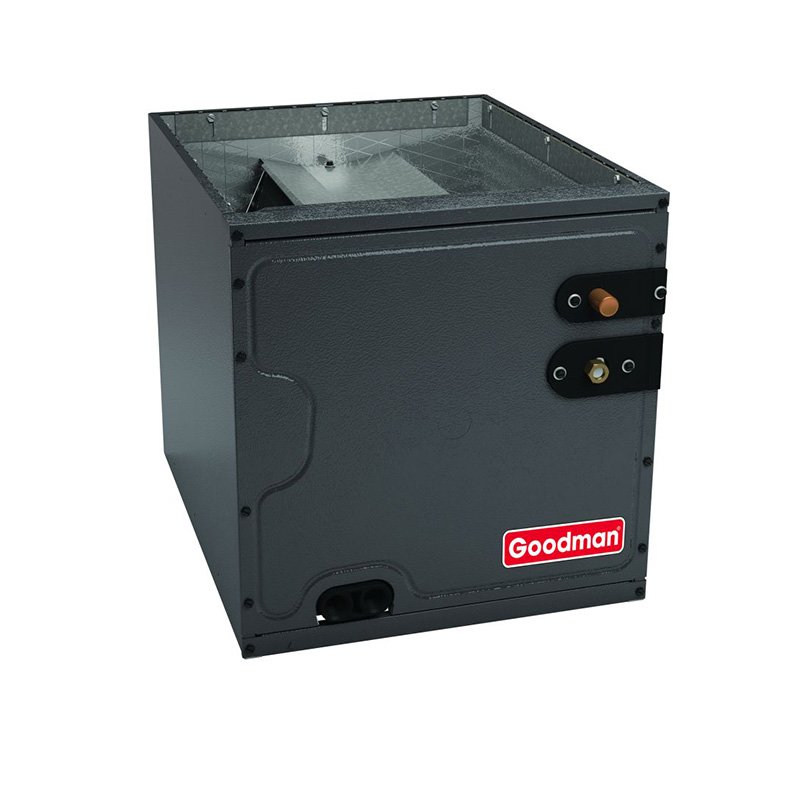
Goodman 3.5 Ton 13.6 SEER2 AC With 120000 BTU 96% AFUE 2-Stage Variable-Speed ECM Gas Furnace System – Downflow | R32
View on AC Direct see your lowest price →Check current price on AC Direct →
Key features
- 3.5-ton cooling capacity with 13.6 SEER2 rated efficiency
- 120,000 BTU two-stage gas furnace at 96% AFUE
- Variable-speed ECM blower motor for quieter, more even airflow
- Downflow configuration for floor-register and crawl-space installations
- R-32 refrigerant with lower global warming potential than R-410A
- Two-stage burner reduces short-cycling and improves humidity control
About this system
This Goodman bundle pairs a 3.5-ton, 13.6 SEER2 air conditioner with a 120,000 BTU, 96% AFUE two-stage, variable-speed ECM gas furnace in a downflow configuration. Downflow units are designed specifically for installations where conditioned air is delivered through floor registers, a common setup in homes built on crawl spaces or in regions where the air handler sits in a closet above a subfloor plenum. The R-32 refrigerant charge is a meaningful update over older R-410A equipment, offering a lower global warming potential and slightly better thermodynamic efficiency per pound of refrigerant used.
The 96% AFUE rating puts this furnace in the high-efficiency tier, meaning roughly 96 cents of every dollar spent on gas goes toward usable heat. The two-stage burner and variable-speed ECM blower work together to reduce short-cycling, run the system at a lower capacity on milder days, and deliver quieter, more even comfort than single-stage equipment. That combination also tends to keep humidity better controlled during shoulder seasons. At 13.6 SEER2, the cooling efficiency clears the federal minimums for most U.S. climate zones but sits at the lower end of the efficiency ladder, so homeowners in very hot climates or those with high cooling loads may find the long-run operating costs higher than a 16 or 18 SEER2 system would produce.
This system suits mid-to-large homes with existing floor-register ductwork, buyers who want a meaningful furnace upgrade without paying premium-brand prices, and households where the heating load is the primary concern. It is less well matched to climates where air conditioning does most of the seasonal work, or to buyers whose priority is the lowest possible utility bill over a 20-year horizon.
This Goodman bundle delivers a genuinely capable furnace at a price point well below comparable Trane, Lennox, or Carrier configurations, and the 96% AFUE two-stage furnace is the clear highlight of the package. The cooling side is competent but unremarkable at 13.6 SEER2, and Goodman's documented history of capacitor failures and coil leaks means buyers should budget for at least one service call in the back half of a 10-year ownership window.
Overall score is the average of the five ratings above.
What we like
- 96% AFUE two-stage furnace is a strong heating performer for the price
- Variable-speed ECM blower improves comfort and humidity management noticeably over single-stage units
- Priced 15 to 25 percent below comparable Trane, Lennox, and Carrier systems
- R-32 refrigerant is a forward-looking choice as the industry phases out R-410A
- Downflow configuration covers a real installation gap that not all bundles address
Trade-offs
- 13.6 SEER2 cooling efficiency is near the federal minimum and will produce higher operating costs than mid- or high-efficiency alternatives in hot climates
- Dual-run capacitor failures are the most commonly reported issue, typically surfacing after year 5 to 7 and costing 300 to 600 dollars to repair
- Compressor lifespan averages 10 to 14 years versus 15 to 20 years for premium brands, a relevant consideration on a 3.5-ton unit running hard in warm regions
- A minority of owners have reported refrigerant leaks within the first year, most often traced to installation or initial charge errors rather than the equipment itself
What homeowners and pros say about Goodman
On consumer review channels, Goodman equipment tends to polarize opinion. The ConsumerAffairs score sits at around 2.5 out of 5, a figure that reflects the complaint-heavy nature of that platform, where the recurring pattern is owners reporting that repair costs climbed noticeably after roughly year 7. Google dealer reviews tell a somewhat more favorable story, averaging around 3.8 out of 5 across hundreds of location-level reviews, where the most consistent praise is for affordability and the most consistent criticism centers on long-term parts costs. For this specific system, that context matters: the furnace is the stronger half of the bundle at 96% AFUE with a two-stage burner and variable-speed blower, and most technician feedback suggests Goodman furnaces hold up reasonably well when installed correctly. The air conditioning side is where owner frustration tends to cluster.
HVAC professionals who work on Goodman equipment regularly point to dual-run capacitor failures as the most predictable service call, typically arriving in the 300 to 600 dollar repair range and most common after the five-to-seven year mark. Evaporator coil leaks appear in a meaningful share of owner reports and are more expensive to address. Compressor longevity is the longer-term concern, with Goodman compressors averaging 10 to 14 years compared to 15 to 20 years for premium brands, a gap that is most consequential on a 3.5-ton unit in a warm climate. A small minority of owners have also reported refrigerant leaks within the first year, almost always attributed to installation or initial charge issues rather than a factory defect, which underscores how heavily Goodman’s real-world performance depends on who installs it and how carefully.
Sources: ConsumerAffairs Goodman owner reviews, AHRI Directory of Certified Product Performance, U.S. DOE appliance and equipment efficiency standards, Goodman product specification sheets.
What it costs to run
At 13.6 SEER2, cooling this 3.5-ton system for a typical 1200-hour cooling season at the U.S. average electricity rate of $0.17/kWh works out to roughly $630 per year in cooling, about $9 less per year than a minimum-efficiency 13.4 SEER2 unit of the same size. Your real cost depends on your climate and local rate.
Method: (42,000 BTU/hr ÷ 13.6 SEER2) × 1200 hours ÷ 1000 × $0.17/kWh. Rate source: U.S. EIA average; cooling hours: moderate-climate estimate.
How it compares
| Brand | Comparable model | SEER2 | Stage | Price position |
|---|---|---|---|---|
| Goodman | 3.5 Ton 13.6 SEER2 AC + 120,000 BTU 96% AFUE 2-Stage ECM Furnace (Downflow, R-32) | 13.6 | Two-stage | Value pick |
| Carrier | Comfort 24ACC636 + 59SC5 (3.5 Ton, 96% AFUE) | 14.3 | Two-stage | Roughly 15 to 20 percent more than this Goodman bundle |
| Trane | XR15 + S9X2 (3.5 Ton, 96% AFUE) | 15.0 | Two-stage | Roughly 20 to 25 percent more than this Goodman bundle |
| Lennox | Merit ML14XC1 + ML196E (3.5 Ton, 96% AFUE) | 14.3 | Two-stage | Roughly 18 to 22 percent more than this Goodman bundle |
Competitor rows are comparable single-stage units at similar efficiency; price is relative position, not a quote.
Questions about this system
Is a downflow furnace interchangeable with an upflow unit, or do I need to specifically order downflow?
Downflow and upflow furnaces are not interchangeable. The heat exchanger, burner orientation, and flue connections are designed for a specific airflow direction, and installing a downflow unit in an upflow application is a safety and warranty issue. Confirm your existing plenum and ductwork orientation before ordering.
Does the 96% AFUE rating apply in all climates, or only in certain regions?
The 96% AFUE rating is a steady-state laboratory measurement and reflects real-world performance closely in most conditions, but condensing furnaces like this one work best when return air temperatures are moderate. In extremely cold climates with very low return-air temps, efficiency can dip slightly, though it remains well above 80% AFUE equipment under nearly all conditions.
What is covered under the Goodman warranty for this system, and how long does it last?
Goodman typically offers a 10-year parts warranty on registered equipment, and the compressor on qualifying units may carry a lifetime compressor limited warranty when registered within the required window after installation. Registration must be completed within 60 days of installation, and the warranty is generally voided by improper installation or unauthorized modifications, so using a licensed HVAC contractor matters here.
My home is in a hot Southern climate where the AC runs hard for six months. Is 13.6 SEER2 going to cost me significantly more to operate than a higher-efficiency unit?
Yes, in a climate with long, heavy cooling seasons the difference between 13.6 SEER2 and a 16 or 18 SEER2 system adds up meaningfully over time. A rough rule of thumb is that each SEER2 point of improvement reduces cooling energy use by roughly 6 to 7 percent, so the gap on a 3.5-ton unit running 1,800 or more hours a year can translate to a real dollar difference annually. If cooling is your dominant load, it is worth pricing a higher-efficiency cooling unit.
How important is the installer's skill level with a system like this, and what should I look for when hiring?
Installer quality is the single biggest factor in how long a Goodman system lasts and how well it performs, according to technicians who work on these units regularly. For this bundle specifically, proper refrigerant charging, correct static pressure testing on the downflow duct connections, and accurate furnace sizing verification are critical. Look for a licensed HVAC contractor with Goodman or Daikin (Goodman's parent) factory training, ask for a Manual J load calculation, and confirm they will pull the required permits.
Specifications
| Cooling capacity | 3.5 Ton |
| Efficiency | 13.6 SEER2 |
| Furnace output | 120000 BTU |
| Furnace efficiency | 96% AFUE |
| Configuration | Downflow |
| Refrigerant | R-32 |