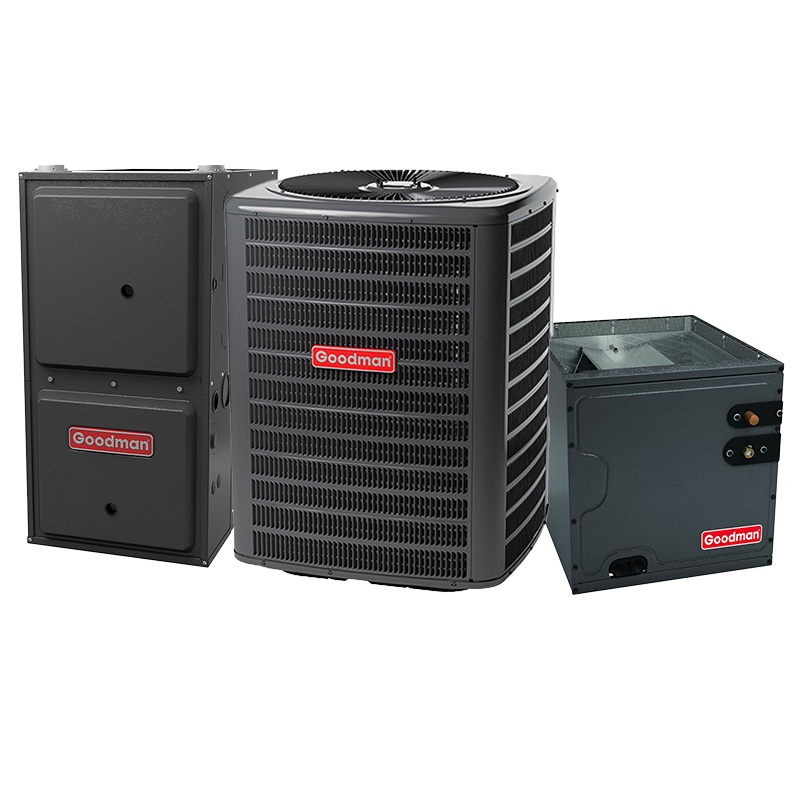
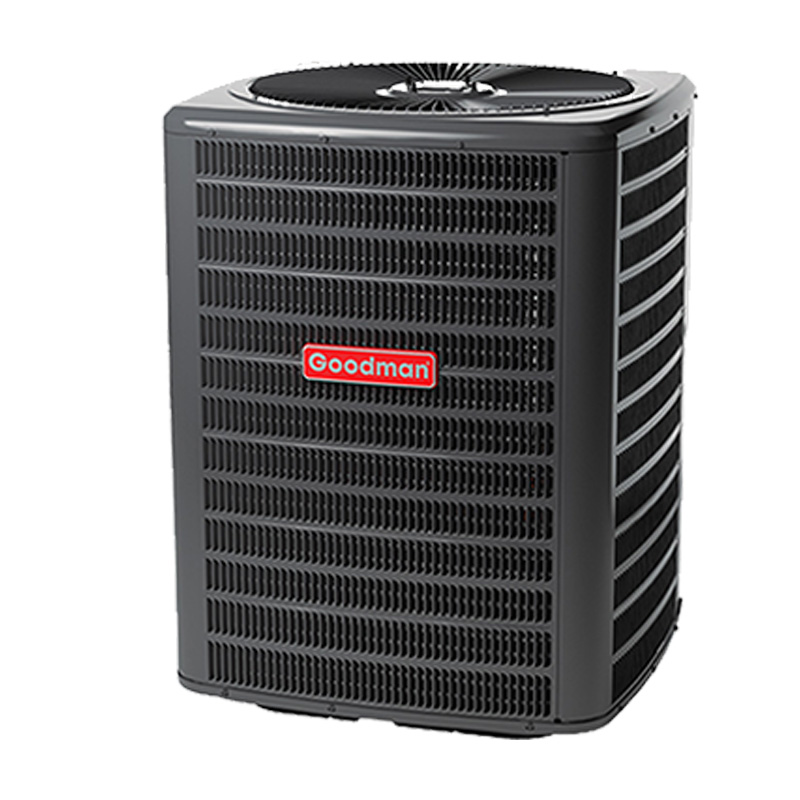
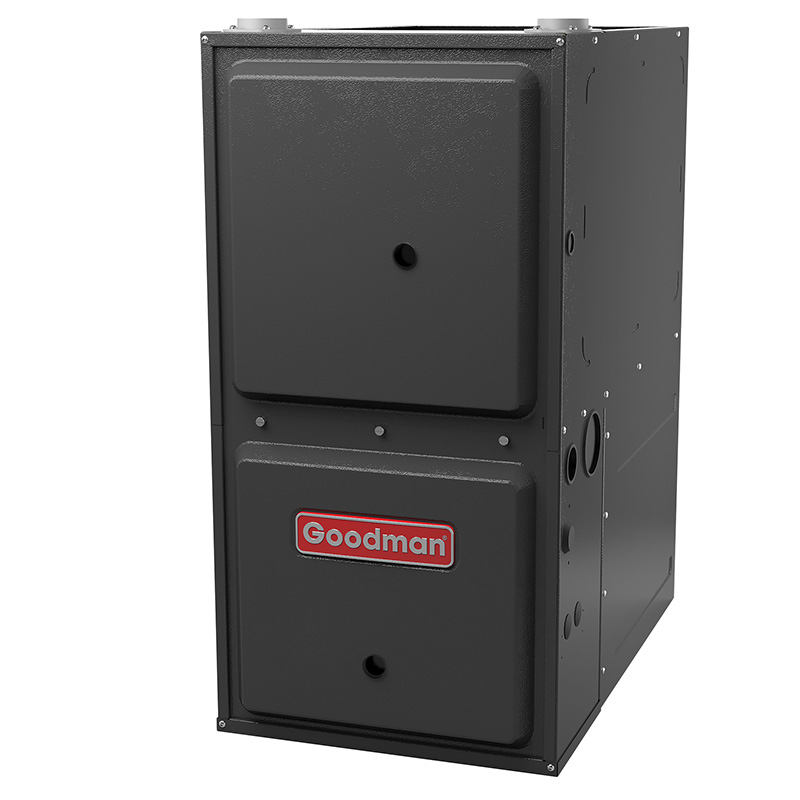
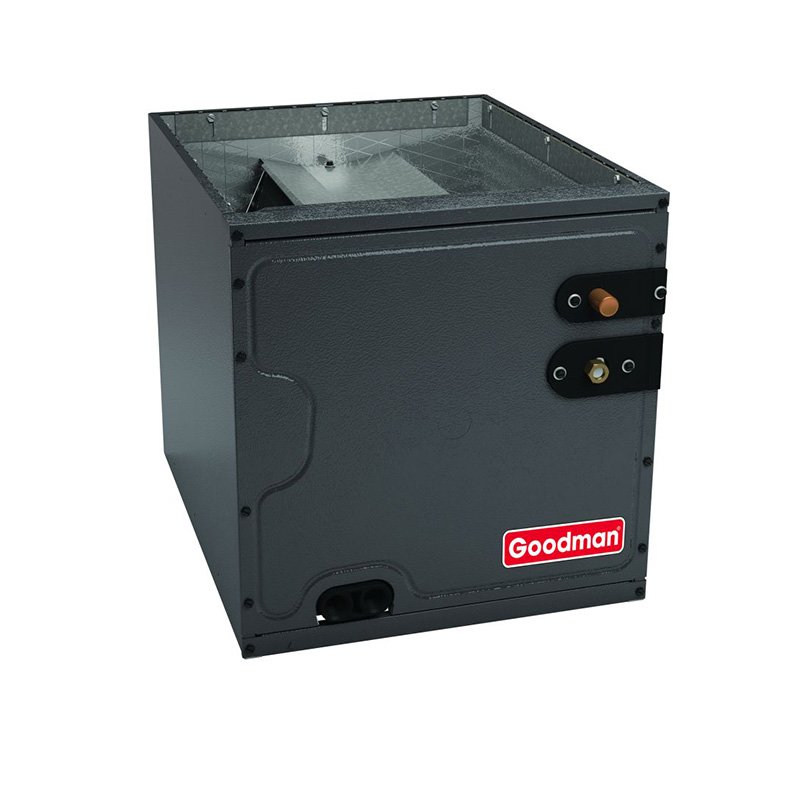
Goodman 4 Ton 13.5 SEER2 AC With 120000 BTU 96% AFUE 2-Stage Variable-Speed ECM Gas Furnace System – Downflow | R32
View on AC Direct see your lowest price →Check current price on AC Direct →
Key features
- 4-ton cooling capacity rated at 13.5 SEER2 for federal minimum efficiency compliance
- 120,000 BTU two-stage gas furnace at 96% AFUE for efficient heating in cold climates
- Variable-speed ECM blower motor for quieter operation and improved humidity control
- Downflow configuration designed for floor-level supply duct systems
- R-32 refrigerant with lower global-warming potential than legacy R-410A
- Two-stage furnace burner reduces short-cycling and temperature swings on mild days
About this system
This Goodman package pairs a 4-ton, 13.5 SEER2 air conditioner with a 120,000 BTU, 96% AFUE two-stage, variable-speed ECM gas furnace in a downflow configuration, meaning the air supply exits from the bottom of the unit. That configuration suits homes where the furnace sits in a closet or utility room above a crawlspace or basement with floor-level ductwork. The R-32 refrigerant is a lower global-warming-potential alternative to the older R-410A, and it is now the industry standard for new residential equipment. At 13.5 SEER2, this system meets the federal minimum efficiency threshold for most U.S. climate zones but does not reach the higher tiers that qualify for Inflation Reduction Act tax credits, so buyers motivated by rebates should check local utility program requirements before purchasing.
The real standout here is the furnace side. A 96% AFUE two-stage burner with a variable-speed ECM blower motor is a genuinely capable combination for heating-dominated climates. Two-stage firing means the furnace runs at a lower capacity most of the time, cycling less aggressively, reducing temperature swings, and burning less gas on mild days. The variable-speed blower adjusts airflow continuously, which improves humidity control in summer and distributes heat more evenly in winter. For a 4-ton system serving a large home, typically 2,000 to 2,800 square feet depending on insulation and climate, that level of comfort control is a meaningful upgrade over single-stage equipment at a similar price point.
This system delivers a well-specified furnace at a competitive price, and the two-stage, variable-speed combination is genuinely good technology for a large home in a heating-heavy climate. The AC side is entry-level in efficiency, and Goodman's track record shows real durability trade-offs compared to premium brands, so the value equation depends heavily on how long you plan to own the home and how much you trust your installer.
Overall score is the average of the five ratings above.
What we like
- 96% AFUE two-stage furnace is high-efficiency heating at a below-market price point
- Variable-speed ECM blower improves comfort and humidity control versus single-speed alternatives
- Priced roughly 15 to 25 percent below comparable Trane, Lennox, and Carrier systems
- R-32 refrigerant is future-ready and widely available through certified technicians
- Downflow configuration offers installation flexibility for closet and platform installs above floor-level ducts
Trade-offs
- 13.5 SEER2 is entry-level cooling efficiency and will not qualify for most federal or utility energy-efficiency incentives
- Dual-run capacitors are the most commonly reported failure point, typically after several years of use
- Compressor lifespan averages 10 to 14 years versus 15 to 20 years for premium-brand compressors
- A minority of owners report refrigerant leaks within the first year, often traced to installation or charge issues rather than the equipment itself
What homeowners and pros say about Goodman
Homeowners who choose Goodman most often cite price as the deciding factor, and that tracks with the brand’s Google dealer review average of around 3.8 out of 5 across hundreds of reviews per location, where affordability consistently draws the most praise. The ConsumerAffairs score tells a more cautious story at roughly 2.5 out of 5, though that channel skews toward frustrated owners who sought out a place to complain. The pattern that emerges from both channels is a system that performs acceptably in the early years and then sees repair costs climb after roughly year seven. The specific failure modes that appear most in owner feedback are dual-run capacitor failures, which are a low-cost fix in the 300 to 600 dollar range, and evaporator coil leaks, which are more disruptive and expensive to address. Refrigerant leaks within the first year are also reported by a minority of owners, and technicians consistently point to installation or improper charge as the cause rather than a defect in the equipment itself.
HVAC professionals tend to hold a pragmatic view of Goodman. They will install it without hesitation for a budget-conscious customer and acknowledge that a properly installed Goodman can give years of reliable service. Where they raise concerns is compressor longevity: Goodman compressors tend to average 10 to 14 years in the field, compared to 15 to 20 years for Trane, Carrier, or Lennox compressors. For a homeowner planning to sell within a decade, that gap may not matter much. For someone who intends to stay in the home long-term, the math on a compressor replacement or early system swap can erode the upfront savings. The two-stage furnace in this particular system is a genuine bright spot that pros tend to acknowledge, as it is real comfort technology at a price point where single-stage equipment often dominates.
Sources: ConsumerAffairs Goodman owner reviews, AHRI Directory of Certified Product Performance, U.S. DOE appliance and equipment efficiency standards, Goodman product specification sheets.
What it costs to run
At 13.5 SEER2, cooling this 4-ton system for a typical 1200-hour cooling season at the U.S. average electricity rate of $0.17/kWh works out to roughly $725 per year in cooling, about $6 less per year than a minimum-efficiency 13.4 SEER2 unit of the same size. Your real cost depends on your climate and local rate.
Method: (48,000 BTU/hr ÷ 13.5 SEER2) × 1200 hours ÷ 1000 × $0.17/kWh. Rate source: U.S. EIA average; cooling hours: moderate-climate estimate.
How it compares
| Brand | Comparable model | SEER2 | Stage | Price position |
|---|---|---|---|---|
| Goodman | 4-Ton 13.5 SEER2 AC / 120K BTU 96% AFUE 2-Stage Variable-Speed Furnace (Downflow, R-32) | 13.5 | Two-stage furnace / single-stage AC | Value pick |
| Carrier | Performance Series 59TP6 Furnace with 24ACC6 AC | 14.3 | Two-stage furnace / single-stage AC | Roughly 20 to 25 percent above this Goodman system |
| Trane | S9V2 Furnace with XR14 AC | 14.0 | Two-stage furnace / single-stage AC | Roughly 20 to 30 percent above this Goodman system |
| Lennox | EL296V Furnace with XC14 AC | 14.0 | Two-stage furnace / single-stage AC | Roughly 25 to 35 percent above this Goodman system |
Competitor rows are comparable single-stage units at similar efficiency; price is relative position, not a quote.
Questions about this system
Does this system qualify for the federal Inflation Reduction Act tax credit?
No. The IRA tax credit for central air conditioners requires a minimum of 16 SEER2 in most climate zones, and this unit is rated 13.5 SEER2. The furnace at 96% AFUE does meet the efficiency threshold for the furnace portion of the credit, but you should verify current IRS guidance and your specific climate zone requirements with a tax professional before purchasing.
What does downflow configuration mean, and how do I know if it matches my home?
Downflow means the furnace draws return air in at the top and pushes conditioned air out through the bottom into floor-level supply ducts. It is the right choice if your furnace sits in a closet or utility space above a crawlspace or slab with ducts running under the floor. If your ducts are in an attic or the air handler sits below the ductwork, you likely need an upflow or horizontal unit instead.
R-32 refrigerant is new to me. Will my HVAC technician be able to service it?
R-32 is now standard on new residential equipment and most EPA 608-certified technicians are trained to handle it. It does require specific handling procedures because it is mildly flammable, so confirm your service technician has R-32 experience before scheduling any refrigerant work.
How often do Goodman capacitors actually fail, and what does it cost to fix?
Dual-run capacitors are the most commonly reported failure point across Goodman owner reviews, and they can fail on any brand of equipment. The repair is typically straightforward and falls in the 300 to 600 dollar range including labor, so it is a manageable cost rather than a system-threatening issue. Enrolling in an annual maintenance agreement helps catch a weakening capacitor before it causes a compressor lockout.
Is a 120,000 BTU furnace oversized for a 4-ton AC system?
Furnace and AC sizing are independent calculations based on heating load and cooling load respectively, so there is no rule that BTU output must match AC tonnage directly. A proper Manual J load calculation for your specific home is the only reliable way to confirm whether 120,000 BTU is the right furnace size. In very cold climates with large, older homes, that capacity is common alongside a 4-ton cooling system.
Specifications
| Cooling capacity | 4 Ton |
| Efficiency | 13.5 SEER2 |
| Furnace output | 120000 BTU |
| Furnace efficiency | 96% AFUE |
| Configuration | Downflow |
| Refrigerant | R-32 |