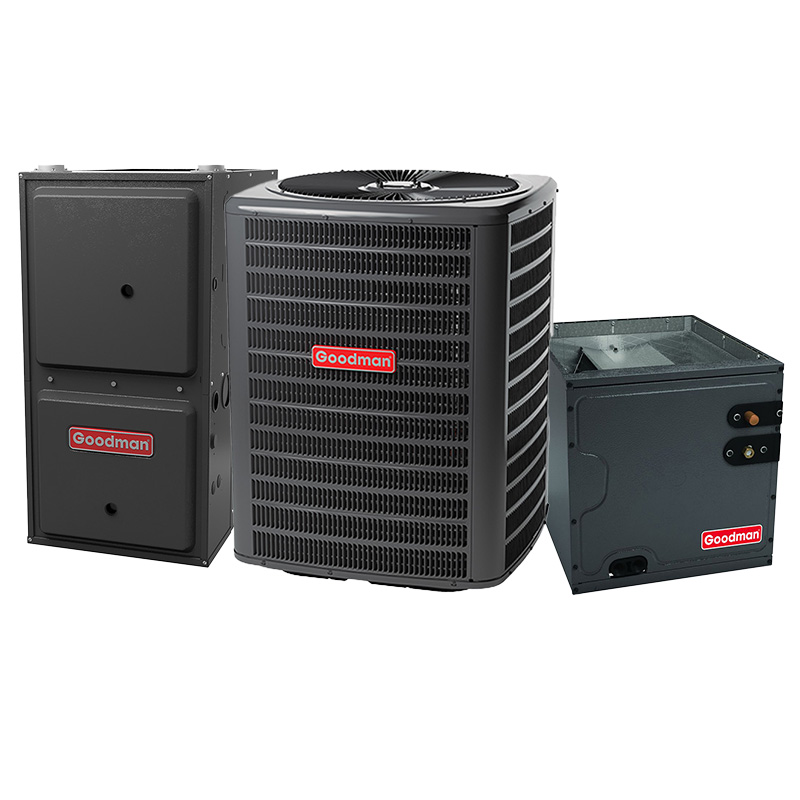
Goodman 2 Ton 17.5 SEER2 AC With 60000 BTU 96% AFUE 2-Stage Variable-Speed ECM Gas Furnace System – Downflow | 2-Stage High Efficiency AC | R32
View on AC Direct see your lowest price →Check current price on AC Direct →
Key features
- 17.5 SEER2 two-stage cooling with R-32 refrigerant
- 96% AFUE two-stage gas furnace rated at 60,000 BTU/hr
- Variable-speed ECM blower motor for quieter, more efficient airflow
- Downflow configuration designed for closet or platform installations
- Two-stage operation reduces cycling, supporting steadier temperatures and humidity control
- 10-year parts warranty when registered within 60 days of installation
About this system
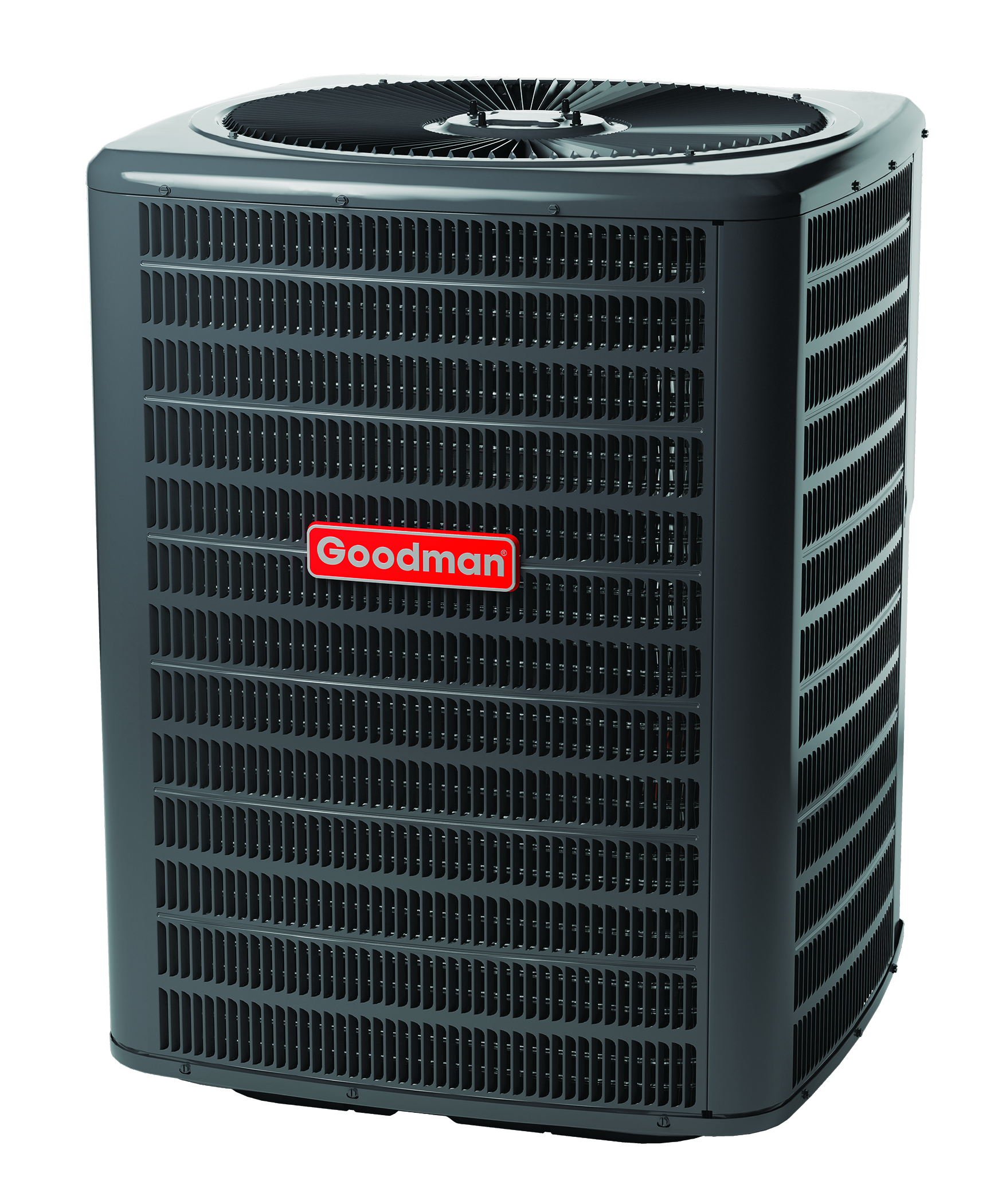
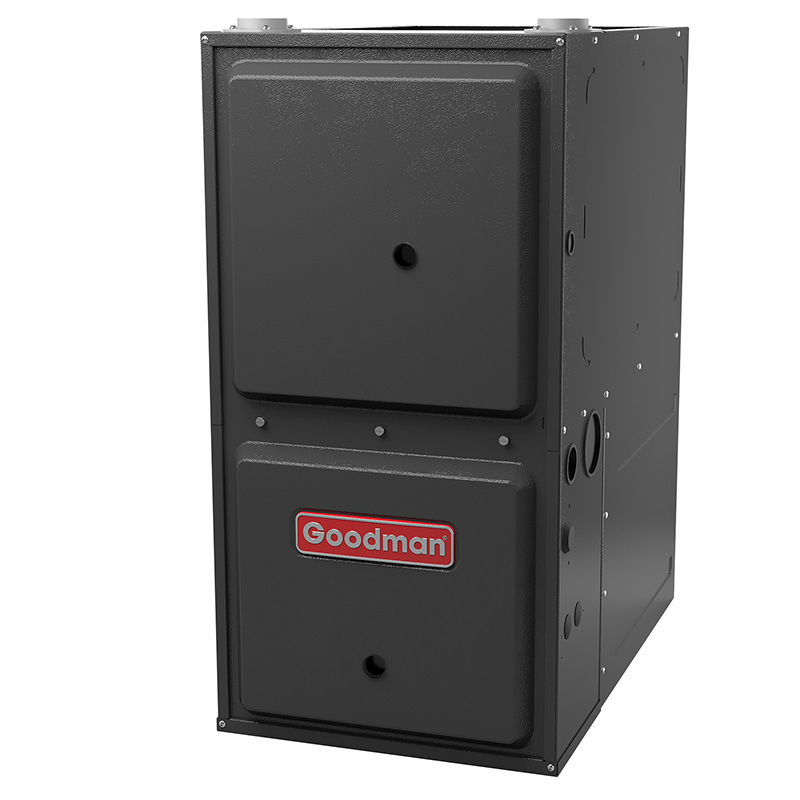
The Goodman GLXT7CA2410 pairs a 2-ton, 17.5 SEER2 two-stage air conditioner with a 60,000 BTU, 96% AFUE two-stage gas furnace in a downflow configuration. The downflow setup is built for homes where the air handler sits in an upper-floor closet or attic platform and delivers conditioned air downward through floor registers, a layout common in ranch-style homes and certain manufactured housing applications. The R-32 refrigerant charge is a meaningful upgrade over older R-410A systems, offering a lower global warming potential and slightly better heat transfer efficiency.
The variable-speed ECM blower motor is one of the standout hardware choices here. ECM motors consume significantly less electricity than standard PSC motors, run quieter at lower speeds, and support better humidity control because they can circulate air slowly and continuously. Combined with two-stage cooling and two-stage heating, this system spends most of its runtime at the lower stage, which means steadier temperatures, quieter operation, and less on-off cycling stress on components. For a roughly 800 to 1,200 square foot space in a moderate climate, this capacity and efficiency tier is a reasonable match, though a Manual J load calculation by your installer should always confirm sizing before purchase.
This Goodman system delivers a genuinely competitive efficiency package at a price point that is hard to match among name-brand alternatives, and the ECM motor plus two-stage operation are real performance upgrades over entry-level equipment. The trade-off is that Goodman's long-term reliability record sits below premium brands, and the system's performance ceiling is heavily dependent on the quality of the installation. Buyers who vet their installer carefully and budget for possible capacitor or coil work after year seven will get solid value here.
Overall score is the average of the five ratings above.
What we like
- 17.5 SEER2 rating qualifies for federal efficiency incentives in many markets
- ECM variable-speed blower reduces electricity use and improves humidity control
- Two-stage cooling and heating lower cycling frequency, reducing mechanical wear
- R-32 refrigerant has a lower environmental impact than R-410A
- Priced roughly 15 to 25 percent below comparable Trane, Lennox, and Carrier systems
Trade-offs
- Dual-run capacitors are a well-documented weak point, typically requiring replacement around year 7 to 10 at a cost of $300 to $600
- Evaporator coil leaks appear in a meaningful share of owner reports, which can be a costly mid-life repair
- Compressor lifespan averages 10 to 14 years versus 15 to 20 years for premium-brand compressors
- A minority of owners report refrigerant leaks in the first year, most often traced to install or initial charge issues rather than factory defects
What homeowners and pros say about Goodman
Owners who buy Goodman equipment tend to echo a consistent theme: the price-to-efficiency ratio is genuinely attractive, and when the system is properly installed, it performs close to its rated specs. On Google dealer reviews Goodman-installed systems average around 3.8 out of 5 across hundreds of location-level reviews, with affordability cited most often as the reason buyers chose it. That score reflects real satisfaction among buyers who went in with realistic expectations and a competent installer. The picture on ConsumerAffairs is less flattering, sitting around 2.5 out of 5, though that platform disproportionately captures owners who sought a review channel after a frustrating experience. The recurring complaint there is repair costs climbing after roughly year 7, which aligns with the documented failure modes on Goodman equipment.
HVAC technicians are candid about where the hardware shows its price. Dual-run capacitors on Goodman condensers are among the most commonly replaced parts in the trade, typically a quick $300 to $600 fix but one that comes up more often than on premium-brand units. Evaporator coil leaks show up in a meaningful share of owner accounts, and compressor lifespan tends to fall in the 10 to 14 year range rather than the 15 to 20 years you might expect from a Trane or Carrier compressor. A smaller number of owners report refrigerant leaks within the first year, and technicians generally point to installation or initial charge errors as the cause rather than a factory defect. For this two-stage, ECM-equipped system specifically, pros note that the added complexity of the variable-speed motor means any installer unfamiliar with ECM commissioning could undercut the efficiency gains the hardware is capable of delivering.
Sources: ConsumerAffairs Goodman owner reviews, AHRI Directory of Certified Product Performance, U.S. DOE appliance and equipment efficiency standards, Goodman product specification sheets.
What it costs to run
At 17.5 SEER2, cooling this 2-ton system for a typical 1200-hour cooling season at the U.S. average electricity rate of $0.17/kWh works out to roughly $280 per year in cooling, about $85 less per year than a minimum-efficiency 13.4 SEER2 unit of the same size. Your real cost depends on your climate and local rate.
Method: (24,000 BTU/hr ÷ 17.5 SEER2) × 1200 hours ÷ 1000 × $0.17/kWh. Rate source: U.S. EIA average; cooling hours: moderate-climate estimate.
How it compares
| Brand | Comparable model | SEER2 | Stage | Price position |
|---|---|---|---|---|
| Goodman | GLXT7CA2410 (this system) | 17.5 | Two-stage | Value pick |
| Carrier | Performance 17 (24ACC7) | 17 | Two-stage | 15 to 25 percent higher than this Goodman system |
| Trane | S-Series XR17 | 17 | Two-stage | 20 to 30 percent higher than this Goodman system |
| Lennox | Merit ML17XC2 | 17 | Two-stage | 20 to 30 percent higher than this Goodman system |
Competitor rows are comparable single-stage units at similar efficiency; price is relative position, not a quote.
Questions about this system
Why does this system require a downflow furnace specifically, and can I swap it for an upflow model?
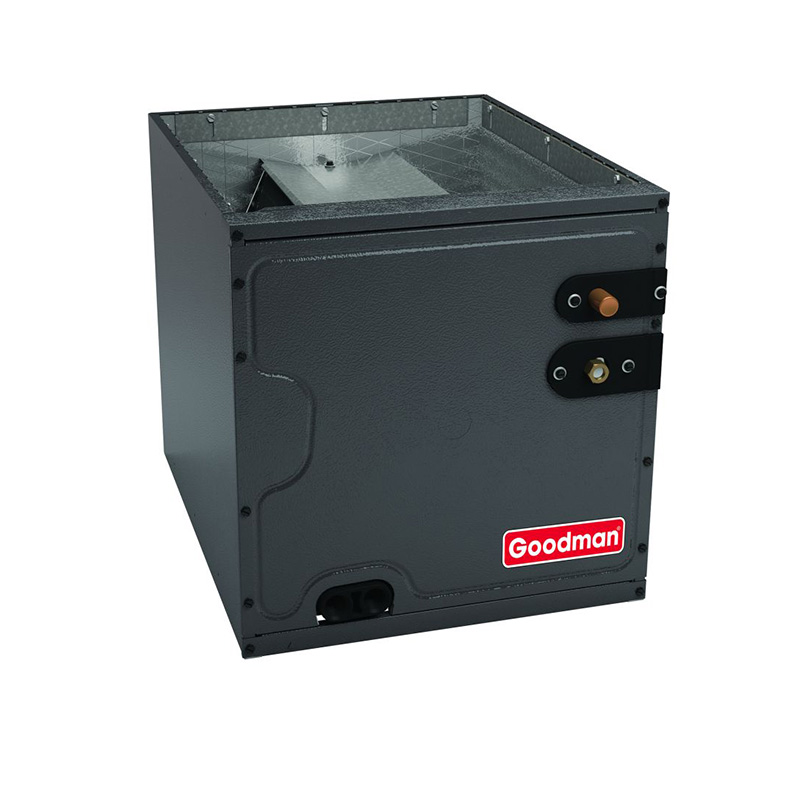
The GLXT7CA2410 is configured for downflow installations where the furnace sits above the living space and air travels downward through floor ducts. Substituting an upflow furnace would require a different model number and a different coil cabinet orientation. Your installer must confirm the airflow direction matches your existing duct layout before ordering.
What is the 10-year parts warranty and what do I need to do to get it?
Goodman covers parts for 10 years provided you register the equipment with Goodman within 60 days of installation. Without registration, coverage typically drops to five years on parts. The warranty does not cover labor, refrigerant, or diagnostic fees, so those costs fall to you on any service call.
Does this system qualify for the federal energy efficiency tax credit?
The 25C federal tax credit for 2023 through 2032 requires a minimum of 15 SEER2 for split-system AC and 96% AFUE for gas furnaces in most climate zones. This system meets both thresholds, so it should qualify for up to $600 on the AC portion and up to $600 on the furnace portion. Consult a tax professional to confirm your specific eligibility.
Is R-32 refrigerant harder to service than R-410A?
R-32 requires technicians certified to handle A2L mildly flammable refrigerants, and not all HVAC contractors in every market are currently equipped for it. Before purchasing, confirm your local installer has the required certification and R-32 recovery equipment, since servicing by an unprepared technician can void the warranty.
What are the most common repairs on Goodman equipment and when should I expect them?
Dual-run capacitors are the single most frequently reported failure point on Goodman systems and typically show up between years 7 and 10. That repair usually runs $300 to $600 for parts and labor. Evaporator coil leaks and compressor wear are less common but more expensive issues that tend to surface after year 10, which is why some owners opt to add an extended labor warranty at installation.
Specifications
| Cooling capacity | 2 Ton |
| Efficiency | 17.5 SEER2 |
| Furnace output | 60000 BTU |
| Furnace efficiency | 96% AFUE |
| Configuration | Downflow |
| Refrigerant | R-32 |
| Model | GLXT7CA2410 |