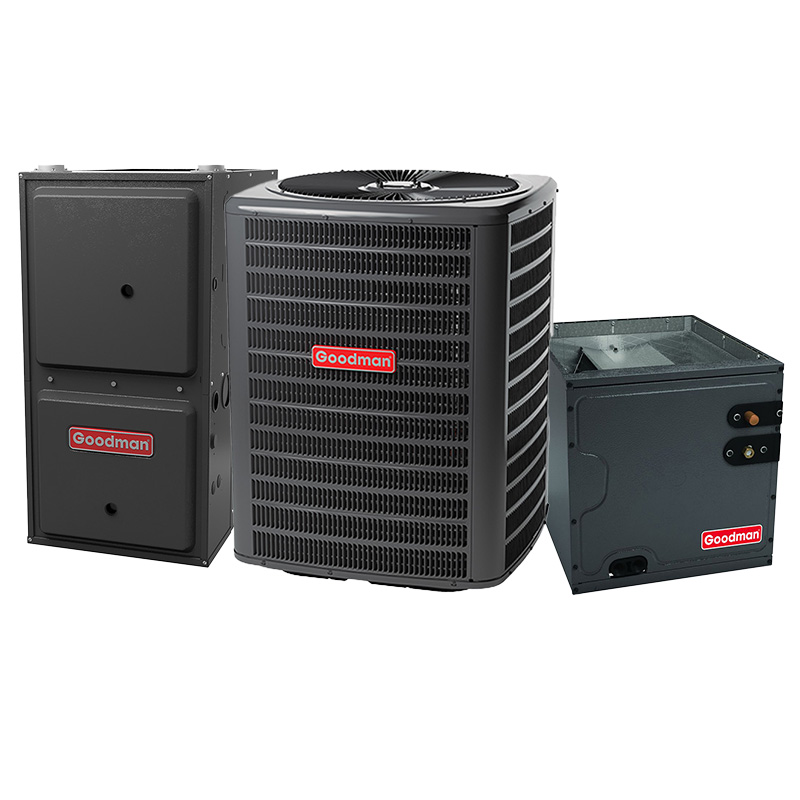
Goodman 4 Ton 17.2 SEER2 AC With 80000 BTU 96% AFUE 2-Stage Variable-Speed ECM Gas Furnace System – Downflow | 2-Stage High Efficiency AC | R32
View on AC Direct see your lowest price →Check current price on AC Direct →
Key features
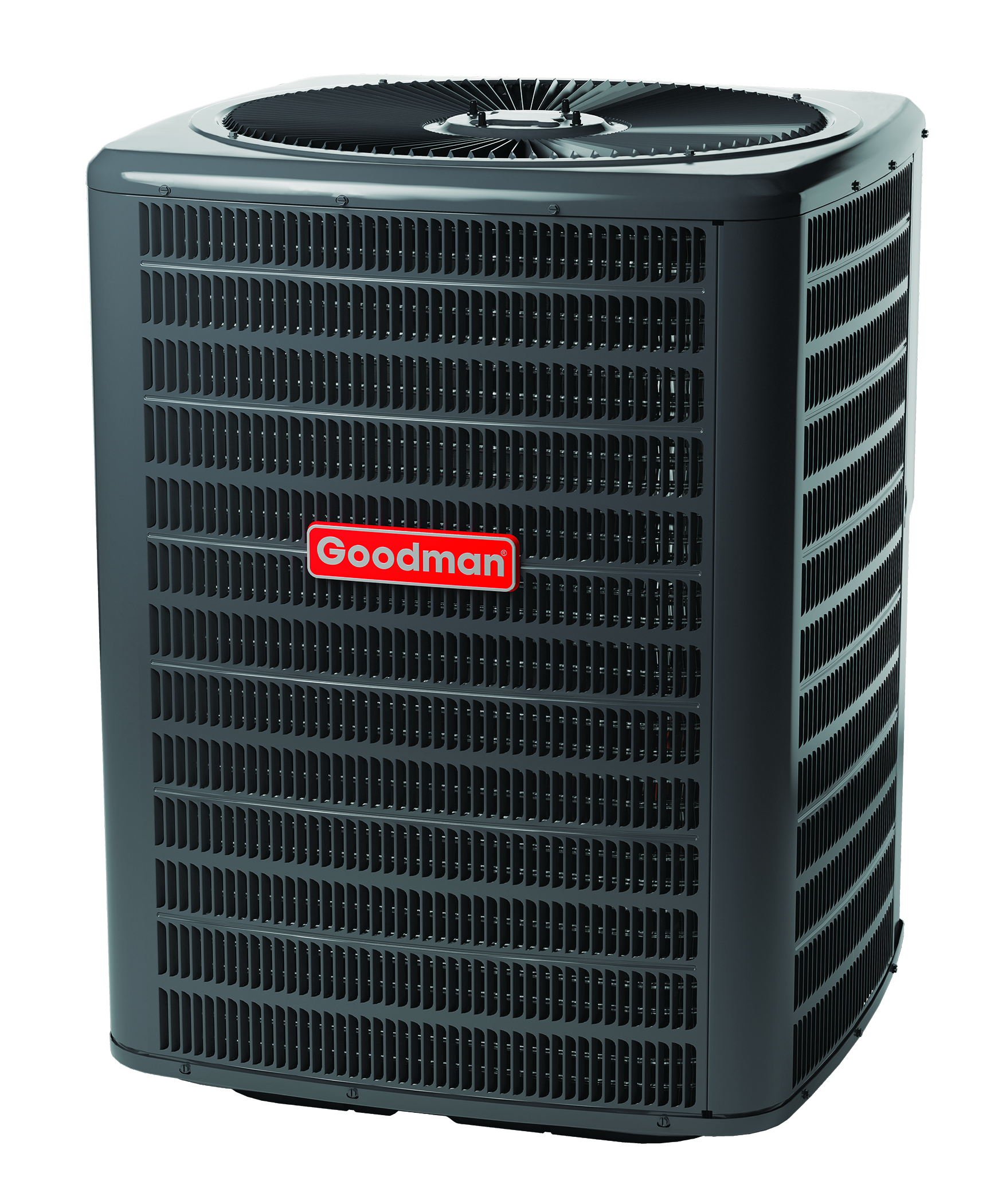
- 4-ton two-stage AC rated at 17.2 SEER2 using R-32 refrigerant
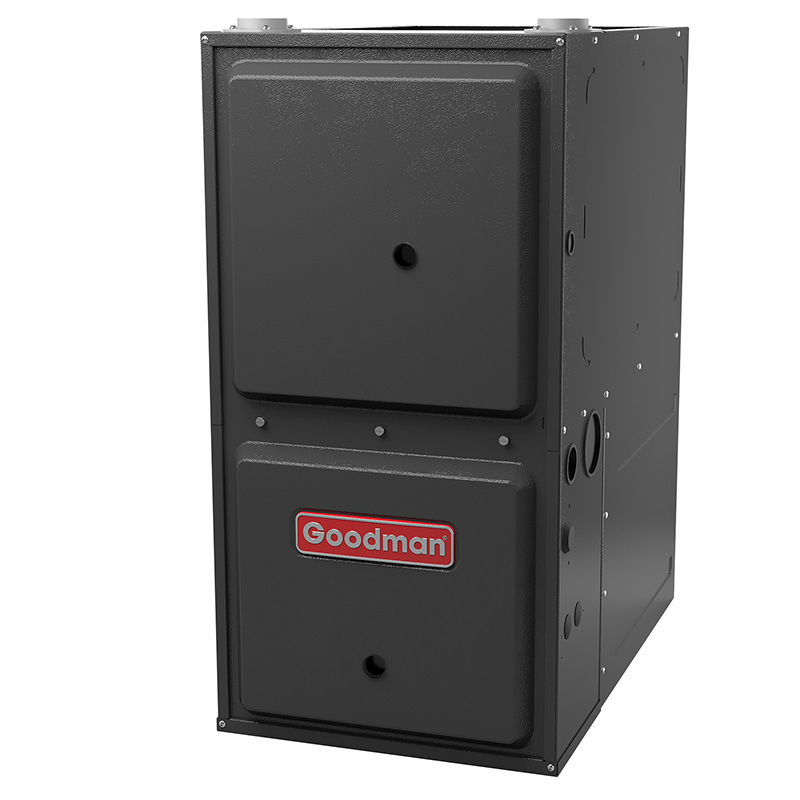
- 80,000 BTU two-stage gas furnace with 96% AFUE efficiency rating
- Variable-speed ECM blower motor for quieter operation and lower blower energy use
- Downflow-only configuration for installations where supply air exits the bottom of the unit
- Two-stage cooling reduces humidity swings and short-cycling on mild days
- R-32 refrigerant carries a lower global warming potential than the R-410A it replaces
About this system
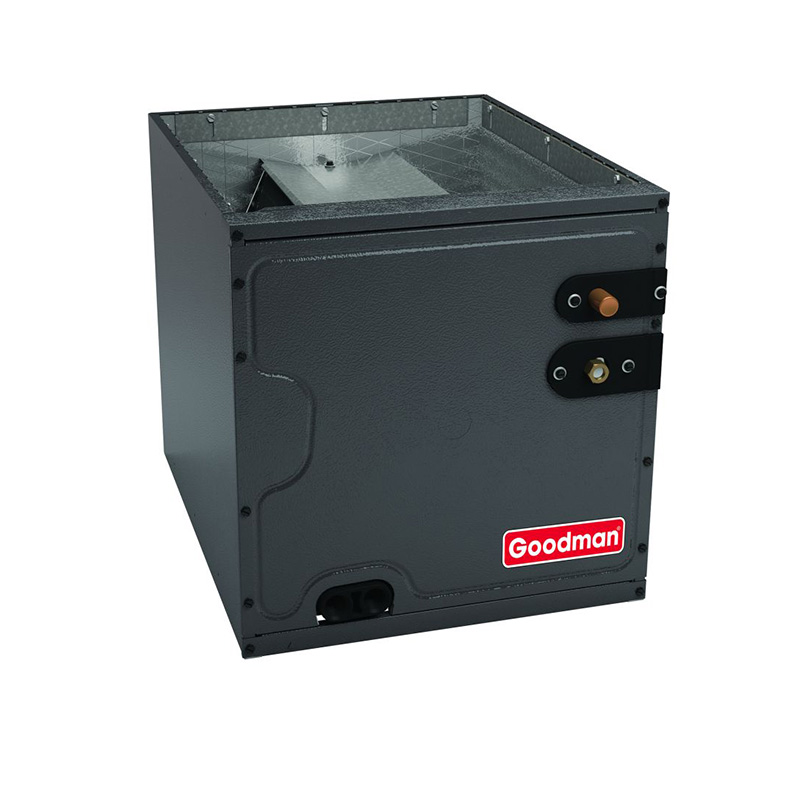
The Goodman GLXT7CA4810 pairs a 4-ton, 17.2 SEER2 two-stage central air conditioner with an 80,000 BTU, 96% AFUE two-stage gas furnace in a downflow configuration, making it a practical choice for homes where the air handler sits in a closet or utility space above a crawlspace or on an upper floor with ducts running downward. The R-32 refrigerant charge is lower in global warming potential than the older R-410A it replaces, and the variable-speed ECM blower motor runs at multiple speeds to hold temperatures steady while trimming blower electricity use. Together, the two-stage compressor and two-stage gas valve let the system run at reduced capacity on moderate days rather than cycling on and off at full blast, which improves humidity control and reduces temperature swings throughout the house.
At 17.2 SEER2 this system sits comfortably in the high-efficiency tier without reaching the premium cost of inverter-driven variable-speed compressors. The 96% AFUE rating means 96 cents of every dollar spent on gas goes toward heat, which is near the top of the non-condensing range and a meaningful upgrade over the 80% AFUE furnaces still common in older homes. Homeowners in climates with genuine winters and warm summers, roughly IECC zones 3 through 5, will get the most out of running both pieces of equipment together. The downflow configuration is the critical fit requirement here: if your existing ductwork pulls air from the bottom of the unit, this system fits; if your setup is upflow or horizontal, it does not.
This Goodman combo delivers genuinely high efficiency specs at a price point that undercuts Carrier, Trane, and Lennox by a meaningful margin, and the two-stage, variable-speed setup is a real upgrade over basic single-stage systems. The trade-off is a brand track record showing shorter compressor lifespans and a handful of documented early failure modes, so long-term ownership costs depend heavily on installer quality and whether you purchase extended coverage.
Overall score is the average of the five ratings above.
What we like
- 17.2 SEER2 and 96% AFUE put real efficiency numbers on the nameplate, not just marketing language
- Two-stage compressor and furnace improve comfort and humidity control compared with single-stage equipment
- Variable-speed ECM blower reduces electricity use during the blower's continuous or low-speed operation
- R-32 refrigerant is lower in global warming potential and is increasingly standard in new residential equipment
- Priced 15 to 25 percent below comparable configurations from Trane, Lennox, and Carrier, leaving budget for a quality install
Trade-offs
- Dual-run capacitors are the most commonly reported failure point, typically surfacing in years 3 through 7 and costing 300 to 600 dollars to address
- Evaporator coil leaks appear in a meaningful share of owner reviews and can be expensive to remediate
- Compressor lifespan averages 10 to 14 years versus 15 to 20 years for premium-brand compressors, raising long-term replacement cost considerations
- A minority of owners report refrigerant leaks within the first year, typically tied to install quality or initial charge issues rather than equipment defects
What homeowners and pros say about Goodman
Homeowners who review Goodman equipment online tend to cluster at the extremes. On Google, dealer-level reviews average around 3.8 out of 5, where affordability and the value-per-dollar proposition come up most often as reasons for satisfaction. On ConsumerAffairs, the average sits at roughly 2.5 out of 5, a platform that skews toward people who specifically sought a place to lodge a complaint, and the recurring pattern there involves repair costs escalating after roughly year seven of ownership. Neither number tells the complete story on its own, but together they suggest a brand that delivers acceptable early-year performance while carrying more risk of component-level issues as the system ages compared with premium competitors.
HVAC technicians who work on Goodman equipment regularly point to dual-run capacitor failures as the most common service call, a repair that is inexpensive and fast but that shows up with some regularity in years three through eight. Evaporator coil leaks are a more serious documented concern, noted in a meaningful share of owner accounts and potentially costly to address. Compressor longevity is the largest long-term distinction between Goodman and premium-tier brands: Goodman compressors typically average 10 to 14 years in service compared with 15 to 20 years for Carrier, Trane, or Lennox units, which affects the total-cost-of-ownership math when you extend the horizon past a decade. A small but documented minority of owners also report refrigerant leaks within the first year, and technicians consistently attribute those to installation or charging errors rather than factory defects, which reinforces how much the outcome of any Goodman system depends on who installs it.
Sources: ConsumerAffairs Goodman owner reviews, AHRI Directory of Certified Product Performance, U.S. DOE appliance and equipment efficiency standards, Goodman product specification sheets.
What it costs to run
At 17.2 SEER2, cooling this 4-ton system for a typical 1200-hour cooling season at the U.S. average electricity rate of $0.17/kWh works out to roughly $569 per year in cooling, about $162 less per year than a minimum-efficiency 13.4 SEER2 unit of the same size. Your real cost depends on your climate and local rate.
Method: (48,000 BTU/hr ÷ 17.2 SEER2) × 1200 hours ÷ 1000 × $0.17/kWh. Rate source: U.S. EIA average; cooling hours: moderate-climate estimate.
How it compares
| Brand | Comparable model | SEER2 | Stage | Price position |
|---|---|---|---|---|
| Goodman | GLXT7CA4810 | 17.2 | Two-stage | Value pick |
| Carrier | Performance 17 (24ACC7 series with 59TP6 furnace) | 17 | Two-stage | 15 to 25 percent above this Goodman system |
| Trane | XR17 with S9V2 furnace | 17 | Two-stage | 20 to 30 percent above this Goodman system |
| Lennox | XC17 with SLP98V furnace | 17.5 | Two-stage | 25 to 35 percent above this Goodman system |
Competitor rows are comparable single-stage units at similar efficiency; price is relative position, not a quote.
Questions about this system
Can this system be installed in an upflow or horizontal orientation, or is it strictly downflow?
The GLXT7CA4810 furnace is designed and certified for downflow installation only, meaning supply air exits from the bottom of the cabinet. Installing it in an upflow or horizontal position is not approved and would void the warranty. Confirm your existing duct configuration before purchasing.
Will my existing R-410A refrigerant lines work with this R-32 system?
R-32 operates at similar pressures to R-410A, and copper line sets that are clean, properly sized, and in good condition are generally compatible. However, your installer must verify line set size, length, and condition, flush any residual R-410A oil, and confirm that all fittings and components are rated for R-32 before startup. This is not a do-it-yourself task.
What does the Goodman warranty actually cover on this system, and are there conditions I need to meet?
Goodman offers a 10-year parts warranty when the system is registered within 60 days of installation by a licensed contractor. Without registration the coverage drops to five years. The warranty covers parts but not labor, refrigerant, or diagnostic costs, so out-of-pocket repair bills can still add up after the first year even with a valid warranty.
How loud is the two-stage operation compared with a standard single-stage system?
When running at first-stage (low) capacity, which covers most mild-weather days, the system operates at a noticeably lower sound level than a full-speed single-stage unit. The variable-speed ECM blower also ramps up gradually rather than kicking on at full blast, which most homeowners find quieter. Actual decibel output depends on installation quality, duct design, and unit placement.
The capacitor failure issue shows up a lot in Goodman reviews. Is that something I should plan for?
Dual-run capacitors are the most commonly reported Goodman failure point, and they can fail on any brand of equipment, though they appear with some frequency in Goodman ownership histories starting around year three. The repair is typically in the 300 to 600 dollar range and is a straightforward fix for a licensed technician. Budgeting for one or two capacitor replacements over the life of the system is a reasonable expectation.
Specifications
| Cooling capacity | 4 Ton |
| Efficiency | 17.2 SEER2 |
| Furnace output | 80000 BTU |
| Furnace efficiency | 96% AFUE |
| Configuration | Downflow |
| Refrigerant | R-32 |
| Model | GLXT7CA4810 |