Goodman 4 Ton 17.2 SEER2 AC With 120000 BTU 96% AFUE 2-Stage Variable-Speed ECM Gas Furnace System – Downflow | 2-Stage High Efficiency AC | R32
View on AC Direct see your lowest price →Check current price on AC Direct →
Key features
- 4-ton, 17.2 SEER2 two-stage AC paired with 120,000 BTU 96% AFUE two-stage furnace
- Variable-speed ECM blower motor for quieter operation and lower blower electricity costs
- Downflow configuration for installations with supply ducts below the air handler
- R-32 refrigerant with lower global-warming potential than R-410A
- Two-stage compressor improves humidity control and reduces wear from short-cycling
- 96% AFUE furnace qualifies for many utility rebate programs in gas-heating markets
About this system
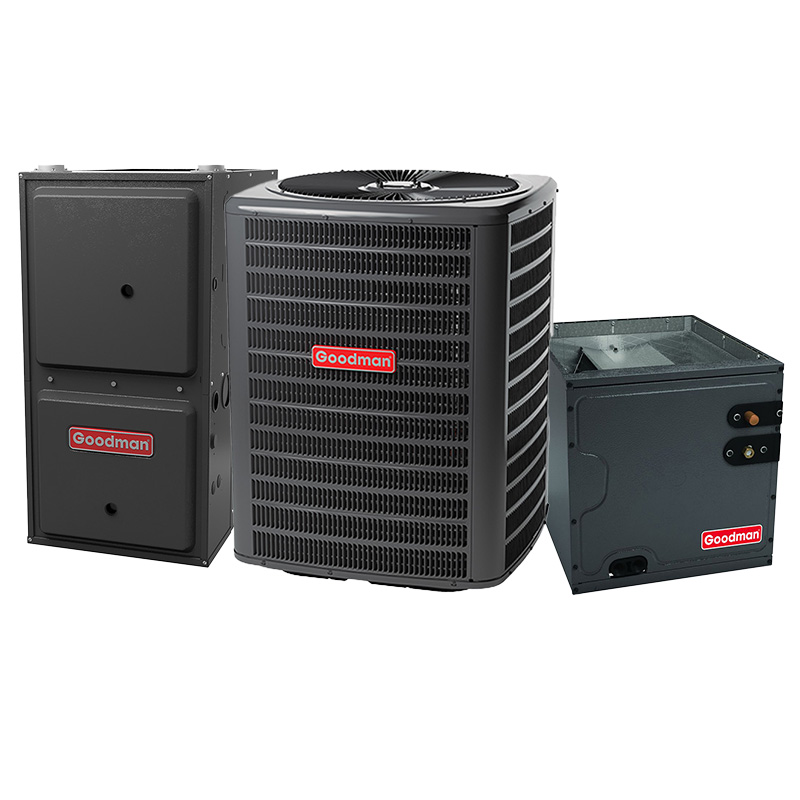
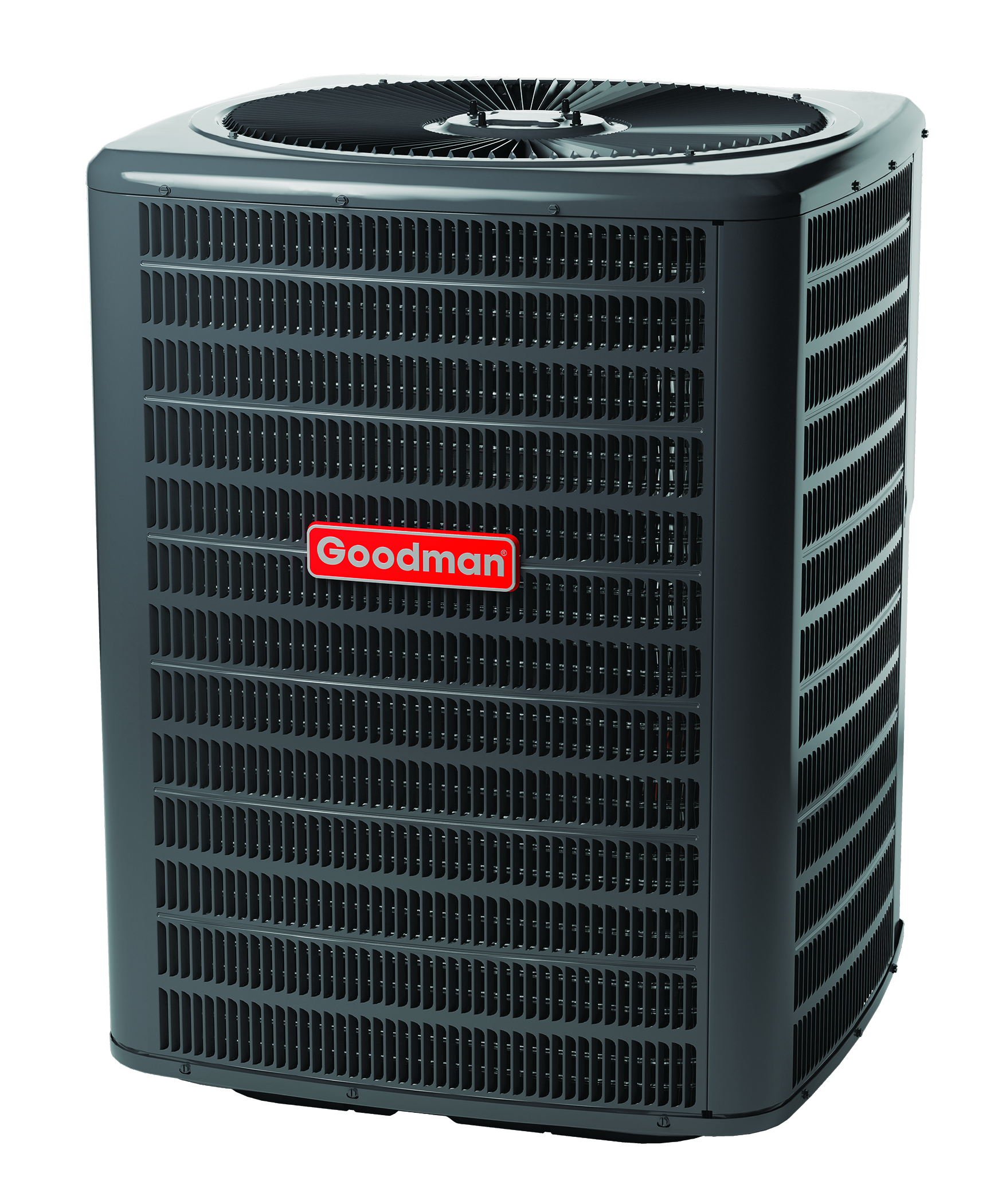
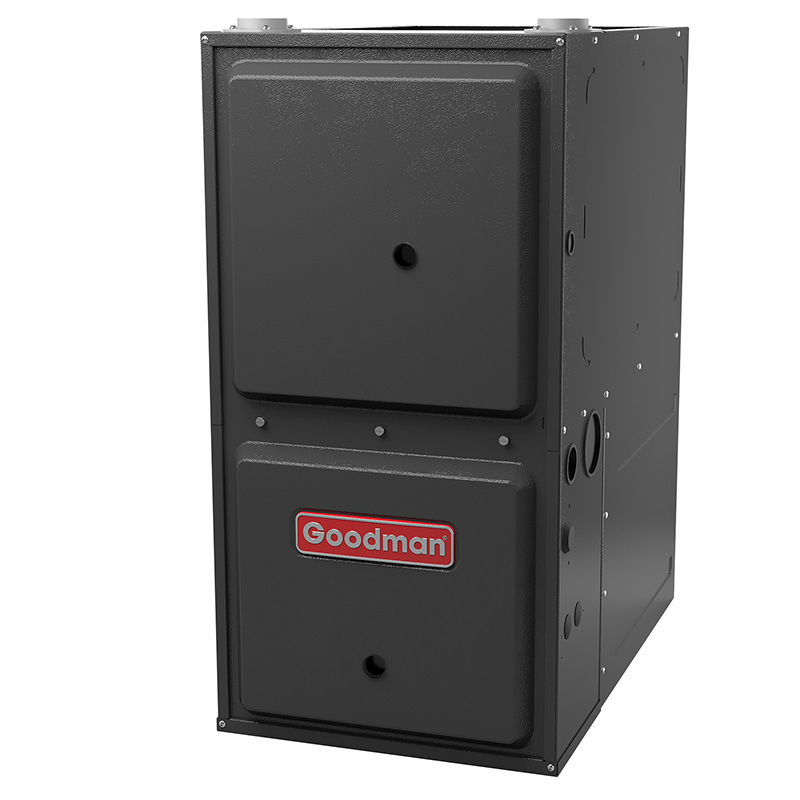
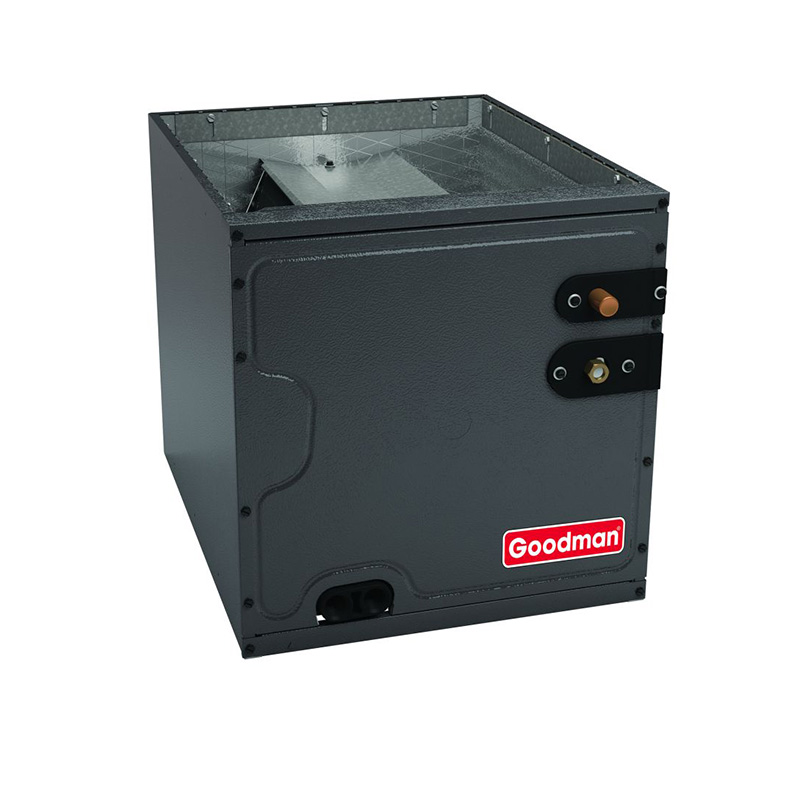
The Goodman GLXT7CA4810 pairs a 4-ton, 17.2 SEER2 two-stage central air conditioner with a 120,000 BTU, 96% AFUE two-stage variable-speed ECM gas furnace in a downflow configuration. That combination puts this system squarely in the high-efficiency tier without reaching into premium variable-capacity territory. The 96% AFUE furnace means roughly 96 cents of every fuel dollar becomes heat, a meaningful reduction in operating cost over an 80% unit. The variable-speed ECM blower motor runs at lower speeds most of the time, which cuts electricity consumption, reduces temperature swings, and moves air more quietly than a single-speed blower.
The downflow configuration is designed for installations where the air handler sits above the living space and supply air is delivered downward, a common arrangement in homes with crawl-space ductwork or certain utility-closet layouts. R-32 refrigerant replaces the older R-410A in this system; it has a lower global-warming potential and slightly better thermodynamic efficiency, though it does require technicians who are familiar with its mildly flammable classification. The two-stage compressor runs at a lower capacity on mild days and ramps to full output only when needed, improving humidity control and reducing the on-off cycling that wears components faster than steady operation.
This system suits homeowners with larger homes in the 2,200 to 3,000 square foot range who want meaningful efficiency gains over builder-grade equipment but are not ready to pay the premium that Trane, Carrier, or Lennox charge for comparable specs. It rewards careful installation more than most systems, so the quality of the contractor you hire matters as much as the hardware itself.
The GLXT7CA4810 delivers genuinely high-efficiency specs at a price that undercuts the major premium brands by 15 to 25 percent, making it a competitive choice for budget-conscious buyers who prioritize efficiency. The trade-off is a reliability track record that sits below Trane and Carrier, with documented issues around capacitors, evaporator coil leaks, and compressor longevity after the 10-year mark. It is a reasonable buy when paired with a skilled installer and realistic expectations about long-term durability.
Overall score is the average of the five ratings above.
What we like
- 17.2 SEER2 and 96% AFUE land in the high-efficiency tier, supporting lower monthly utility bills
- Variable-speed ECM blower reduces blower electricity use and improves comfort consistency
- Two-stage operation on both the AC and furnace provides better humidity control than single-stage systems
- Priced 15 to 25 percent below Trane, Lennox, and Carrier equipment with similar specs
- R-32 refrigerant is compatible with upcoming regulatory shifts away from R-410A
Trade-offs
- Compressor lifespan averages 10 to 14 years versus 15 to 20 years for premium brands, increasing replacement risk after the warranty period
- Evaporator coil leaks appear in a meaningful share of owner reviews and can be costly to repair
- Dual-run capacitors are the most commonly reported failure point, typically adding service calls after year 7
- A minority of owners report refrigerant leaks in the first year, most often tied to installation or initial charge problems rather than the unit itself
What homeowners and pros say about Goodman
Goodman sits at roughly 2.5 out of 5 on ConsumerAffairs, a channel that attracts frustrated owners more than satisfied ones, so the score should be read in context. The recurring complaint theme there is repair costs climbing after about year 7, which lines up with documented failure patterns: dual-run capacitors are the most frequently reported part failure, and evaporator coil leaks show up in a meaningful portion of longer-term owner accounts. Compressor longevity is a real concern, with Goodman units averaging 10 to 14 years versus the 15 to 20 years more commonly seen with Trane and Carrier compressors. A minority of owners also report refrigerant leaks in the first year, though most HVAC technicians attribute those to installation or initial charge problems rather than a defect in the unit itself.
On Google dealer review pages, Goodman scores closer to 3.8 out of 5 across several hundred reviews per location, and affordability is far and away the most common positive note. Contractors who regularly install Goodman tend to say the same thing: the equipment performs well when the installation is done right, and it underperforms when it is not. For a system as installation-sensitive as a downflow two-stage combo with R-32 refrigerant and an ECM blower, that is a meaningful caveat. Homeowners who have had good experiences with this brand usually credit a thorough commissioning process, proper refrigerant charging, and a contractor who actually tested airflow before signing off on the job.
Sources: ConsumerAffairs Goodman owner reviews, AHRI Directory of Certified Product Performance, U.S. DOE appliance and equipment efficiency standards, Goodman product specification sheets.
What it costs to run
At 17.2 SEER2, cooling this 4-ton system for a typical 1200-hour cooling season at the U.S. average electricity rate of $0.17/kWh works out to roughly $569 per year in cooling, about $162 less per year than a minimum-efficiency 13.4 SEER2 unit of the same size. Your real cost depends on your climate and local rate.
Method: (48,000 BTU/hr ÷ 17.2 SEER2) × 1200 hours ÷ 1000 × $0.17/kWh. Rate source: U.S. EIA average; cooling hours: moderate-climate estimate.
How it compares
| Brand | Comparable model | SEER2 | Stage | Price position |
|---|---|---|---|---|
| Goodman | GLXT7CA4810 | 17.2 | Two-stage | Value pick |
| Carrier | Performance 17 (24ACC7) | 17 | Two-stage | 15 to 25 percent higher than this Goodman |
| Trane | XR17 | 17 | Two-stage | 20 to 30 percent higher than this Goodman |
| Lennox | Merit ML17XC2 | 17.2 | Two-stage | 25 to 35 percent higher than this Goodman |
Competitor rows are comparable single-stage units at similar efficiency; price is relative position, not a quote.
Questions about this system
Why does this system use a downflow configuration, and how do I know if my home needs it?
Downflow means the furnace pulls return air in from the top and discharges conditioned air downward into the duct system below. It is the correct choice when your air handler sits in a closet or utility space on the main floor with supply ducts running through a crawl space or basement beneath it. An upflow or horizontal unit in that same installation would require significant duct rerouting, so always confirm your existing duct layout with your contractor before ordering.
What should I know about R-32 refrigerant before hiring a technician for installation or service?
R-32 is classified as mildly flammable, which means not every technician certified for R-410A work will be familiar with its handling requirements. Ask prospective installers specifically whether they have worked with R-32 systems, because improper handling can create safety risks and may void the warranty. Many larger HVAC contractors are already trained on it as manufacturers transition away from R-410A.
What is covered under the Goodman warranty on this system, and does it require anything on my end?
Goodman offers a 10-year parts limited warranty when the system is registered within 60 days of installation; without registration it typically drops to 5 years. The compressor may carry an extended warranty under certain conditions, but coverage details depend on the registration and the specific model. Warranty claims generally require proof of professional installation and regular maintenance, so keep service records.
Is the dual-run capacitor failure issue something I should budget for, and how serious is it?
Dual-run capacitor failures are the most commonly reported service issue on Goodman equipment and tend to surface after roughly 7 years of operation. The repair itself is straightforward and relatively inexpensive, typically in the 300 to 600 dollar range including a service call, so it is not a system-ending problem. Budgeting for one or two capacitor replacements over the life of the system is a reasonable expectation.
How does the two-stage compressor actually affect comfort and humidity control compared to a single-stage unit?
A two-stage compressor runs at reduced capacity for the majority of operating hours, cycling less frequently and running for longer periods at lower output. Longer run times mean the evaporator coil has more time to pull moisture out of the air, which noticeably improves indoor humidity levels during mild but humid weather. The result is a more even temperature throughout the home and fewer abrupt starts and stops that can create comfort complaints.
Specifications
| Cooling capacity | 4 Ton |
| Efficiency | 17.2 SEER2 |
| Furnace output | 120000 BTU |
| Furnace efficiency | 96% AFUE |
| Configuration | Downflow |
| Refrigerant | R-32 |
| Model | GLXT7CA4810 |