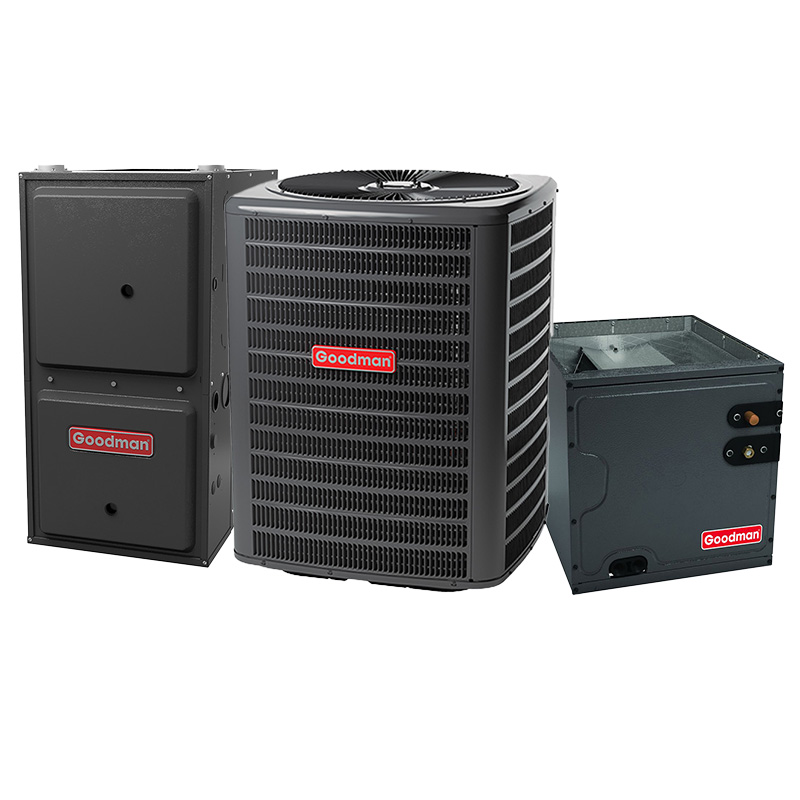
Goodman 5 Ton 16 SEER2 AC With 100000 BTU 96% AFUE 2-Stage Variable-Speed ECM Gas Furnace System – Downflow | 2-Stage High Efficiency AC | R32
View on AC Direct see your lowest price →Check current price on AC Direct →
Key features
- 16 SEER2 two-stage cooling on a 5-ton platform with R-32 refrigerant
- 96% AFUE two-stage gas furnace rated at 100,000 BTU output
- Variable-speed ECM blower motor for quiet, consistent airflow and better dehumidification
- Downflow configuration suits slab-on-grade and closet-platform installations
- R-32 refrigerant: lower global warming potential than R-410A, phasing in industry-wide
- Priced approximately 15 to 25 percent below comparable Carrier, Trane, and Lennox systems
About this system
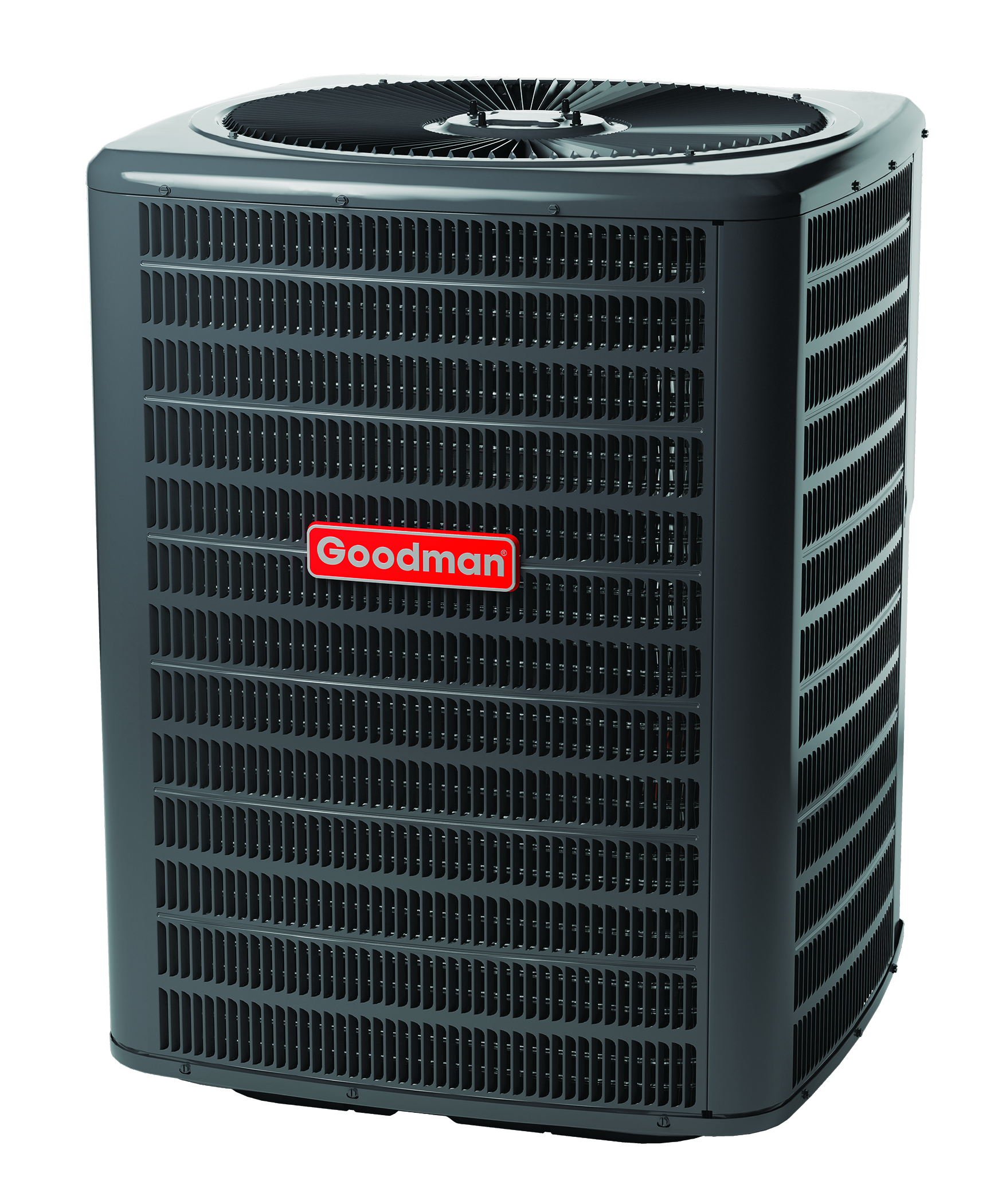
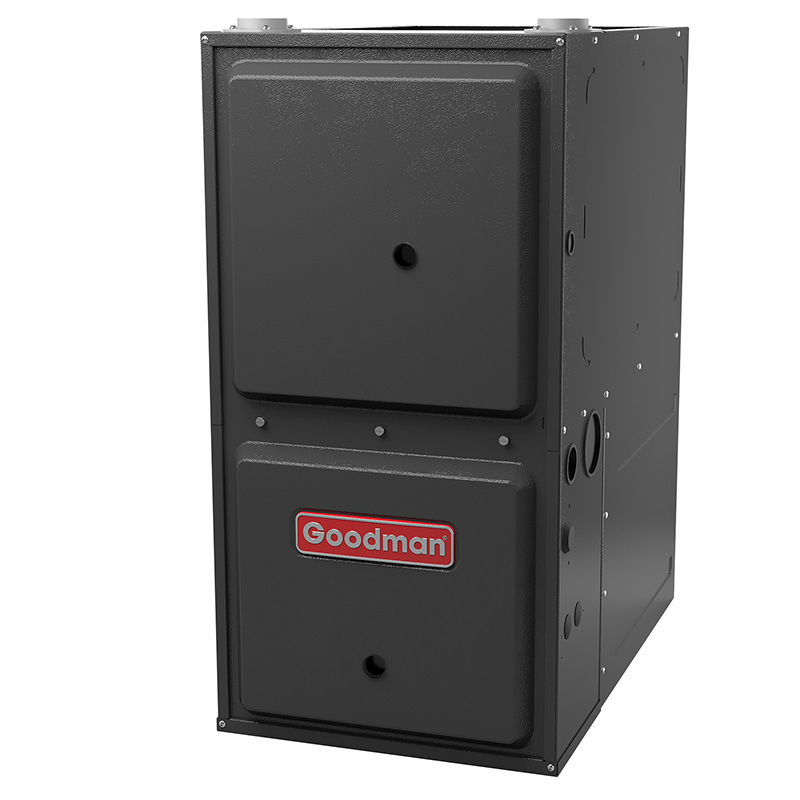
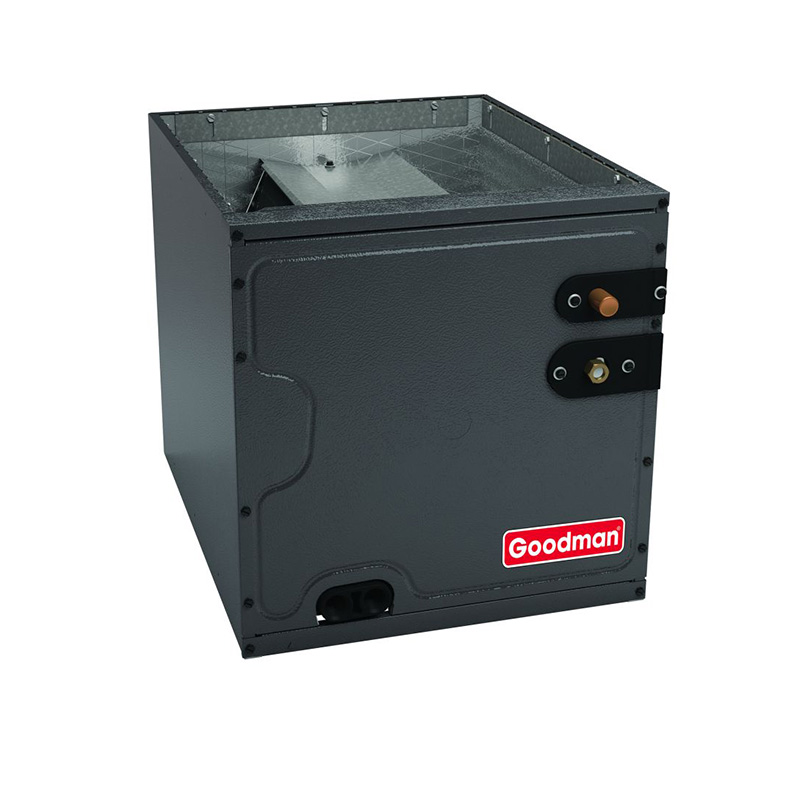
The Goodman GLXT7CA6010 pairs a 5-ton, 16 SEER2 two-stage central air conditioner with a 100,000 BTU, 96% AFUE two-stage variable-speed ECM gas furnace in a downflow configuration. That combination is designed for homes where the air handler sits in a closet or platform and blows conditioned air downward through floor registers, a layout common in ranch-style homes and slab-on-grade construction in the South and Southwest. The R-32 refrigerant charge is a forward-looking choice: R-32 has roughly one-third the global warming potential of the R-410A it is replacing across the industry, and it operates at higher efficiency per pound, which contributes to the system reaching the 16 SEER2 rating.
The two-stage compressor on the AC side means the system runs on a lower capacity setting for most of the cooling season, cycling up to full output only on the hottest days. Paired with the variable-speed ECM blower motor in the furnace, this arrangement delivers more consistent indoor temperatures, meaningfully better dehumidification compared with a single-stage system, and quieter day-to-day operation. The 96% AFUE furnace sits in the top tier of gas furnace efficiency under current Department of Energy standards, and the two-stage burner mirrors the compressor logic: low fire for mild weather, high fire when the load demands it. This is a capable, full-featured system at a price point that is typically 15 to 25 percent below comparable equipment from Carrier, Trane, or Lennox.
Five tons is a large residential capacity, appropriate for roughly 2,500 to 3,500 square feet depending on climate zone, insulation levels, window area, and local Manual J load calculations. Buyers should be aware that oversizing is a real risk at this capacity class: an oversized system short-cycles, wears components faster, and undermines the humidity control that makes a two-stage system worthwhile. A proper Manual J load calculation before purchase is not optional at this size.
This Goodman system delivers genuinely high-efficiency heating and cooling hardware at a price that makes premium-tier specs accessible to budget-conscious buyers. The trade-off is a brand track record that sits below the premium field on reliability and owner satisfaction, with capacitors, coil leaks, and compressor longevity all documented concerns. Buyers who prioritize upfront cost savings and use a skilled installer will likely get strong value; buyers who want the longest equipment lifespan with the fewest service calls should budget for that possibility or look at premium brands.
Overall score is the average of the five ratings above.
What we like
- Two-stage compressor and variable-speed ECM blower significantly improve comfort and humidity control over single-stage systems
- 96% AFUE puts heating efficiency in the top tier, reducing annual gas costs compared with 80% AFUE alternatives
- R-32 refrigerant is a forward-compatible choice as R-410A phases out industry-wide
- Priced 15 to 25 percent below Carrier, Trane, and Lennox equivalents, which is a meaningful dollar difference at this capacity
- Downflow configuration is well-suited to common Southern and Southwestern home layouts where floor-register setups are standard
Trade-offs
- Dual-run capacitors are the most frequently reported failure point, typically adding a 300 to 600 dollar service call within the first several years
- Evaporator coil leaks appear in a meaningful share of owner reports and can be a costly mid-life repair
- Compressor lifespan averages 10 to 14 years versus 15 to 20 years for premium-brand compressors, meaning earlier replacement exposure
- Owner satisfaction on ConsumerAffairs sits around 2.5 out of 5, with repair cost escalation after roughly year 7 as a recurring complaint
What homeowners and pros say about Goodman
Homeowners who have installed Goodman equipment tend to split into two camps, and that split shows up clearly in the numbers. Google dealer reviews across Goodman installers average around 3.8 out of 5, where the most consistent praise is straightforward: the price was lower than competing bids and the system cools and heats as advertised. ConsumerAffairs tells a harder story, sitting at roughly 2.5 out of 5, and the complaints that pile up there follow a pattern: the system works fine for several years, then repair bills start accumulating around year 7 or beyond. The specific failure modes named in owner reports line up with what HVAC technicians see in the field: dual-run capacitors going out (a relatively quick and inexpensive fix in the 300 to 600 dollar range, but still an inconvenience), evaporator coil leaks that can be a more serious mid-life expense, and compressors that tend to reach the end of their service life at 10 to 14 years rather than the 15 to 20 years more commonly seen in Carrier, Trane, or Lennox compressors.
Among HVAC professionals, the consistent message is that install quality is the single biggest variable in how a Goodman system performs over its lifetime. A properly sized, correctly charged, and well-commissioned Goodman installation can deliver solid efficiency and years of reliable service. The same unit improperly charged or installed in an oversized configuration tends to surface problems sooner, and the first-year refrigerant leak reports seen in a minority of owner reviews are typically traced back to charge issues at installation rather than a factory defect. For this specific system, the two-stage compressor and variable-speed ECM blower are features that reward a careful install: get them set up right and the comfort improvement over a single-stage system is real and noticeable. Cut corners on commissioning and those benefits largely disappear while the reliability risks remain.
Sources: ConsumerAffairs Goodman owner reviews, AHRI Directory of Certified Product Performance, U.S. DOE appliance and equipment efficiency standards, Goodman product specification sheets.
What it costs to run
At 16 SEER2, cooling this 5-ton system for a typical 1200-hour cooling season at the U.S. average electricity rate of $0.17/kWh works out to roughly $765 per year in cooling, about $148 less per year than a minimum-efficiency 13.4 SEER2 unit of the same size. Your real cost depends on your climate and local rate.
Method: (60,000 BTU/hr ÷ 16 SEER2) × 1200 hours ÷ 1000 × $0.17/kWh. Rate source: U.S. EIA average; cooling hours: moderate-climate estimate.
How it compares
| Brand | Comparable model | SEER2 | Stage | Price position |
|---|---|---|---|---|
| Goodman | GLXT7CA6010 | 16 | Two-stage | Value pick |
| Carrier | Performance 24ACC636 with 59TP6 furnace | 16 | Two-stage | Approximately 15 to 20 percent above this Goodman system |
| Trane | XR17 with S9X2 furnace | 17 | Two-stage | Approximately 20 to 25 percent above this Goodman system |
| Lennox | Merit ML17XC1 with ML196 furnace | 17 | Two-stage | Approximately 20 to 30 percent above this Goodman system |
Competitor rows are comparable single-stage units at similar efficiency; price is relative position, not a quote.
Questions about this system
Is a downflow furnace the right choice for my house, or can I flip it to upflow?
Downflow units are factory-configured to discharge air downward and are not interchangeable with upflow models without a different cabinet. Downflow is the correct choice when your air handler sits in a raised closet or platform above floor registers, which is common in slab-on-grade Southern homes. If your ductwork runs up through the ceiling or attic, you need an upflow or horizontal unit instead.
What does the two-stage compressor actually do differently day to day compared to a single-stage unit?
On most days the compressor runs at its lower stage, which means longer, quieter run cycles that remove more humidity from the air before the thermostat is satisfied. Full capacity kicks in only during peak heat loads. The practical result is more even temperatures across rooms and noticeably lower indoor humidity, which is particularly valuable in humid climates.
Goodman has mixed reviews online. Should I be worried about buying this system?
The concerns are real but manageable. ConsumerAffairs scores around 2.5 out of 5 on a channel that skews toward complaints, and the recurring issue is repair costs escalating after roughly year 7. The most documented failure points are dual-run capacitors (typically a 300 to 600 dollar fix), evaporator coil leaks, and compressors that average 10 to 14 years rather than the 15 to 20 years seen in premium brands. A skilled installer, a maintenance contract, and a small reserve for those known failure points significantly change the ownership experience.
Why does this system use R-32 refrigerant instead of R-410A, and does that affect servicing?
R-32 is being adopted industry-wide because its global warming potential is about 68 percent lower than R-410A, and it operates more efficiently per pound of charge. From a service standpoint, not all technicians are currently certified to handle R-32, so it is worth confirming that your installer and any future service company are equipped for it before purchase.
How do I know if 5 tons is actually the right size for my home?
Five tons is a large residential capacity, typically appropriate for 2,500 to 3,500 square feet depending on insulation, climate zone, window area, and ceiling height. An oversized system short-cycles, wears components faster, and defeats the humidity-control advantages of the two-stage compressor. Require a full Manual J load calculation from your contractor before finalizing this capacity; do not rely on square footage rules of thumb alone at this size.
Specifications
| Cooling capacity | 5 Ton |
| Efficiency | 16 SEER2 |
| Furnace output | 100000 BTU |
| Furnace efficiency | 96% AFUE |
| Configuration | Downflow |
| Refrigerant | R-32 |
| Model | GLXT7CA6010 |